
How to Prevent Freight Damage in Transit
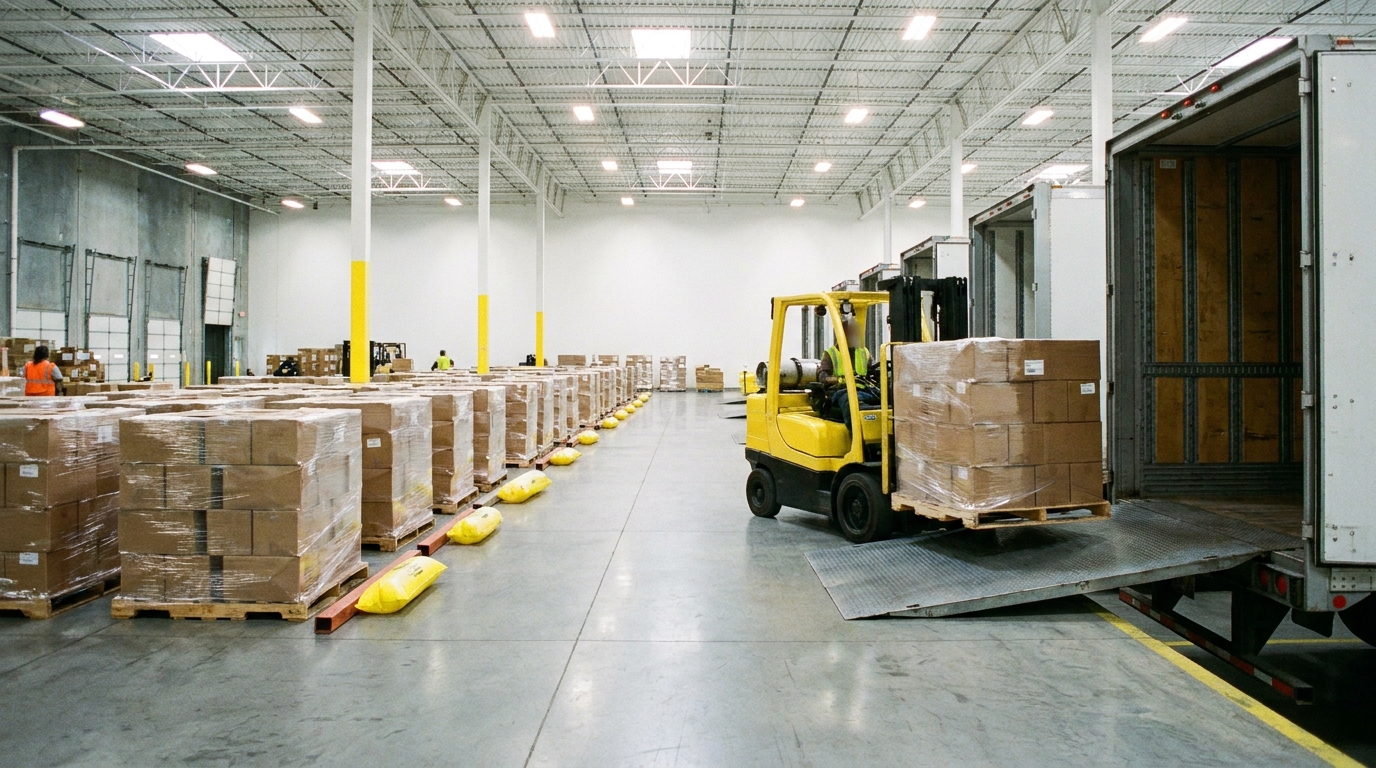
To prevent freight damage in transit, protect the load before it ever moves: use right-sized packaging, palletize tightly with no overhang, secure the stack with stretch wrap plus banding, guard the corners with edge protectors, and block and brace it inside the trailer so it cannot shift. Most damage is not caused by a dramatic accident. It comes from ordinary road vibration, repeated handling, and loads that were built to fail before the truck left the dock. The good news is that the same handful of practices prevent the large majority of it.
Key takeaways
- Poor packaging and palletizing, not accidents, cause most freight damage. Fix the load first.
- Never let cartons overhang the pallet edge. Overhang is the fastest way to get a load crushed.
- Stretch wrap stops sliding but adds little strength. Add banding and edge boards for heavy or tall loads.
- Blocking and bracing inside the trailer stops the shifting that vibration and hard braking cause.
- LTL freight is handled and re-loaded several times, so it needs sturdier packaging than a single full truckload move.
What causes most freight damage in transit?
Most freight damage comes from three ordinary forces: vibration over the road, compression from stacking, and impact during handling. A trailer vibrates continuously for hundreds of miles, which loosens weak wrap and works cartons apart. Freight also gets picked up, set down, and re-loaded at every terminal, and each touch is a chance to drop, crush, or puncture it.
Damage usually traces back to how the load was built, not to a rare crash. A pallet that was stable on the dock but poorly secured will slowly shift, lean, and topple. Once you treat the load as the variable you control, prevention becomes a checklist rather than luck.
How do you choose the right packaging and box size?
Right-sized packaging means the carton fits the product with enough cushioning to absorb shock but no excess void space for the contents to rattle around in. A box that is too big lets product slam against the walls; a box that is too small bulges and loses its stacking strength. Match the box to the item, fill voids with dunnage, and use double-wall corrugated for anything heavy or fragile.
Box strength matters as much as size. Corrugated cartons carry a burst-strength or edge-crush rating, and stacking heavy freight on an under-rated box collapses the whole column. When you are sizing cartons and pallets, a quick pass through a dimensional weight calculator also shows whether tighter packing lowers your billable weight, so better packaging and lower cost often move together.
How should you palletize and stack freight to prevent damage?
Build a stable, square load: keep every carton fully on the pallet deck with zero overhang, stack in interlocking columns for strength, and keep the heaviest items on the bottom. Overhang is the single worst mistake because any carton hanging past the edge loses the deck's protection and gets sheared off by a forklift or a neighboring pallet.
Column stacking (cartons stacked directly on top of each other) gives the most vertical strength, while brick-style interlocking gives more stability at some cost to strength. For a detailed walkthrough of pattern, height, and weight distribution, see our guide on how to palletize freight. Keep the load height reasonable so it does not become top-heavy, and cap tall stacks with a top sheet or slip sheet before wrapping.
Do stretch wrap and banding really hold the load together?
They do different jobs, and heavy freight needs both. Stretch wrap unitizes the load and stops cartons from sliding sideways, but it adds almost no vertical or downward holding force. Banding or strapping, anchored down through the pallet, is what actually clamps a tall or dense load to the deck.
The technique matters. Wrap from the base up, catching the bottom cartons to the pallet itself with several tight bottom wraps, then spiral up with overlap. When you band, run straps over edge protectors so the tension does not crush the corner cartons. A pallet that is only loosely wrapped near the top will lean and spill; the connection to the pallet base is where unitizing succeeds or fails.
What are edge and corner protectors, and when do you need them?
Edge protectors are rigid boards, usually V-shaped corrugated or plastic, placed along the vertical corners of a palletized load. They spread strap tension across the cartons instead of letting it bite into one corner, and they add rigidity that helps the whole column resist crushing. Use them on any banded load, any tall stack, and any freight with soft or fragile corners.
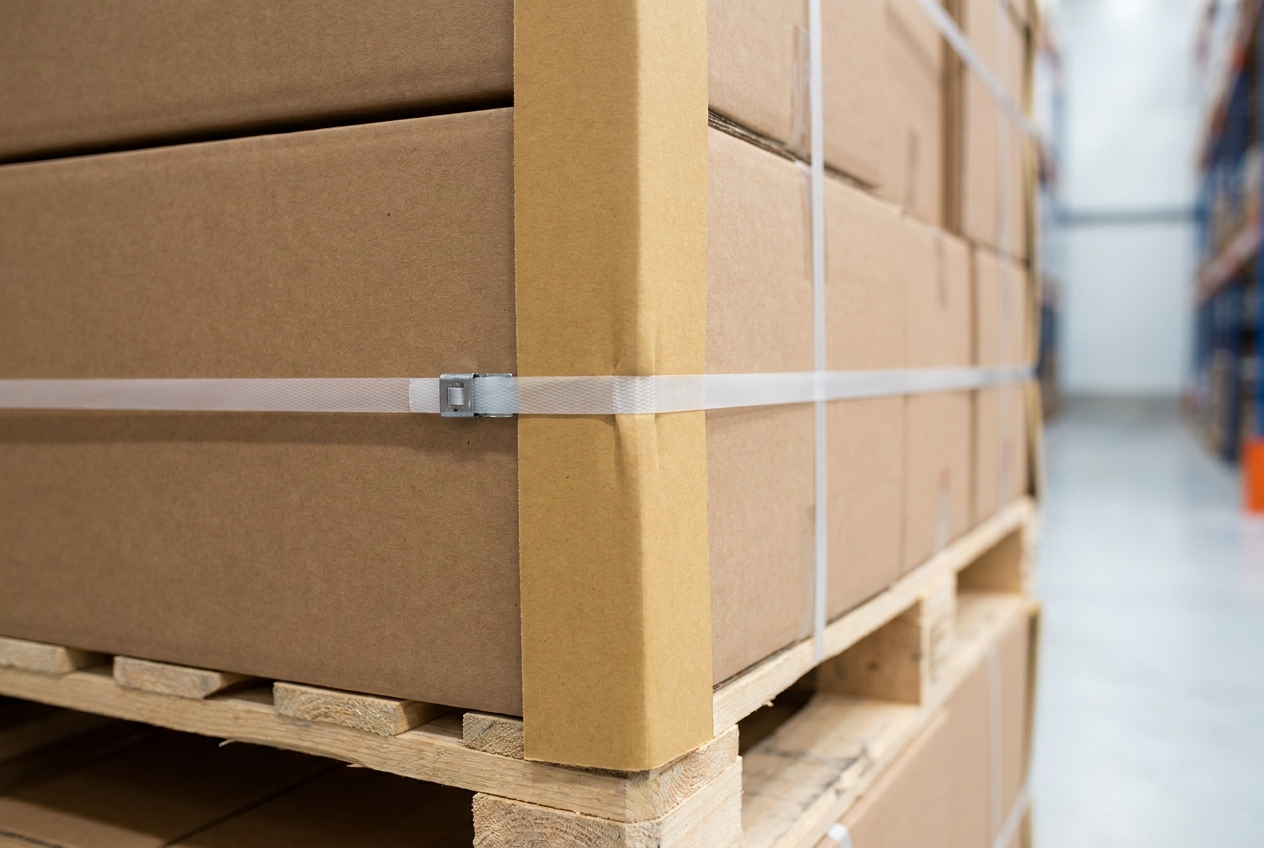
Corner boards are cheap insurance against two common failures: strap cut-through and corner crush from a neighboring pallet. On mixed LTL trailers where pallets are packed against each other, that corner is exactly where contact happens, so protecting it prevents a large share of dock damage.
How do you block and brace freight inside the trailer?
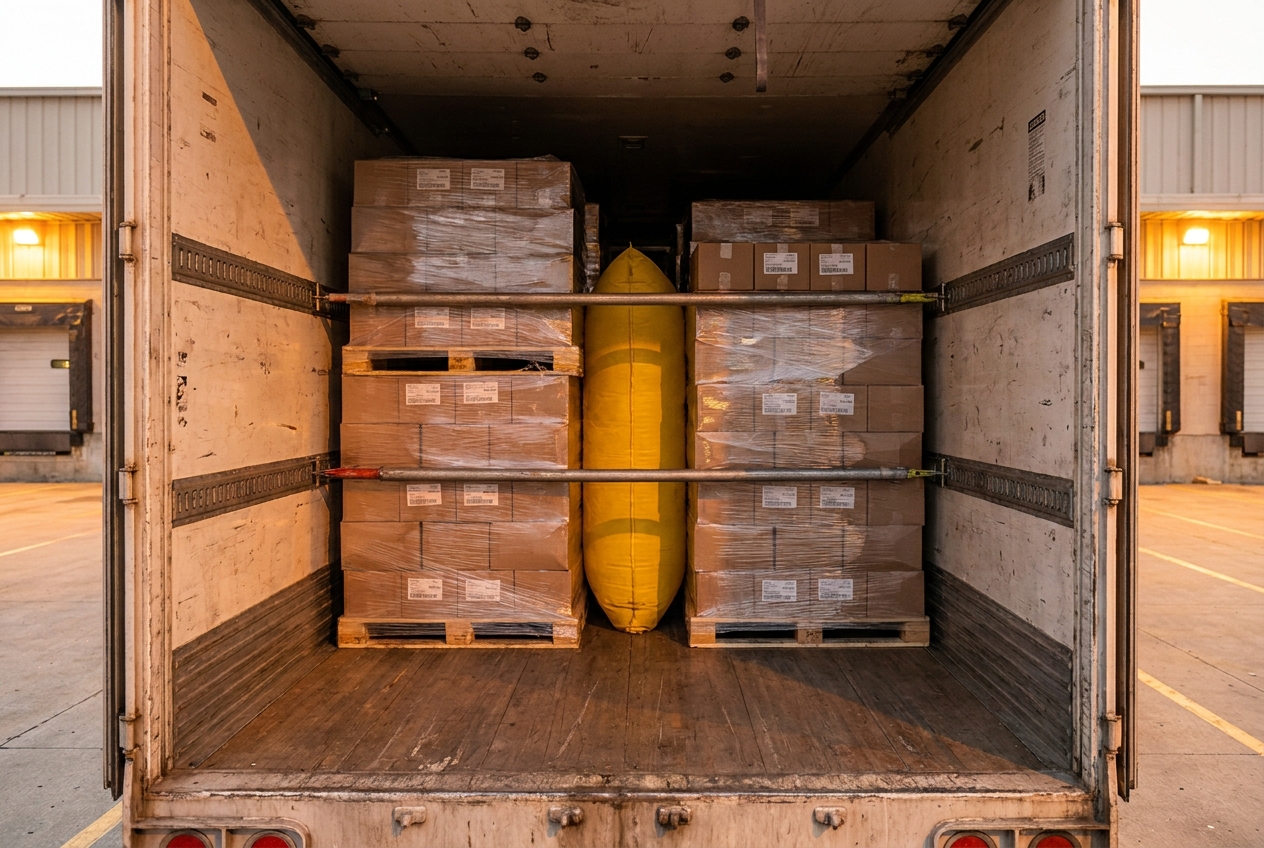
Blocking and bracing keeps freight from moving inside the trailer once the doors close. Blocking fills the gaps so pallets cannot slide; bracing holds them in place against the walls and each other. Load bars, airbags (dunnage bags) between pallets, and load straps are the common tools, and the goal is a load that cannot shift forward under braking or sideways in a turn.
Load freight tight to the nose and square the pallets so gaps are minimized, then fill remaining voids. Federal cargo securement standards from the FMCSA set minimum requirements for how commercial loads must be restrained, so a shifted load is both a damage problem and a safety violation. The freight that survives, out of the billions of tons moved by truck each year tracked by the Bureau of Transportation Statistics, is the freight that cannot move inside the trailer.
Do labeling and orientation arrows actually reduce damage?
Clear labeling helps, but only as a backup to good packaging. Orientation arrows ("this side up"), handling marks, and stacking-limit labels tell handlers how to treat the freight, and they work best when printed large, placed on multiple sides, and matched to how the pallet is actually built. A "do not stack" label on a load that was engineered to be stackable just wastes trailer space.
Treat labels as communication, not protection. If a load truly must not be double-stacked, use a pyramid top or a physical cap that makes stacking impossible, rather than relying on a sticker alone. Legible shipping labels and an accurate bill of lading also keep the freight from being misrouted, which reduces the extra handling that causes damage in the first place.
Does shipping mode change your damage risk?
Yes. The mode you choose sets how many times your freight gets handled, which is the biggest driver of damage exposure. Full truckload freight stays on one trailer from pickup to delivery, so it is touched the fewest times. Less-than-truckload freight shares trailers and moves through hub-and-spoke terminals, where it is unloaded and re-loaded several times, so it needs sturdier packaging and better unitizing.
| Damage cause | Where it happens | Prevention |
|---|---|---|
| Carton overhang | On the pallet | Size the load to the deck; use a larger pallet; zero overhang |
| Load shift / topple | In transit vibration, braking | Stretch wrap to the base, banding, blocking and bracing, load bars |
| Corner and edge crush | Mixed LTL trailers, dock contact | Edge protectors, square stacking, tight loading |
| Column collapse | Stacking in terminals | Correct box strength rating, column stacking, top caps |
| Repeated handling damage | LTL terminal transfers | Sturdier packaging, unitize fully, or move to FTL |
| Void-space rattle | Inside the carton | Right-sized boxes, dunnage, double-wall corrugated |
If your freight is high-value or fragile enough that repeated handling is the real risk, consolidating to a full truckload or a partial can be cheaper than replacing damaged goods. To compare handling profiles and see how carriers describe their networks, browse LTL freight companies in the directory before you book.
A worked example: a 48-by-40 pallet moving LTL
Say you are shipping a 48-by-40-inch pallet stacked to 60 inches and weighing about 900 pounds, moving LTL across two terminal transfers. Cartons overhang the deck by two inches per side, the load is wrapped near the top only, and there are no corner boards. On paper it looks packed. In practice the overhanging cartons get sheared at the first dock, the top-heavy stack leans during the second transfer, and the corners crush where an adjacent pallet presses in.
Rebuild it the right way: restack so every carton sits fully on the deck, put the heavier layer on the bottom, wrap from the base up with several anchoring bottom turns, add four edge protectors, and band the load over them. Now the pallet arrives square. If damage still occurs, note it on the delivery receipt before signing and follow the steps to file a freight claim, because a clean signature with no notation makes recovery much harder. Prevention is mostly discipline at the dock: build square, unitize to the base, protect the corners, brace the trailer, and match the mode to how much handling the freight can survive.
Frequently asked questions
What is the single most common cause of freight damage?
Poor palletizing and packaging is the most common cause. Loads that shift, overhang the pallet edge, or stack unevenly get crushed and toppled during normal transit vibration and handling, well before anything unusual happens to the truck.
Does stretch wrap alone hold a pallet together?
No. Stretch wrap keeps cartons from sliding but adds little vertical strength. For heavy or tall loads, combine wrap with banding or strapping anchored to the pallet, plus edge boards so the straps do not crush the corners.
Is LTL or full truckload riskier for freight damage?
Less-than-truckload (LTL) carries more damage risk because freight is handled and re-loaded several times across terminals and shares trailer space with other shippers' goods. Full truckload stays on one trailer end to end, so a well-braced FTL load is handled less.
Do 'this side up' and fragile labels actually work?
Orientation arrows and handling labels help when they are clear, on multiple sides, and matched to how the freight is actually packed. They are not a guarantee, so they should support proper packaging and bracing rather than replace it.
How much overhang is acceptable on a pallet?
Aim for zero. Any carton that extends past the pallet footprint loses the deck's protection and becomes the first thing a forklift, dock plate, or neighboring pallet crushes. Size the load to sit fully on the deck, or step up to a larger pallet.
What should I do first if freight arrives damaged?
Note the damage on the delivery receipt or bill of lading before signing, photograph the freight and packaging, and keep everything. A clean signature with no notation makes a freight claim much harder to win later.
Ready to compare providers?
Search the directory by service and location, save options to your shortlist, and send a clear RFQ.
Related guides
Carrier Vetting: How to Avoid Fraud and Bad Carriers
A step-by-step guide to carrier vetting: verify FMCSA authority and safety, confirm insurance with the insurer, spot red flags, and stop double-brokering.
Dedicated vs Common Carrier: Which Fits
How dedicated contract carriage, common carriers, and private fleets compare on cost, capacity, and commitment, and when your volume justifies dedicated.
Shipping Construction Materials to a Jobsite
How construction freight works: matching flatbed and specialized trailers to steel, lumber, pipe, and precast, plus jobsite access, oversize permits, and delivery timing.