
Shipping Construction Materials to a Jobsite
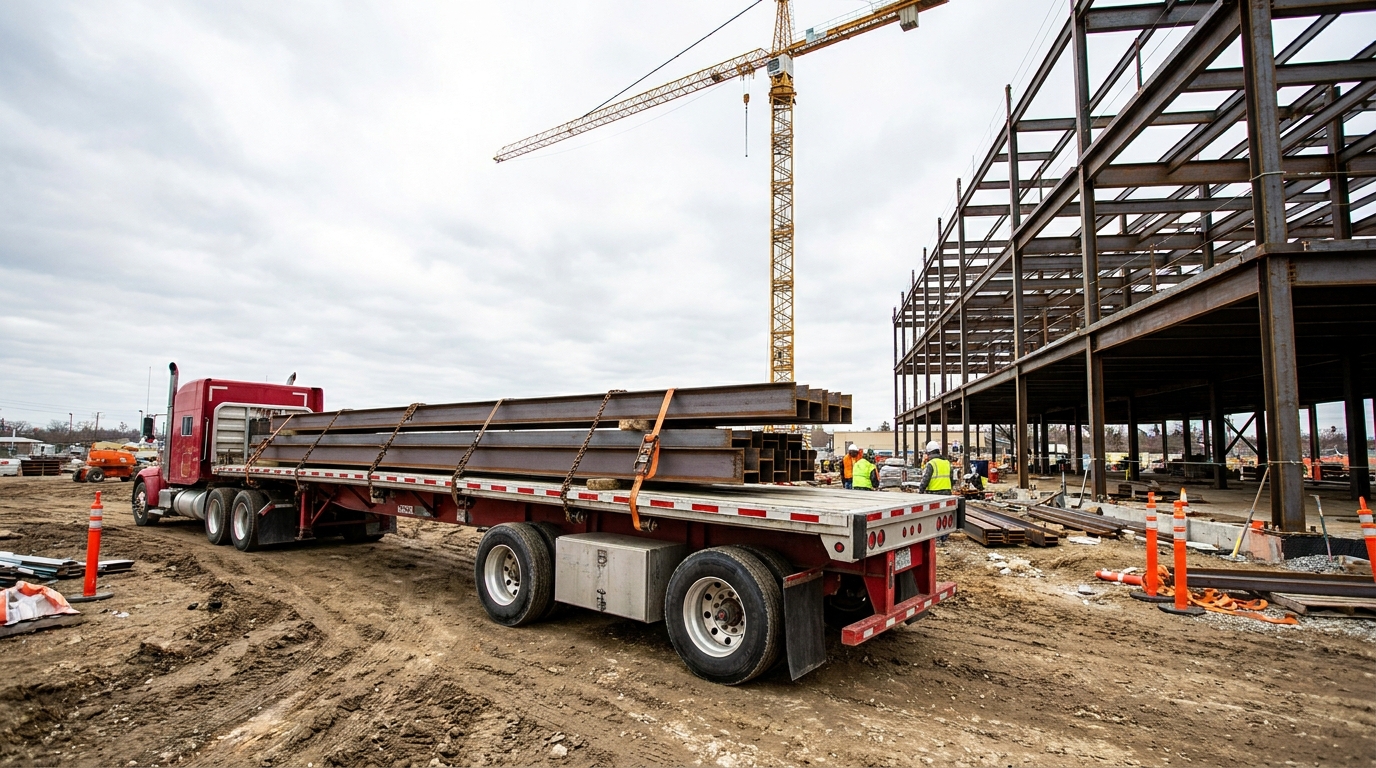
Construction freight is the movement of building materials, steel, lumber, pipe, precast concrete, and heavy equipment, from a mill, yard, or plant to an active jobsite. It differs from ordinary trucking in three ways: the materials are usually long, heavy, or awkward, so they ride on open flatbed and specialized trailers; the destination often has no loading dock, so unloading depends on a crane or forklift already on site; and deliveries have to land in step with the build schedule. This guide covers how to match the trailer to the material, plan for jobsite access, handle oversize permits, and time deliveries to the work.
Key takeaways
- Most construction materials move on flatbed or step-deck trailers because they load and unload from the side or top, not from a dock.
- Match the trailer to the material: flatbed for steel and lumber, step-deck for tall loads, lowboy for heavy equipment, dump for aggregate, mixer for ready-mix concrete.
- Loads over legal size or weight need oversize or overweight permits from every state on the route, which can add escorts and travel-time windows.
- Confirm who unloads the truck before it arrives; most jobsites have no dock, and a driver alone cannot lift bound steel or precast.
- Schedule deliveries against the build sequence so materials arrive close to installation rather than sitting exposed on site.
How does shipping construction materials to a jobsite work?
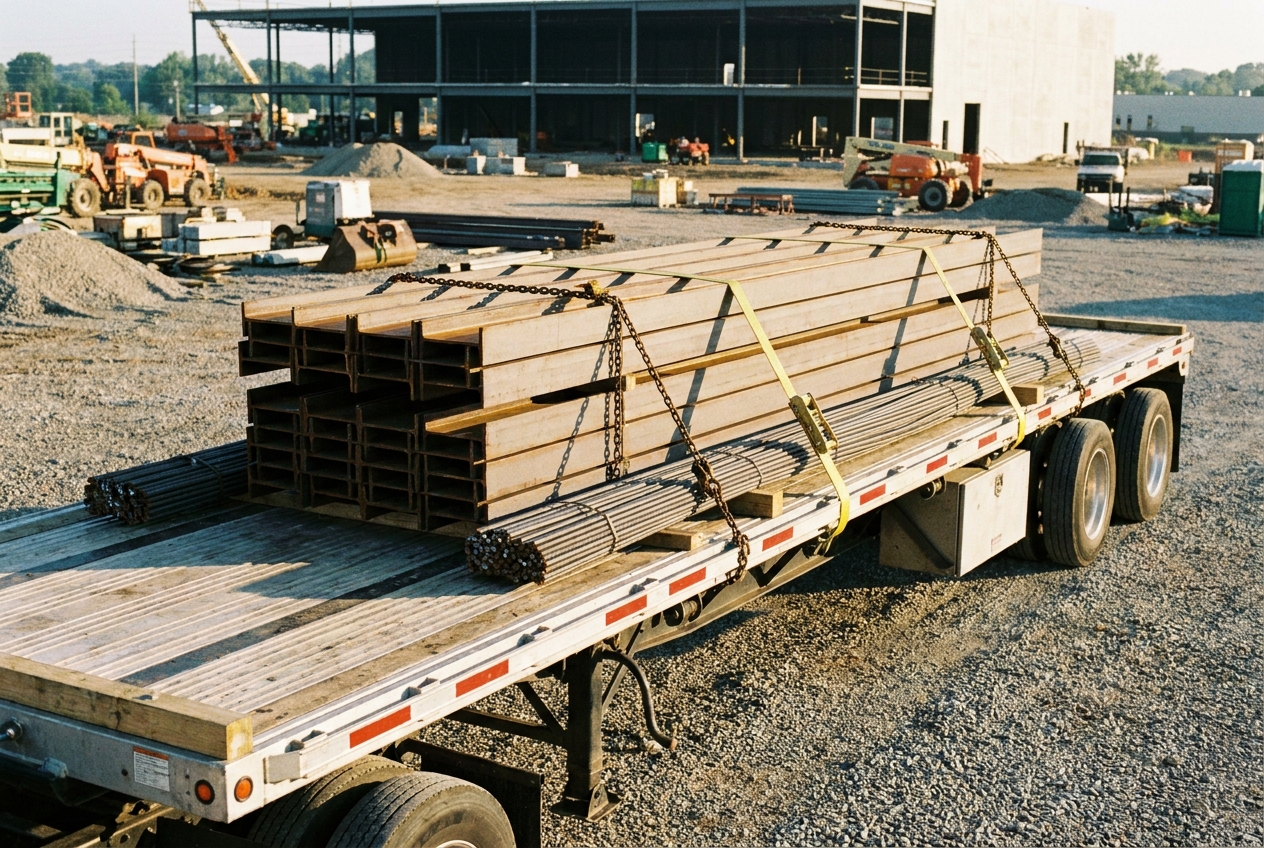
Construction freight works by matching an open or specialized trailer to a material that cannot go in a dry van, then delivering it to a site that usually cannot unload from a dock. Because steel, lumber, pipe, and precast are loaded from the side or top, the standard equipment is a flatbed or step-deck rather than an enclosed trailer. The carrier secures the load with chains, straps, and edge protectors, tarps it if the material needs weather protection, and routes around any bridge, weight, or clearance limit between the origin and the site.
The three planning questions that decide everything are: what trailer does this material need, how will it come off the truck at the site, and when does the crew actually need it. Answer those before you book, not after the truck is loaded.
What trailer or equipment do I need for each material?
The right trailer depends on the material's length, height, weight, and whether it needs weather protection. A flatbed handles most steel, lumber, and pipe within legal height; taller or heavier loads step up to a drop-deck, lowboy, or extendable trailer, and bulk or wet materials use their own dedicated equipment. The table below maps common materials to the trailer that typically hauls them.
| Material | Typical trailer or equipment | Why |
|---|---|---|
| Structural steel, rebar, bar joists | Flatbed or step-deck | Long, heavy, loaded and lifted from the side by crane or forklift |
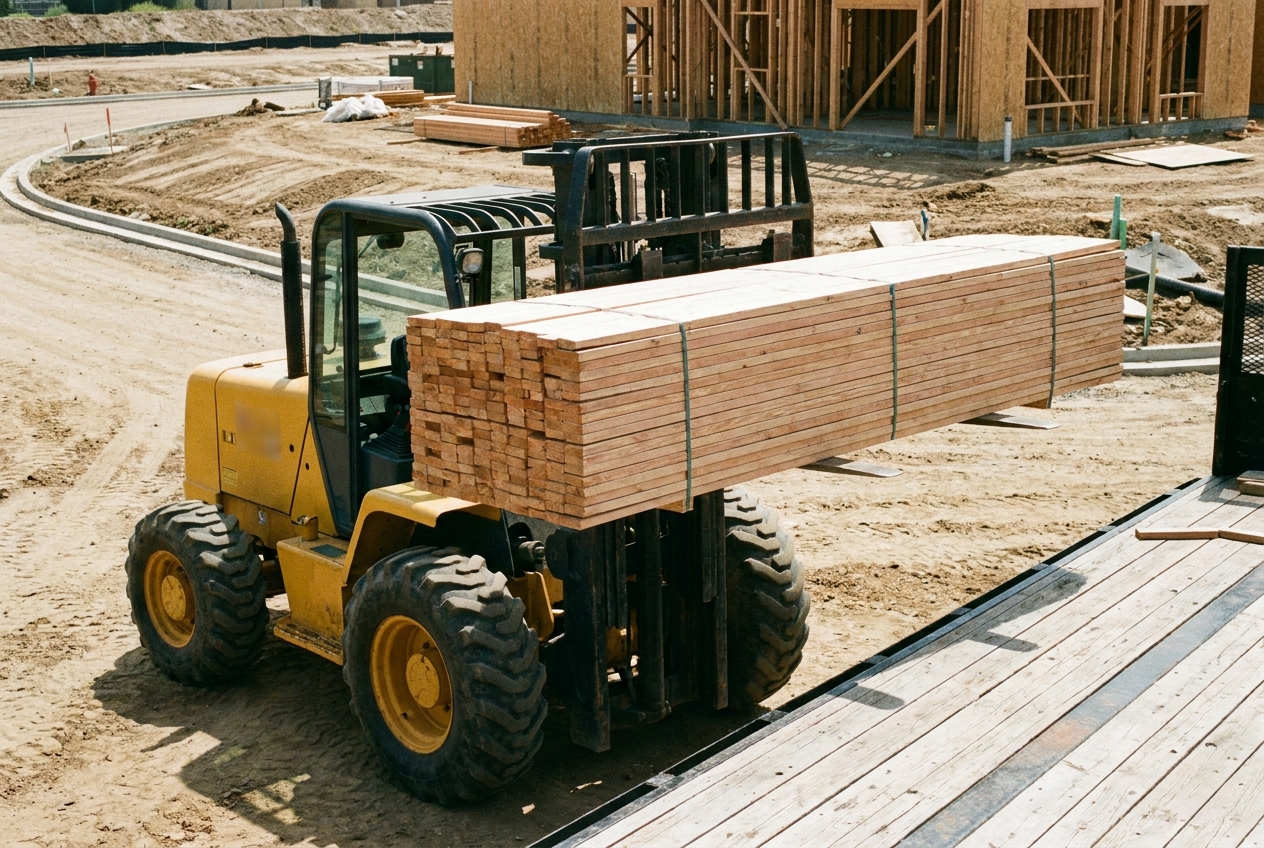
| Dimensional lumber, plywood, trusses | Flatbed, tarped | Needs side loading and cover from rain and road spray |
| Pipe (steel, concrete, plastic) | Flatbed with stakes or a pipe trailer | Rolling stock needs stakes or cradles to stay put |
| Precast concrete panels, beams, box culverts | Step-deck, lowboy, or extendable | Very heavy and often oversize; low deck keeps height legal |
| Heavy equipment (excavators, dozers) | Lowboy or removable-gooseneck (RGN) | Low deck and a ramp let tracked machines drive on and off |
| Aggregate, sand, gravel, fill | Dump trailer or end dump | Bulk material that discharges by tilting the bed |
| Ready-mix concrete | Concrete mixer truck | Must stay agitated and pour within a set time window |
If you are comparing carriers for open-deck work, our flatbed trucking directory and heavy-haul directory list providers by equipment and lane, and the broader logistics company directory covers specialty and regional haulers. For a deeper look at open-deck options, see our guides on trailer types explained and flatbed load securement.
What makes jobsite delivery different from a normal dock delivery?
A jobsite delivery is different because there is usually no dock, no forklift waiting, and no paved staging area, so unloading and access have to be arranged in advance. The truck may need to reach a spot deep in the site over gravel or graded dirt, turn a long trailer in a tight space, and wait for the site's own crane or rough-terrain forklift to lift the load off. Before a construction freight delivery, confirm the practical details: is the access road firm enough for a loaded tractor-trailer, is there room to turn and stage, and who supplies the unloading equipment and operator.
The most common failure is assuming the driver will unload. On open-deck freight the driver removes straps and tarps, but a crew or equipment on site does the lifting. If nobody is scheduled to unload when the truck arrives, it waits, and wait time past the free window becomes a detention charge. Cover who unloads, what equipment they bring, and the delivery window in the order, the same way you would confirm detention and demurrage terms on any freight lane.
When do construction loads need oversize or overweight permits?
A load needs an oversize or overweight permit whenever it exceeds a state's legal limits for width, height, length, or axle weight. As a general rule of thumb, loads wider than about 8.5 feet, taller than roughly 13.5 feet, longer than the legal trailer length, or over standard axle-weight limits become permit loads, though exact thresholds vary by state. Long steel, wide precast panels, and heavy equipment routinely cross those lines.
Permits are issued per state, so a multi-state haul needs one from each state it passes through, and each can impose its own routing, curfew, and escort rules. Wide or long loads may require pilot or escort vehicles; the heaviest may face travel only in daylight or outside rush hour, and certain routes are off-limits for bridge or clearance reasons. A carrier experienced in oversize work handles permitting and routing, but build the extra lead time into your schedule. For how permitted heavy loads are moved and priced, see our guide to heavy-haul trucking, and confirm any carrier's operating authority and safety record through the FMCSA.
How do I coordinate deliveries with the build schedule?
Coordinate deliveries by sequencing them to the build, so each material lands close to when a crew installs it instead of all arriving at once. Ordering everything up front sounds efficient but backfires on a jobsite: materials sit exposed, block access, get damaged or stolen, and tie up the limited space near the work. Instead, work backward from the construction schedule and set delivery windows that feed the sequence, footings and rebar first, then steel, then decking and finish materials.
Practical coordination steps that keep a site moving:
- Book capacity early, especially for specialized or permitted loads, which can need a week or more of lead time.
- Give each delivery a firm window and a site contact who can receive it and direct the truck.
- Stage materials near their point of use, not wherever there is open ground, to cut double-handling.
- Sequence heavy and crane-dependent loads for when the crane and operator are already on site.
- Build in buffer for weather, permit delays, and access that softens after rain.
What does a real construction freight delivery look like?
Consider a two-story commercial build that needs 40-foot structural steel delivered to a graded but unpaved site. The steel is bundled and within legal width and height, so it rides on a flatbed with no permit, and the general contractor books the delivery for a Tuesday because the tower crane and operator are on site that day. The truck arrives, the driver releases the chains and straps, and the crane lifts each bundle to the staging area beside the footings, all under the carrier's free unloading window, so no detention applies.
Had the same steel shipped as 12-foot-wide fabricated assemblies, it would have become a permitted oversize load with a possible escort, several days more lead time, and a daylight-only travel window. That is exactly why the trailer and permit question gets answered before anything is booked.
How do I choose a construction freight carrier?
Choose a carrier that runs the right equipment for your material, knows oversize permitting if you need it, and can hit jobsite delivery windows. Ask what open-deck and specialized trailers they operate, whether they handle permits and escorts in-house, how they secure and tarp your specific material, and how they bill wait time at a site. Confirm their operating authority and safety record before you book, and get the free-time and detention terms in writing.
A few questions separate a specialist from a general carrier: Do they haul this material regularly and on your lanes? Can they route a permitted load and arrange escorts? What is their plan if the site access is soft or the crane runs late? You can compare open-deck and heavy-haul providers in the construction freight directory, and general freight economics like accessorial and wait-time charges are covered in the tools hub and related guides. For broader industry data on freight movement and infrastructure, the Bureau of Transportation Statistics is a neutral source.
Frequently asked questions
What kind of truck ships construction materials to a jobsite?
Most construction materials move on flatbed or step-deck trailers because they are loaded and unloaded from the side or top with a crane or forklift rather than from a dock. Bulk aggregate uses dump trailers, ready-mix uses mixer trucks, and oversized precast or steel may need a lowboy or extendable trailer with permits.
Do I need a permit to ship oversize construction materials?
Yes. A load that exceeds legal size or weight limits, commonly wider than about 8.5 feet, taller than roughly 13.5 feet, or over standard axle-weight limits, needs an oversize or overweight permit from each state it travels through. Permits can add routing restrictions, travel-time windows, and escort vehicles.
Who unloads construction materials at a jobsite with no dock?
Whoever has the right equipment on site. Many jobsites have no loading dock, so unloading depends on a crane, a rough-terrain forklift, or a truck-mounted crane. Confirm before delivery who supplies the unloading equipment and an operator, because a driver alone usually cannot unbind and lift steel or precast.
How far ahead should I schedule construction material deliveries?
Tie deliveries to the build schedule rather than ordering everything at once. Book flatbed capacity as early as you can, often a week or more for specialized or permitted loads, and stage arrivals so materials land close to when a crew installs them instead of sitting exposed on site.
What is the difference between a flatbed and a step-deck trailer?
A flatbed is a single-level open deck about 5 feet off the ground and works for steel, lumber, and pipe within legal height. A step-deck, or drop-deck, sits lower on the rear section so it can carry taller loads, like tall equipment or bundled materials, while staying under the 13.5-foot legal height limit.
How is construction freight priced?
Construction freight is usually priced per mile or as a flat lane rate, then adjusted for trailer type, weight, tarping, permits, escorts, and any wait time at the jobsite. Oversize and specialized loads cost more than a standard flatbed, and jobsite detention can add fees when a truck waits to be unloaded.
Ready to compare providers?
Search the directory by service and location, save options to your shortlist, and send a clear RFQ.
Related guides
Carrier Vetting: How to Avoid Fraud and Bad Carriers
A step-by-step guide to carrier vetting: verify FMCSA authority and safety, confirm insurance with the insurer, spot red flags, and stop double-brokering.
Dedicated vs Common Carrier: Which Fits
How dedicated contract carriage, common carriers, and private fleets compare on cost, capacity, and commitment, and when your volume justifies dedicated.
Trade Show Shipping and Material Handling
How trade show shipping works, from advance warehouse vs show-site delivery to drayage fees, targeted move-in times, paperwork, and return freight.