
Trailer Types Explained: Which Freight Needs Which
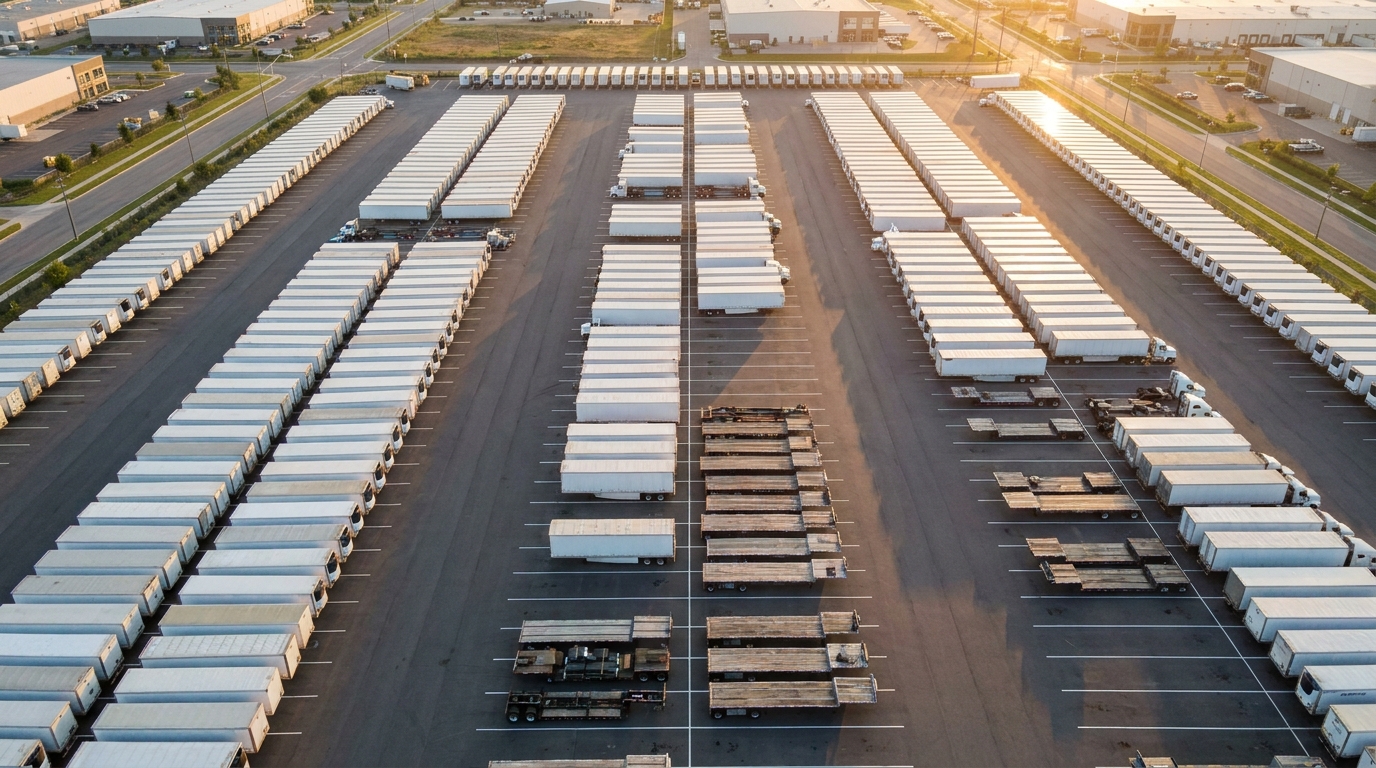
Trailer types matter because the wrong equipment means a load that cannot be picked up, a rate that comes back double, or a driver who arrives and turns around. The main freight trailer types are the dry van, the refrigerated (reefer) trailer, the flatbed, the step deck (also called a drop deck), the lowboy or RGN, and the Conestoga. Each is built around a different problem: keeping freight enclosed, keeping it cold, or carrying loads that are too tall, heavy, or awkward for a closed box. Match your cargo to the trailer before you request a quote, and both the price and the pickup go smoother.
Key takeaways
- The 53-foot dry van handles most general palletized freight and is the default full-truckload trailer.
- Reefers carry anything temperature-sensitive; flatbeds carry anything loaded from the side or top or too big for a van.
- Step decks, lowboys, and RGNs exist to move progressively taller and heavier machinery that a flatbed cannot legally clear.
- Most tractor-trailers are capped at 80,000 pounds gross weight and about 8.5 feet wide before permits are required.
- Picking the right trailer up front avoids re-quotes, refused pickups, and oversize surprises.
What are the main types of freight trailers?
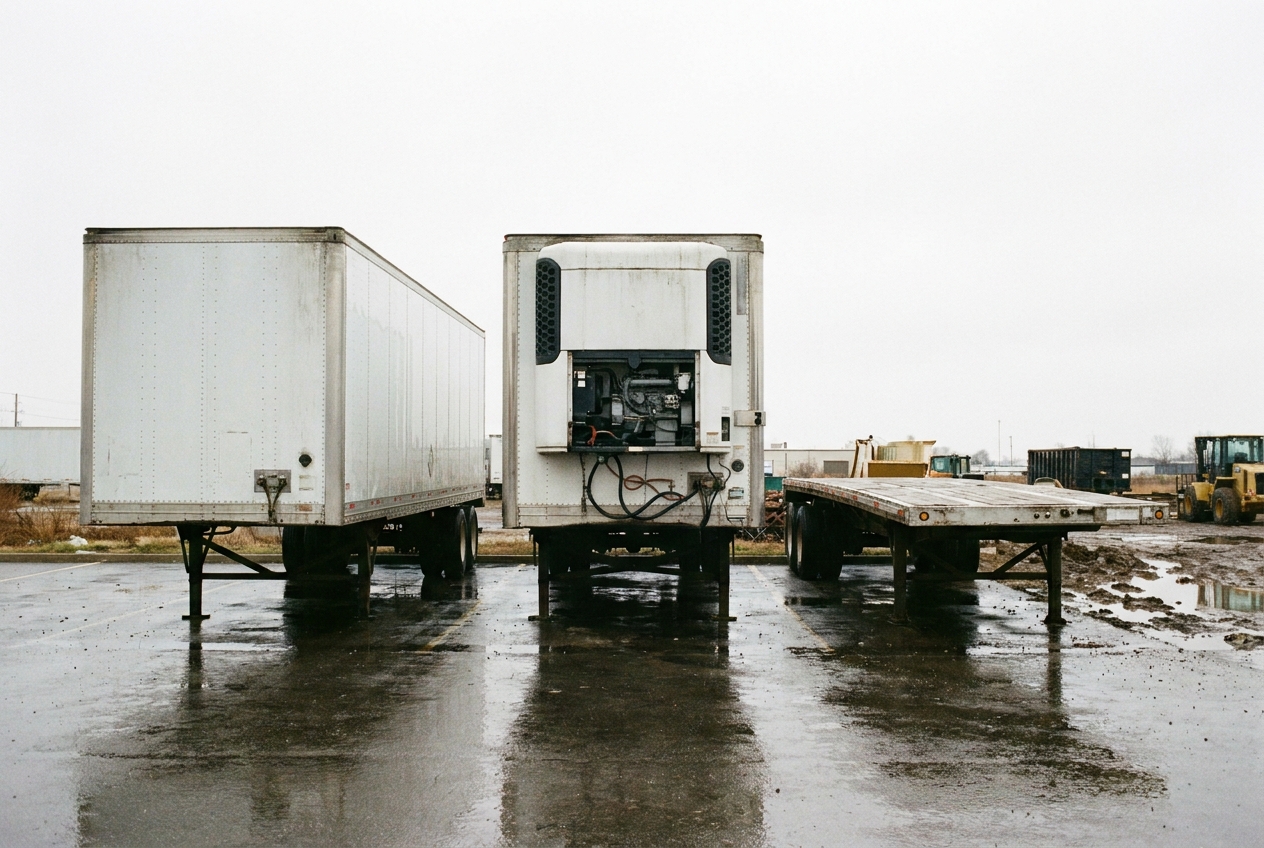
There are six trailer types that cover the overwhelming majority of over-the-road freight. Everything else is a variation on these. The quickest way to choose is to ask three questions in order: does the freight need to be enclosed, does it need temperature control, and is it too tall, heavy, or oddly shaped for a standard box. Your answers point directly at one of the trailers below.
| Trailer type | Best for | Typical cargo | Key limits |
|---|---|---|---|
| Dry van | Enclosed general freight | Boxed goods, palletized consumer products, non-perishable food | No temp control; freight must fit a closed box (about 110 in interior height) |
| Reefer | Temperature-controlled freight | Produce, frozen food, dairy, pharmaceuticals | Slightly less payload than a van; unit adds cost |
| Flatbed | Side- or top-loaded freight | Lumber, steel, pipe, building materials, machinery | Freight over about 8.5 ft tall on the deck goes oversize |
| Step deck / drop deck | Freight too tall for a flatbed | Tractors, taller machinery, large crates | Lower deck allows roughly 10 ft of cargo height without a permit |
| Lowboy / RGN | Very tall or very heavy machines | Excavators, bulldozers, transformers | Low deck for height and weight; slower to load, higher rate |
| Conestoga | Open-deck freight needing weather protection | Coils, sensitive machinery, finished metal | Rolling tarp limits maximum cargo height |
What is a dry van and what does it haul?
A dry van is a fully enclosed box trailer, most commonly 53 feet long, that hauls general freight not needing temperature control. It is the default trailer for full-truckload shipping and the one behind most of the palletized goods moving between warehouses and stores. If your freight fits on standard pallets, does not need to stay cold, and can be loaded through the rear doors, a dry van is almost always the right and cheapest choice.
A standard 53-foot van has roughly 110 inches of interior height and holds about 26 standard pallets in a single layer. Payload usually lands in the 42,000 to 45,000 pound range once the tractor and trailer weight are subtracted from the legal limit. If your cargo cubes out before it weighs out, a van's interior dimensions matter more than the weight cap. For a fast read on whether your shipment is heavy or bulky enough to price by volume, the dimensional weight calculator gives you the number carriers use. For smaller shipments that do not fill a van, compare the tradeoffs in our guide to LTL versus FTL shipping.
When do you need a refrigerated (reefer) trailer?
You need a reefer whenever the freight must stay within a set temperature range, whether chilled or frozen. A reefer looks like a dry van but adds insulation and a diesel-powered cooling unit at the nose, so it can hold a target temperature across a long haul. Produce, dairy, meat, frozen goods, and many pharmaceuticals all move on reefers because a few hours outside their range can spoil the load or void a compliance requirement.
Because the cooling unit and insulation add weight and take up space, a reefer carries slightly less payload than a comparable dry van and costs more to run. Book reefer capacity earlier during produce season, when demand spikes and rates climb. If cold chain is central to your operation, browse specialists in the reefer trucking directory rather than assuming any dry-van carrier can handle temperature-controlled freight.
What is a flatbed trailer used for?
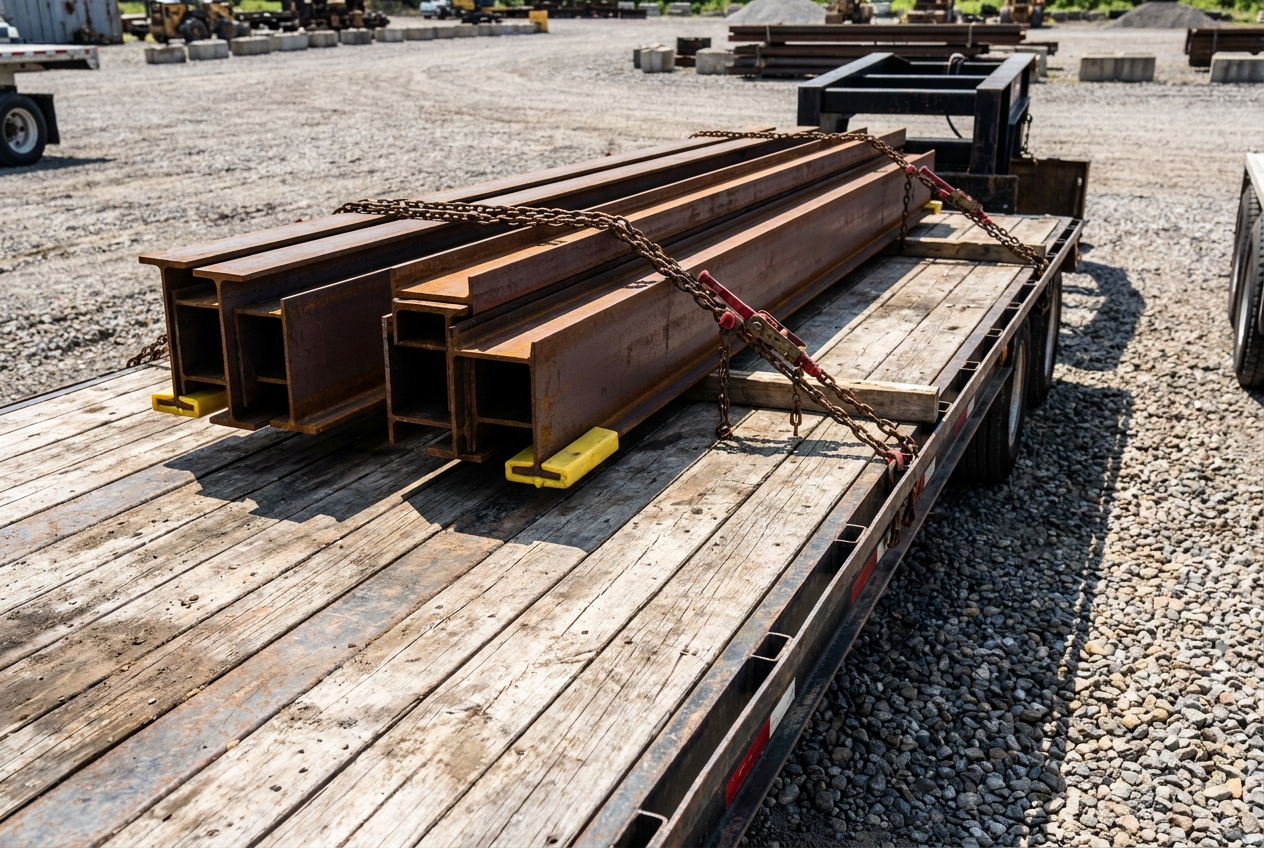
A flatbed is an open deck with no walls or roof, used for freight that is loaded from the side or top or is simply too large for an enclosed van. Lumber, steel, pipe, precast concrete, building materials, and machinery are classic flatbed loads because a crane or forklift can reach them from any angle. The tradeoff is exposure: the freight rides in the open, so it must be secured and, often, tarped.
A standard flatbed is 48 or 53 feet long with a deck around 60 inches off the ground. Freight that pushes past roughly 8.5 feet tall on that deck starts bumping into height limits and heads toward oversize territory. Securement is not optional on open decks; straps, chains, and binders have to meet federal cargo securement rules. Our flatbed load securement guide walks through the tie-down math, and you can shop verified carriers in the flatbed trucking category.
Step deck vs. lowboy: what moves the tallest and heaviest loads?
When freight is too tall for a flatbed, you step down to a lower deck. A step deck, also called a drop deck, has an upper deck over the wheels and a longer lower deck closer to the ground, which lets it carry cargo up to roughly 10 feet tall without a permit. Tractors, forklifts, and taller crates that would exceed height limits on a flatbed ride on step decks.
A lowboy, or removable gooseneck (RGN), drops far lower still, with a deck that can sit close to the ground between the axles. That geometry is built for the tallest and heaviest machines: excavators, bulldozers, cranes, and large transformers. An RGN's gooseneck detaches so equipment can be driven straight onto the deck. These loads are slower to secure, usually need permits, and often overlap with heavy haul trucking, where weight and dimensions push past standard limits and require route planning and escorts.
What is a Conestoga trailer?
A Conestoga is a flatbed or step deck fitted with a rolling tarp system stretched over a frame, giving open-deck access with weather protection. The tarp retracts like an accordion so a crane or forklift can load from the side or top, then closes to shield the freight from rain and road grime. It bridges the gap between a flatbed and a van for cargo that is awkward to load but too sensitive to ride fully exposed, such as steel coils, finished metal, or delicate machinery. The tradeoff is that the frame and tarp cap the maximum cargo height and add a modest cost over a bare flatbed.
What are the standard trailer dimensions and weight limits?
Most tractor-trailers are capped at 80,000 pounds gross combination weight, about 8.5 feet (102 inches) wide, and 13.5 to 14 feet tall before they need permits. Length limits vary but 53 feet is the standard trailer. Cross any of those thresholds and the load becomes oversize or overweight, which triggers state permits, restricted travel windows, and sometimes pilot cars or police escorts. The Federal Motor Carrier Safety Administration publishes the federal weight and size framework, though individual states set their own permit rules on top of it.
In practice, the limit you hit first is usually weight or height. Consider a shipment of steel plate: it can weigh out well before it fills the deck, so the real constraint is the 80,000 pound cap, not the trailer's length. A tall piece of equipment does the opposite, staying light but forcing you off a flatbed and onto a step deck or RGN purely for clearance. Knowing which limit binds tells you both the trailer and whether you are heading toward a permit. When you are ready to line up equipment, you can filter carriers by mode and lane in the logistics company directory, and check current federal size and weight guidance from the FMCSA or freight movement data from the Bureau of Transportation Statistics.
Frequently asked questions
What is the most common freight trailer type?
The 53-foot dry van is the most common trailer on the road. It is an enclosed box that hauls palletized and boxed general freight that does not need temperature control or open-deck access, which covers the majority of full-truckload shipments.
What is the difference between a step deck and a lowboy?
A step deck has an upper and a lower deck and carries freight up to roughly 10 feet tall without a permit. A lowboy, or RGN, sits far lower to the ground and is built for very tall or very heavy machinery like excavators and bulldozers that a step deck cannot clear.
How much weight can a trailer legally carry?
Federal law caps most tractor-trailers at 80,000 pounds gross combination weight without a permit, which usually leaves 42,000 to 48,000 pounds of payload depending on the trailer and tractor. Heavier loads need state overweight permits and often specialized equipment.
Do I need a flatbed or a reefer for my freight?
Use a reefer for anything that must stay chilled or frozen, such as food, produce, or pharmaceuticals. Use a flatbed for freight that is loaded from the side or top or is too tall or wide for an enclosed van, such as lumber, steel, or machinery.
What is a Conestoga trailer?
A Conestoga is a flatbed or step deck fitted with a rolling tarp system on a frame. It gives flatbed-style side and top loading access while protecting the freight from weather, so it suits cargo that is awkward to load but sensitive to rain or road grime.
When does freight become an oversize load?
Freight generally becomes oversize when it exceeds about 8.5 feet wide, 13.5 to 14 feet tall, or standard trailer length, or overweight when the combination tops 80,000 pounds. Exact thresholds vary by state, and crossing them requires permits and sometimes escorts.
Ready to compare providers?
Search the directory by service and location, save options to your shortlist, and send a clear RFQ.
Related guides
Carrier Vetting: How to Avoid Fraud and Bad Carriers
A step-by-step guide to carrier vetting: verify FMCSA authority and safety, confirm insurance with the insurer, spot red flags, and stop double-brokering.
Dedicated vs Common Carrier: Which Fits
How dedicated contract carriage, common carriers, and private fleets compare on cost, capacity, and commitment, and when your volume justifies dedicated.
Shipping Construction Materials to a Jobsite
How construction freight works: matching flatbed and specialized trailers to steel, lumber, pipe, and precast, plus jobsite access, oversize permits, and delivery timing.