
Trade Show Shipping and Material Handling
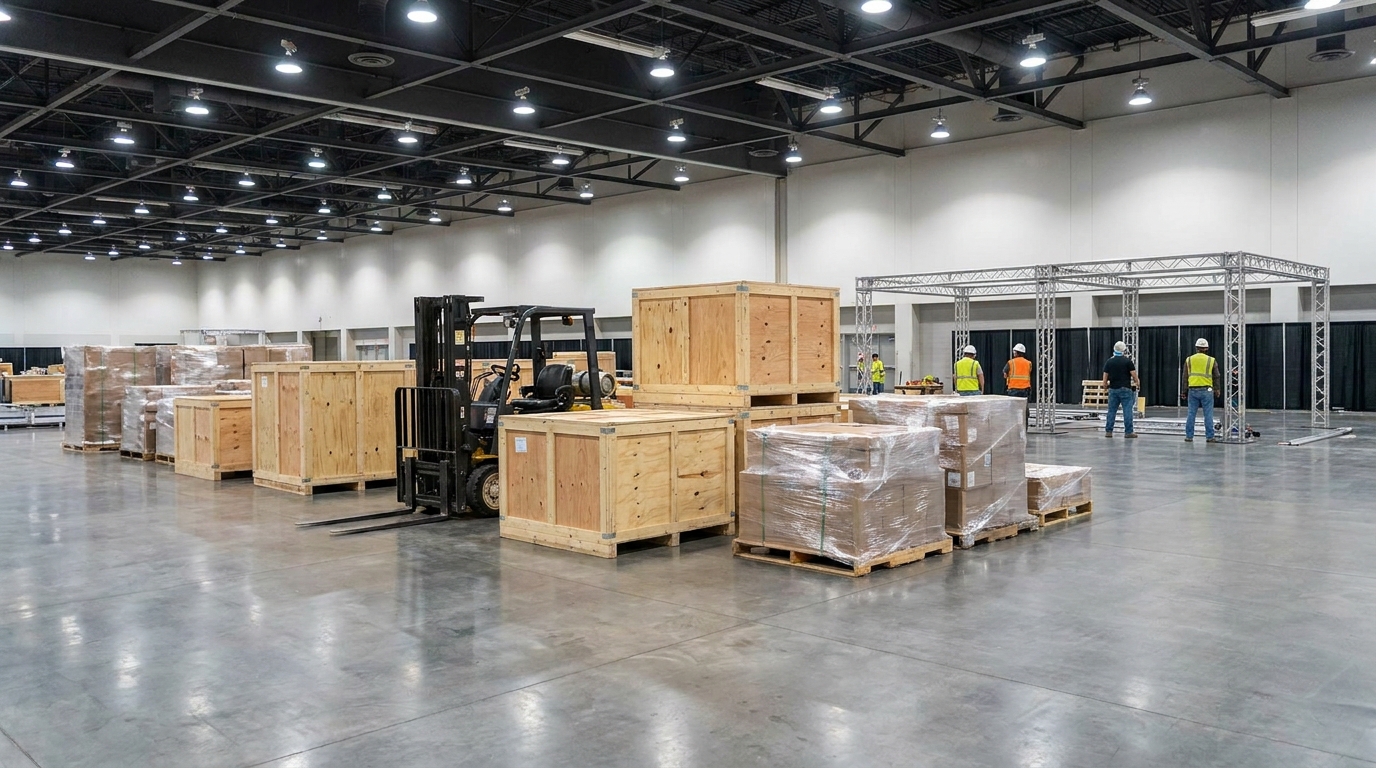
Trade show shipping moves your booth, product, and marketing materials from your facility to a convention center and back, under rules that do not apply to ordinary freight. The biggest surprise for first-time exhibitors is that getting your crate to the building is only half the cost. Once it arrives, the venue charges a separate fee, called material handling or drayage, to move it from the dock to your booth. Understanding how trade show shipping and drayage work together is the difference between a clean move-in and a booth of missing freight and unexpected invoices.
Key takeaways
- Trade show freight has two distinct costs: your carrier's transportation charge to reach the venue, and the show's material handling (drayage) charge to move it on and off the floor.
- Shipping to the advance warehouse gives you a firm deadline and guaranteed booth delivery; shipping direct to show site saves a handling step but carries more timing risk.
- Material handling is billed per hundredweight (per 100 lb) with a minimum, so small and loose shipments cost the most per pound.
- Large shows assign targeted move-in times, and your carrier must deliver inside that window or you risk off-target surcharges.
- You need a separate outbound bill of lading filled out on site; nothing ships home automatically.
How does trade show shipping actually work?
Trade show shipping runs on a chain of hand-offs your everyday LTL shipment never touches. You book a carrier to deliver freight to one of two destinations, the show's advance warehouse or the convention center itself. From there the show's official general contractor takes over: crews unload the truck, move your crates to your booth, store your empty containers during the event, and bring them back for teardown. That venue-controlled handling is drayage, and it is why exhibiting is priced differently from any other freight lane.
Every show publishes an exhibitor kit, sometimes called a service manual, listing shipping addresses, deadlines, material handling rates, and order forms. Read it before you book anything. It tells you whether the advance warehouse is open, the drayage rate per hundredweight, when targeted move-in applies, and which forms must travel with your freight. Comparing specialized providers first through a directory like our trade show and event logistics companies listing helps you find carriers who understand convention deliveries.
Should you ship to the advance warehouse or direct to show site?
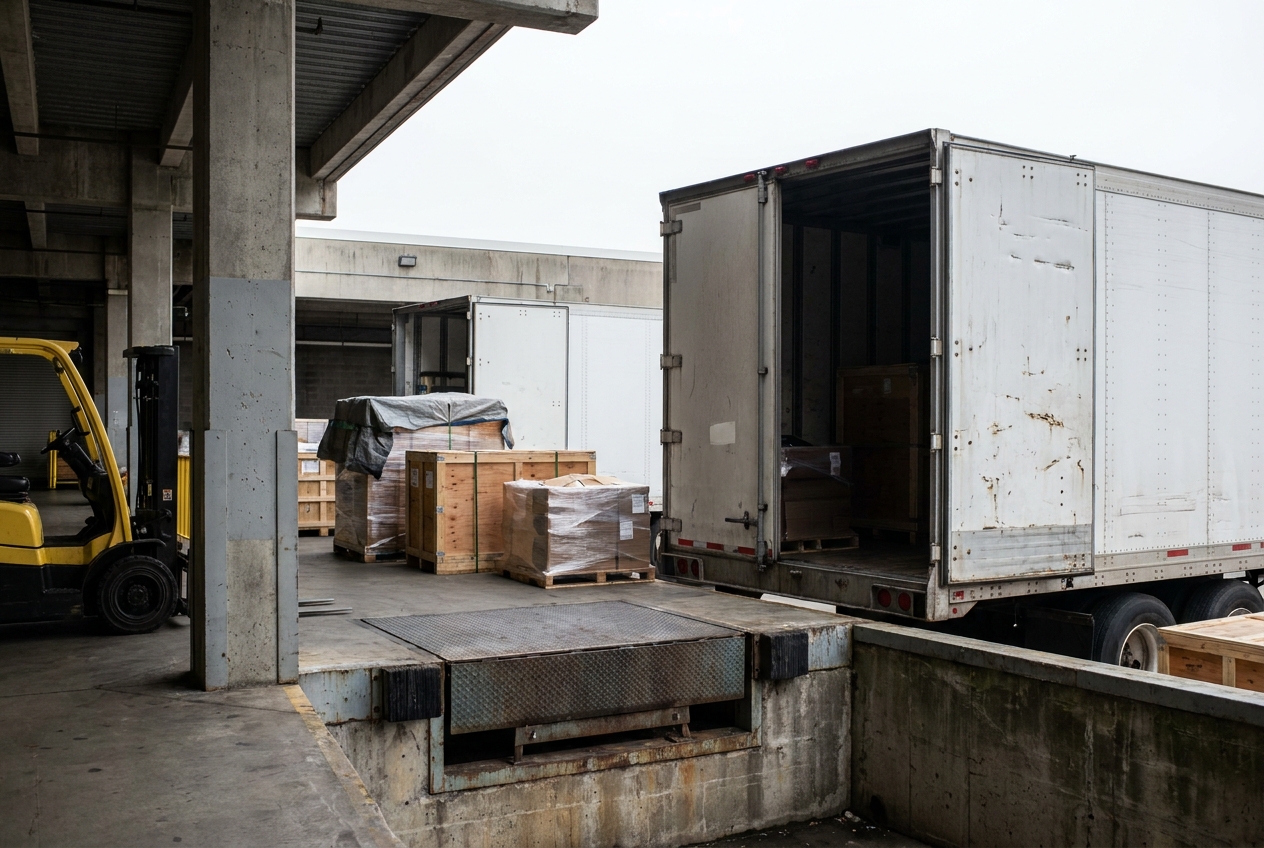
Ship to the advance warehouse when you want certainty; ship direct to show site when your freight is late, oversized, or you want to skip a handling step. The advance warehouse accepts freight for roughly two to three weeks before the show, stores it, and delivers it to your booth so it is waiting on move-in day. Show site accepts freight only during the official move-in window, so a truck that misses its slot can sit in a marshaling yard for hours.
| Factor | Advance warehouse | Direct to show site |
|---|---|---|
| Arrival deadline | Firm, about 2 to 3 weeks out | Only during move-in window |
| Storage before show | Included, held until move-in | None |
| Freight waiting in booth | Yes, on move-in day | Depends on truck arrival timing |
| Material handling rate | Higher per hundredweight | Lower per hundredweight |
| Timing risk | Low | Higher, tied to targeted move-in |
| Best for | Most exhibitors, early or on-time freight | Late, last-minute, or very large freight |
The advance warehouse usually carries a higher drayage rate, but the certainty is worth it for most exhibitors. You know the freight arrived, you avoid the move-in day scramble, and a driver who is a day late still gets you covered. Direct-to-site makes sense mainly when your build is too big for warehouse storage or you genuinely cannot meet the advance deadline.
What is drayage and why is it a separate cost?
Drayage at a trade show, more precisely called material handling, is the venue service that moves your freight from the dock or advance warehouse to your booth, stores your empties during the show, and returns everything to the dock for outbound pickup. It is distinct from your carrier's charge because it is a different service by a different party inside a controlled environment: your freight company is paid to reach the building, and the show's general contractor is paid for everything that happens once the freight is inside.
This is the same underlying concept as port drayage, where a container is moved a short distance under specialized handling, and our guide to what drayage is breaks down the broader term. At a convention center it is a distinct, non-negotiable cost for one reason: the official contractor holds an exclusive on floor handling. You cannot bring your own forklift or shop the service to a cheaper vendor. The charge covers labor, equipment, dock scheduling, and empty storage you never see itemized on a normal freight bill.
How is material handling charged?
Material handling is billed per hundredweight (CWT), meaning per 100 pounds, almost always with a minimum charge covering the first two to three hundredweight. Rates change based on where freight arrives (advance warehouse versus show site), whether it is crated or loose, and whether it moves during standard hours or on overtime. Weights round up to the next full hundredweight, so a 210 lb shipment bills at 300 lb, and loose or uncrated pieces often carry a surcharge because crews handle them individually.
Consider a worked example. You ship one 380 lb crate to the advance warehouse at a set rate per hundredweight with a 200 lb minimum. Your 380 lb rounds up to 400 lb, so you pay four hundredweight, not the two-unit minimum. Add an after-hours target that pushes the move to overtime, and the same crate costs noticeably more than a booth neighbor who arrived crated during standard hours. Because these charges scale with weight and handling complexity, tools like our dimensional weight calculator are worth using to understand what you are shipping before the show prices it.
What are targeted move-in times and why do they matter?
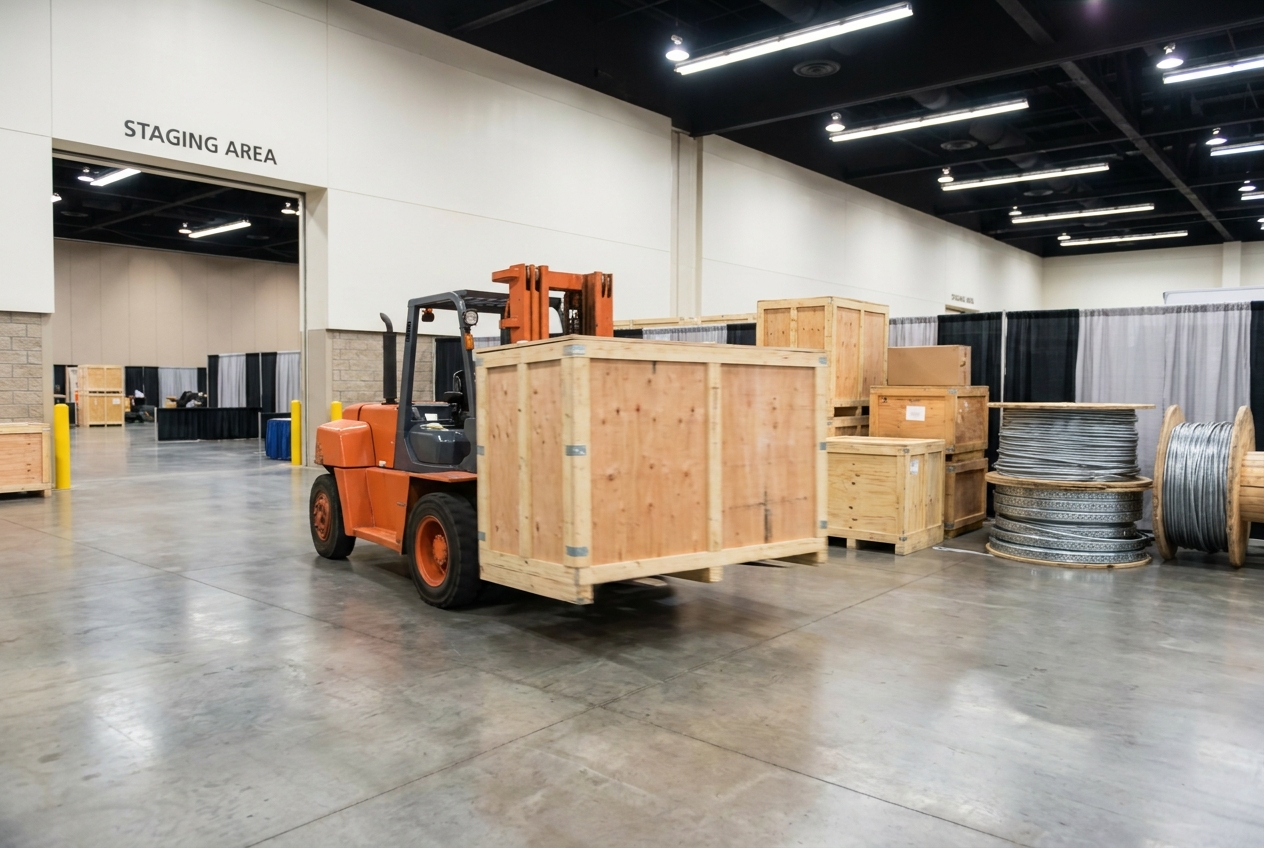
A targeted move-in time is a scheduled window the show assigns for your freight and setup labor to enter the hall, used at large shows to stagger dock congestion. Deliver outside that window and you can face an off-target surcharge or get pushed to the back of the setup queue. The delivery appointment, freight paperwork, and assigned target all have to line up, which is why direct-to-site shipping carries more timing risk than the advance warehouse.
When a show uses targeted move-in, give your carrier the exact date and time window and confirm they can meet a dock appointment, not just a delivery date. A carrier who treats it like a standard LTL delivery may show up early or late and trigger fees or missed placement. This is one reason to work with freight companies that specialize in events; you can compare them through our directory of logistics providers and filter for convention work.
What paperwork and deadlines do you need?
Trade show shipping runs on three documents: a bill of lading for the inbound move, the show's material handling agreement or shipping form from the exhibitor kit, and labels showing the show name, booth number, and exhibiting company. The bill of lading is the contract and receipt for your freight, and the material handling form authorizes the venue to move and store it. Missing or mismatched paperwork is the most common reason freight sits undelivered on the floor.
Label every piece and match the count on your bill of lading to the physical pieces, because the venue reconciles against that number. Note the two hard deadlines from the exhibitor kit: the advance warehouse cutoff and the show-site move-in window. Build backward from those dates and leave buffer for a delayed pickup or weather. If your booth includes fragile, high-value, or oversized displays, the careful handling principles in our white glove delivery guide apply to how you crate and label them.
How does return shipping work after the show?
Nothing ships home automatically. At teardown the venue returns your empty crates to your booth, you repack, and you complete a new outbound bill of lading and hand it to the show's service desk. If you do not turn in an outbound bill of lading and arrange a carrier pickup, the show may force your freight onto its default carrier at a rate you did not choose. Fill out the outbound paperwork early, before the closing rush.
Schedule your return carrier for the published outbound pickup window and confirm they know it is a convention center pickup with dock and marshaling procedures. Keep a copy of every document. When freight goes missing after a show, the inbound and outbound bills of lading and the material handling agreement are what let you trace it and file a claim, along with any accessorial charges the show may add.
How do you keep trade show shipping costs down?
The biggest savings come from crating tightly, consolidating into fewer heavy pieces rather than many loose ones, and hitting the advance warehouse deadline to avoid overtime and off-target fees. Because material handling rounds up by hundredweight and penalizes loose freight, a single well-built crate almost always beats a scatter of boxes, and reusing durable crates show to show means you are not paying to handle disposable packaging.
Read the exhibitor kit the day it publishes, book your carrier early, and verify it can meet a dock appointment. To vet a carrier, check its operating authority and safety record through the FMCSA, and general freight movement data is published by the Bureau of Transportation Statistics. Planning against the exhibitor kit turns trade show shipping from a source of surprise invoices into a predictable line item.
Frequently asked questions
What is drayage at a trade show?
Trade show drayage, usually called material handling, is the venue service that moves your freight from the loading dock or advance warehouse to your booth on the show floor, stores your empty crates during the event, and returns your freight to the dock for outbound pickup. It is billed separately from your carrier's transportation charge and is controlled by the show's official general contractor, not your freight company.
Should I ship to the advance warehouse or direct to the show site?
Ship to the advance warehouse if you want a firm arrival deadline, guaranteed storage, and your freight waiting in your booth on move-in day. Ship direct to show site only if your freight is late, oversized, or you want to avoid the extra warehouse handling. Advance warehouse costs more per hundredweight but reduces the risk of missing a targeted move-in window.
How is trade show material handling charged?
Material handling is charged per hundredweight (CWT), meaning per 100 pounds of freight, with a minimum charge that often covers the first two to three hundredweight. Rates vary by whether freight arrives at the advance warehouse or show site, whether it is crated or loose, and whether it moves during standard hours or overtime. Rounding up to the next hundredweight and minimum charges make small shipments expensive per pound.
What is a targeted move-in time?
A targeted move-in time is a scheduled window the show assigns for your freight and labor to enter the hall, used at large shows to stagger dock traffic. Missing your target can push your setup to the end of the schedule or trigger off-target surcharges. Your carrier must deliver within the window, so the delivery appointment and the freight paperwork have to match the assigned target.
What paperwork do I need for trade show shipping?
You need a bill of lading for both the inbound and outbound moves, a completed material handling agreement or shipping form from the show's exhibitor kit, and shipping labels that show the show name, booth number, and exhibiting company. For the return, you fill out a new outbound bill of lading on site and hand it to show services rather than assuming your inbound carrier automatically returns.
Why is trade show drayage so expensive?
Drayage covers labor, forklifts, dock coordination, and empty-crate storage inside a union or contractor-controlled convention environment, and it is a monopoly service you cannot shop around once you exhibit at that show. Minimum charges, hundredweight rounding, overtime windows, and special handling for loose or uncrated freight all add up, which is why a single pallet can cost several hundred dollars to move a few hundred feet.
Ready to compare providers?
Search the directory by service and location, save options to your shortlist, and send a clear RFQ.
Related guides
Carrier Vetting: How to Avoid Fraud and Bad Carriers
A step-by-step guide to carrier vetting: verify FMCSA authority and safety, confirm insurance with the insurer, spot red flags, and stop double-brokering.
Dedicated vs Common Carrier: Which Fits
How dedicated contract carriage, common carriers, and private fleets compare on cost, capacity, and commitment, and when your volume justifies dedicated.
Shipping Construction Materials to a Jobsite
How construction freight works: matching flatbed and specialized trailers to steel, lumber, pipe, and precast, plus jobsite access, oversize permits, and delivery timing.