
White Glove Delivery: What It Includes
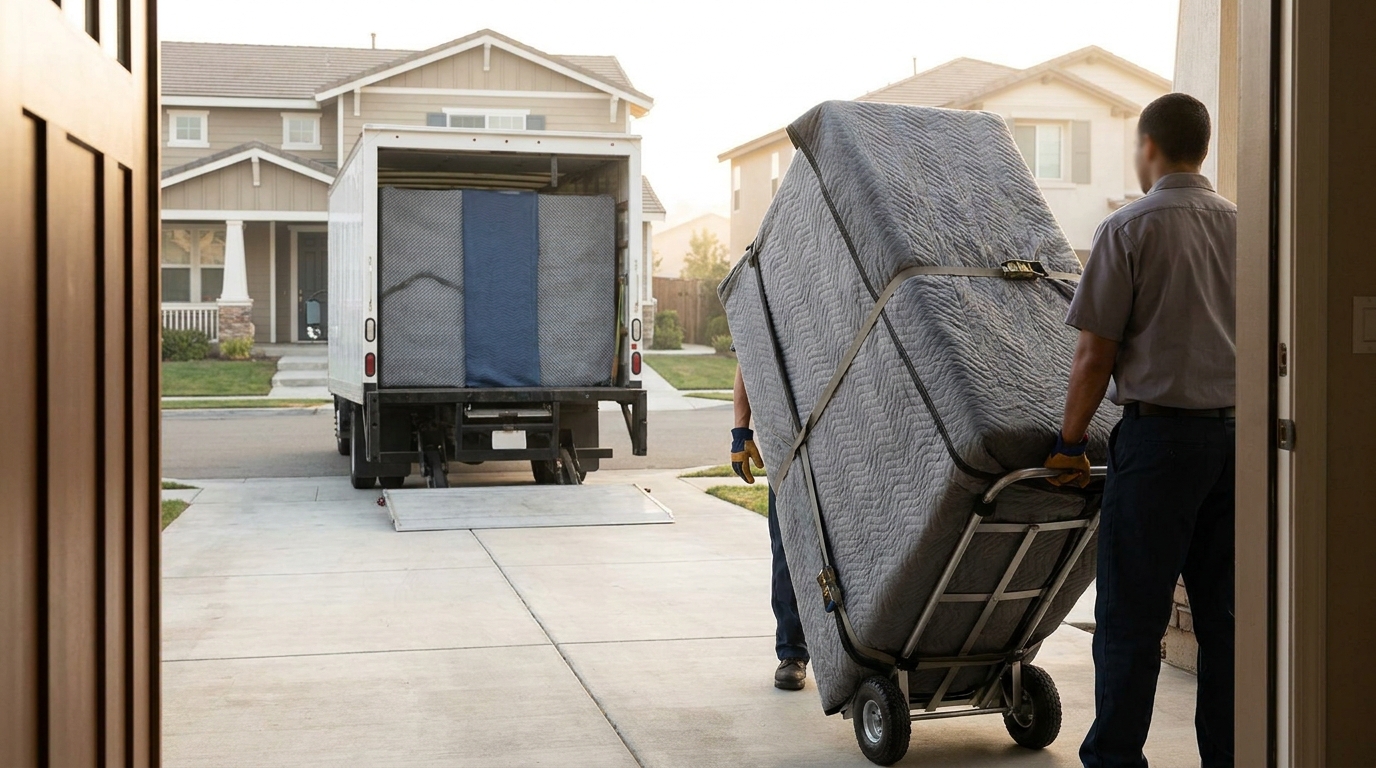
White glove delivery is a premium final-mile service in which a two-person team delivers your item on a scheduled appointment, carries it into the room of your choice, unpacks and assembles it, and removes the packaging and debris. It is the opposite of a boxed drop at the curb: instead of leaving freight at your doorway, the crew handles the last few feet, through the door, up the stairs, and into place. Retailers and shippers use white glove delivery for goods that are too large, heavy, or fragile for a single driver to hand off and walk away.
Key takeaways
- White glove delivery bundles scheduled appointment, in-home room-of-choice placement, unpacking, assembly or setup, and packaging removal into one final-mile service.
- It is most common for furniture, major appliances, fitness and medical equipment, and high-value electronics, where placement and assembly matter as much as transport.
- Threshold and room-of-choice delivery are lighter, cheaper tiers; full white glove costs more because it uses two people, a longer window, and added labor.
- Before booking, confirm exactly what assembly, stair carries, haul-away, and damage liability are included, because scope varies by provider.
- It is worth the premium when the item is hard to move safely, needs setup, or a failed self-delivery would cost more than the service.
What is white glove delivery?
White glove delivery is a high-touch final-mile service that goes beyond dropping a package. The carrier books a delivery appointment, brings a two-person crew, moves the item inside to the specific room you designate, unpacks it, performs basic assembly or setup, and takes the boxes, foam, and pallet away. The name comes from handling goods carefully enough that you could wear white gloves and not get them dirty.
It sits at the premium end of the final-mile delivery spectrum. Standard parcel and freight delivery ends when the driver leaves the box at your door, in your garage, or at the curb, still packaged and unassembled. White glove picks up where that stops, so the customer ends with the item unboxed, in place, and ready to use.
What does white glove delivery include?
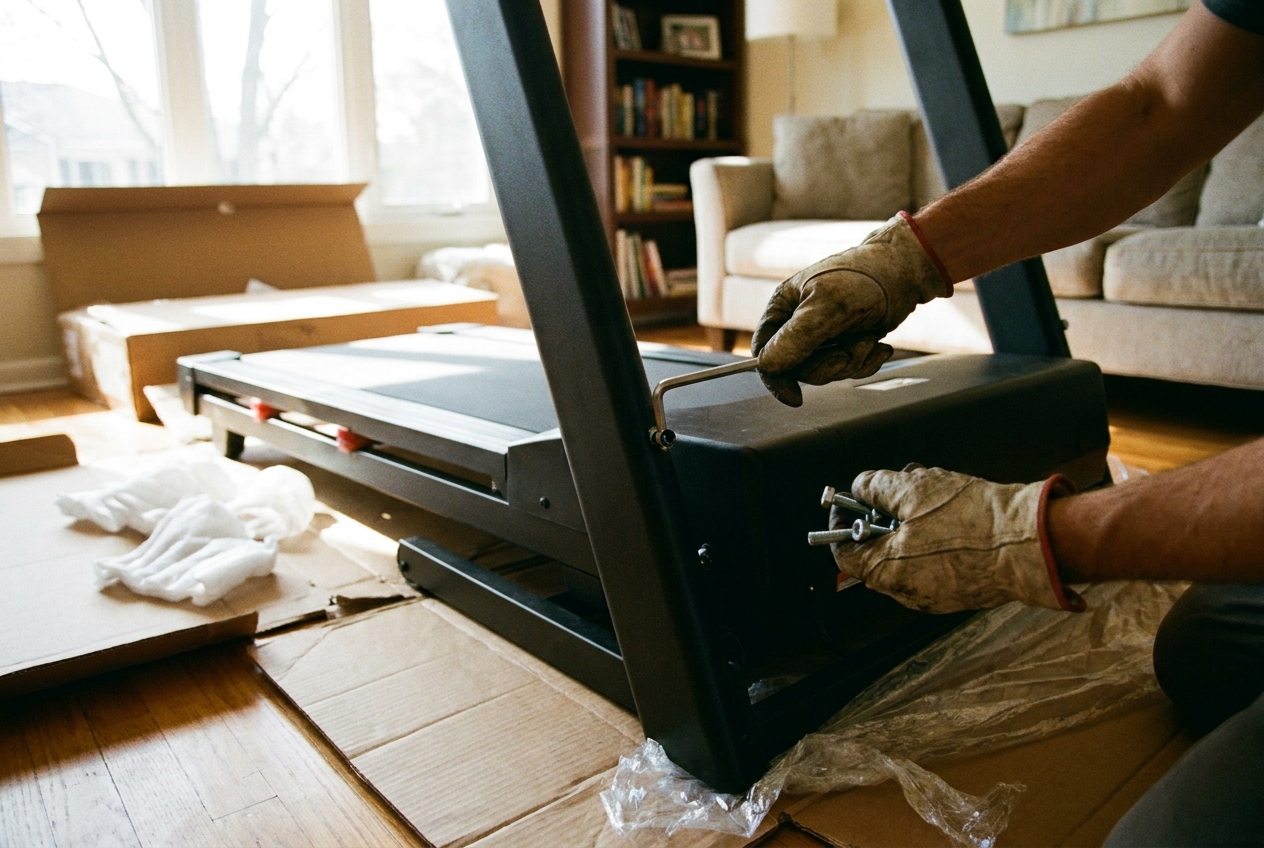
Full white glove delivery generally includes five things: a scheduled appointment window, in-home carry to the room of choice, unpacking, basic assembly or setup, and removal of all packaging and debris. The exact contents vary by carrier, so treat the list below as the typical baseline rather than a guarantee.
- Scheduled appointment. The customer is contacted to book a specific date and time window, rather than getting a same-day surprise drop.
- Room-of-choice placement. The crew carries the item inside and positions it where you want it, including up flights of stairs when access allows.
- Unpacking. Boxes, straps, and protective wrap are removed so the item is exposed and inspected on the spot.
- Assembly or setup. Basic assembly such as attaching legs, bolting a frame, or positioning a mattress. It usually excludes electrical, plumbing, or gas hookups and wall mounting.
- Debris removal. Packaging materials are hauled away so the customer is not left with a pile of cardboard.
Old-item haul-away, such as removing a used appliance or mattress, is frequently offered but is usually a separate add-on rather than part of the base service. Because assembly and haul-away are the two areas providers define most differently, they are worth pinning down in writing before you book.
Which products usually need white glove delivery?
The common thread is items that are large, heavy, fragile, or need setup, so a single driver cannot reasonably place and assemble them alone. Typical categories include:
- Furniture such as sofas, sectionals, bed frames, dining sets, and armoires that must be maneuvered through doorways and stairwells.
- Major appliances including refrigerators, washers, dryers, and ranges, where placement and leveling matter.
- Home fitness equipment like treadmills, ellipticals, and multi-station gyms that ship heavy and require assembly.
- Medical devices such as hospital beds, lift chairs, and mobility equipment, where careful in-home setup is part of the value. Shippers moving this category often pair white glove with the added compliance controls covered in our medical device logistics guide.
- High-value electronics including large-format televisions, home theater components, and audio gear that are expensive to damage.
- Safes, pianos, and specialty goods that are dense, awkward, and unforgiving of a dropped corner.
Threshold vs. room-of-choice vs. full white glove: what is the difference?
These are three delivery tiers that increase in service and price. Threshold stops at your first doorway or garage; room-of-choice carries the item to the right room but leaves it boxed; full white glove unpacks, assembles, and cleans up. The table shows what each tier typically covers.
| Service element | Threshold | Room of choice | Full white glove |
|---|---|---|---|
| Scheduled appointment | Sometimes | Usually | Yes |
| Carry inside past the door | First doorway or garage only | Yes, to the chosen room | Yes, to the chosen room |
| Stair carries | No | Often, may cost extra | Yes, may cost extra |
| Unpacking | No | No | Yes |
| Assembly or setup | No | No | Basic assembly included |
| Packaging removal | No | No | Yes |
| Relative cost | Lowest | Middle | Highest |
The right tier depends on the item and the customer. A flat-boxed desk that one person can assemble may only need threshold delivery, while a 300-pound treadmill headed upstairs is a clear white glove job.
How much does white glove delivery cost?
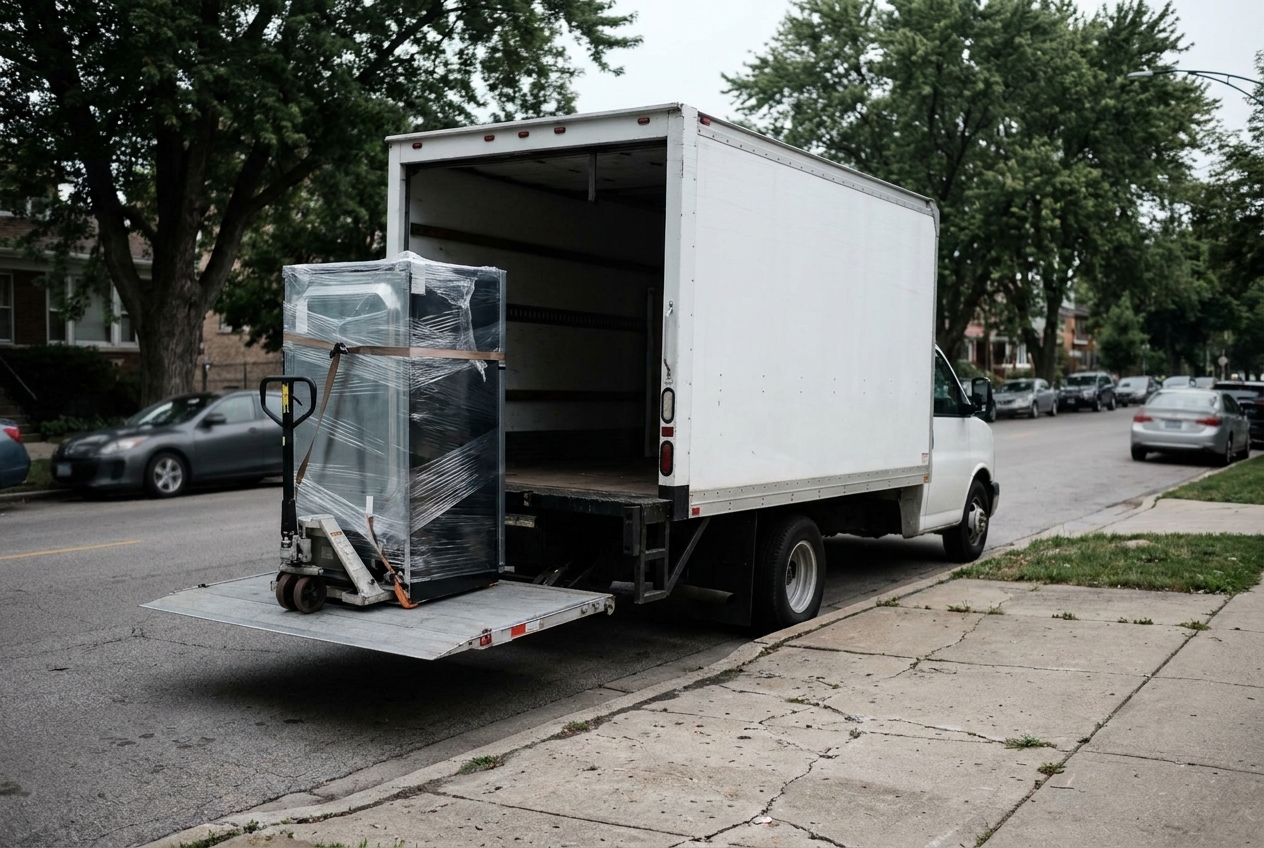
White glove delivery costs a meaningful premium over threshold or curbside delivery, because it uses two people, a longer appointment window, and extra labor for unpacking, assembly, and debris removal. There is no single flat rate: pricing scales with the item's size and weight, the number of flights of stairs, distance from the terminal, and whether add-ons like haul-away are included.
Because white glove is a bundle of labor and access charges, it behaves like a stack of accessorial charges rather than a single line item. Ask each provider for a written, itemized quote that spells out stair fees, assembly, and haul-away, and compare quotes on identical scope. For shippers building this into a program, our logistics company directory lets you shortlist final-mile carriers and request quotes side by side.
When is white glove delivery worth it?
White glove delivery is worth the premium when the item is hard to move safely, requires setup, or when a failed self-delivery would cost more than the service. Consider a scenario: a brand ships a 190-pound sectional sofa and a 250-pound smart treadmill to a second-floor apartment. Curbside delivery would leave both boxed on the sidewalk, and the customer has no way to carry them up, no tools to assemble the treadmill, and no way to dispose of the packaging. A single damaged panel or a self-injury claim would erase any saving from the cheaper freight.
White glove pays off when several of these are true: the item is heavy or oversized, stairs or tight access are involved, assembly is required, the goods are fragile or high-value, the recipient cannot handle the item alone, or your brand promises a premium unboxing experience. It is usually not worth it for light, flat-boxed goods a customer can carry and assemble, where threshold or standard parcel delivery is faster and cheaper.
What should you confirm with a white glove provider?
Because scope varies, confirm the details in writing before you commit a shipment. Pin down what assembly is included and what is excluded, whether stair carries and long walks cost extra, and whether old-item haul-away is available. Clarify how the appointment is scheduled and what the delivery window is, and get the damage liability and claims process in writing, including who inspects the item at delivery.
Vet the carrier itself, not just the price. For any motor carrier handling your freight, you can check the operating authority and safety record on the FMCSA website, and the U.S. Bureau of Transportation Statistics is a neutral reference for broader freight and final-mile context. When you are ready to compare specialist providers, browse the white glove and bulky-goods final-mile category to see carriers that handle furniture, appliances, and other oversized items. Confirm each one covers your product type, your delivery region, and the assembly your customers expect, then request itemized quotes on identical scope so the comparison is fair.
Frequently asked questions
What is white glove delivery?
White glove delivery is a premium final-mile service where a two-person team delivers on a scheduled appointment, carries the item into the room of your choice, unpacks and assembles it, and removes the packaging and debris. It contrasts with standard delivery, which typically drops the freight at the curb or garage still boxed.
Does white glove delivery include assembly?
Full white glove usually includes basic assembly and setup, such as attaching legs, positioning a mattress on a frame, or bolting a treadmill deck together. It does not normally include electrical, plumbing, or gas hookups, and it excludes wall mounting unless you arrange that separately. Confirm the exact scope in writing before delivery.
How much more does white glove delivery cost than standard shipping?
White glove typically runs a meaningful premium over threshold or curbside delivery because it uses two people, a longer appointment window, and added labor for assembly and debris removal. Pricing varies widely by item size, number of flights of stairs, and market, so ask each provider for a written quote rather than assuming a flat figure.
What is the difference between threshold and white glove delivery?
Threshold delivery brings the item across your first doorway or into the garage and stops there, still boxed. White glove carries it to the room of choice, unpacks it, assembles it, and hauls away the packaging. Room-of-choice placement without assembly sits between the two.
Does white glove delivery remove the old item?
Removal or haul-away of an old appliance, mattress, or piece of furniture is often available but is usually a separate add-on, not part of the base white glove service. Some carriers also restrict removal of items like mattresses for sanitation reasons. Ask whether haul-away is included and what it costs.
What products usually need white glove delivery?
Large or fragile goods that are hard for one person to place and set up: furniture, major appliances, home fitness equipment, medical devices, high-end electronics, and safes. These items are heavy, awkward through doorways and stairs, and often require assembly, which is exactly what white glove covers.
Ready to compare providers?
Search the directory by service and location, save options to your shortlist, and send a clear RFQ.
Related guides
Carrier Vetting: How to Avoid Fraud and Bad Carriers
A step-by-step guide to carrier vetting: verify FMCSA authority and safety, confirm insurance with the insurer, spot red flags, and stop double-brokering.
Dedicated vs Common Carrier: Which Fits
How dedicated contract carriage, common carriers, and private fleets compare on cost, capacity, and commitment, and when your volume justifies dedicated.
Shipping Construction Materials to a Jobsite
How construction freight works: matching flatbed and specialized trailers to steel, lumber, pipe, and precast, plus jobsite access, oversize permits, and delivery timing.