
What Is Project Cargo?
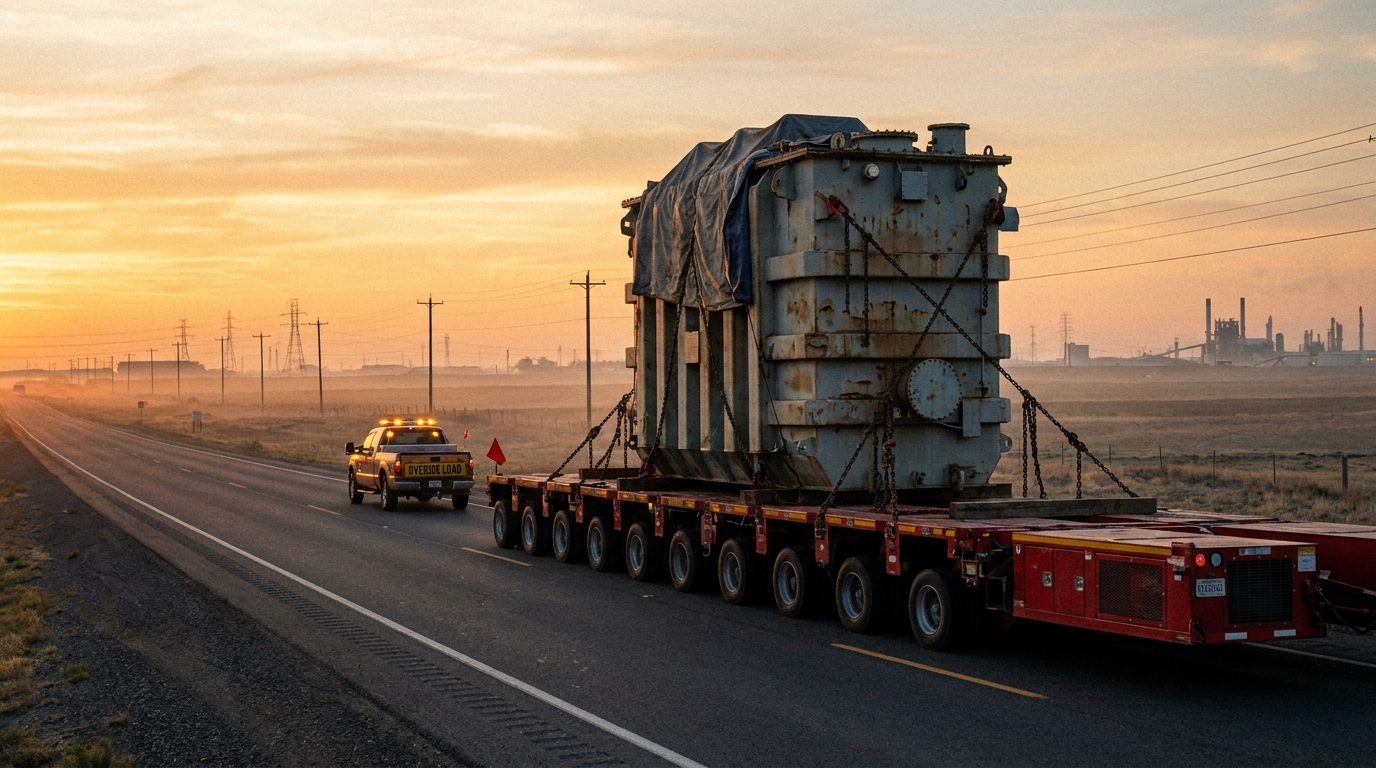
Project cargo is the movement of oversized, extremely heavy, high-value, or complex freight as a single engineered project rather than as routine freight. Think of a power transformer, a wind turbine nacelle, a refinery pressure vessel, or a pre-assembled industrial module. These loads are too large or too critical to drop on a standard trailer, so a project cargo move is planned end to end, often across multiple modes (ocean, rail, road, and sometimes barge), with route surveys, permits, and specialized lifting gear engineered around one specific piece.
Key takeaways
- Project cargo is defined by the shipment, oversized, overweight, high-value, or complex, and by the engineered, multi-modal plan needed to move it, not by any single dimension.
- Planning drives the move: a route survey, oversize and overweight permits, heavy-lift equipment, and coordination across ocean, rail, and road legs all happen before the load rolls.
- It needs specialists because a standard carrier lacks the equipment, permits, engineering, and insurance limits these shipments require.
- Cost and timeline scale with weight and dimensions; a few extra inches or tons can trigger extra escorts, a stronger trailer, or a different route entirely.
- The single biggest risk is discovering a clearance or bridge-rating problem after the load is moving, which is exactly what upfront engineering exists to prevent.
What counts as project cargo?
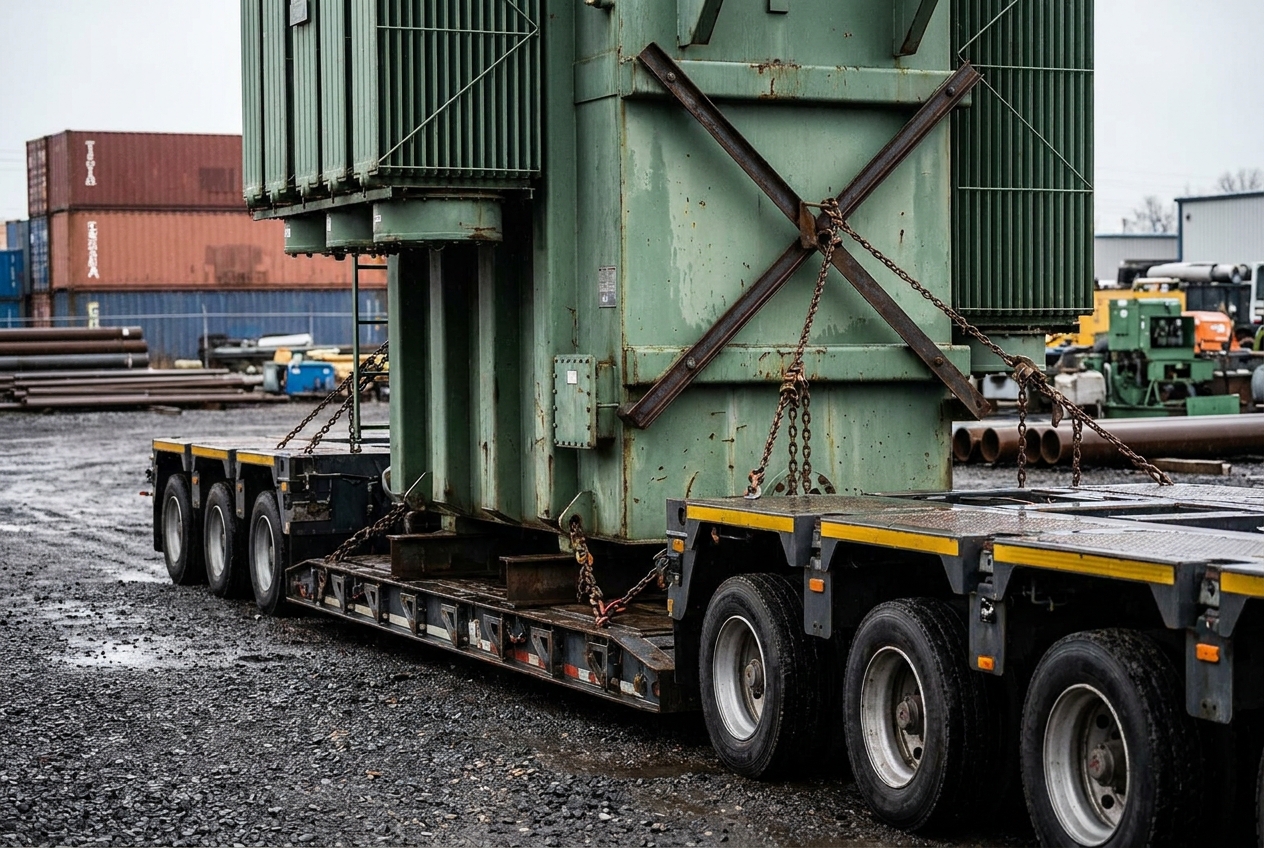
A shipment counts as project cargo when it cannot move as standard freight and needs an engineered plan to reach its destination safely. In practice that means it is oversized (wider, taller, or longer than legal road limits), overweight (heavy enough to need axle-load engineering or bridge analysis), extremely high-value, or complex enough that several parties and modes have to be coordinated as one project.
Common examples include electrical transformers and generators, wind turbine blades, towers, and nacelles, refinery and chemical-plant columns, mining and construction machinery, boilers, and factory-built modules that ship in one piece to avoid on-site assembly. What ties them together is not a fixed size but the fact that moving them is a designed operation, not a booking.
How is project cargo different from heavy haul and breakbulk?
These terms overlap and often describe legs of the same move, but they are not the same thing. Heavy haul trucking is the road leg for oversize and overweight loads, the specialized trailers, permits, and escorts that get a large piece down a highway. Breakbulk shipping is an ocean loading method: cargo handled as individual pieces or on flat racks rather than inside containers. Project cargo is the whole engineered operation, which often uses breakbulk on the water and heavy haul on land.
| Term | What it describes | Scope | Typical use |
|---|---|---|---|
| Project cargo | The full engineered, multi-modal move | End to end | A transformer from an overseas factory to a substation |
| Heavy haul | The oversize/overweight road leg | One mode (road) | Trucking that transformer from port to site |
| Breakbulk | An ocean loading method for non-containerized pieces | One mode (ocean) | Loading the transformer onto the vessel deck |
Why does project cargo need specialists?
Because a standard carrier is not equipped to handle it, legally or physically. Project cargo needs specialized trailers (multi-axle hydraulic modular units, extendable flatbeds, Schnabel or beam trailers), heavy-lift cranes or vessels, state oversize and overweight permits, pilot cars and police escorts, and cargo insurance limits far above what a normal load carries. It also needs engineers who can calculate axle loads, lift plans, and load securement for a shape that has never moved the same way twice.
Just as important is coordination. A single move may involve a project forwarder, an ocean carrier, a heavy-haul trucker, a crane company, permit agents in several states, and the receiving site's own crew. A specialist project logistics provider or 3PL exists to own that whole chain so one missed clearance or late permit does not strand a multi-ton load on the shoulder of a highway.
What does planning a project cargo move involve?
Planning is most of the work, and it starts long before anything moves. The core steps are engineering the load, surveying the route, securing permits, arranging specialized equipment, and coordinating the modal handoffs so each one is ready when the cargo arrives.
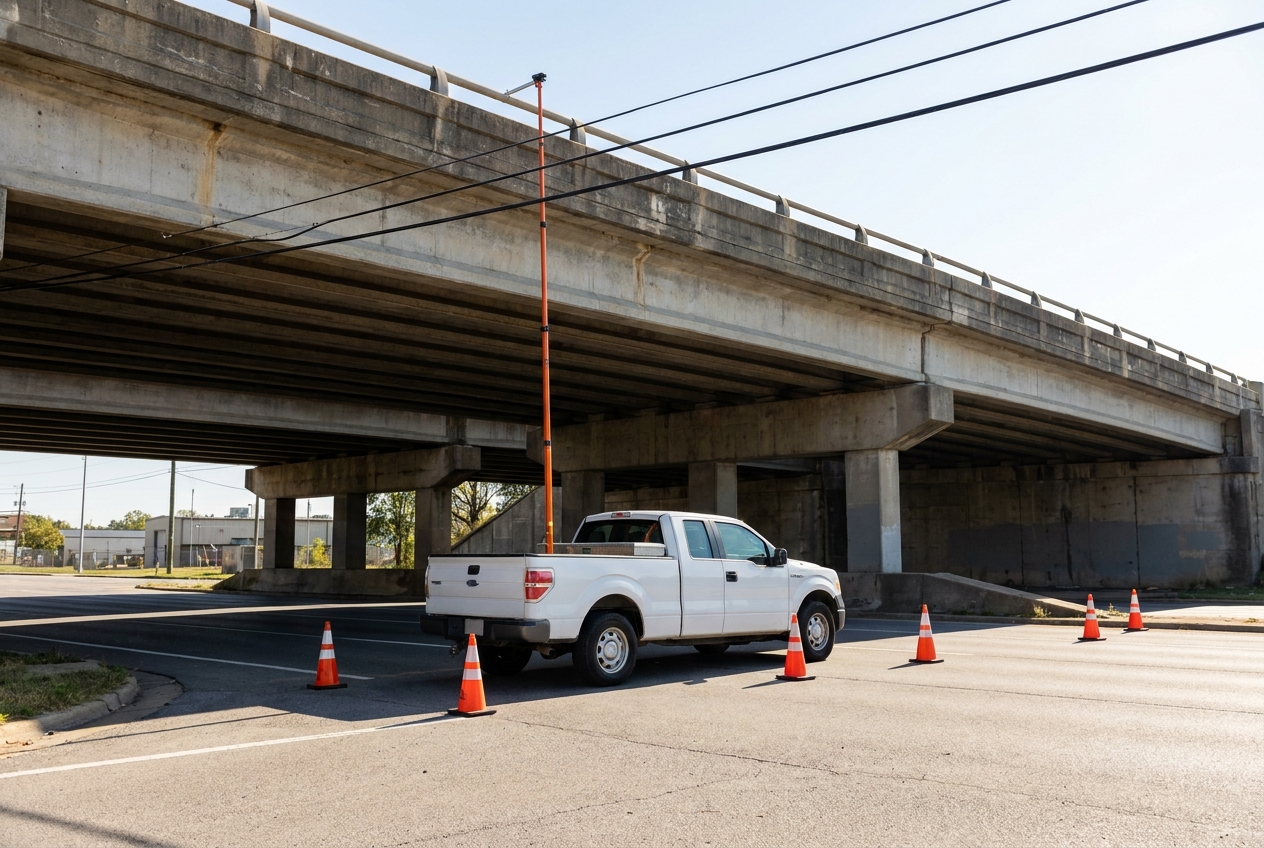
A route survey is the anchor. Someone physically drives and measures the intended path, checking overpass and bridge clearances, bridge weight ratings, turn radii, road grades, and low utility lines against the load's height, width, and axle weights. If the route does not clear, the plan changes: a different road, a temporary utility lift, or even a different port of entry. Permitting authorities frequently require a survey before they issue an oversize permit at all.
What permits does project cargo require?
Almost every road leg needs oversize and overweight permits, and each state issues its own with its own limits, fees, escort requirements, and allowed travel windows. A load that crosses five states needs five permits, sometimes with conflicting rules about night travel or weekend movement. Federal size and weight limits on the Interstate System are set through the U.S. Department of Transportation, while carrier authority and safety are administered by the Federal Motor Carrier Safety Administration, and the Bureau of Transportation Statistics publishes the freight-network data planners lean on. On the import side, oversized machinery still clears through U.S. Customs and Border Protection like any other cargo, so classification and documentation matter as much as the physical move.
Because permit rules and lead times vary widely, treat the permit calendar as part of the schedule, not an afterthought. A specialist typically manages the applications, but the shipper should still know which states gate the timeline.
How much does project cargo cost and how long does it take?
Cost and timeline both scale with weight, dimensions, distance, and the number of modes and handoffs. You are paying for engineering, permits, specialized equipment, escorts, lifting gear, and idle time, so the per-mile logic of standard trucking does not apply. Ranges vary too widely to quote a single figure, but the drivers are consistent: heavier and larger means more axles, more escorts, slower windows, and pricier permits.
Timelines commonly run weeks to months because the planning, permitting, vessel scheduling, and route surveying happen in sequence, and a small dimensional change can ripple through all of it. Getting the specifications right early, and building a realistic buffer, is cheaper than reworking a permit mid-move.
What do the steps of a project cargo move look like?
Here is how a typical move sequences, using a worked example: a 90-ton power transformer shipped from an overseas manufacturer to a domestic electrical substation.
| Step | What happens | In the transformer example |
|---|---|---|
| 1. Scope and engineering | Confirm exact weight, dimensions, lift points, and value; produce lift and securement plans | Transformer measured at roughly 90 tons; lift plan and center-of-gravity confirmed with the maker |
| 2. Route survey | Physically assess road, rail, and port legs for clearance and weight capacity | Port-to-substation road route surveyed; two low overpasses flagged, one requiring a utility lift |
| 3. Permits and approvals | Apply for oversize/overweight permits per state; schedule escorts | Permits pulled in each state crossed; night-travel window and police escort arranged for the final leg |
| 4. Ocean leg | Load as breakbulk or on a heavy-lift vessel; secure for sea | Craned onto a heavy-lift vessel and lashed for the ocean crossing |
| 5. Port handling and customs | Discharge, clear customs, transfer to inland equipment | Discharged at the port, cleared through customs, moved onto a multi-axle hydraulic trailer |
| 6. Heavy-haul road leg | Move to site with escorts inside permitted windows | Hauled overnight to the substation with pilot cars and utility crews on standby |
| 7. Final placement | Offload and set the piece on its foundation | Crane sets the transformer on its pad; the project closes out |
The lesson from the sequence is that a delay or error in an early step (a wrong dimension, a missed clearance) is far more expensive once the load is on the water or the highway. That is why so much of a project cargo move is front-loaded into planning.
How do I choose a project cargo provider?
Look for a provider that regularly moves freight like yours, owns or reliably sources the right equipment, and can walk you through recent comparable moves. Ask specifically about route surveys, permit management, cargo insurance limits, and how they coordinate the ocean, rail, and road handoffs under one point of contact. A provider that treats the route survey and permit calendar as optional is a red flag.
When you are comparing options, you can browse specialized carriers on the heavy-haul category or search the full logistics company directory, and if your load is oversized but still within the range of specialized trucking, the guide on shipping oversized freight covers the trailer and permit basics. For loads where dimensions push you into higher billing tiers on any standard legs, the freight class calculator and the wider tools hub help you sanity-check the numbers before you ask for a quote.
Frequently asked questions
What qualifies as project cargo?
A shipment usually qualifies as project cargo when it is too large, too heavy, or too high-value to move as standard freight, and when moving it requires engineering, permits, or coordination across more than one mode. Wind turbine blades, power transformers, refinery columns, mining shovels, and pre-assembled industrial modules are common examples.
How is project cargo different from breakbulk shipping?
Breakbulk describes how cargo is loaded, as individual pieces handled separately rather than in containers. Project cargo describes the nature of the move, an engineered, often multi-modal effort for oversized or complex freight. A project cargo shipment frequently travels as breakbulk on the ocean leg, but the terms are not interchangeable.
Why does project cargo cost more than regular freight?
The equipment is specialized, the route may need surveys and permits, and the timeline can span weeks or months with multiple handoffs. You are paying for engineering, escorts, permits, heavy-lift cranes or vessels, and idle time, not just miles. Small changes in weight or dimensions can move a shipment into a higher cost tier.
What is a route survey in project cargo?
A route survey is a physical and engineering assessment of the path a load will travel, checking bridge ratings, overpass clearances, turning radii, road grades, and utility lines against the load's dimensions and axle weights. It confirms the route is passable before permits are pulled and is often required by permitting authorities.
Do I need permits to move project cargo?
Almost always, for the road legs. Oversize and overweight loads require state-issued permits, and each state sets its own limits, fees, escort rules, and travel-time windows. A move crossing several states needs a permit from each. A specialist or heavy-haul carrier typically manages the permit process for you.
Who should I hire to move project cargo?
Look for a heavy-haul carrier, project forwarder, or 3PL that regularly handles oversized and multi-modal freight, carries the right specialized equipment, and can show recent moves like yours. Ask about route surveys, permit management, cargo insurance limits, and how they coordinate ocean, rail, and final-mile legs.
Ready to compare providers?
Search the directory by service and location, save options to your shortlist, and send a clear RFQ.
Related guides
What Is Freight Audit and Payment?
Freight audit and payment checks every carrier invoice against your contracted rate and the bill of lading, corrects overcharges, pays the carrier, and captures the cost data.
How to Write a Logistics RFP
A section-by-section guide to writing a logistics RFP that gets accurate, comparable quotes from 3PLs, freight brokers, and carriers.
Reverse Logistics: Returns, Recalls, and Recycling
A complete guide to reverse logistics: the backward flow of returns, recalls, repairs, redistribution, recycling, and disposal, plus how to recover value and choose a provider.