
Shipping Oversized Freight: Permits and Basics
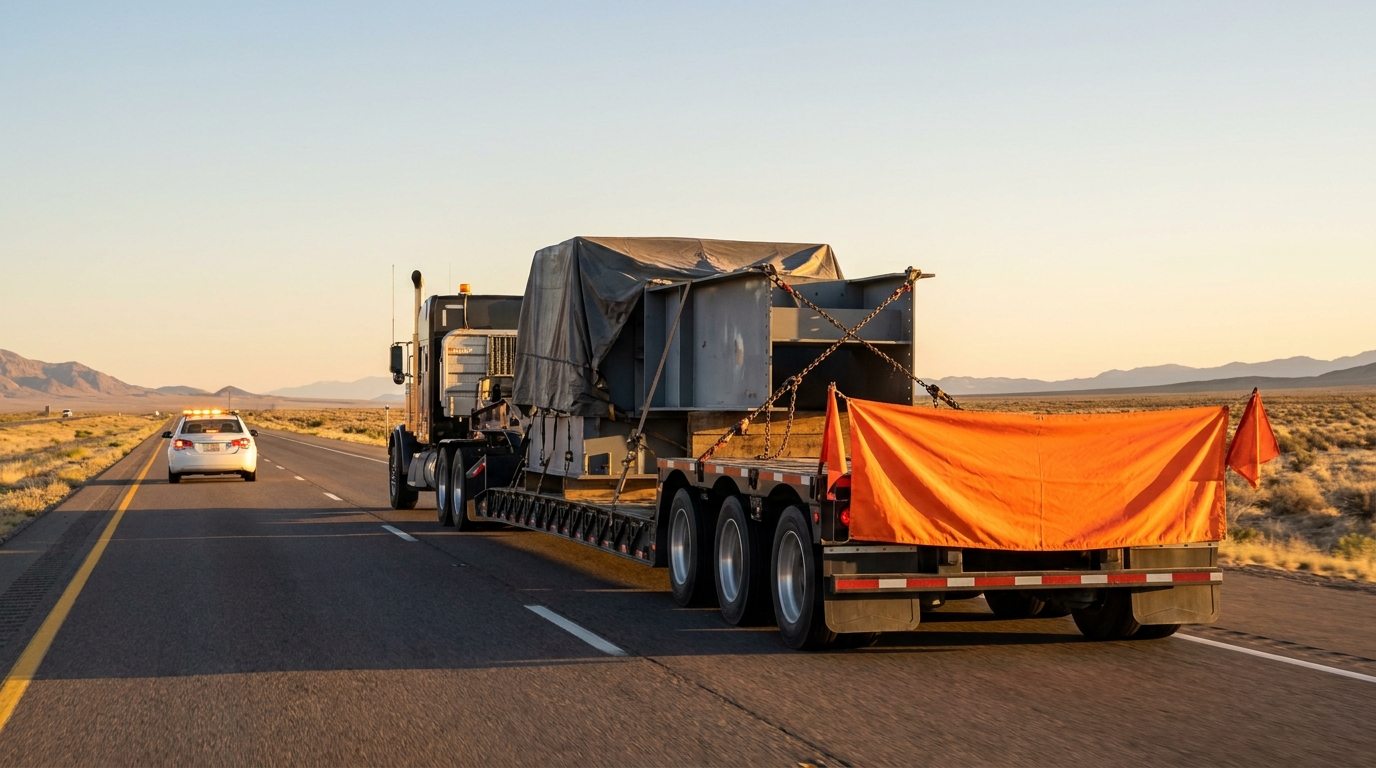
Oversized freight is any load that exceeds the standard legal limits for width, height, length, or weight on public roads, which on most U.S. highways means wider than about 8.5 feet, taller than roughly 13.5 to 14 feet, or longer than a standard 48 to 53 foot trailer. Moving it legally requires a permit from every state the load passes through, and often pilot cars, restricted travel hours, and a pre-approved route. This guide covers what counts as oversized, when permits and escorts are required, and the routing and equipment rules that govern these loads before you book.
Key takeaways
- A load is oversized when any dimension exceeds a state's legal limits; it is overweight when it exceeds gross or per-axle weight limits, and the two are permitted separately.
- Exact legal dimensions vary by state, so permits are issued per state and are usually tied to a specific route and travel dates.
- Pilot cars, police escorts, and route surveys scale with the load's size, and the requirements are written into each state permit.
- Most states restrict oversized loads to daylight hours and prohibit weekend, holiday, and rush-hour travel.
- The heaviest and largest loads become superloads, which need engineering reviews and much longer lead times.
What counts as oversized freight?
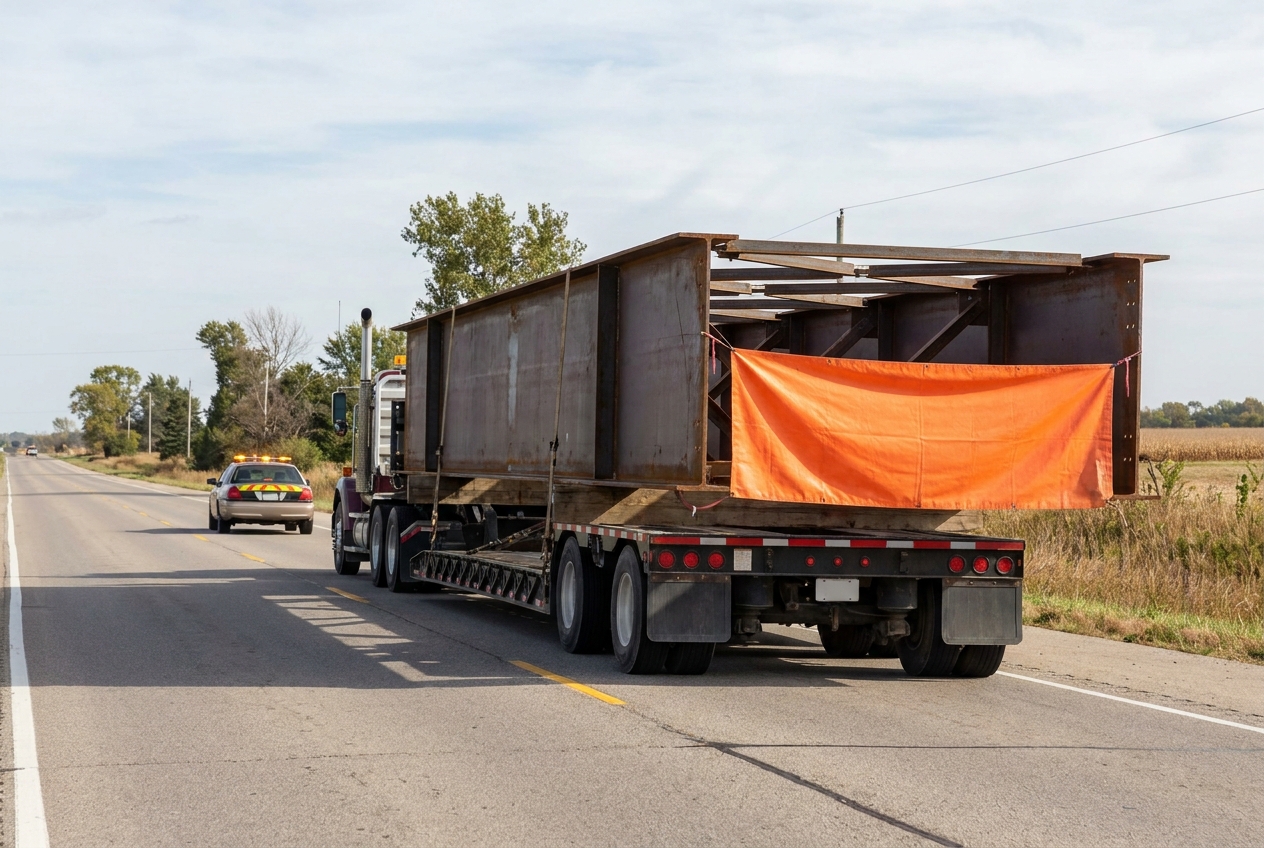
Freight is oversized when any single dimension exceeds the standard legal limit for the roads it will travel. On most highways the common thresholds are about 8.5 feet wide, 13.5 to 14 feet tall, and 48 to 53 feet long for a standard trailer, though the exact numbers are set by each state, not by a single national rule. Federal standards set a baseline for the Interstate system, but states control their own roads, so a load that is legal in one state can require a permit in the next.
Common oversized freight includes construction and mining equipment, prefabricated building sections, industrial machinery, wind turbine blades and towers, transformers, and large tanks. If the item cannot be broken down into legal-size pieces, it moves as an oversized load. When it can be disassembled, splitting it into legal shipments is often cheaper than permitting and escorting one large load, so price that trade-off first.
What is the difference between oversize and overweight?
Oversize describes a load that exceeds legal dimensions; overweight describes a load that exceeds legal weight limits. They are not the same, and a single shipment can be one, the other, or both. Weight limits apply both to the gross weight of the whole vehicle and to the weight carried on each axle or axle group, which is why heavy loads are spread across trailers with many axles.
The distinction matters because each triggers a separate permit and a separate set of rules. A tall but light load may need only an oversize permit and a height-pole escort, while a compact but very heavy transformer may be within legal dimensions yet need an overweight permit and a route that avoids weight-restricted bridges. Confirm which category, or both, applies before you request quotes.
When do you need a permit for oversized freight?
You need a permit whenever a load exceeds a state's legal size or weight limits, and you need one from each state along the route. Permits are typically valid for a specific origin, destination, route, and set of dates, and many are single-trip. Wider, taller, or heavier loads move into higher permit categories with more conditions attached.
Permitting is a state function, so the authority is the relevant state department of transportation, not a federal office. Start with each state DOT's oversize and overweight permitting office to confirm current limits, fees, and lead times, since these change and vary widely. The federal FMCSA sets the safety and size-and-weight framework for interstate carriers, but the trip permits themselves are issued by the states. A carrier that specializes in oversized work usually secures the permits as part of the service, but the shipper is still responsible for confirming they are in place.
When are pilot cars or escorts required?
Pilot cars, also called escort vehicles, are required once a load crosses the width, height, or length thresholds each state sets for them, and the number of escorts rises with the load's size. A moderately wide load might need a single lead or chase car, while a very wide load on a two-lane road can need both. Extremely tall loads often need a height-pole vehicle that physically checks clearances ahead of the truck, and the largest loads may require police escorts or utility crews to move wires.
Each state permit states exactly what escorts that specific load needs on that route, so do not estimate the requirement loosely. Build escort costs into the quote early, because on a wide multi-state move they add up quickly and can change which routing makes sense.
What routing and time-of-day restrictions apply?
Oversized loads cannot simply take the shortest route or travel whenever the driver wants. States approve a specific route that avoids low bridges, weight-restricted structures, tight interchanges, and construction zones, and the permit binds the load to that route. Deviating from it can void the permit and the insurance behind the move.
Time-of-day rules are just as strict. Most states limit oversized travel to daylight hours and prohibit movement during weekends, holidays, and weekday rush hours, with tighter limits for very wide or tall loads and for travel through metro areas. Some loads are also barred from moving in rain, fog, or other poor visibility. Because a multi-state move stacks each state's curfews on top of the others, transit time for an oversized load is often longer and less predictable than for standard freight, and schedules should reflect that.
What equipment hauls oversized freight?
Oversized freight rides on specialized trailers chosen for the load's height, length, and weight rather than on a standard dry van. The right choice depends on how the cargo must sit to stay within legal height and to be loaded and secured safely. Understanding the options helps you match equipment to the load before you request a quote; our guide to trailer types breaks down the full range.
- Flatbed: an open deck for loads that are wide or long but within legal height, and can be loaded from the side or top.
- Step-deck (drop deck): a lower rear deck that lets taller loads stay under height limits.
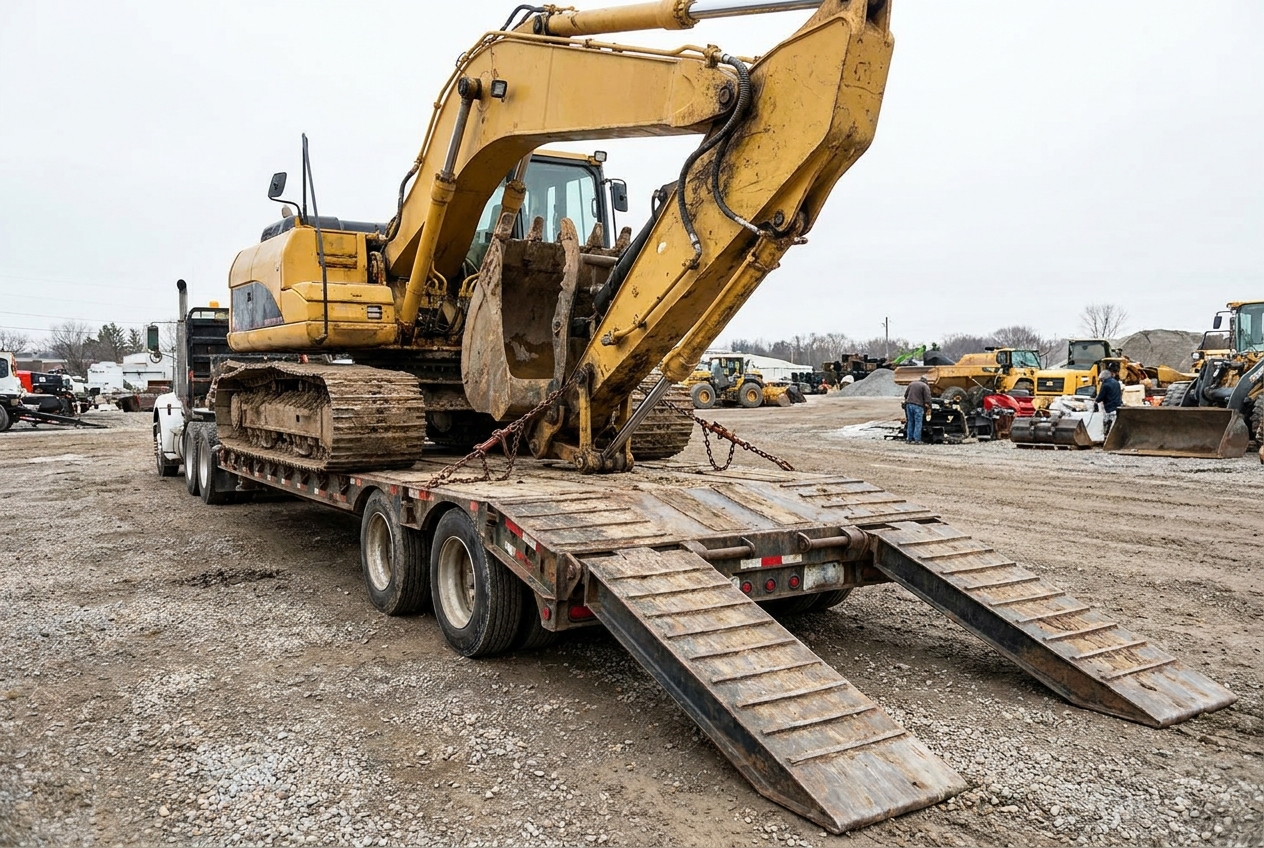
- Lowboy (double-drop): a very low deck that carries tall, heavy equipment such as excavators and industrial machinery.
- RGN (removable gooseneck): a lowboy whose front detaches so equipment can be driven on and off.
- Multi-axle and extendable trailers: added axles spread heavy loads across more points, and extendable decks support very long items like beams and blades.
Because loading, securement, and routing all get more complex as the load grows, these moves are handled by carriers that specialize in heavy and oversized transport. Our overview of heavy-haul trucking explains how that segment works, and you can compare providers on the heavy-haul carriers directory.
How do legal, oversize, and superload freight compare?
The three tiers describe how far a load sits above standard limits and how much process it takes to move it. Legal loads need no permit; oversize and overweight loads need routine state permits; superloads exceed even routine permit thresholds and require engineering review. The conceptual table below shows how the requirements escalate. Treat the numbers as illustrative, since every state sets its own exact cutoffs.
| Tier | Rough profile | Permit needed? | Typical requirements |
|---|---|---|---|
| Legal load | Within standard limits (about 8.5 ft wide, 13.5 to 14 ft tall, legal weight) | No | Standard trailer, no special routing or escorts |
| Oversize / overweight | Exceeds one or more legal limits but within routine thresholds | Yes, per state | Approved route, possible pilot cars, daylight-hours travel |
| Superload | Exceeds a state's routine permit thresholds (very wide, very tall, or extremely heavy) | Yes, special permit | Engineering route survey, bridge analysis, police escorts, long lead time |
What does an oversized move look like in practice?
Consider a contractor shipping a tracked excavator that sits about 11 feet wide and 12 feet tall on a lowboy, roughly 200 miles across two states. Because the width exceeds the 8.5-foot legal limit, both states require oversize permits tied to a set route and dates. That profile likely triggers at least one pilot car in each state, and travel is limited to weekday daylight hours, so a move that would take a few hours as a legal load may stretch across most of a working day.
The lesson is to plan an oversized shipment backward from its constraints. Confirm the exact dimensions and weight, identify which states are involved, price permits and escorts, and pad the schedule for daylight-only travel. To line up a carrier, browse the heavy-haul category or search the full directory of logistics companies, and use national freight-movement data from the Bureau of Transportation Statistics if you are benchmarking lanes. Getting the permits, route, and equipment right before the load leaves the yard is what keeps an oversized move legal, insured, and on schedule.
Frequently asked questions
What size is considered oversized freight?
A load is generally treated as oversized when any dimension exceeds standard legal limits, which on most highways means roughly 8.5 feet wide, 13.5 to 14 feet tall, and 48 to 53 feet long for a standard trailer. The exact thresholds vary by state, so confirm limits with each state DOT along the route before booking.
What is the difference between oversize and overweight?
Oversize refers to a load that exceeds legal dimensions such as width, height, or length. Overweight refers to a load that exceeds legal weight limits, either gross vehicle weight or the weight allowed per axle. A single load can be one, the other, or both, and each triggers its own permit.
Do I need a permit to ship oversized freight?
Yes. Any load that exceeds a state's legal size or weight limits requires an oversize or overweight permit from each state it travels through. Permits are issued per state, are usually tied to a specific route and dates, and are the shipper or carrier's responsibility to secure before the load moves.
When are pilot cars or escorts required for oversized loads?
Escort requirements are set by each state and scale with the load's dimensions. Wider and taller loads typically require one or more pilot cars, and the widest or tallest loads may require police escorts, a height-pole car, or route surveys. The permit for each state spells out exactly what escorts that load needs.
What is a superload?
A superload is an oversized or overweight load large enough to exceed a state's routine permit thresholds, often loads beyond roughly 16 feet wide, 16 feet tall, or 200,000 pounds, though the cutoffs vary. Superloads usually require engineering route surveys, bridge analysis, and longer lead times than a routine oversize permit.
Can oversized freight travel at night?
Usually not. Most states restrict oversized loads to daylight hours and prohibit movement during weekends, holidays, and rush hours, with tighter rules for very wide or very tall loads. Some routes and load sizes are also barred from travel in poor visibility. The governing rules are stated on each state permit.
Ready to compare providers?
Search the directory by service and location, save options to your shortlist, and send a clear RFQ.
Related guides
Carrier Vetting: How to Avoid Fraud and Bad Carriers
A step-by-step guide to carrier vetting: verify FMCSA authority and safety, confirm insurance with the insurer, spot red flags, and stop double-brokering.
Dedicated vs Common Carrier: Which Fits
How dedicated contract carriage, common carriers, and private fleets compare on cost, capacity, and commitment, and when your volume justifies dedicated.
Shipping Construction Materials to a Jobsite
How construction freight works: matching flatbed and specialized trailers to steel, lumber, pipe, and precast, plus jobsite access, oversize permits, and delivery timing.