
What Is Breakbulk Shipping?
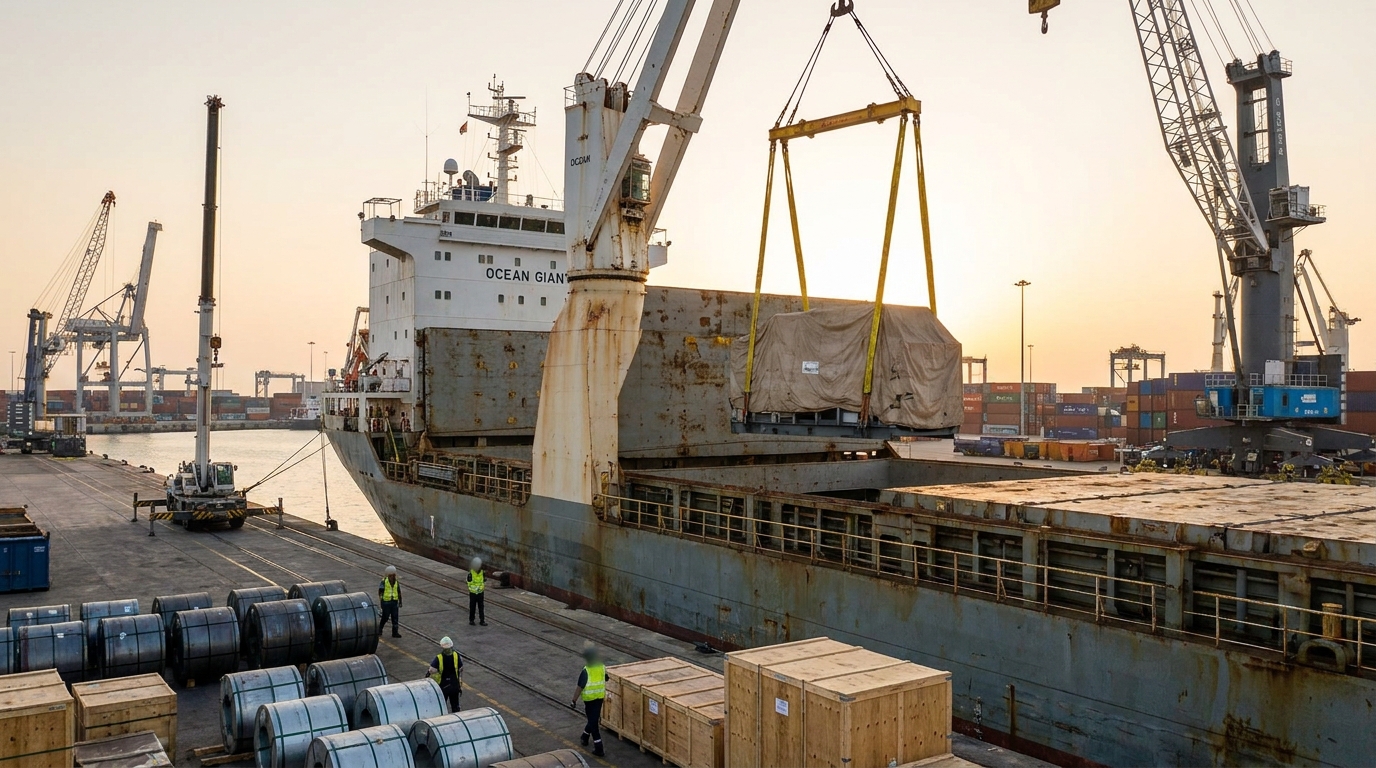
Breakbulk shipping is the movement of non-containerized ocean cargo that is loaded, stowed, and discharged as individual pieces rather than sealed inside a standard container or poured loose into a hold. Each item, whether a steel coil, a transformer, a boat hull, or a crated machine, is lifted aboard one at a time using the ship's own gear or shore cranes and secured in place. It is the method shippers reach for when cargo is too large, too heavy, or too oddly shaped to fit a container, or when the destination port has no container terminal.
Key takeaways
- Breakbulk cargo is non-containerized ocean freight handled as separate, individually counted pieces.
- It sits between containerized shipping (sealed boxes) and bulk shipping (loose commodities poured into a hold).
- Shippers use it for out-of-gauge, oversized, or heavy items, and for project cargo the container network cannot carry.
- It relies on ship-mounted or shore cranes and multipurpose terminals, not standard container gantries.
- Because every piece is rigged and stowed by hand, planning around dimensions, weight, and port capability is what keeps it safe and on schedule.
How does breakbulk differ from containerized and bulk shipping?
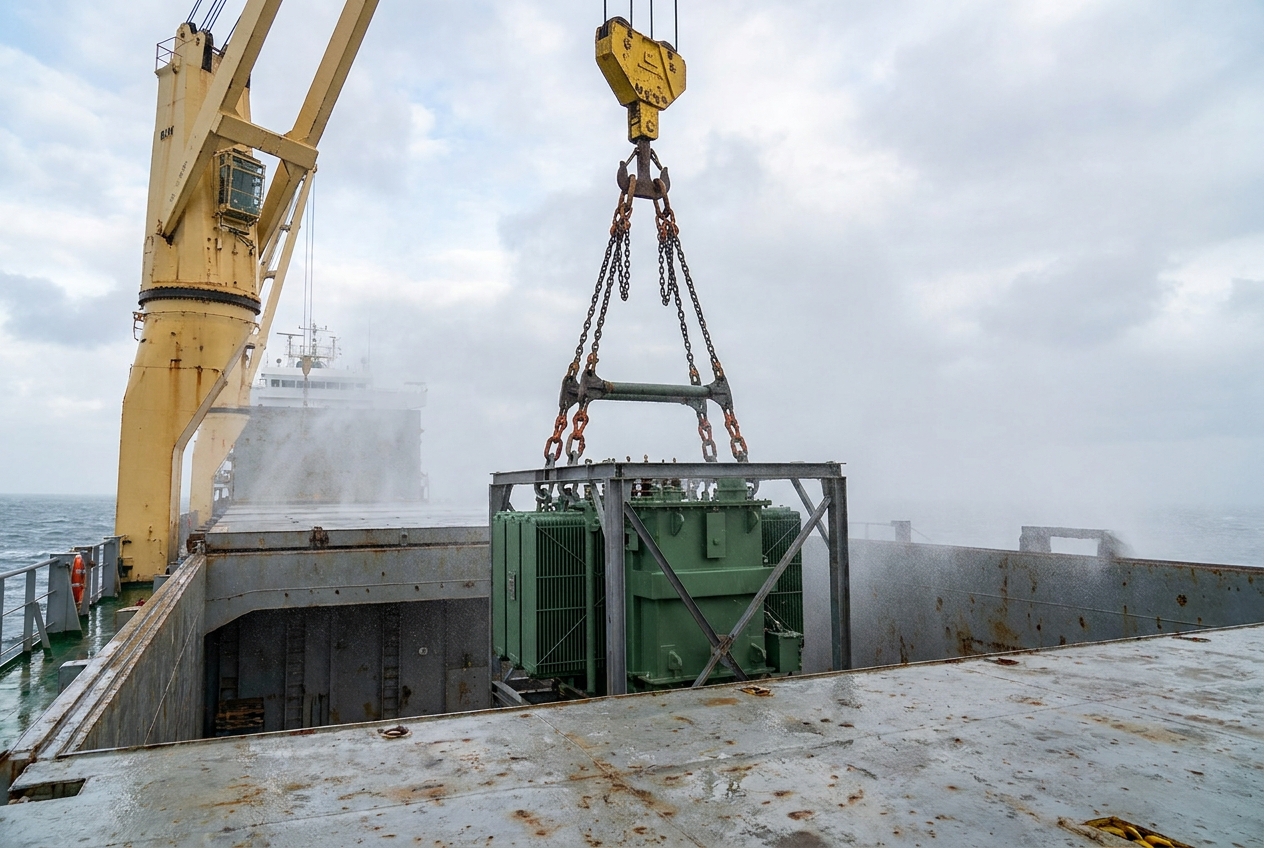
Breakbulk differs from containerized shipping because the cargo is never sealed inside a standardized box, and it differs from bulk shipping because the cargo is discrete pieces rather than a loose commodity. Containerized freight moves in interchangeable 20-foot and 40-foot boxes that stack and transfer by gantry crane in minutes. Bulk shipping, split into dry bulk (grain, coal, ore) and liquid bulk (crude, chemicals), pours or pumps one continuous cargo into a hold or tank. Breakbulk falls in the middle: packaged or unitized pieces, each lifted and counted on its own.
| Factor | Breakbulk | Containerized | Bulk |
|---|---|---|---|
| Cargo form | Individual pieces, crates, coils, units | Sealed in standard containers | Loose commodity poured or pumped |
| Typical goods | Machinery, steel, project cargo, vehicles | Finished consumer goods, mixed freight | Grain, coal, ore, crude oil, chemicals |
| Loading gear | Ship cranes or shore cranes, rigging | Container gantry cranes | Conveyors, grabs, pumps, chutes |
| Port type | Multipurpose or general-cargo terminal | Dedicated container terminal | Dedicated dry or liquid bulk terminal |
| Size limits | Very high, handles out-of-gauge loads | Bound by container dimensions | Limited only by hold or tank capacity |
| Handling speed | Slower, piece by piece | Fast, standardized | Fast, continuous flow |
The practical line is simple. If it fits and palletizes into a box, containerize it. If it is a loose commodity, ship it bulk. If it is a discrete piece that will not fit a container, it moves breakbulk. For a wider view of how these modes fit together across an ocean move, see our ocean freight shipping guide.
When do shippers use breakbulk instead of containers?
Shippers choose breakbulk when the cargo physically will not go in a container or when containerizing it makes no economic sense. The most common triggers are out-of-gauge dimensions (taller, wider, or longer than a container's internal clearance), single very heavy pieces that exceed a container's weight rating, and destinations where the receiving port lacks container-handling equipment.
It also wins for one-off large items. A single 40-ton press does not justify assembling a full container load, and trying to brace it inside a box is riskier than lashing it to a flat rack or stowing it directly in a hold. Much of this cargo is also project cargo, the large and complex shipments, such as plant modules or generators, that the container network simply cannot carry.
What kinds of cargo move as breakbulk?
Breakbulk covers a broad range of packaged and unitized goods that share one trait: they are handled as separate pieces. Typical categories include industrial machinery and manufacturing equipment, steel products such as coils, plate, pipe, and rebar bundles, construction materials and prefabricated structures, vehicles and rolling stock, wind-energy components like blades and tower sections, and bagged or drummed goods on pallets.
At the heavy and oversized end, breakbulk carries transformers, turbines, boilers, cranes, and pressure vessels. These pieces often continue inland on specialized trailers, which is where breakbulk connects to heavy haul trucking for the final overland leg to a job site or plant.
How is breakbulk cargo handled and loaded?
Breakbulk is loaded piece by piece, either with the vessel's onboard cranes and derricks or with shore-based mobile and gantry cranes at the terminal. Heavy-lift ships carry high-capacity cranes, sometimes rated for hundreds of tons and able to work in tandem, so they can serve ports that have no heavy lifting gear of their own.
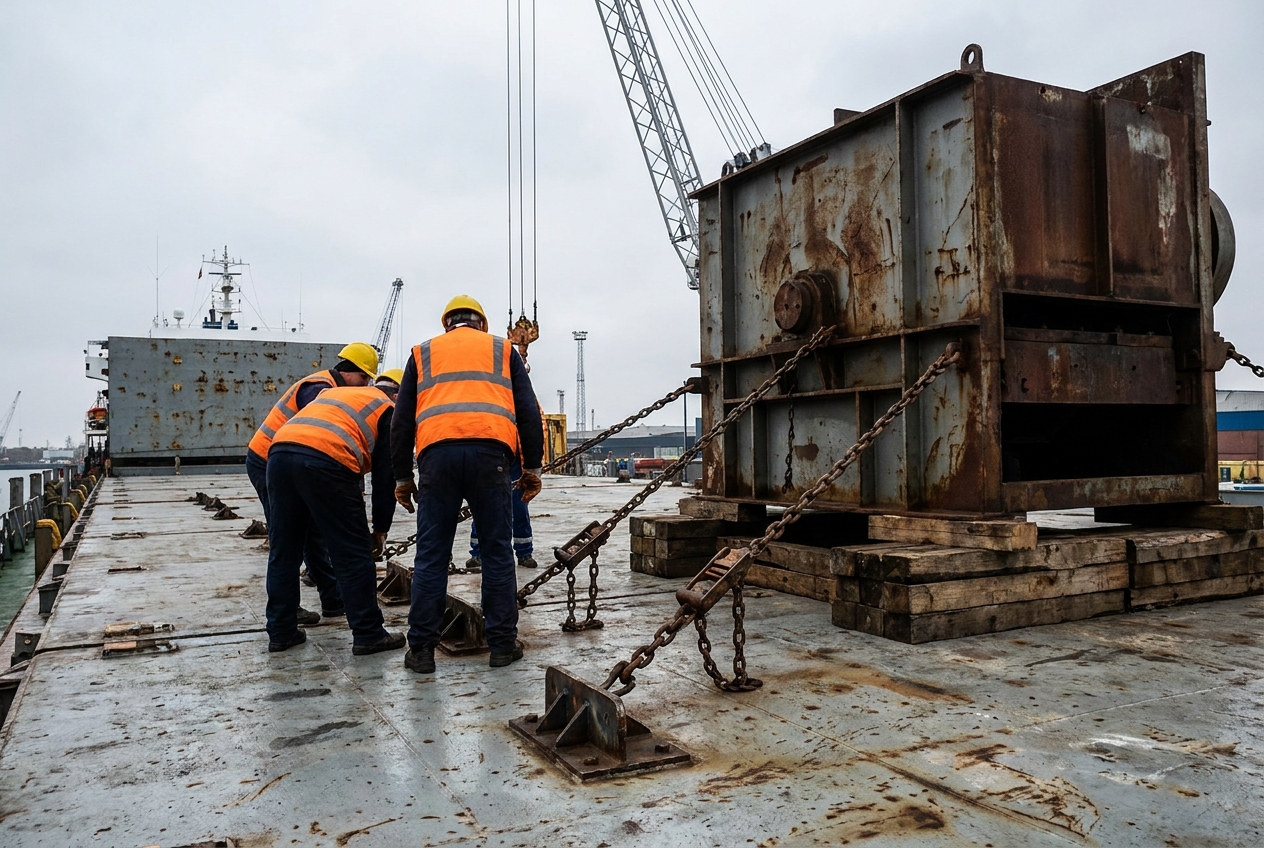
Each piece is rigged with slings, spreader bars, or shackles, lifted into the hold or onto the deck, then secured with lashings, chains, welded stoppers, dunnage, and purpose-built cradles so it cannot shift in a seaway. Stowage planning matters: weight has to be distributed for vessel stability, and fragile or moisture-sensitive items get crated, tarped, or coated against salt air. This hand-rigged process is slower than a container gantry, which is one reason breakbulk schedules run longer.
What port and terminal considerations matter for breakbulk?
Breakbulk moves through multipurpose and general-cargo terminals built for heavy lifts and irregular pieces, not through the standard container gantries at box terminals. The things to confirm before booking are crane capacity, available laydown and open-storage yard space, quay strength and water depth for the vessel, and the labor and rigging crews to handle each piece.
Because a single move may cross several jurisdictions and involve oversized loads, the inland connections and permits matter as much as the berth. Both the load and discharge ports need to handle the piece dimensions and weights, and the onward road or rail route has to clear the same envelope. Reviewing carriers and forwarders that specialize in this work through the international freight category is a practical starting point.
How much does breakbulk cost and how long does it take?
Breakbulk pricing is quoted per shipment rather than off a flat container rate, because every piece is unique. Instead of a single box price, expect a build-up of ocean freight (often based on weight or measurement, whichever is greater), heavy-lift and crane charges, rigging and lashing, terminal handling, and any oversize permits or escorts inland. As a result, quotes vary widely and are hard to benchmark against a container rate. Transit times also tend to run longer than container services because loading is slower and heavy-lift sailings are less frequent.
When you weigh breakbulk against a container option for a borderline piece, it helps to price the container route in parallel. A quick check with a container load calculator shows whether the item can be cubed into a box at all before you commit to the more specialized breakbulk path.
How do you prepare a breakbulk shipment?
Start by nailing down the exact dimensions, weight, and center of gravity of each piece, because those numbers drive vessel selection, crane choice, and every permit downstream. From there, a clean breakbulk booking comes together in a few moves.
- Confirm the load and discharge ports can handle the piece weights and dimensions, including crane capacity and yard space.
- Decide on crating, skidding, or blocking so the piece can be rigged and lashed safely.
- Map the full door-to-door route, including the inland legs and any oversize permits, before fixing a sailing.
- Prepare accurate documentation, since packing lists, weights, and customs paperwork must match what physically arrives; U.S. import requirements are set out by Customs and Border Protection.
- Insure to full replacement value, because a single oversized piece can carry more risk than a mixed container.
Ocean and general freight movements are also tracked in national trade data published by the Bureau of Transportation Statistics, useful context when you are planning volumes or routes. Once the piece specs are set, comparing specialist carriers and forwarders in the logistics company directory is the fastest way to get apples-to-apples heavy-lift quotes.
A worked example
Say a manufacturer needs to move a 60-ton transformer from a U.S. Gulf port to a plant overseas. At roughly 20 feet long, 12 feet wide, and 14 feet tall, it is well outside the internal clearance of any standard container, so containerizing is off the table. The transformer is skidded onto a steel cradle, rigged with a spreader bar, lifted aboard a heavy-lift vessel by its onboard crane, then chained and welded down for the crossing. At the discharge port a shore crane offloads it onto a multi-axle trailer for the inland move. The shipment is priced as a single engineered move, not a box rate, and scheduled around the heavy-lift sailing rather than a weekly container string. That sequence, an oversized piece plus crane plus multipurpose terminal plus permitted inland haul, is breakbulk in practice.
Frequently asked questions
What is breakbulk shipping?
Breakbulk shipping is the movement of non-containerized ocean cargo that is loaded, stowed, and discharged as individual pieces rather than inside a standard container or poured loose into a hold. Each item is handled separately using the ship's cranes or shore cranes, which makes it the standard method for oversized, heavy, or out-of-gauge cargo.
What is the difference between breakbulk and bulk shipping?
Bulk shipping moves loose, unpackaged commodities such as grain, coal, or crude oil that are poured or pumped into a hold or tank as one continuous cargo. Breakbulk moves discrete, packaged, or unitized pieces that are lifted aboard and counted individually, such as steel coils, machinery, or crates.
Is breakbulk the same as project cargo?
They overlap but are not identical. Breakbulk describes the loading method (individual, non-containerized pieces), while project cargo describes a large, complex, often oversized shipment such as a plant module or generator that usually moves as breakbulk. Most project cargo is breakbulk, but routine breakbulk like bagged goods or steel is not project cargo.
Why would a shipper choose breakbulk over a container?
Shippers use breakbulk when cargo is too large, too heavy, or too oddly shaped to fit a standard container, or when the destination port has no container-handling infrastructure. It is also used for single large items where building a full container load makes no sense.
What ports handle breakbulk cargo?
Breakbulk moves through multipurpose and general-cargo terminals that have heavy-lift cranes, open laydown yards, and the labor to rig and secure individual pieces. These differ from dedicated container terminals, so route planning should confirm the load and discharge ports can handle the piece dimensions and weights.
How is breakbulk cargo protected during transit?
Each piece is individually secured with lashings, chains, dunnage, and cradles so it cannot shift in a seaway, and sensitive items are crated, tarped, or coated against moisture and salt air. Because pieces are handled and stowed individually, careful rigging and stowage planning are central to preventing damage.
Ready to compare providers?
Search the directory by service and location, save options to your shortlist, and send a clear RFQ.
Related guides
What Is Freight Audit and Payment?
Freight audit and payment checks every carrier invoice against your contracted rate and the bill of lading, corrects overcharges, pays the carrier, and captures the cost data.
How to Write a Logistics RFP
A section-by-section guide to writing a logistics RFP that gets accurate, comparable quotes from 3PLs, freight brokers, and carriers.
Reverse Logistics: Returns, Recalls, and Recycling
A complete guide to reverse logistics: the backward flow of returns, recalls, repairs, redistribution, recycling, and disposal, plus how to recover value and choose a provider.