
Ocean Freight Shipping: A Complete Guide
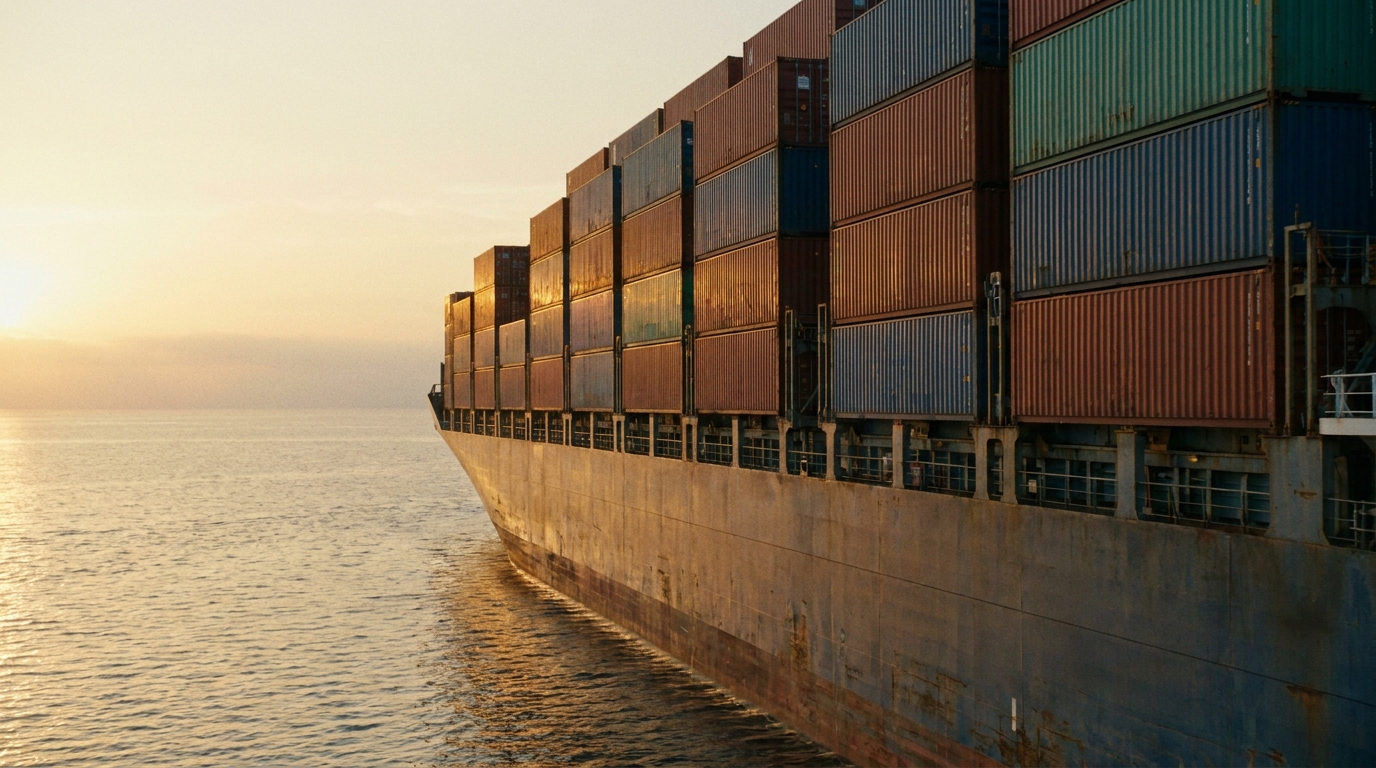
Ocean freight is the movement of goods in standardized shipping containers aboard cargo vessels between seaports, and it is how the vast majority of the world's traded goods cross an ocean. If you import or export anything at volume, ocean freight is almost always the cheapest way to move it, in exchange for transit measured in weeks rather than the days you get from air. This guide walks the whole process end to end: how a booking works, which container you need, when to choose FCL over LCL, what actually happens between the two ports, how long it takes, and how the cost is built from a base rate plus a stack of surcharges you should understand before you sign.
Key takeaways
- Ocean freight is the lowest cost per unit for moving high volumes internationally, but door-to-door transit is measured in weeks once you add drayage, port dwell, and customs.
- The core decision is FCL (your own container) versus LCL (sharing one); FCL usually wins once your cargo fills roughly half a container.
- A quote is a base ocean rate plus surcharges (BAF for fuel, THC at both ports, chassis, documentation), so always ask for an all-in number.
- Demurrage and detention are per-container, per-day penalties for leaving equipment too long at or away from the terminal, and they are among the easiest costs to avoid with tight scheduling.
- Most shippers run the whole move through a freight forwarder, who books space, arranges drayage on both ends, and files customs.
What is ocean freight shipping?
Ocean freight is cargo transported inside intermodal shipping containers on ocean-going vessels, then transferred to trucks or trains for the land legs. The container is the whole point: a sealed steel box that is packed once at origin and stays sealed through the vessel, the terminal, and the truck to your door, which cuts handling, theft, and damage. Because a single large vessel carries many thousands of containers, the cost to move one box across an ocean is low relative to the value inside it, which is why ocean freight dominates international trade in everything from furniture to machinery. The trade-off is speed and predictability: you plan around vessel schedules, port operations, and customs, not overnight delivery.
How do you book an ocean freight shipment?
You book ocean freight by reserving container space on a specific vessel and sailing, almost always through a freight forwarder or NVOCC (non-vessel operating common carrier) rather than dealing with the steamship line directly. The forwarder needs your cargo details, ready date, origin and destination, Incoterms (who is responsible for cost and risk at each stage), and a commercial invoice and packing list. From there they issue a booking confirmation, arrange the container and the origin trucking, and start the paperwork.
Give yourself lead time. Space on popular lanes can be tight, and rushing a booking is how shippers end up rolled to a later sailing. A good forwarder will also flag documentation and compliance requirements early, which matters because a missing filing can hold your cargo at the destination port. To understand who does what in this chain, see our guide to what a freight forwarder does.
What container types are used in ocean freight?
Ocean freight runs on a handful of standard container sizes, and picking the right one is mostly about matching your cargo's volume, weight, and handling needs. The four you will meet most often are the 20-foot standard, the 40-foot standard, the 40-foot high cube, and the refrigerated (reefer) container.
20-foot and 40-foot standard containers
The 20-foot dry container (often called a TEU, or twenty-foot equivalent unit) suits dense, heavy cargo that hits a weight limit before it fills the space, such as tile, stone, or machinery. The 40-foot standard holds roughly double the volume for a price that is well under double the 20-foot rate, so it is the default when you have enough cargo to fill it.
40-foot high cube containers
A 40-foot high cube (HC) is the same footprint as a 40-foot standard but about a foot taller inside, adding roughly 10 to 13 percent more cubic capacity. It is the common pick for light, bulky goods (think foam, textiles, or packaged consumer products) that run out of room before they run out of allowed weight.
Reefer and specialized containers
A reefer is an insulated, refrigerated container with its own powered cooling unit for temperature-sensitive cargo like produce, seafood, pharmaceuticals, and other cold-chain goods. Reefers cost more to book and require power at the terminal and on the vessel, plus tighter monitoring. Beyond these, open-top and flat-rack containers handle over-height or over-dimensional loads that will not fit through standard doors.
| Container type | Interior length | Best for | Notes |
|---|---|---|---|
| 20-foot standard | ~19.4 ft | Dense, heavy cargo | Fills weight limit before volume |
| 40-foot standard | ~39.5 ft | General mixed cargo | Best volume for the money |
| 40-foot high cube | ~39.5 ft | Light, bulky cargo | ~1 ft extra interior height |
| 40-foot reefer | ~37.9 ft | Temperature-controlled goods | Powered cooling, higher cost |
If you are trying to work out how much fits in a box before you book, a container load calculator helps you test carton counts and pallet configurations against each size.
FCL vs LCL: which should you use?
FCL (full container load) means you book an entire container for your cargo alone; LCL (less than container load) means your goods share a container with other shippers' freight. The practical rule of thumb: once your cargo fills roughly half a container, FCL usually beats LCL on total cost and handling risk, because LCL is priced by volume and requires consolidation and deconsolidation at container freight station (CFS) warehouses, which adds fees and touchpoints where damage can occur.
LCL still earns its place for smaller shipments where paying for a whole container makes no sense, and for testing a new product or lane before you commit to volume. FCL wins on transit predictability, lower per-unit handling, and a sealed box that is not opened until it reaches you. For a deeper side-by-side on cost breakpoints and timing, see FCL vs LCL shipping.
What does the ocean freight transit process look like?
An ocean shipment is a chain of legs, not a single trip, and most delays happen at the handoffs. Understanding the sequence helps you see where your cargo actually is and where time gets lost.
Origin: packing and drayage to the port
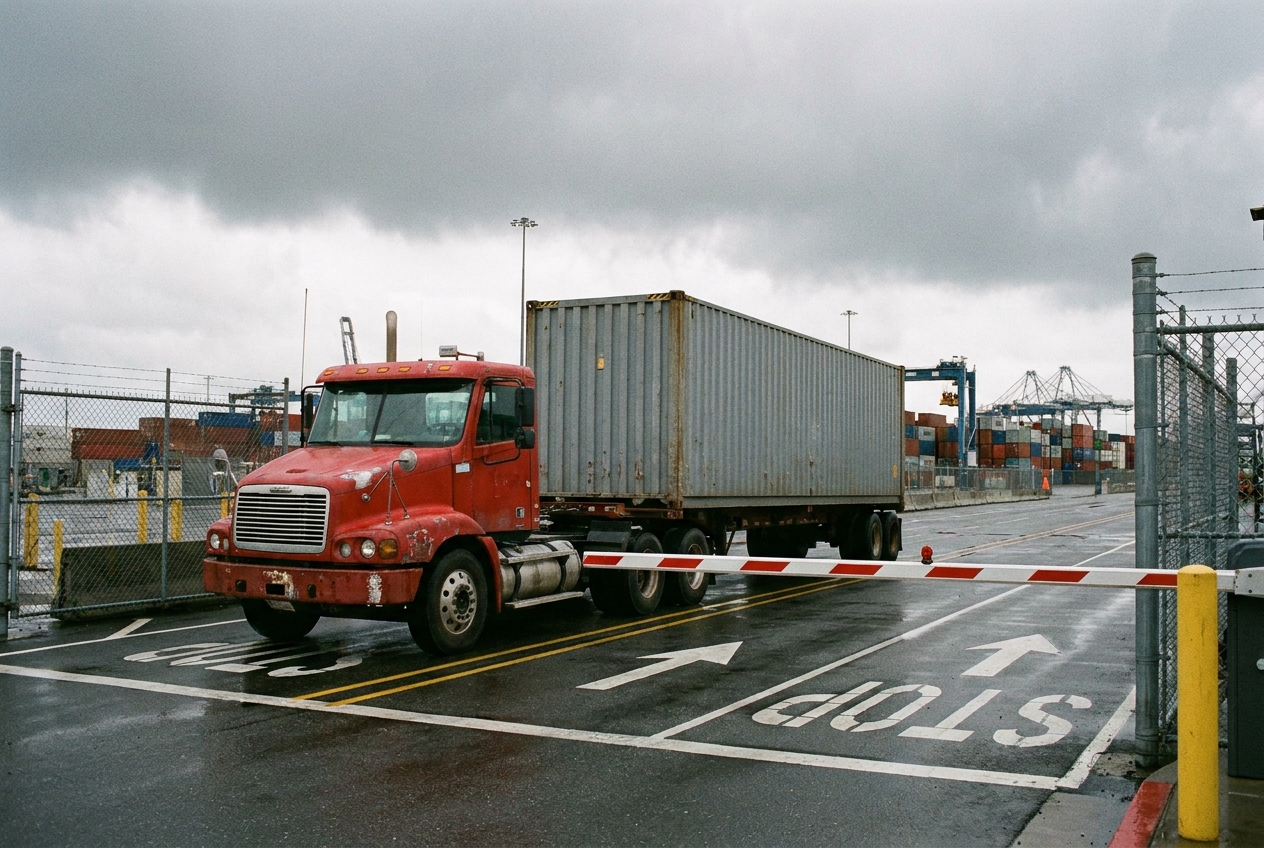
The container is delivered to your facility or a warehouse, packed, and sealed, then trucked to the origin port. That short-haul move between the shipper and the port is called drayage, and it is a distinct service with its own scheduling and fees; our primer on what drayage is covers how it works on both ends.
Origin port: terminal and loading
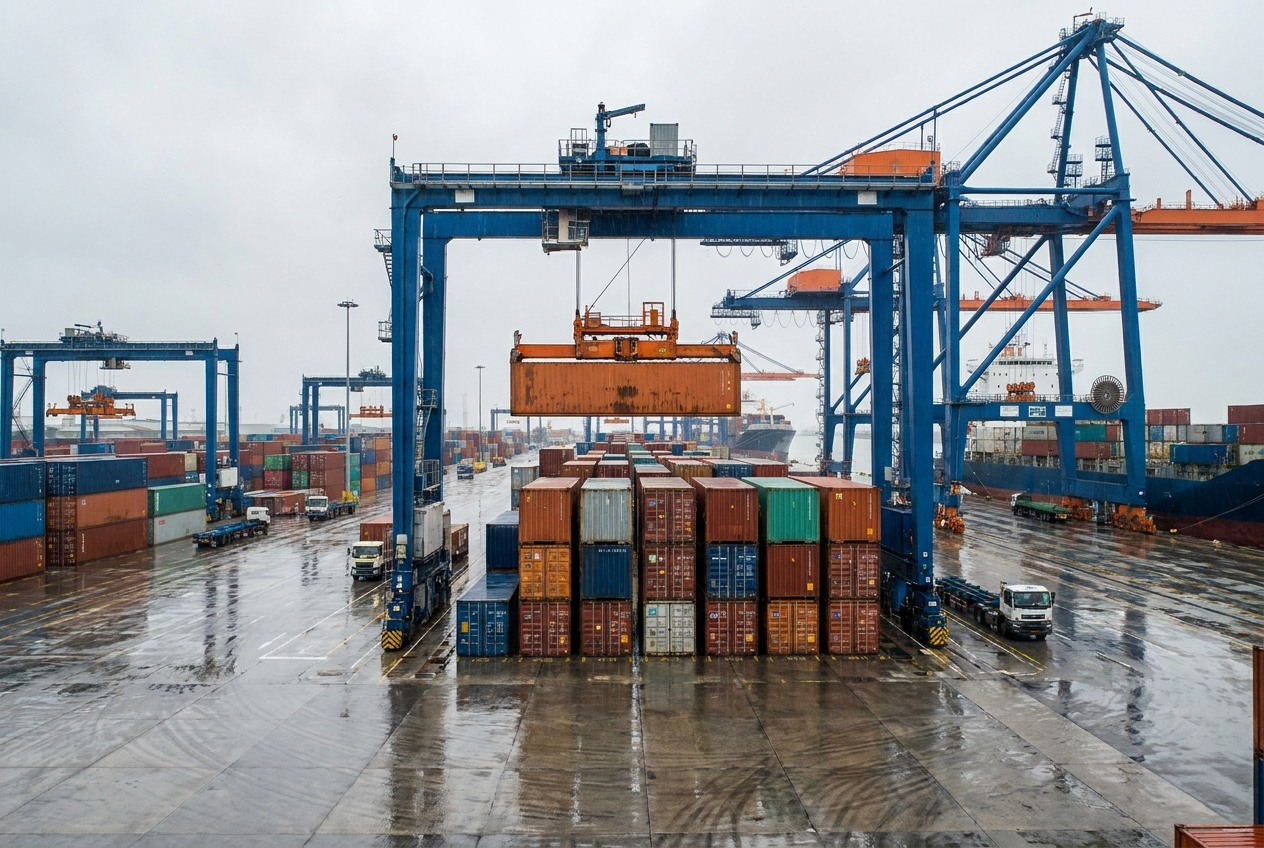
At the terminal the container is checked in, sits in the yard until its vessel is ready, and is then loaded aboard by ship-to-shore cranes. Export customs clearance and required filings happen around this stage, which is why documentation accuracy matters so early.
The ocean leg: sailing
The vessel sails the booked route, which may include transshipment (moving your container to a second vessel at an intermediate hub) on some lanes. This is the longest leg and the one you have the least control over once the ship departs.
Destination port and final drayage
On arrival, the container is discharged, moves through import customs, and then waits in the terminal until it is picked up. A drayage carrier collects it, often on a wheeled chassis, and hauls it to your warehouse or a deconsolidation point. The clock on free time starts here, which is where demurrage and detention risk lives.
How long does ocean freight take?
Plan ocean freight in weeks, not days. Port-to-port sailing is often around a couple of weeks on a major transpacific lane and roughly one to two weeks transatlantic, but those figures are only the vessel time. Door-to-door, you add booking lead time, origin drayage and terminal dwell, the sailing, destination customs, and final drayage, which realistically stretches many moves to several weeks total. Congestion, weather, blank sailings (a carrier canceling a scheduled departure), and transshipment can all add days, so build a buffer rather than promising a hard delivery date to your own customers. For context on how trade volumes move through U.S. ports, the U.S. Bureau of Transportation Statistics publishes freight data at bts.gov.
How is ocean freight priced?
An ocean freight quote is a base ocean rate plus a stack of surcharges, and the surcharges often add up to a meaningful share of the total. The base rate covers the vessel move for your container or cubic volume; everything else reflects fuel, terminal labor, equipment, and paperwork. Always ask for an all-in, door-to-door number so you are comparing like with like between forwarders.
| Cost component | What it covers | Charged how |
|---|---|---|
| Base ocean rate | The core vessel move, port to port | Per container (FCL) or per volume (LCL) |
| BAF (bunker adjustment factor) | Fuel cost swings | Per container, adjusts periodically |
| THC (terminal handling) | Loading and unloading at the terminal | Per container, at origin and destination |
| Chassis fee | The wheeled frame that carries the box on the road | Per day or per use during drayage |
| Documentation fee | Bill of lading and paperwork processing | Per shipment |
| Peak / congestion surcharge | High-demand seasons or backed-up ports | Situational, per container |
Because line items pile up quickly, the base rate alone tells you little. For a fuller breakdown of the extra fees that attach to an ocean move, see our guide to ocean freight accessorials, and to estimate the total cost of getting goods to your door including duties, try the landed cost calculator.
What are demurrage and detention, and how do you avoid them?
Demurrage and detention are per-container, per-day charges for holding equipment too long, and they are among the most avoidable ocean freight costs. Demurrage is billed when a loaded container sits inside the terminal past its allotted free time; detention is billed when you keep the container outside the terminal (at your dock) past the free time for returning it empty. Both accrue daily and can escalate fast if a shipment stalls.
You avoid them by scheduling pickup and return tightly, clearing customs before the vessel arrives, having labor ready to unload, and returning the empty promptly. A forwarder who watches free-time clocks for you is worth a lot here. Our detailed guide to detention and demurrage explains how free time works and how to dispute charges you should not owe.
What documents does ocean freight require?
Every ocean shipment rides on a set of documents, and errors in them are a leading cause of holds and delays. The core set is the commercial invoice, the packing list, and the bill of lading (the carrier's receipt and contract of carriage, which also governs title to the goods). International moves also need customs paperwork, and U.S. imports require an Importer Security Filing (the "10+2" data set) submitted before the cargo is loaded overseas. U.S. Customs and Border Protection publishes import requirements at cbp.gov. Getting names, values, HS codes, and quantities right the first time is the cheapest insurance you can buy against a customs hold.
Who handles ocean freight for you?
Most shippers run the entire move through a freight forwarder or NVOCC, who books vessel space, arranges drayage on both ends, prepares and files documents, and coordinates customs brokerage. Contracting directly with a steamship line can make sense for very large, steady volumes, but a forwarder is the practical choice for most importers and exporters because it turns a dozen moving parts into one point of contact. If you are comparing providers by mode and specialty, our directory of international freight companies lets you shortlist forwarders and NVOCCs, and you can browse the full list at find logistics companies.
A worked example: choosing a container and mode
Suppose you import 300 cartons of packaged homeware from Asia, each carton 20 x 16 x 12 inches, totaling roughly 670 cubic feet and about 6,000 pounds. That volume is light for its size and fills space before weight, so a 40-foot high cube is the natural box, and it comfortably holds the load with room to spare. Because the cargo fills well over half a container, FCL beats LCL: you avoid CFS consolidation fees and the extra handling, and you get a sealed container straight to your warehouse. Your all-in quote would show a base rate for the 40-foot HC plus BAF, origin and destination THC, a chassis fee for the destination drayage, and a documentation fee. To keep the box moving and dodge demurrage, you clear customs before arrival and have a crew ready to unload the day it hits your dock, then return the empty within the free-time window. That single set of choices, right container, right mode, tight scheduling, is where most of the avoidable cost in ocean freight is won or lost.
What are the most common ocean freight mistakes?
The recurring ones are booking too late and getting rolled, comparing forwarders on base rate instead of an all-in number, and underestimating door-to-door transit so downstream commitments slip. Add to that inaccurate documents that trigger customs holds, ignoring free-time clocks until demurrage is already running, and choosing LCL when the cargo really justified a full container. None of these are exotic; they are scheduling and diligence problems. Give yourself lead time, insist on all-in quotes, verify every document, and watch the free time, and ocean freight becomes the predictable, low-cost backbone it is meant to be.
Frequently asked questions
What is ocean freight shipping?
Ocean freight is the movement of goods in standardized shipping containers aboard cargo vessels between seaports. It is the primary mode for high-volume international trade because it carries large loads at a low cost per unit, in exchange for longer transit times than air freight.
What is the difference between FCL and LCL?
FCL (full container load) means you book an entire container for your cargo alone. LCL (less than container load) means your goods share a container with other shippers and are consolidated and deconsolidated at CFS warehouses. FCL usually wins on cost per unit and handling risk once you fill roughly half a container; LCL suits smaller shipments.
How long does ocean freight take?
Port-to-port sailing is often a couple of weeks on a major transpacific lane and around one to two weeks transatlantic, but total door-to-door time is longer once you add booking lead time, drayage, terminal dwell, and customs. Plan in weeks, not days, and build a buffer for port congestion and vessel schedule changes.
What is demurrage and detention?
Demurrage is a charge for leaving a loaded container inside the terminal past the free time allowed. Detention is a charge for keeping the container outside the terminal (at your dock) too long before returning it empty. Both accrue per container per day and are among the easiest ocean freight costs to avoid with tight scheduling.
What surcharges appear on an ocean freight quote?
Beyond the base ocean rate, common line items include BAF (bunker adjustment factor for fuel), THC (terminal handling charges) at origin and destination, chassis fees, documentation fees, and any peak-season or congestion surcharges. Ask for an all-in quote so surcharges do not surprise you later.
Do I need a freight forwarder for ocean freight?
Most shippers use a freight forwarder or NVOCC to book space, coordinate drayage, prepare documents, and file customs entries. You can contract directly with a carrier for large, steady volumes, but a forwarder is usually the practical choice for handling the moving parts of an international move.
What is the difference between a 40-foot and a 40-foot high cube container?
Both are 40 feet long, but a high cube (HC) is about a foot taller inside, adding roughly 10 to 13 percent more cubic capacity. High cube is the common choice for light, bulky cargo that fills space before it hits weight limits.
Ready to compare providers?
Search the directory by service and location, save options to your shortlist, and send a clear RFQ.
Related guides
What Is Freight Audit and Payment?
Freight audit and payment checks every carrier invoice against your contracted rate and the bill of lading, corrects overcharges, pays the carrier, and captures the cost data.
How to Write a Logistics RFP
A section-by-section guide to writing a logistics RFP that gets accurate, comparable quotes from 3PLs, freight brokers, and carriers.
Reverse Logistics: Returns, Recalls, and Recycling
A complete guide to reverse logistics: the backward flow of returns, recalls, repairs, redistribution, recycling, and disposal, plus how to recover value and choose a provider.