
What Is Retail Consolidation?
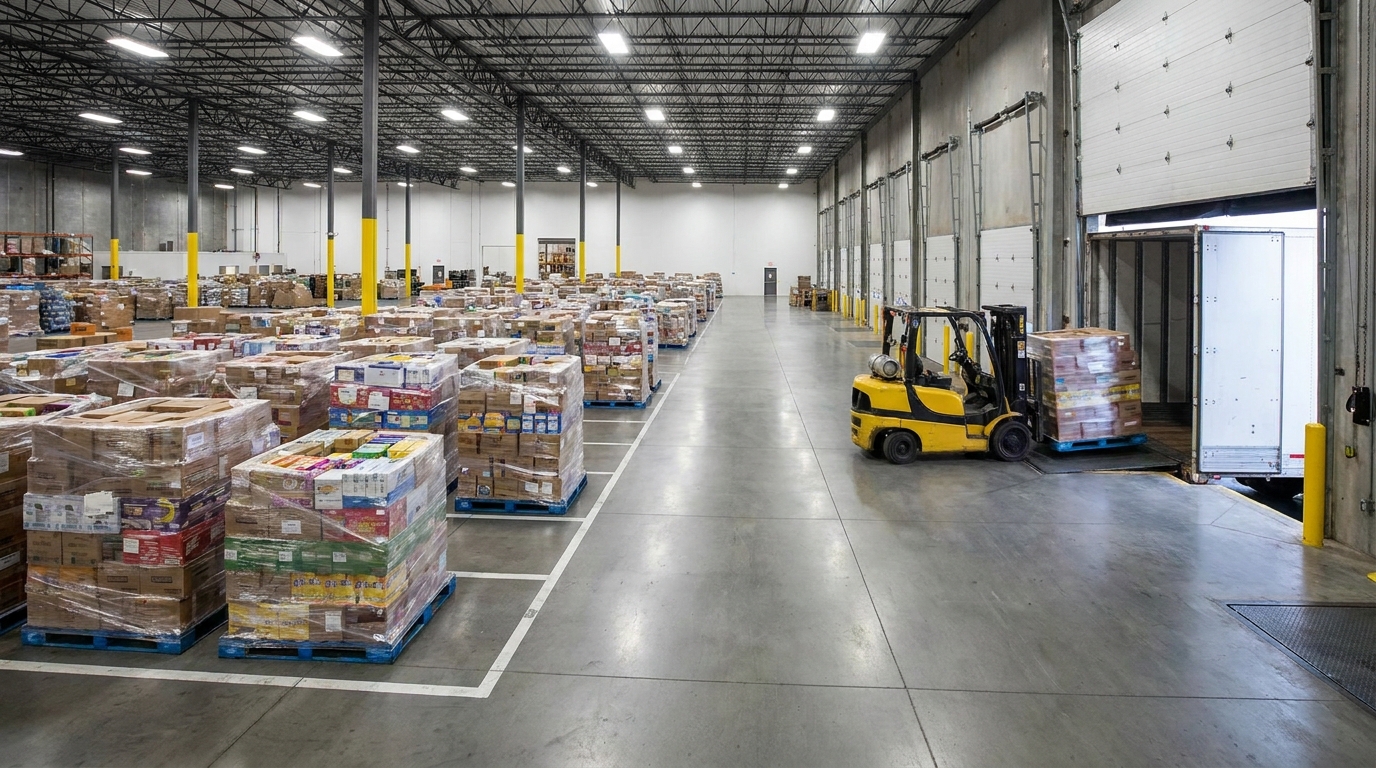
Retail consolidation is a logistics program that pools less-than-truckload (LTL) freight from multiple suppliers heading to the same retailer, combines it at a shared consolidation center, and delivers it as full truckloads to the retailer's distribution center. Instead of a dozen suppliers each sending small, separate LTL shipments to one DC, their pallets are gathered, staged, and reshipped together. The result is lower freight cost per unit, fewer inbound deliveries for the retailer to receive, and more predictable, appointment-based arrivals that lift on-time-in-full performance.
Key takeaways
- Retail consolidation combines many suppliers' LTL freight into full truckloads bound for one retailer's DC.
- The work happens at a consolidation center, often fed by regional pool points that gather nearby freight first.
- The main benefits are lower cost, fewer deliveries, better OTIF and appointment compliance, and less product damage from fewer handling touches.
- It fits best for suppliers shipping frequent LTL volume to the same big-box retailer, especially those facing chargebacks for missed windows.
- Confirm routing terms and who owns the freight at each leg before enrolling.
What is retail consolidation?
Retail consolidation is a program that merges freight from several suppliers, all destined for the same retailer, into shared full truckloads. It exists because retailers do not want to receive twenty small deliveries a week when they could receive two or three full trucks, and because suppliers pay a premium to move partial loads as LTL. By pooling that freight, both sides move the same goods at truckload economics. This is a specific application of the broader idea covered in our freight consolidation guide, focused squarely on inbound retail supply chains.
How does retail consolidation work?
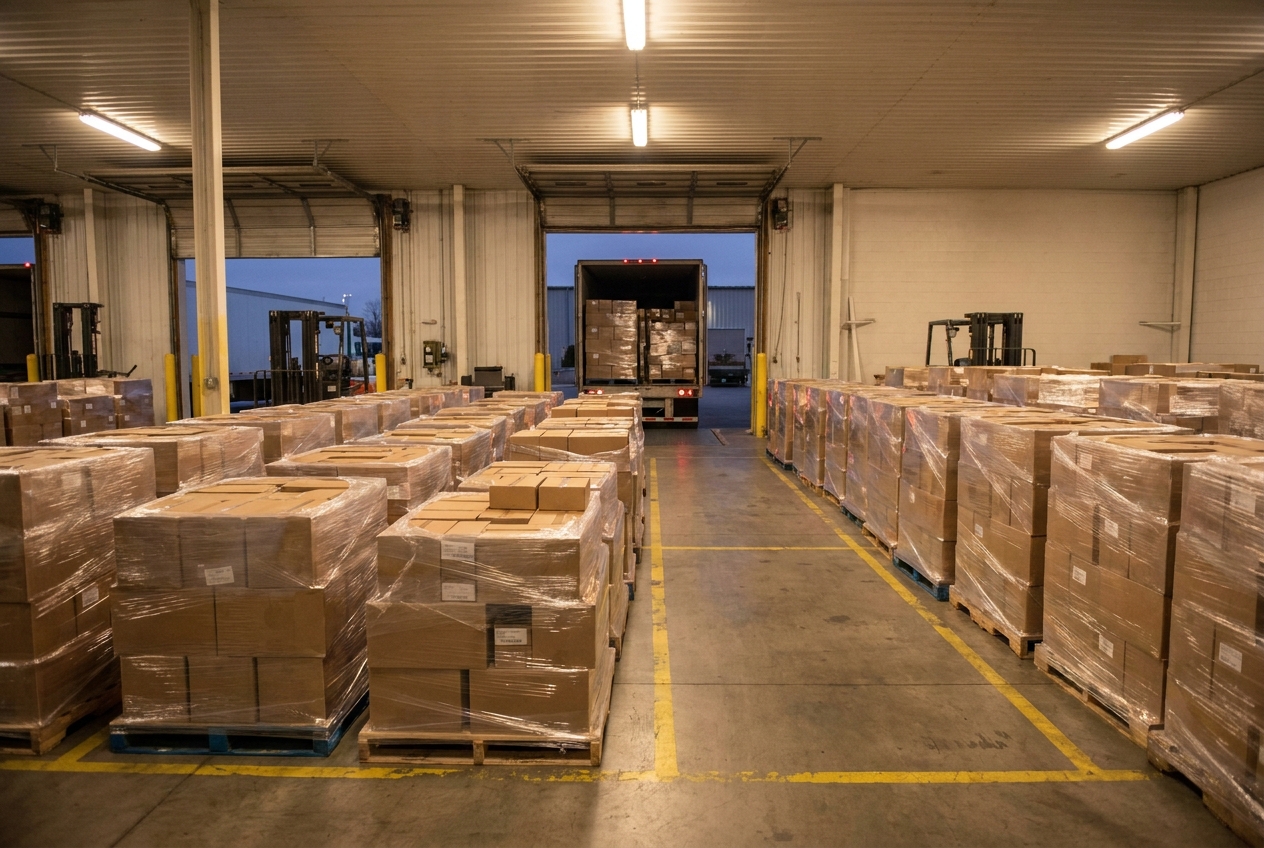
Suppliers ship their orders to a consolidation center rather than directly to the retailer's DC. The center receives each supplier's pallets, verifies them against the retailer's purchase orders, stages them by delivery destination, and then loads full trucks that run on scheduled appointments to the DC.
The mechanics usually rely on cross-docking, where freight flows from inbound trailers to outbound trailers with minimal storage, though a center may hold orders briefly to build a complete, on-time load. A typical flow looks like this:
- Suppliers tender their retailer-bound LTL freight to the consolidation center.
- The center receives, scans, and stages pallets against open purchase orders.
- Orders for the same DC and delivery window are combined into one truckload.
- The full truck departs on a booked appointment and delivers complete.
What are consolidation centers and pool points?
A consolidation center is the facility where multiple suppliers' freight is combined into outbound truckloads for a retailer. A pool point is an upstream regional hub that first gathers freight from nearby suppliers in a given area, then forwards it to the consolidation center or directly into the retailer's network. Pool points shorten the LTL leg by keeping the first move local and short.
In practice, a national program may run several pool points feeding one or more regional consolidation centers. A supplier in the Southeast drops freight at a nearby pool point instead of paying for a long LTL haul, and the network handles the linehaul at truckload rates from there. To see providers that run this model, browse the retail consolidation category in the directory.
What are the benefits of retail consolidation?
The core benefit is moving LTL-sized orders at truckload cost while arriving on a single scheduled appointment. That produces several compounding gains for shippers selling into large retailers.
- Lower freight cost. Pallets that would ship as LTL, priced by freight class and often padded with accessorial charges, instead ride in shared full truckloads. Use the container load calculator to see how many pallets fill a trailer before you model the savings.
- Fewer deliveries. The retailer receives a handful of full trucks instead of many partial LTL deliveries, which eases dock congestion and receiving labor on their side.
- Better OTIF and appointment compliance. Consolidated loads arrive complete and on a booked slot, which is exactly what on-time-in-full scorecards measure.
- Less damage. Fewer handling touches and fewer terminal-to-terminal transfers than repeated LTL mean less opportunity for crushed cartons and lost pallets.
Retail consolidation vs LTL direct: which fits?
Shipping LTL direct to the DC is simplest when your volume is low and infrequent. Retail consolidation wins when you ship often enough to a given retailer that pooling turns partial loads into full trucks. The table compares the two on the factors shippers weigh most.
| Factor | LTL direct to DC | Retail consolidation |
|---|---|---|
| Pricing basis | LTL rates by freight class, plus accessorials | Truckload economics shared across suppliers |
| Handling touches | Multiple terminal transfers | Fewer touches, often single cross-dock |
| Delivery to DC | Many separate arrivals | Consolidated full truckloads on appointment |
| OTIF risk | Higher; each shipment is its own window | Lower; scheduled complete loads |
| Best for | Low, occasional volume | Frequent volume to the same retailer |
When does retail consolidation make sense?
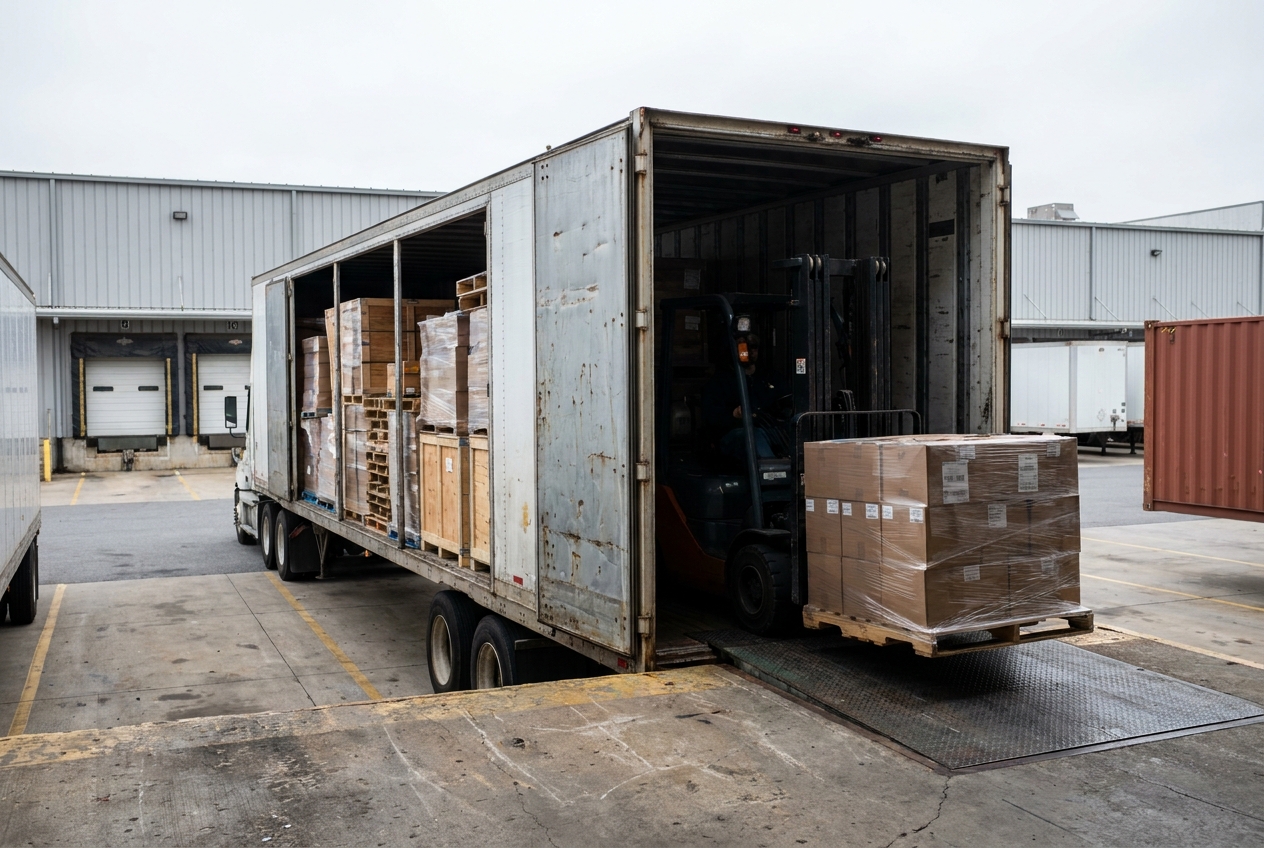
It makes sense when you ship recurring LTL volume to the same retailer and none of your individual orders fills a truck. Consider a worked example. Six apparel and housewares suppliers each ship two or three pallets a week to the same big-box DC in the Midwest. On their own, each pays LTL rates and books separate delivery appointments, and two of them regularly miss their windows and eat chargebacks.
Routed through a shared consolidation center, their combined fifteen-or-so pallets fill a full truck that runs twice a week on a single booked appointment. Each supplier now pays a share of one truckload move instead of a full LTL bill, the DC receives one complete truck instead of six partial deliveries, and the missed-window chargebacks stop because the load arrives on schedule and in full. Suppliers with light, frequent volume tend to gain the most, since consolidation is what gives them access to truckload rates in the first place. If your orders are large enough to fill a truck on their own, compare the trade-offs in our LTL vs FTL guide before assuming consolidation is the answer.
How does retail consolidation improve OTIF and reduce chargebacks?
It improves OTIF because a consolidation center can hold and release orders to hit a specific delivery window in complete units, rather than depending on several independent LTL carriers each hitting their own appointment. Major retailers score suppliers on on-time-in-full and issue chargebacks for early, late, or short deliveries, so predictability directly protects margin. When one managed load carries multiple suppliers' orders and departs on a booked slot, the number of things that can go wrong drops sharply. Freight patterns and mode data that inform these decisions are published by the Bureau of Transportation Statistics.
How do you get started with retail consolidation?
Start by mapping your recurring lanes to each retailer and flagging where you ship frequent LTL that never fills a truck. Then confirm the routing terms: some retailers run managed consolidation programs and tell you where to tender freight, while other times you arrange it yourself to cut your own costs. Verify who owns the freight at each leg and how prepaid versus collect billing works before enrolling.
From there, evaluate consolidators on their pool-point coverage near your origins, their appointment and OTIF track record with your target retailers, and their visibility into order status. When you vet a carrier or 3PL running the linehaul, check active operating authority through the FMCSA. You can shortlist providers that offer these programs in the retail consolidation directory and request quotes on the lanes that matter most to you.
Frequently asked questions
What is retail consolidation in shipping?
Retail consolidation is a program that pools less-than-truckload (LTL) freight from several suppliers heading to the same retailer at a shared consolidation center, then reships it as full truckloads to the retailer's distribution center. It lowers cost, reduces the number of inbound deliveries, and improves on-time-in-full performance.
What is the difference between retail consolidation and cross-docking?
Cross-docking moves freight from an inbound trailer to an outbound trailer with little or no storage, and can happen for any lane. Retail consolidation is a specific program that gathers many suppliers' orders for one retailer and combines them into full truckloads to that retailer's DC. Consolidation centers often use cross-docking as the mechanism to do it.
Who pays for retail consolidation?
It depends on the routing terms. Under a retailer-managed program, the retailer or its consolidator usually controls the lane and the supplier ships prepaid to the consolidation center. Under a supplier-initiated program, the shipper arranges consolidation to cut its own LTL and accessorial costs. Confirm who owns the freight at each leg before you enroll.
Does retail consolidation help with OTIF compliance?
Yes. Because a consolidation center can hold orders and release them as scheduled full truckloads, freight arrives on a booked appointment in complete units rather than as scattered LTL deliveries. That predictability is what drives higher on-time-in-full scores and fewer chargebacks at big-box DCs.
Is retail consolidation only for large shippers?
No. Smaller suppliers often gain the most, because their individual volume is too low to fill a truck on its own. Pooling their freight with other suppliers to the same retailer is what lets them access truckload economics and meet strict delivery windows.
How much can retail consolidation reduce freight cost?
Savings vary by lane, density, and how much LTL and accessorial spend you replace, so treat any single figure with caution. The gains come from moving pallets at truckload rates instead of LTL, cutting accessorial charges, and avoiding retailer chargebacks. Model your own lanes rather than assuming a fixed percentage.
Ready to compare providers?
Search the directory by service and location, save options to your shortlist, and send a clear RFQ.
Related guides
What Is Freight Audit and Payment?
Freight audit and payment checks every carrier invoice against your contracted rate and the bill of lading, corrects overcharges, pays the carrier, and captures the cost data.
How to Write a Logistics RFP
A section-by-section guide to writing a logistics RFP that gets accurate, comparable quotes from 3PLs, freight brokers, and carriers.
Reverse Logistics: Returns, Recalls, and Recycling
A complete guide to reverse logistics: the backward flow of returns, recalls, repairs, redistribution, recycling, and disposal, plus how to recover value and choose a provider.