
What Is Cross-Docking and When to Use It
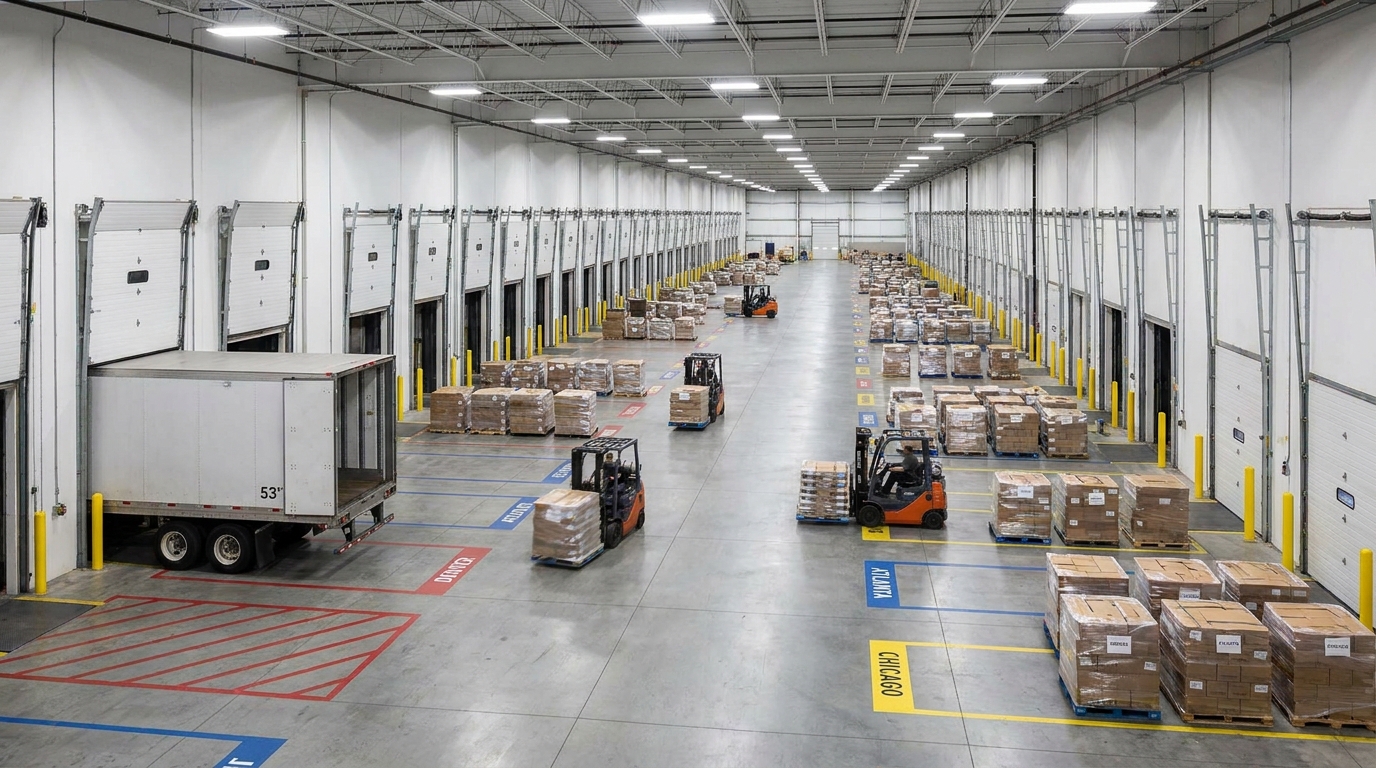
Cross docking is a distribution method where inbound freight is unloaded, sorted, and reloaded straight onto outbound trucks with little or no time spent in storage. Instead of receiving goods into inventory, holding them, then picking them later, a cross-dock treats the building as a sorting hub: a shipment comes in one door, gets staged by destination, and leaves through another door, often within the same shift. The payoff is speed and lower handling cost. The catch is that it only works when your freight is steady, predictable, and mostly pre-sold.
Key takeaways
- Cross-docking moves freight from inbound to outbound with minimal or zero storage, so goods dwell hours rather than days.
- There are two main types: pre-distribution (freight is pre-assigned to a destination before it arrives) and post-distribution (allocation is decided at the dock).
- It differs from warehousing, which holds inventory over time, and from transloading, which changes the mode or equipment freight travels on.
- It fits high-volume, fast-moving, time-sensitive, or pre-sold freight; it fails on slow, erratic, or inspection-heavy goods.
- Success depends on tight appointment scheduling, accurate scanning, and enough dock doors and labor to clear freight inside its dwell window.
What is cross-docking?
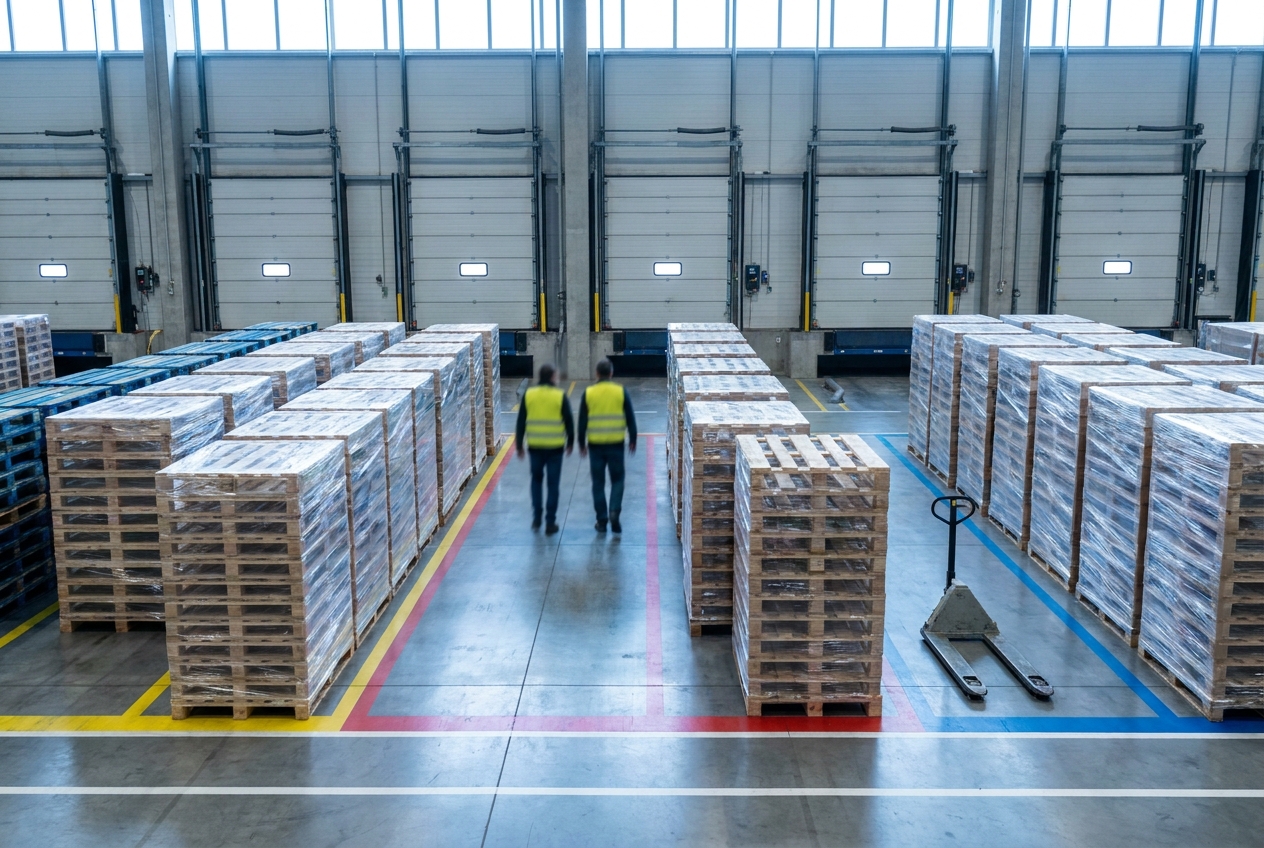
Cross-docking is a logistics process where product flows through a facility without being put away into storage. Freight arrives at inbound dock doors, is broken down and sorted by outbound destination, and is loaded onto departing trucks, often within hours. The facility is a transit point, not a stockroom.
The name comes from the physical layout. A dedicated cross-dock is typically a long, narrow building with inbound doors along one wall and outbound doors along the other, so freight literally crosses the dock floor from receiving to shipping. Because nothing is stored, the metric that matters is dwell time (how long a unit sits before it ships), not inventory turns. A well-run cross-dock keeps dwell in the range of a few hours to a day, not weeks.
What are the types of cross-docking?
The two core types are pre-distribution and post-distribution cross-docking, and the difference is when the destination decision gets made. Pre-distribution decides before arrival; post-distribution decides at the dock.
In pre-distribution cross-docking, each carton or pallet is already assigned to a specific store, customer, or outbound lane before the inbound truck arrives. The supplier or 3PL sorts it and reloads it by destination with no allocation decision on-site. This is common in retail replenishment where a vendor ships store-labeled cartons that flow straight to store-bound trailers.
In post-distribution cross-docking, the freight arrives first and the allocation is decided at the facility based on current demand, open orders, or store need. Goods are staged briefly while the system assigns them, then loaded. This adds flexibility when demand shifts fast, at the cost of a slightly longer dwell and more decision-making at the dock. Many operations blend the two, and both often overlap with freight consolidation, where several small inbound shipments are combined into fuller, cheaper outbound loads.
How does cross-docking differ from warehousing and transloading?
Warehousing holds inventory over time, cross-docking flows it through, and transloading changes the equipment or mode the freight rides on. All three can happen inside the same building, but they answer different questions.
Warehousing exists to buffer supply and demand: you store goods so you can fulfill orders on your own schedule. Transloading exists to bridge modes, for example moving cargo out of an ocean container or a rail car into over-the-road trailers, and it may include short-term storage. Cross-docking exists to consolidate and reship quickly, usually truck to truck, without a storage step. The table below shows how they compare on the factors shippers weigh.
| Factor | Cross-dock | Transload | Traditional warehouse |
|---|---|---|---|
| Primary purpose | Sort and reship fast | Change mode or equipment | Hold inventory over time |
| Typical dwell time | Hours to about a day | Hours to a few days | Days to months |
| Storage involved | Little or none | Short-term, optional | Core function |
| Handling touches | Low | Medium | Higher (put-away and pick) |
| Best for | Pre-sold, fast-moving freight | Import and intermodal freight | Buffer stock, variable demand |
What are the benefits of cross-docking?
The main benefits are lower handling cost, faster transit, and less inventory sitting still. Every unit you do not put away and pick later is a touch you do not pay for.
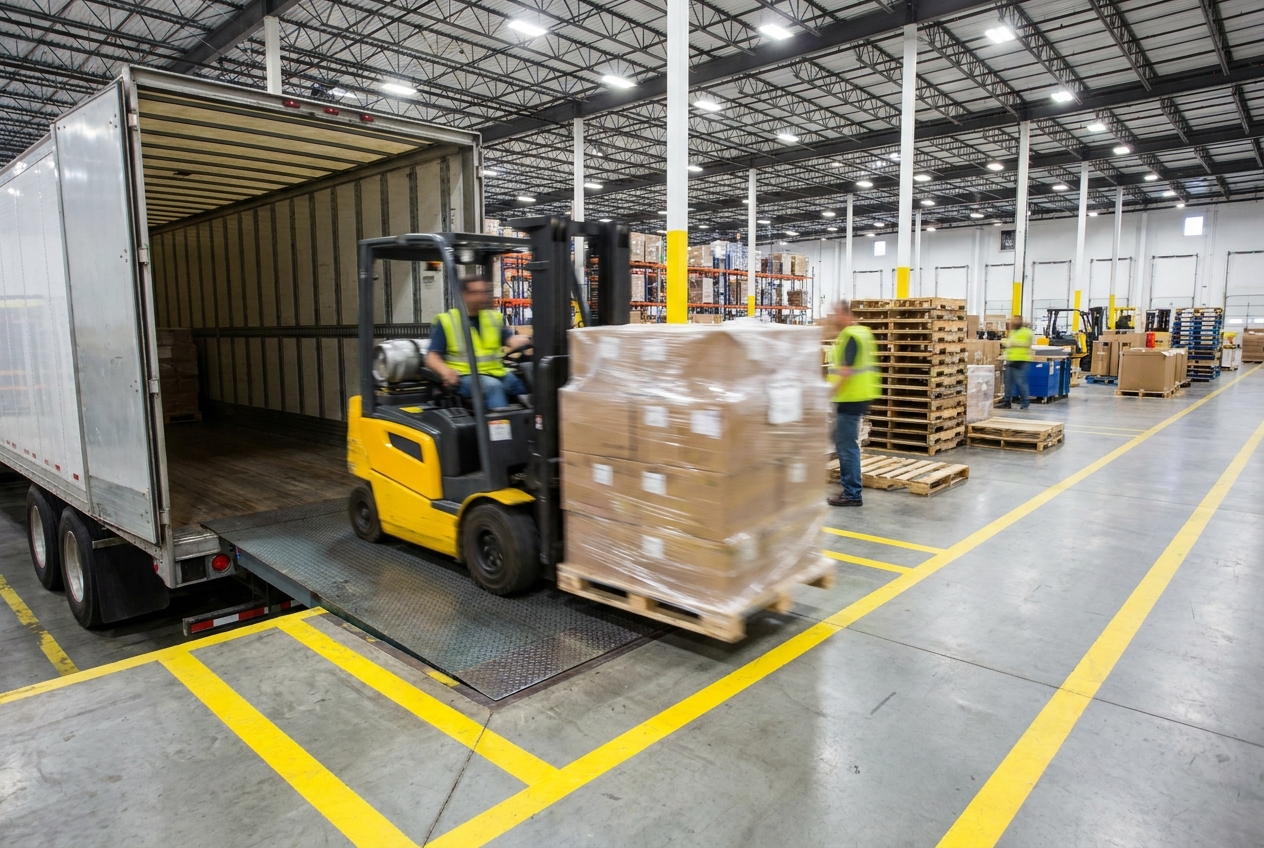
Because goods skip storage, you cut put-away labor, storage fees, and the pick step, and you shrink the time freight spends in the network. That can mean fresher perishables, faster store replenishment, and less working capital tied up in stationary inventory. Consolidating partial loads into fuller outbound trucks also improves trailer utilization and can lower per-unit freight cost, which is why cross-docks are common in retail consolidation programs. Fewer touches also tends to mean less damage, since each extra handling step is a chance to drop or misroute a pallet.
What does cross-docking require to work?
Cross-docking requires predictable inbound freight, a facility built for flow, tight scheduling, and accurate real-time visibility. Remove any one of those and the model stalls.
- A dock-heavy facility. Enough inbound and outbound doors and staging lanes so trucks are not waiting and freight is not piling up.
- Appointment scheduling. Inbound and outbound trucks have to be sequenced so freight arrives shortly before its outbound truck loads. Late inbound freight either misses its truck or forces unplanned storage.
- Scan-based visibility. Barcode or RFID scanning and a warehouse or transportation management system that routes each unit to the right outbound door in real time.
- Reliable carriers. Because there is no inventory buffer, a missed pickup ripples immediately. Vetting carrier reliability and confirming active operating authority through the FMCSA is part of protecting the flow.
- Steady volume. The economics depend on throughput. A cross-dock running well below capacity loses the labor and freight savings that justify it.
Many shippers run cross-docking through a third-party operator rather than building their own. If that is your path, understanding what a 3PL does and comparing providers in the warehousing and 3PL directory is the practical next step.
When should you use cross-docking?
Use cross-docking when your freight is high-volume, fast-moving, time-sensitive, or already pre-sold, and your inbound flow is predictable enough to schedule tightly. Avoid it when demand is erratic, SKUs move slowly, or goods need inspection, rework, or long holds.
Good fits include retail store replenishment, perishable and temperature-sensitive food headed to a common lane, promotional or seasonal pushes with a firm ship date, and consolidated LTL freight moving to shared destinations. Poor fits include slow-moving or long-tail inventory, products that need quality inspection or kitting before shipment, and any operation where inbound arrivals are too unpredictable to schedule. In those cases a traditional warehouse, or a transload with a short storage buffer, protects you better than a flow-through model that punishes variability. National freight-movement patterns tracked by the Bureau of Transportation Statistics underscore how much of this comes down to lane density: cross-docking rewards consistent, high-frequency lanes.
A worked example: replenishing 40 stores
Say a retailer replenishes 40 regional stores from a mix of 12 vendors. Each vendor ships several pallets a few times a week, but no single vendor fills a truck to any one store. Without cross-docking, each vendor either ships expensive partial LTL loads to every store or the retailer warehouses everything and re-picks it, paying storage and pick labor on fast-moving goods that do not need to sit.
With pre-distribution cross-docking, vendors label cartons by store and ship into one cross-dock. Inbound freight arrives on scheduled appointments through the morning, is sorted by store across the dock floor, and consolidates into 40 fuller store-bound trailers that depart the same afternoon. Freight dwells hours, storage cost is near zero, and outbound trucks run fuller. To pressure-test whether that beats simply warehousing the goods, a shipper can compare holding and handling costs with a warehouse cost calculator before committing to either model.
The lesson from the example is the same as the rule: cross-docking wins when volume is steady and destinations are known in advance. When either of those breaks down, the storage-free model that made it cheap is the same thing that makes it fragile.
Frequently asked questions
What is cross-docking in simple terms?
Cross-docking is a distribution method where inbound freight is unloaded at a dock, sorted, and moved directly onto outbound trucks with little or no time spent in storage. Goods typically dwell hours instead of days, and the facility acts as a sorting hub rather than a place to hold inventory.
What is the difference between pre-distribution and post-distribution cross-docking?
In pre-distribution cross-docking, freight is already assigned to a final customer or store before it arrives, so it is sorted and reloaded by destination. In post-distribution cross-docking, the goods arrive first and the allocation decision (who gets what) is made at the dock based on current demand.
How is cross-docking different from transloading?
Transloading transfers freight from one mode or equipment type to another, for example ocean container to domestic truck, and can include short-term storage. Cross-docking is about consolidating and reshipping to end destinations quickly, usually truck to truck, with minimal handling and no real storage step.
Is cross-docking cheaper than using a warehouse?
It can be, because you avoid long-term storage, put-away, and pick costs, and you touch each unit fewer times. But it only saves money when volume is steady and predictable. Erratic or slow-moving freight tends to cost more in a cross-dock because it stalls the flow the model depends on.
What products are a good fit for cross-docking?
High-volume, fast-moving, pre-sold, or time-sensitive freight fits best: retail store replenishment, perishable food, promotional or seasonal goods, and consolidated LTL headed to common lanes. Slow-moving SKUs, items needing inspection or rework, and unpredictable demand are poor fits.
Does cross-docking require special facilities?
Yes. A cross-dock is usually a long, narrow building with inbound doors on one side and outbound doors on the other, plenty of dock doors, and staging lanes. It relies on tight appointment scheduling, barcode or scan-based sorting, and enough labor to move freight across the floor within the dwell window.
Ready to compare providers?
Search the directory by service and location, save options to your shortlist, and send a clear RFQ.
Related guides
What Is Customs Clearance? The Import Process
Customs clearance is the process of getting an import legally released by CBP. Here is how the steps, the players, and the common holds actually work.
How to Read a 3PL Invoice (and Catch Overcharges)
A line-by-line guide to reading a 3PL invoice, reconciling it against your contract and order data, and catching the hidden or double-billed fees that quietly inflate your bill.
What Is OTIF (On-Time In-Full)?
OTIF (on-time in-full) is a retail scorecard metric that grades whether a supplier delivered the full quantity, to the right place, inside the retailer's booked delivery window.