
What Is Drop Trailer Service (Drop-and-Hook)?
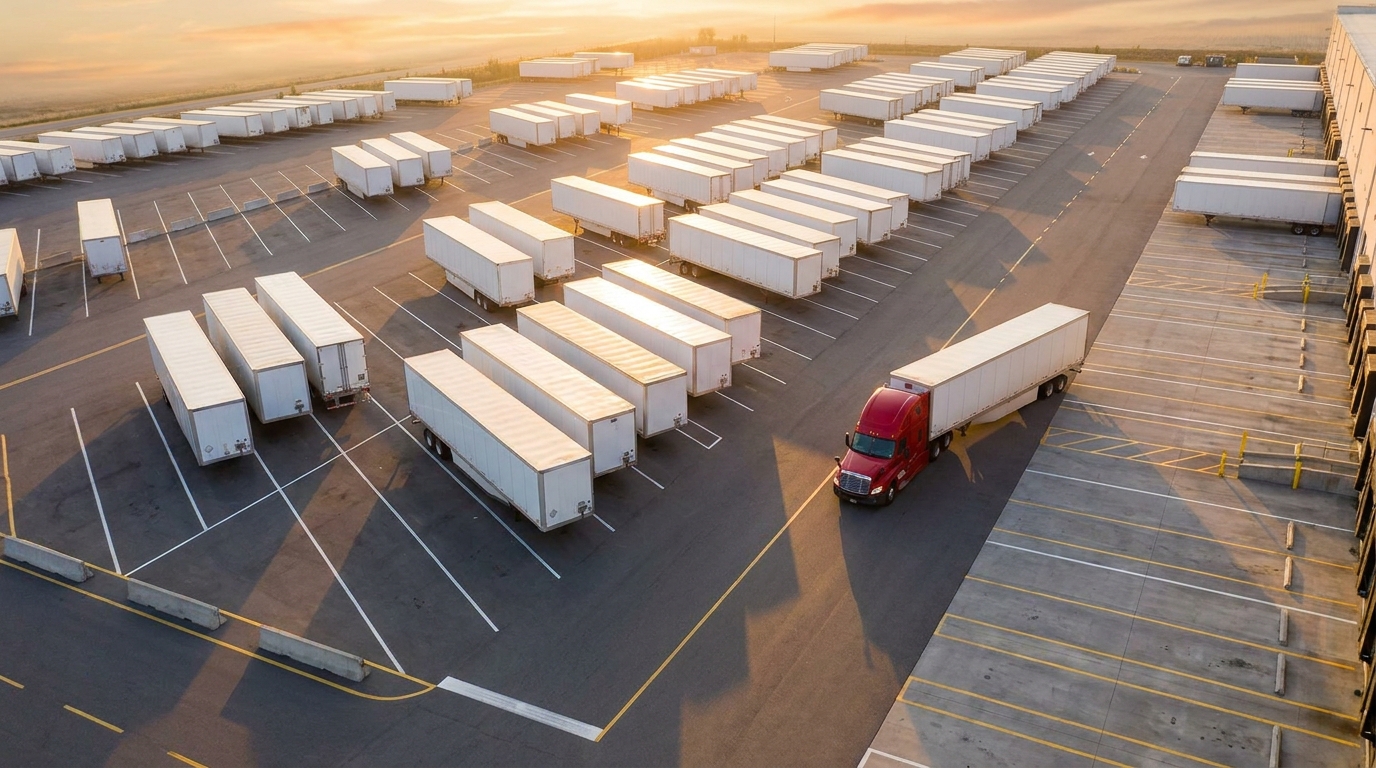
Drop trailer service, commonly called drop-and-hook, is an arrangement where a carrier leaves a trailer at your facility so it can be loaded or unloaded on your schedule, then a driver simply drops the trailer they arrived with and hooks up the staged one. Instead of a driver waiting at the dock while freight is loaded, the trailer is already full when the truck arrives, and the swap takes minutes. It is one of the most effective ways to cut driver wait time, remove detention, and turn trucks faster on high-volume lanes.
Key takeaways
- Drop-and-hook means the trailer is pre-loaded and staged; the driver swaps trailers in minutes instead of waiting through a live load.
- The main payoff is eliminating driver detention, giving you flexible loading windows, and getting faster truck turns on steady lanes.
- It requires yard space, a dedicated trailer pool, and disciplined scheduling so a loaded trailer is always ready to grab.
- It pays off when volume is high and lanes are consistent; low or irregular volume usually favors live loading.
- You trade driver detention for possible trailer rent or per-diem, so the drop agreement terms decide the real cost.
What is drop trailer service?
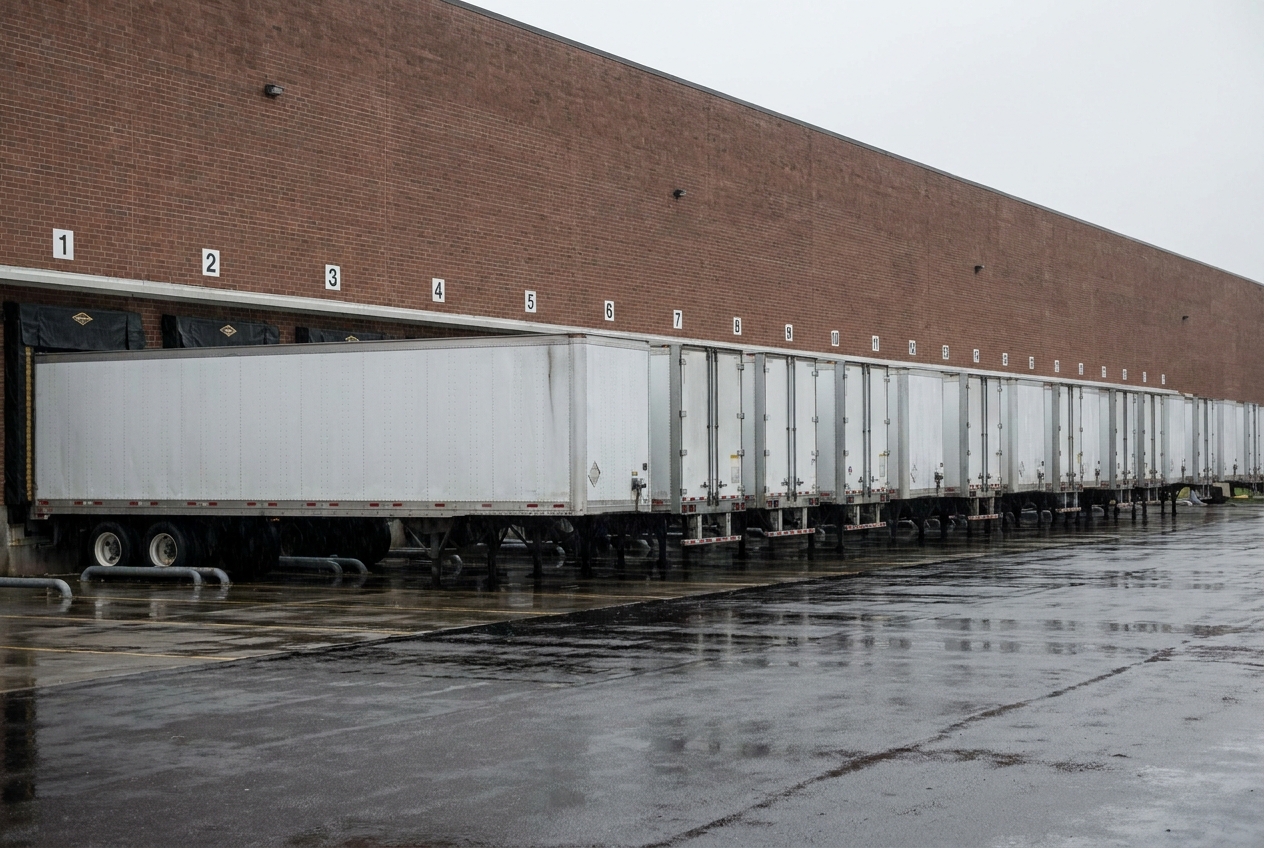
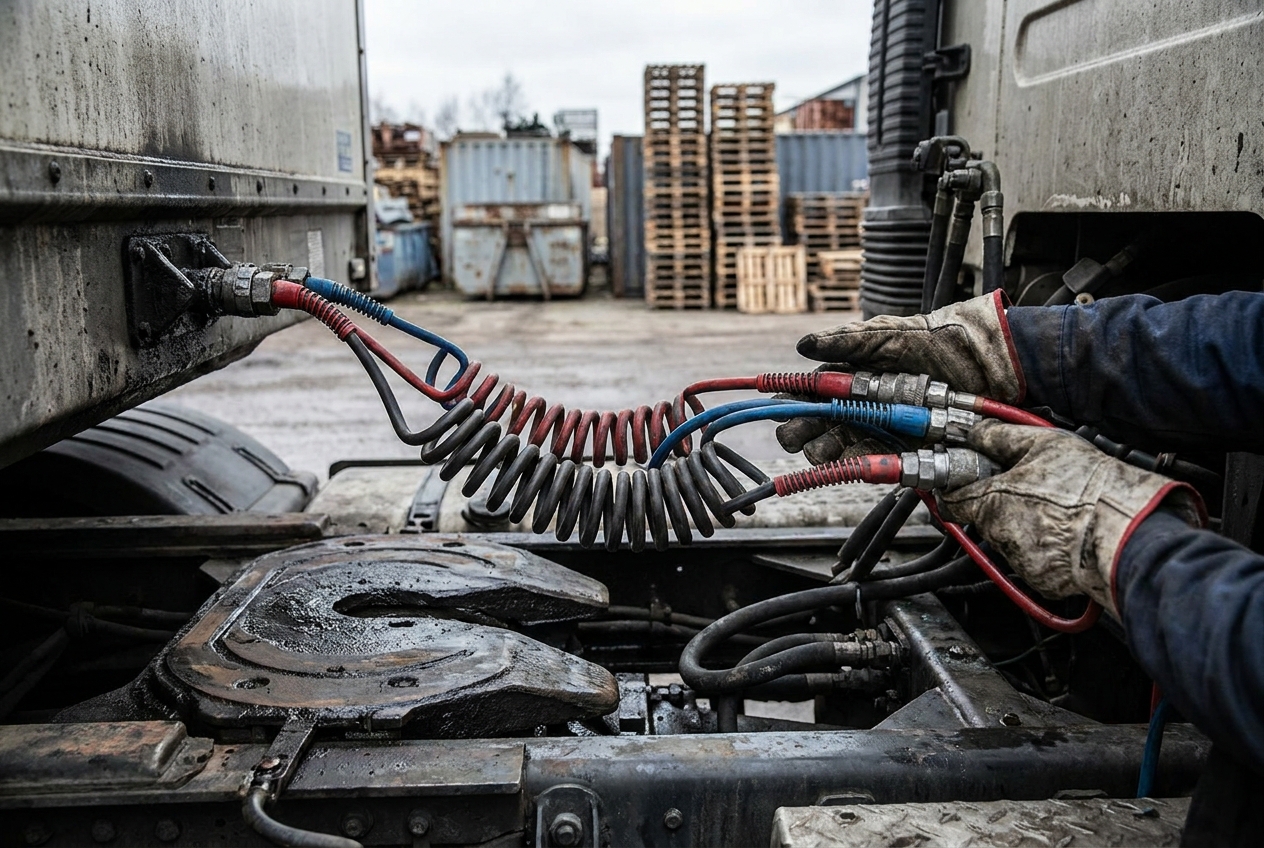
Drop trailer service is a loading model in which the carrier positions a trailer at your dock ahead of time so your team loads or unloads it without a driver present. When a tractor arrives, the driver unhooks the trailer they brought, connects the air lines and electrical to the pre-loaded trailer, does a quick inspection, and pulls out. The freight moves the same way a standard long-haul truckload shipment does; only the loading step changes.
The phrase drop-and-hook describes the driver action: drop one trailer, hook another. Because the loading and the driving are decoupled, your warehouse controls the loading clock and the carrier controls the driving clock, and neither side waits on the other.
How does drop-and-hook differ from a live load?
In a live load, the driver arrives, backs into a door, and waits at your facility while the trailer is loaded or unloaded before leaving with the same trailer. In drop-and-hook, that waiting disappears because the trailer was staged earlier. The trade is that live loading needs no spare trailers, while drop-and-hook needs trailers sitting on site.
Live loading keeps your yard clear and works for any volume, but it exposes you to detention when loading runs long and it ties up a driver's federally limited hours. Detention is a real constraint because drivers operate under hours-of-service limits set by the FMCSA, so time spent waiting at your dock is time they cannot drive. Drop-and-hook removes that pressure but demands equipment and space.
Drop-and-hook vs live load: which fits your dock?
The right choice comes down to volume, lane consistency, and how much yard space you have. The table below lays out the core differences.
| Factor | Drop-and-hook | Live load |
|---|---|---|
| Driver time on site | Minutes to swap trailers | One to several hours waiting to load |
| Loading schedule | Flexible; load anytime before pickup | Fixed to the appointment window |
| Detention risk | Low for drivers; shifts to trailer per-diem | High when loading runs past free time |
| Yard space needed | Spots for a trailer pool | Minimal; trailers do not dwell |
| Equipment commitment | Carrier dedicates trailers | None beyond the arriving trailer |
| Best for | High, steady volume on set lanes | Low or irregular volume |
What are the main benefits of drop trailer service?
The largest benefit is eliminating driver detention, because the driver never waits to be loaded. That alone can remove one of the most common line-item disputes in trucking; our guide on detention and demurrage covers how those charges accrue and why they escalate.
Loading flexibility is the second benefit. Your team loads trailers across a full shift instead of racing to fill a truck during a narrow appointment, which smooths labor and reduces overtime spikes at the dock. Faster truck turns are the third: a carrier that spends minutes at your yard instead of hours can run more loads per day, which makes your freight more attractive and can steady your rates. For a broader view of how these dock charges fit together, see our guide to accessorial charges.
What does drop trailer service require to work?
Drop-and-hook needs three things in place: yard space, a trailer pool, and scheduling discipline. Skip any one and the model breaks down into drivers arriving to find no loaded trailer waiting.
Yard space means striped trailer spots and enough room for a tractor to maneuver, plus dock doors that can hold parked trailers without blocking live-load traffic. A trailer pool is the set of trailers the carrier dedicates to your lane so a loaded one is always staged; pool size scales with your volume and how long trailers dwell before pickup. Scheduling discipline ties it together: your loading team and the carrier's dispatch have to keep the pool balanced so full trailers are ready and empties are available to drop. Many shippers run this through a 3PL or dedicated carrier; you can compare providers in the logistics company directory.
When does drop trailer service actually pay off?
Drop trailer service pays off when your volume is high enough and your lanes consistent enough that the value of removed detention and faster turns outweighs the cost of committing trailers to a pool. Irregular or low-volume shippers rarely clear that bar.
Consider a food distributor shipping four to six truckloads a day out of one facility on the same lane. Under live loading, each driver waits roughly two hours to load, and long loads regularly trigger detention after the free time expires. By switching to drop-and-hook with a small trailer pool, the warehouse pre-loads trailers overnight, drivers swap in minutes at dawn, and detention on that lane effectively disappears. The distributor accepts a few dedicated trailers parked in the yard in exchange for reclaimed driver hours and steadier pickups. A shipper moving two irregular loads a week would not see the same return, because the parked trailers would sit idle most days.
What are the costs and downsides of a drop program?
The line-haul rate for drop-and-hook is often close to a live load, but the model carries its own costs. Trailers staged in your yard are equipment the carrier cannot use elsewhere, so you may see trailer rent, a per-day storage charge, or a slightly higher rate to justify the commitment. If a dropped trailer sits past the agreed free time, trailer detention or per-diem can appear, which shifts the same clock you removed from the driver onto the trailer.
Other trade-offs include the yard footprint, the risk of a mismatched pool leaving drivers without a loaded trailer, and the need for tighter coordination. To keep those charges from creeping back in, read our companion guide on how to avoid demurrage and detention, which walks through the free-time terms that decide whether a drop program stays cheap.
How do you set up drop trailer service with a carrier?
Start by confirming your volume and lane consistency justify a dedicated pool, then negotiate the drop terms explicitly rather than assuming them. Nail down pool size, free time before trailer per-diem, who pays for repositioning empties, and how mismatches are handled when the yard runs short of loaded or empty trailers.
Ask the carrier to spell out the trailer count committed to your lane, the daily free time and the per-diem rate after it, and the process for balancing the pool. Freight volume nationally has stayed under pressure in recent years according to the Bureau of Transportation Statistics, so carriers weigh trailer commitments carefully; a clear, mutually beneficial drop agreement is easier to secure when your volume is steady and your dock keeps the pool moving.
Frequently asked questions
What is the difference between drop-and-hook and live load?
In drop-and-hook, a driver arrives, unhooks the trailer they brought, hooks up a pre-loaded trailer, and leaves in minutes. In a live load, the driver waits at the dock while the trailer is loaded or unloaded, which can take one to several hours. Drop-and-hook trades that waiting time for the need to keep spare trailers on site.
Does drop trailer service cost more than live loading?
The line-haul rate is often similar, but a drop program carries its own costs: trailers sitting in your yard are equipment the carrier cannot use elsewhere, so carriers may charge trailer rent, a per-day storage fee, or a higher rate to justify committing trailers to a pool. You save on detention and loading labor, so the net cost depends on your volume and turn times.
How much yard space do I need for drop trailers?
You need enough striped trailer spots and dock doors to hold the pool plus room to maneuver a tractor. A rough planning figure is one to two spare trailers per active lane so a driver always has a loaded trailer to grab and an empty to leave. A single high-volume door can justify several parked trailers at once.
What is a trailer pool?
A trailer pool is a set of trailers a carrier dedicates to one shipper or lane so trailers are always staged at the dock for loading and pickup. The shipper loads trailers on their own schedule, and the carrier cycles tractors through to move the full ones. Pool size is set by volume, dwell time, and how far apart pickup and delivery sites are.
Does drop-and-hook eliminate detention charges?
It largely removes driver detention because the driver is not waiting to be loaded, but it can introduce trailer detention or per-diem if a dropped trailer sits longer than the agreed free time. You move the clock from the driver to the trailer, so the terms of the drop agreement, not the loading dock, decide whether extra charges appear.
Is drop trailer service worth it for a small shipper?
It usually pays off once you ship enough on consistent lanes that live-load waiting and detention add up, and you have the yard space to hold trailers. Low-volume or irregular shippers often do better with live loads, because a carrier will not commit trailers to a pool that sits idle most of the week.
Ready to compare providers?
Search the directory by service and location, save options to your shortlist, and send a clear RFQ.
Related guides
Carrier Vetting: How to Avoid Fraud and Bad Carriers
A step-by-step guide to carrier vetting: verify FMCSA authority and safety, confirm insurance with the insurer, spot red flags, and stop double-brokering.
Dedicated vs Common Carrier: Which Fits
How dedicated contract carriage, common carriers, and private fleets compare on cost, capacity, and commitment, and when your volume justifies dedicated.
Shipping Construction Materials to a Jobsite
How construction freight works: matching flatbed and specialized trailers to steel, lumber, pipe, and precast, plus jobsite access, oversize permits, and delivery timing.