
What Is Blast Freezing and When Is It Used?
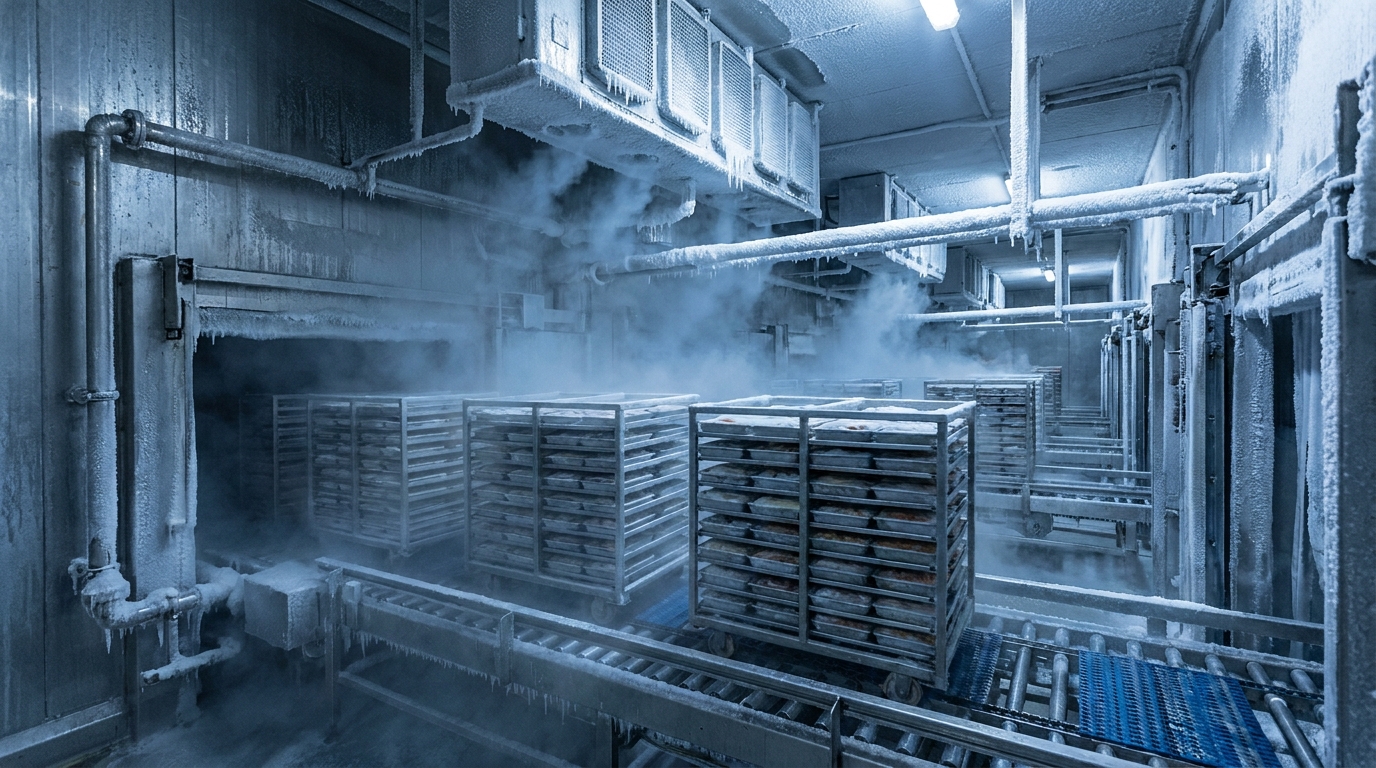
Blast freezing is a rapid freezing method that blows high-velocity, very cold air (typically around -30 to -40 degrees Fahrenheit) across product to drive its core temperature down in hours instead of the day or more a standard storage freezer needs. Freezing that fast forms small ice crystals rather than large ones, which protects texture and moisture, so blast freezing is the standard first freeze for seafood, meat, prepared meals, and other foods where quality on thaw matters. A regular freezer keeps already-frozen goods cold; a blast freezer is what actually freezes fresh or cooked product well in the first place.
Key takeaways
- Blast freezing uses forced, very cold air (about -30 to -40 degrees Fahrenheit) to freeze a product's core in hours, not a full day.
- Fast freezing forms small ice crystals that cause less cell damage, so product thaws firmer and with less moisture loss than slow-frozen product.
- Blast freezing takes product below freezing; blast chilling only cools hot or fresh food to just above freezing to clear the food-safety danger zone.
- It is used when freezing fresh or cooked product for the first time; a standard storage freezer is enough only to hold goods that are already frozen.
- Common candidates are seafood, meat and poultry, ready meals, bakery, and ice cream.
What is blast freezing?
Blast freezing is a freezing process that combines very cold air with high air velocity to remove heat from a product quickly. The speed is the whole point. Instead of leaving product to freeze slowly on a shelf, a blast freezer forces chilled air over every surface so the core passes through the critical freezing zone fast.
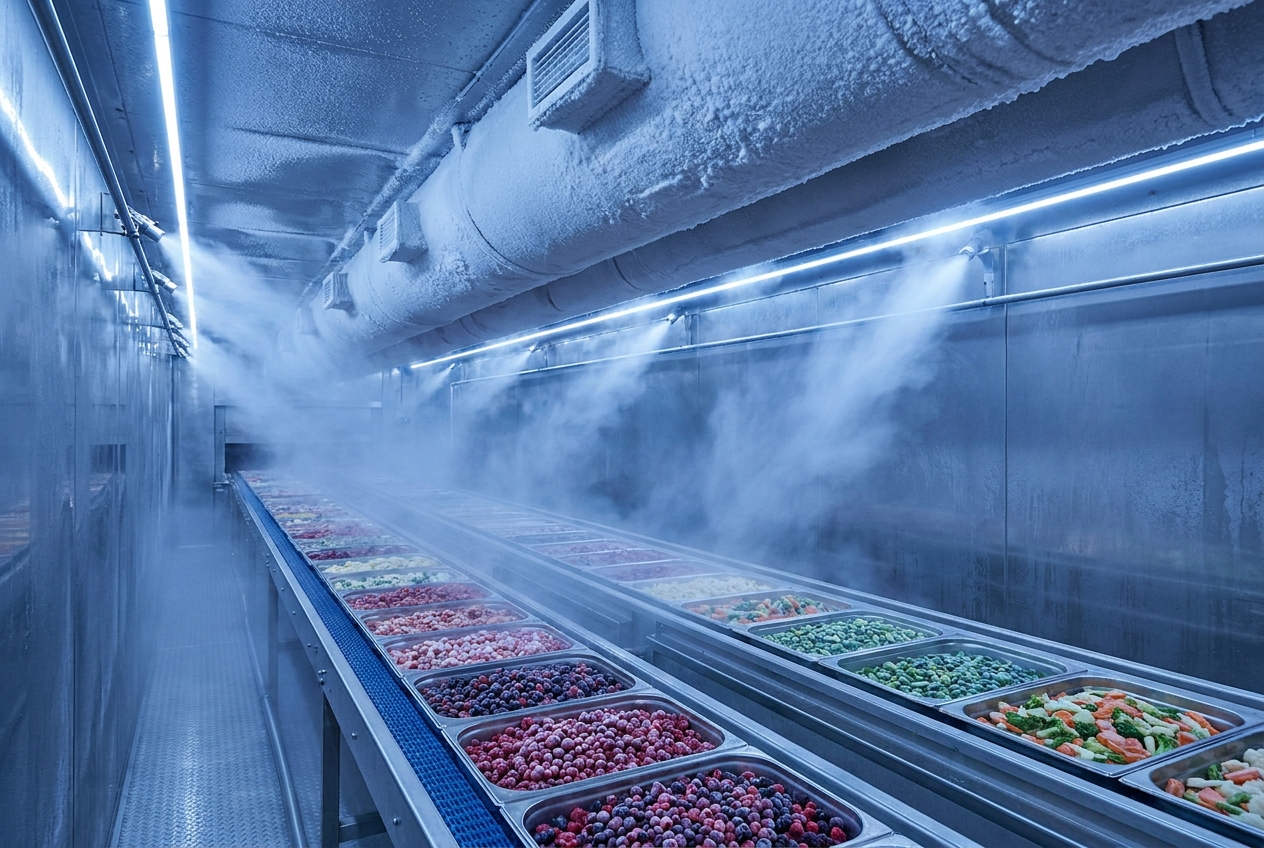
The equipment ranges from a batch blast cell or blast room where loaded racks sit in a fast-moving airstream, to a continuous blast tunnel or spiral freezer that carries product through on a belt. Some operations use plate freezers or cryogenic tunnels that spray liquid nitrogen or carbon dioxide, but forced-air blast freezing is the most common approach in commercial cold storage.
How does blast freezing work?
A blast freezer works by moving high-velocity air, usually in the -30 to -40 degree Fahrenheit range, across the product so heat transfers out of it far faster than in still air. Two factors do the work: the low air temperature and the air speed, which strips away the thin insulating layer of warmer air that clings to a product's surface.
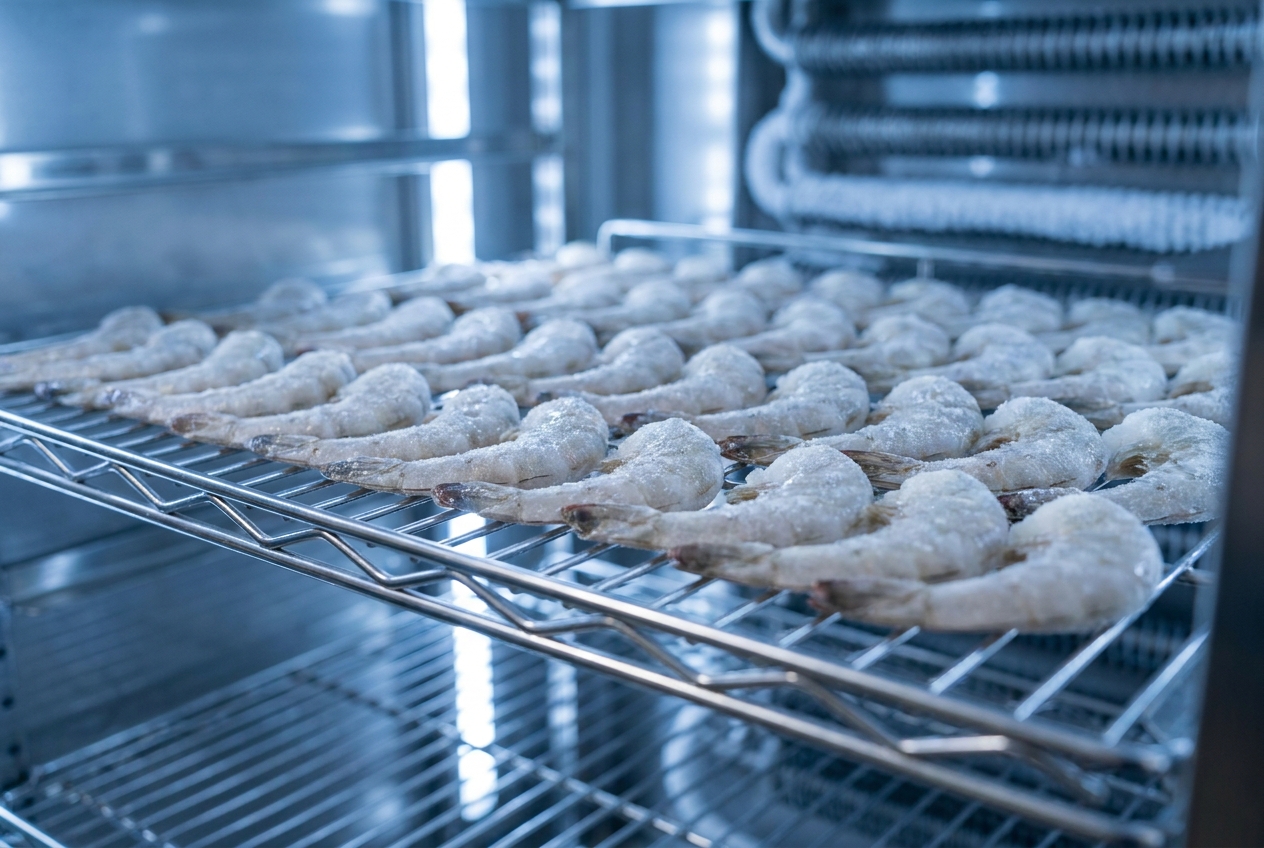
Because the transfer is so aggressive, product is loaded to expose surface area. Thin, individually spread items freeze fastest, which is the basis of individually quick frozen (IQF) product like loose shrimp or berries. Thick cuts, dense blocks, or tightly packed cases freeze slower because heat has farther to travel out of the center.
Why does fast freezing preserve quality better than slow freezing?
Fast freezing preserves quality because it forms many small ice crystals instead of a few large ones. When water inside food freezes slowly, crystals grow large and puncture cell walls. On thaw, those damaged cells leak, so the product loses moisture (drip loss), turns softer, and can look and taste degraded.
Blast freezing rushes the product through the temperature band where the largest crystals form, so the ice that sets is fine and evenly distributed. Cell walls stay largely intact, and the product thaws firmer, holds more of its weight, and keeps closer to its fresh texture. For a shipper, that difference shows up directly in yield and in how the product grades at the far end of the cold chain.
Blast freezing vs standard freezer storage
The simplest way to think about it: a blast freezer freezes product, a storage freezer holds it. They run at different temperatures, move air very differently, and serve different jobs.
| Factor | Blast freezing | Standard freezer storage |
|---|---|---|
| Purpose | Freeze fresh or cooked product for the first time | Hold product that is already frozen |
| Air temperature | Roughly -30 to -40 degrees Fahrenheit or colder | Roughly 0 to -10 degrees Fahrenheit |
| Air movement | High velocity, forced over the product | Low, gentle circulation |
| Time to freeze core | Commonly a few hours | 24 hours or more |
| Ice crystals | Many small crystals, little cell damage | Fewer large crystals, more cell damage |
| Effect on quality | Better texture and moisture retention on thaw | More drip loss and softening if used to freeze fresh |
Using a static storage freezer to freeze fresh product is where quality problems start. It will eventually get the product frozen, but slowly, and the slow pass through the freezing zone is exactly what large crystals and cell damage need. Match the temperature target to the product with our overview of cold storage temperature ranges, and see how frozen sits alongside chilled and refrigerated in frozen vs refrigerated vs chilled storage.
What is the difference between blast freezing and blast chilling?
Blast freezing takes product below freezing to a solid frozen core; blast chilling rapidly cools hot or fresh food only to just above freezing, around 34 to 38 degrees Fahrenheit. Blast chilling is a food-safety step for cooked food. The goal is to move product out of the microbial danger zone (roughly 40 to 140 degrees Fahrenheit) as fast as possible so bacteria have little time to grow, guidance that traces back to FDA food-safety rules.
The equipment looks similar and the airflow is aggressive in both, but the endpoint is different. Blast chill and you get a refrigerated product ready to hold or serve. Blast freeze and you get a frozen product ready for long-term frozen storage and transport. Some cooked-meal operations do both in sequence: blast chill to arrest cooking safely, then blast freeze for shelf life.
What products and industries use blast freezing?
Blast freezing is used anywhere the first freeze determines quality or safety. The most common categories are:
- Seafood and fish: freezing at or near the catch to lock in freshness and support IQF portions.
- Meat and poultry: primal cuts, portioned proteins, and ground product where drip loss hurts yield.
- Prepared and ready meals: cooked dishes blast chilled then frozen for retail and foodservice.
- Bakery and dough: par-baked goods, laminated dough, and desserts that must freeze before structure changes.
- Ice cream and dairy: hardening and holding frozen texture.
- Fruits and vegetables: IQF berries, peas, and cut produce frozen loose so they pour rather than clump.
Providers that run this equipment usually list it as blast freezing or IQF capacity, and many operate reefer trucking to keep product frozen in transit. You can filter for them in the cold storage and warehousing directory.
When should you use blast freezing? A worked example
Use blast freezing when you are freezing product for the first time and quality or safety on thaw depends on speed. Consider a seafood processor with a 400-pound batch of fresh-caught fillets to freeze. In a static storage freezer at 0 degrees Fahrenheit, the core of a packed load can take 24 to 36 hours to freeze, and during that slow pass large ice crystals form and rupture cells, so the fillets thaw soft and give up moisture.
Run the same batch through a blast freezer at -35 degrees Fahrenheit with product spread for airflow, and the core reaches the frozen target in a few hours. The crystals stay small, the fillets thaw firm, and yield holds. If the same processor were freezing cooked crab cakes, the sequence would be blast chill first to clear the danger zone, then blast freeze. The rule of thumb: freezing fresh or cooked product where texture, moisture, or safety matters means blast freezing; simply keeping already-frozen goods cold means storage freezing.
How do you find blast freezing capacity in a cold storage provider?
Ask directly whether the facility has dedicated blast freezing or IQF capability, and separate that from freezer storage space, because many warehouses have only static storage freezers. A provider with true blast capacity can tell you the blast air temperature, batch size or throughput, and how they load product for airflow.
From there, confirm the rest of the cold chain holds together: temperature monitoring, reefer transport, and clear handoffs. Our guide to choosing a cold storage provider covers the full checklist, and you can estimate storage spend with the warehouse cost calculator before you request quotes. For facilities weighing energy use of running blast equipment, Energy Star publishes efficiency guidance for refrigerated warehouses.
Frequently asked questions
What temperature is used for blast freezing?
Blast freezers typically run air between roughly -30 and -40 degrees Fahrenheit, and some go colder. The very cold air combined with high velocity is what pulls a product's core temperature down in hours rather than the day or more a static storage freezer takes.
What is the difference between blast freezing and blast chilling?
Blast freezing takes product below freezing to a frozen core, usually near 0 degrees Fahrenheit or lower. Blast chilling rapidly cools hot or fresh food to just above freezing, around 34 to 38 degrees Fahrenheit, to move it out of the microbial danger zone without freezing it.
Why does fast freezing keep food quality higher?
Fast freezing forms many tiny ice crystals instead of a few large ones. Large crystals rupture cell walls, so when the product thaws it leaks moisture and loses texture. Small crystals cause far less cell damage, which is why blast-frozen product usually thaws firmer and with less drip loss.
What products are blast frozen?
Seafood and fish, meat and poultry, prepared and ready meals, baked goods and dough, ice cream and dairy, and some fruits and vegetables are common. Anything where thaw texture, moisture retention, or fast food-safety cooling matters is a candidate.
Do I need a blast freezer or is a standard freezer enough?
A standard storage freezer holds already-frozen product but freezes slowly, so it is fine for keeping frozen goods cold in transit and storage. You need blast freezing when you are freezing fresh or cooked product for the first time and quality on thaw depends on getting through the freezing zone quickly.
How long does blast freezing take?
It depends on the product's size, density, and starting temperature, but blast freezing a product's core commonly takes a few hours, versus 24 hours or more in a static storage freezer. Thin, individually spread items freeze fastest; thick or densely packed loads take longer.
Ready to compare providers?
Search the directory by service and location, save options to your shortlist, and send a clear RFQ.
Related guides
What Is Cold Chain Logistics?
Cold chain logistics is the end-to-end system that keeps temperature-sensitive freight within a set range from origin to destination. Here is how the links, monitoring, and compliance fit together.
Temperature Monitoring in Cold Storage
Temperature Monitoring in Cold Storage: Questions Buyers Should Ask Temperature monitoring in cold storage is one of the most important details companies should review before choosing a warehouse. A facility may advertise frozen, refrigerated, chilled, or temperature-controlled storage, but buyers need to understand how those temperatures are tracked, recorded, and managed. For food brands, importers, […]
Frozen vs Refrigerated vs Chilled Storage: Which One Do You Need?
Frozen vs Refrigerated vs Chilled Storage: Which One Do You Need? Choosing between frozen vs refrigerated storage is only part of the decision. Some products also need chilled storage or controlled ambient space, depending on product type, handling risk, shelf-life expectations, and customer requirements. The right storage type can protect product quality, reduce delivery exceptions, […]