
What Is Cold Chain Logistics?
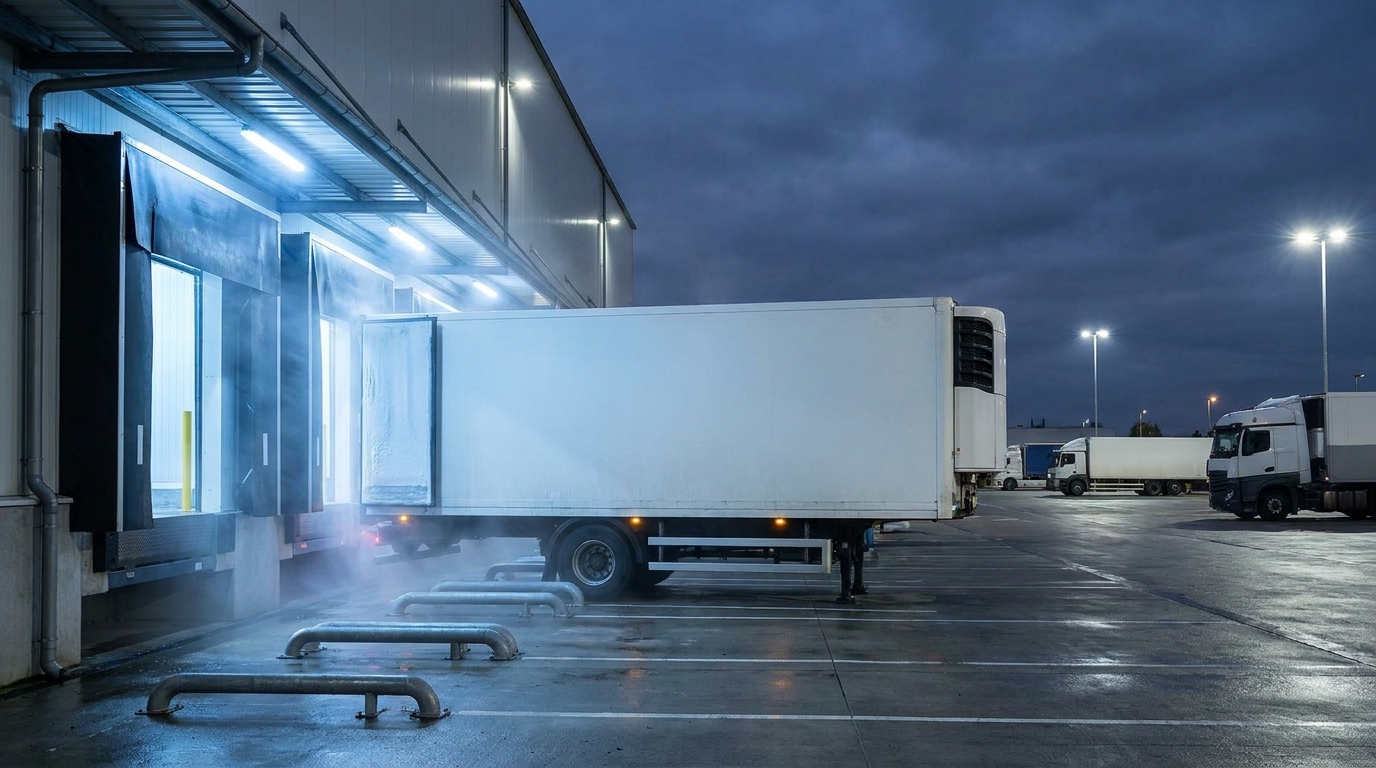
Cold chain logistics is the end-to-end system that keeps temperature-sensitive freight inside a required temperature range from the moment it leaves the producer until it reaches the final destination. It is not one truck or one warehouse. It is the coordinated chain of refrigerated storage, reefer transport, cross-docks, and last-mile delivery, plus the monitoring and documentation that prove the product never warmed past its limit. Break any single link and the whole shipment can be at risk, even if every other step was flawless.
Key takeaways
- Cold chain logistics manages temperature end to end, from origin to destination, not just during the long-haul leg.
- Most freight fits into a few temperature bands: deep-frozen, frozen, refrigerated or chilled, and controlled room temperature.
- The chain is only as strong as its weakest handoff, and most failures happen at loading, dwell points, and last-mile delivery rather than in transit.
- Continuous monitoring and records are what let you prove the temperature held and react before a load is lost.
- Food shipments fall under the FDA's FSMA Sanitary Transportation rule, which assigns responsibilities across shippers, carriers, loaders, and receivers.
What is cold chain logistics?
Cold chain logistics is the discipline of holding a product within its safe temperature range across every step of its journey and documenting that it stayed there. The word chain matters: it is a sequence of temperature-controlled environments connected by handoffs. A carton of frozen seafood might move from a blast freezer, into a refrigerated warehouse, onto a reefer trailer, through a cross-dock, into a delivery van, and finally into a store freezer. Each of those is a link, and each transfer between them is a moment of exposure.
The goal is simple to state and hard to execute: no unplanned temperature excursion, and a clean record proving it. That record is what a receiver, an auditor, or an insurer will want to see, and it is what separates a compliant cold chain from a warm box that happened to arrive on time.
What temperature bands does the cold chain use?
Most temperature-sensitive freight falls into a handful of bands, and the right one depends entirely on the product. The FDA generally recommends keeping a refrigerator at or below 40F and a freezer at 0F, and commercial cold chains build around similar targets with tighter tolerances. The table below shows the common bands, typical targets, and the kinds of products that ride in each. Treat the ranges as general guidance and set the exact spec from the product itself.
| Temperature band | Typical target (general) | Typical products | Common equipment |
|---|---|---|---|
| Deep-frozen | Around -20F or colder | Ice cream, some seafood, certain biologics | Blast freezers, deep-frozen reefers |
| Frozen | Around 0F | Frozen meat, poultry, vegetables, prepared foods | Freezer warehouses, frozen reefer trailers |
| Refrigerated / chilled | About 34F to 40F | Dairy, fresh produce, deli, many vaccines | Refrigerated warehouses, chilled reefers |
| Controlled room temperature | About 59F to 77F | Many pharmaceuticals, chocolate, shelf-stable but heat-sensitive goods | Climate-controlled storage, insulated vans |
The lines between bands are where mistakes happen. A product spec'd for chilled that briefly touches freezing can be damaged, and a frozen product that partially thaws and refreezes loses quality even if it looks fine. For a deeper split of the chilled and frozen categories, see the guide on frozen versus refrigerated versus chilled storage, and for exact target ranges by product type, the breakdown of cold storage temperature ranges.
What are the links in a cold chain?
A cold chain has three functional links: temperature-controlled storage, refrigerated transport, and the last mile. Each has its own equipment, risks, and monitoring, and the handoffs between them are where the chain is most exposed.
Cold storage and warehousing
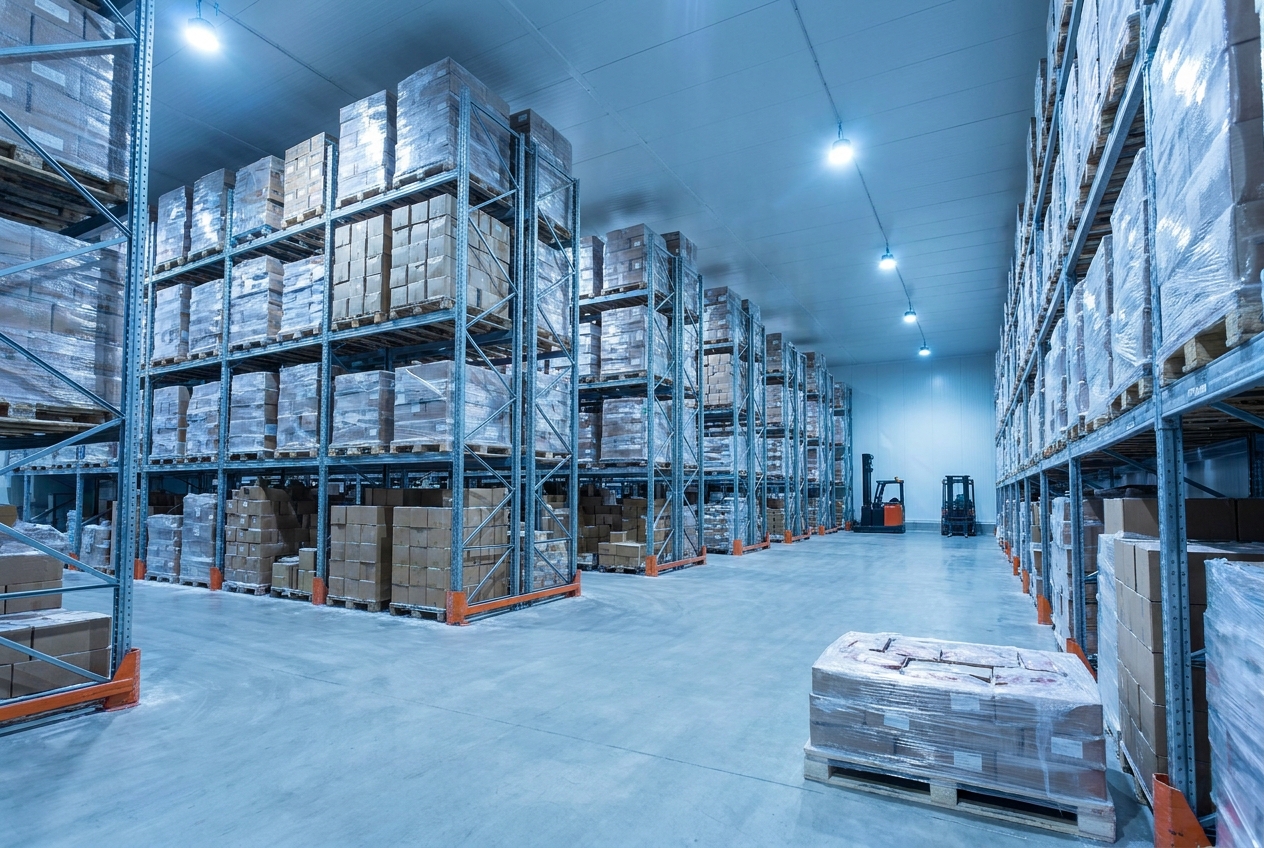
Cold storage is where product waits, sometimes for hours and sometimes for months. Refrigerated and freezer warehouses hold inventory at band, stage it for outbound loads, and often blast-freeze or temper product to a target temperature before it ships. A good facility manages dock-door exposure, keeps refrigerated staging separate from ambient areas, and logs temperatures continuously. You can compare temperature-controlled facilities in the cold storage and warehousing directory, and the guide on how to choose a cold storage provider walks through what to vet.
Refrigerated transport
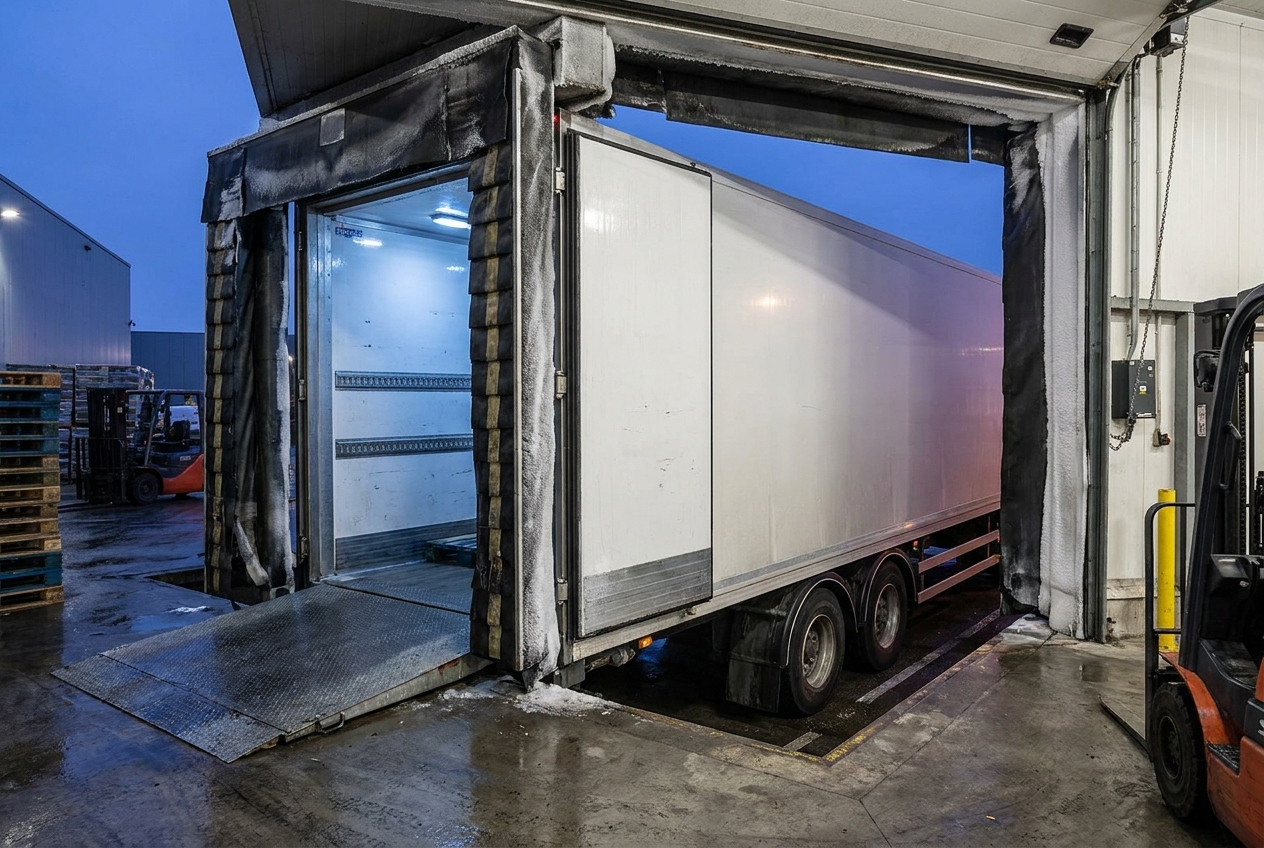
Refrigerated transport moves product between facilities in reefer trailers, containers, and vans. A reefer is a trailer with its own refrigeration unit that maintains a setpoint, not a passive insulated box, so it needs fuel, maintenance, and a driver who knows how to pre-cool and load it correctly. The refrigeration unit conditions air, but it does not chill warm product quickly, which is why loading at temperature matters so much. Reefer capacity and rates move with the broader freight market, so demand and equipment availability affect what you pay.
Last-mile delivery
The last mile delivers to the store, restaurant, clinic, or doorstep, and it is often the least controlled link. Delivery vans open and close doors constantly, routes stack many stops, and product can sit in a warm vehicle or on a receiving dock. For food shippers, a written handoff standard for the final leg is worth as much as the reefer spec, because a well-run trailer means little if the product warms up in a delivery van.
How is temperature monitored and documented?
Monitoring is what turns a cold chain from a hope into a provable process. Data loggers and telematics record temperature continuously inside trailers and warehouses, and modern systems send real-time alerts so someone can react before a load crosses its limit rather than discovering the problem at delivery. At each handoff, temperature is checked and recorded, and those records travel with the shipment.
Documentation does two jobs. First, it lets you intervene: an alert that a reefer setpoint drifted at 2 a.m. is a chance to save the load. Second, it is evidence. If a receiver rejects a shipment or an insurer investigates a claim, the temperature log is what settles the question of whether the chain held. Continuous data beats a single reading at delivery, because a product can arrive cold after a long warm excursion in the middle of the trip. The guide on temperature monitoring for cold storage goes deeper on loggers, telematics, and alert thresholds.
Where does the cold chain break most often?
The cold chain usually breaks at handoffs and dwell points, not during steady-state transit. The common failure modes are consistent across food and pharma:
- Product loaded warm, so the reefer never catches up because it conditions air rather than fast-chilling the load.
- A trailer that was not pre-cooled to setpoint before loading began.
- Long dwell on an ambient dock while a shipment waits to be loaded or received, which gets worse when detention and demurrage delays stack up.
- Doors left open during loading, multi-stop delivery, or cross-docking.
- Monitoring gaps where no one can prove the temperature for a stretch of the trip.
- An equipment failure such as a reefer unit fault or a warehouse compressor going down without a backup plan.
The pattern is that most breaks are procedural, not mechanical. Pre-cooling, disciplined loading, minimizing dwell, and continuous monitoring prevent far more losses than any single piece of equipment.
What does FSMA require for temperature-controlled transport?
Food shipments in the United States fall under the FDA's Sanitary Transportation of Human and Animal Food rule, part of the Food Safety Modernization Act. At a general level, the rule sets expectations for how food is transported by truck and rail, including adequate temperature control, sanitary vehicles and equipment, training for carrier personnel, and records that document the conditions. Responsibility is shared across the shippers, carriers, loaders, and receivers involved in a shipment, so no single party owns compliance alone.
The practical takeaway for a shipper is that you should be able to specify the temperature a load must hold, confirm the carrier can meet and record it, and keep the resulting documentation. This guide stays general on purpose; confirm the current requirements directly with the FDA's FSMA resources before you rely on any specific obligation, and vet carrier safety and operating authority through the FMCSA.
Why do pre-cooling and clean handoffs matter so much?
Pre-cooling and disciplined handoffs are the cheapest insurance in the cold chain. A reefer unit is sized to hold a setpoint, not to pull down a warm load, so if product goes in above temperature the unit may run for hours without ever reaching target, and the exposed product can spoil while the trailer air reads cold. The fix is to pre-cool both the trailer and the product before they meet: chill the load in storage to its band, cool the empty trailer to setpoint, then load quickly with the doors open as briefly as possible.
The same logic applies at every transfer. Staging product in a refrigerated dock area rather than an ambient one, loading and unloading fast, and moving straight from one temperature-controlled environment into the next keeps the exposure windows short. Warehouse energy discipline supports this too; guidance on efficient refrigerated facilities is available from Energy Star.
What does cold chain logistics cost to run?
Cold chain logistics costs more than ambient shipping because of the equipment, energy, and monitoring involved, though the exact premium varies widely by lane, volume, temperature band, and season. Reefer transport typically carries a rate premium over dry van for the same lane, driven by fuel for the refrigeration unit, specialized equipment, and tighter capacity. Refrigerated and freezer storage generally costs more per pallet position than ambient warehousing, with deep-frozen space at the higher end.
Rather than chase a single number, model the pieces for your own freight. A warehouse cost calculator helps estimate storage costs before you compare providers. Weigh those costs against the value of the product and the cost of a lost load; for high-value or perishable freight, tighter monitoring and better carriers usually pay for themselves.
A worked example: shipping frozen seafood cross-country
Consider a brand moving a full trailer of frozen seafood, spec'd to hold at or below 0F, from a port warehouse on one coast to a distribution center on the other. The seafood is already blast-frozen and held in a freezer warehouse. The reefer carrier pre-cools the trailer to 0F before it arrives at the dock. At loading, the warehouse stages the pallets in a refrigerated dock area, loads them quickly, and records the product temperature on the bill of lading.
During transit, a telematics logger reports the trailer temperature continuously, and an alert would fire if the setpoint drifted. Halfway through the run, the reefer runs low on fuel at a stop, but because the trailer was pre-cooled and the doors stayed shut, the temperature holds within tolerance until the unit is refueled. At delivery, the receiver checks product temperature, matches it against the log, and accepts the load. The record, from pre-cool to delivery, is the proof the chain held. Swap any of those steps for a shortcut, such as loading warm product or skipping the pre-cool, and the same shipment becomes a rejection risk.
How do you choose cold chain partners?
Choose partners the way you would audit the chain: link by link. For storage, confirm the facility holds your band with margin, keeps continuous logs, separates refrigerated staging from ambient areas, and has a backup plan if a compressor fails. For transport, confirm the carrier pre-cools trailers, maintains its reefer units, monitors in transit, and can produce records. For the last mile, get a written handoff standard.
Ask for the monitoring data format and the exception process before you sign, not after a load is lost. The cold storage and warehousing directory lets you shortlist temperature-controlled facilities and compare them on the specifics above. The strongest cold chain is not the one with the fanciest single link; it is the one where every handoff is planned, monitored, and documented, so the product arrives at temperature and you can prove it.
Frequently asked questions
What is cold chain logistics in simple terms?
It is the practice of keeping temperature-sensitive goods within a required temperature range at every step from the producer to the final delivery. That includes refrigerated warehouses, reefer trucks, and the last-mile handoff, plus the monitoring and paperwork that prove the temperature held the whole way.
What temperatures does the cold chain use?
Most freight falls into a few bands: deep-frozen around -20F or colder, frozen around 0F, refrigerated or chilled at roughly 34F to 40F, and controlled room temperature near 59F to 77F. The right target depends on the product, and the FDA generally recommends a refrigerator at or below 40F and a freezer at 0F.
What is the difference between the cold chain and a reefer truck?
A reefer truck is one link in the cold chain. The cold chain is the whole system, including cold storage, refrigerated transport, cross-docks, and last-mile delivery, plus the monitoring and documentation that tie them together. A perfect reefer run still fails if the product sat warm on a dock beforehand.
Where does the cold chain break most often?
Breaks usually happen at handoffs and dwell points rather than in transit: product loaded warm, a trailer that was not pre-cooled, long waits on an ambient dock, doors left open, and gaps in monitoring where nobody can prove the temperature. Detention and demurrage delays make dwell risk worse.
Does FSMA regulate temperature-controlled shipping?
Yes. The FDA's Sanitary Transportation of Human and Animal Food rule under FSMA sets general requirements for how food is transported, including temperature control, sanitary equipment, training, and records. Shippers, carriers, loaders, and receivers each carry responsibilities. Confirm the current requirements against the FDA before relying on specifics.
How is cold chain temperature documented?
Through continuous monitoring: data loggers or telematics in the trailer and warehouse, temperature checks at pickup and delivery, and records that travel with the shipment. Real-time alerts let someone react before a load is lost, and the logs become the evidence if a receiver rejects the product.
Ready to compare providers?
Search the directory by service and location, save options to your shortlist, and send a clear RFQ.
Related guides
What Is Blast Freezing and When Is It Used?
Blast freezing rapidly freezes product with high-velocity, very cold air so ice crystals stay small and quality holds. Here is how it works and when to use it.
Temperature Monitoring in Cold Storage
Temperature Monitoring in Cold Storage: Questions Buyers Should Ask Temperature monitoring in cold storage is one of the most important details companies should review before choosing a warehouse. A facility may advertise frozen, refrigerated, chilled, or temperature-controlled storage, but buyers need to understand how those temperatures are tracked, recorded, and managed. For food brands, importers, […]
Frozen vs Refrigerated vs Chilled Storage: Which One Do You Need?
Frozen vs Refrigerated vs Chilled Storage: Which One Do You Need? Choosing between frozen vs refrigerated storage is only part of the decision. Some products also need chilled storage or controlled ambient space, depending on product type, handling risk, shelf-life expectations, and customer requirements. The right storage type can protect product quality, reduce delivery exceptions, […]