
What Is an Intermodal Ramp?
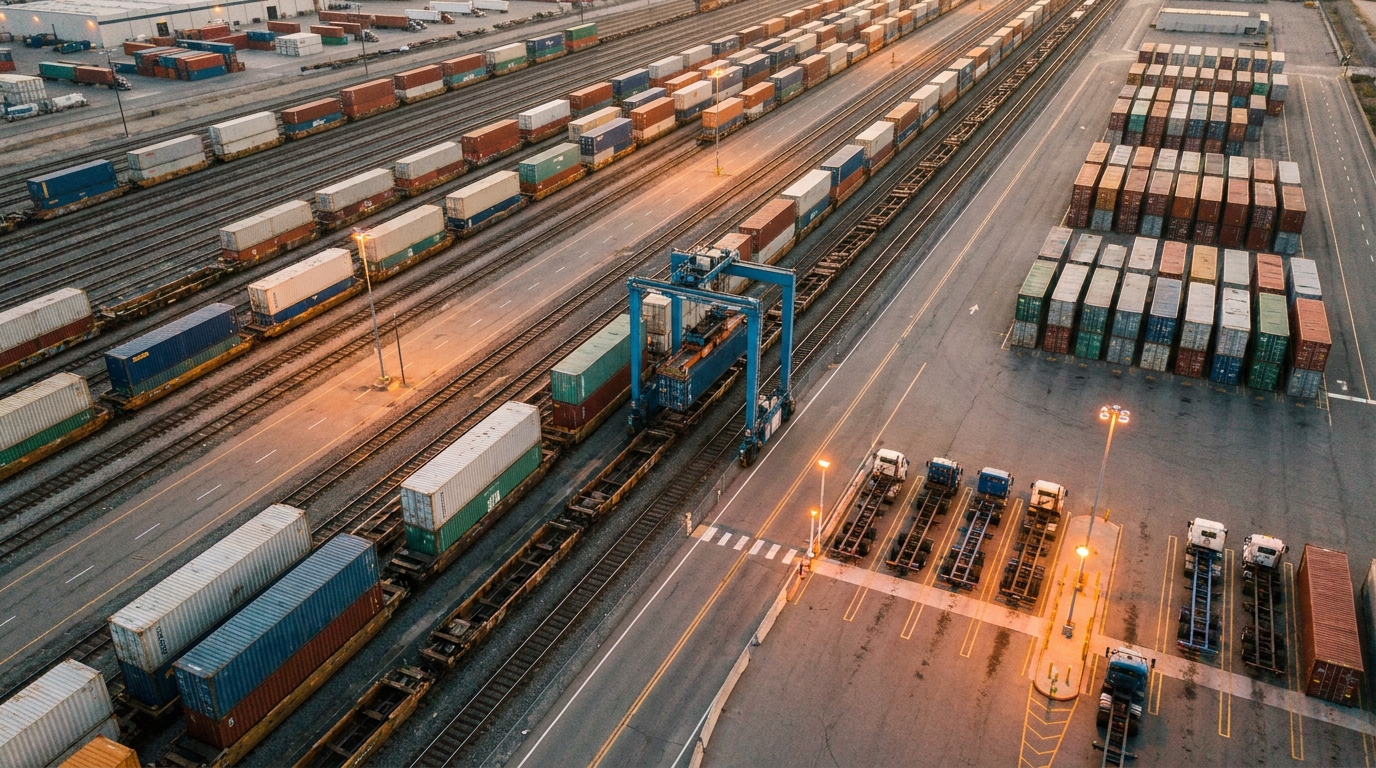
An intermodal ramp is the rail terminal where shipping containers are lifted between truck chassis and rail well cars. It is the physical handoff point in an intermodal move: a container arrives by truck, gets craned onto a stacked rail car for the long-haul leg, then gets lifted back onto a chassis at a ramp near its destination for final delivery. The ramp is where your freight starts and stops its train ride, and where most of the schedule risk and local trucking cost lives.
Key takeaways
- An intermodal ramp is a rail-served terminal that transfers containers between trucks and trains using cranes, reach stackers, and side loaders.
- The move works in a fixed sequence: gate in, ground or lift the container, load or unload the well car, and notify the drayage carrier when the box is available.
- Ramp proximity is the single biggest lever on drayage cost, because dray is priced mostly by distance and driver time to and from the terminal.
- Most intermodal delays happen at the ramp, not on the rail line: gate queues, ungrounded containers, chassis shortages, and last-free-day storage clocks.
- Choosing a lane with a nearby, well-run ramp often matters more to your total cost than the linehaul rate itself.
What does an intermodal ramp actually do?
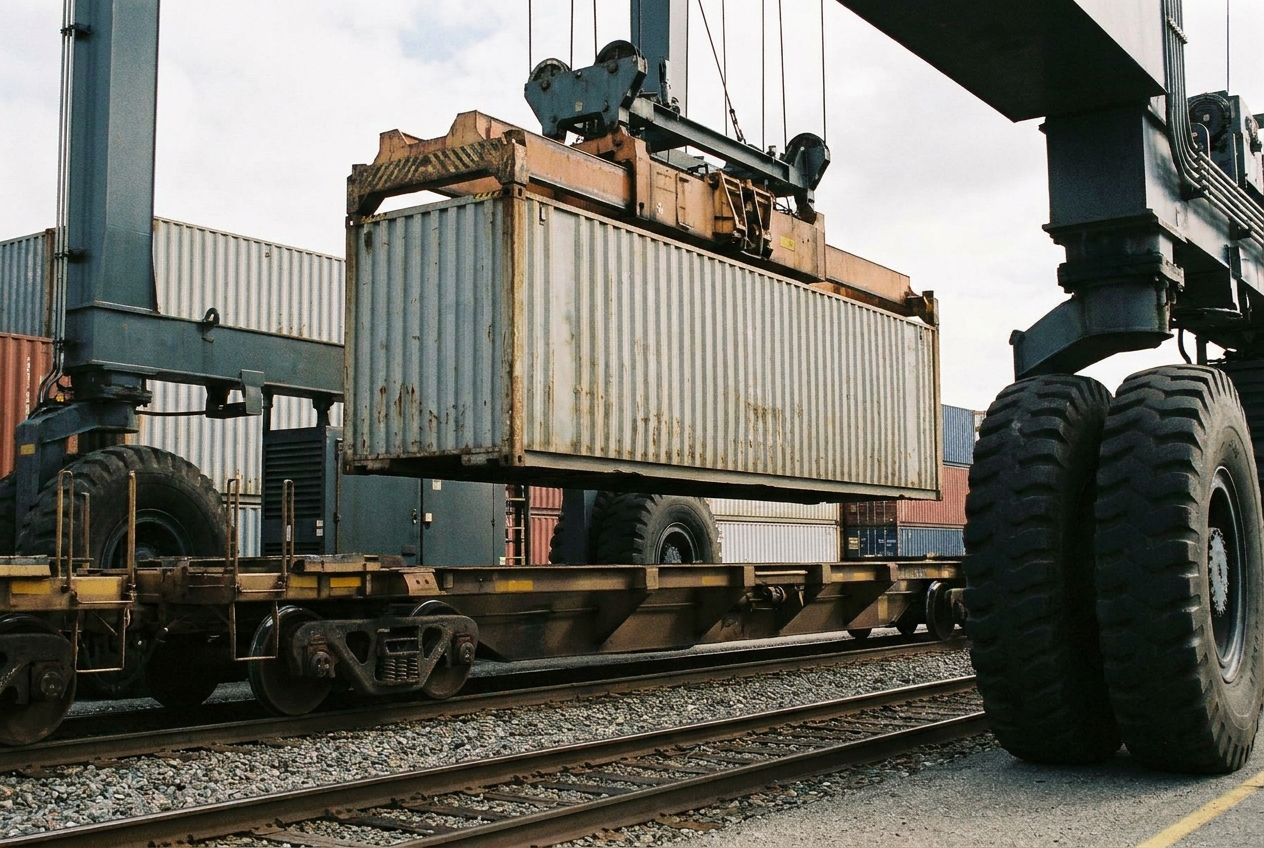
A ramp does one core job: it moves a container between two modes of transport. Trucks bring loaded or empty containers in through a gate, and the railroad stacks those containers onto double-stack well cars for the linehaul. In the other direction, arriving trains are unloaded and containers are grounded in the yard until a drayage driver picks them up. The equipment doing the lifting is usually a rubber-tired gantry crane, a reach stacker, or a side loader, depending on the terminal.
The name is a holdover from early intermodal shipping, when truck trailers were driven up a fixed ramp onto flatcars in what was called piggyback service. Today the container is lifted, not driven, but the facility is still called a ramp. You will also hear it called an intermodal terminal, an inland port, or a rail yard, and for practical purposes they refer to the same handoff point.
How does the intermodal ramp process work, step by step?
The process is a fixed sequence, and knowing it helps you read where a shipment is and where it can stall. On the way out, a drayage truck delivers the loaded container, the gate checks it in, and the container is either grounded to wait or lifted straight onto a well car. On the way in, the reverse happens, and the ramp notifies your carrier when the box is available for pickup.
| Step | What happens | Where it can go wrong |
|---|---|---|
| Gate in | Truck arrives, the container and booking are verified, and the driver gets a yard assignment. | Long gate queues; missing or mismatched booking numbers. |
| Ground or stage | The container is set down in the yard or held on the chassis until the train is built. | Yard congestion; container placed where it is hard to reach. |
| Lift to rail | A crane or reach stacker loads the box onto a double-stack well car. | Equipment backlog; cutoff missed, so the box rolls to the next train. |
| Linehaul | The train runs the long-haul leg between origin and destination ramps. | Network congestion or weather reroutes; usually the most predictable step. |
| Unload and notify | At the destination ramp the box is grounded and flagged available for pickup. | Container not yet grounded; customs or railroad hold not released. |
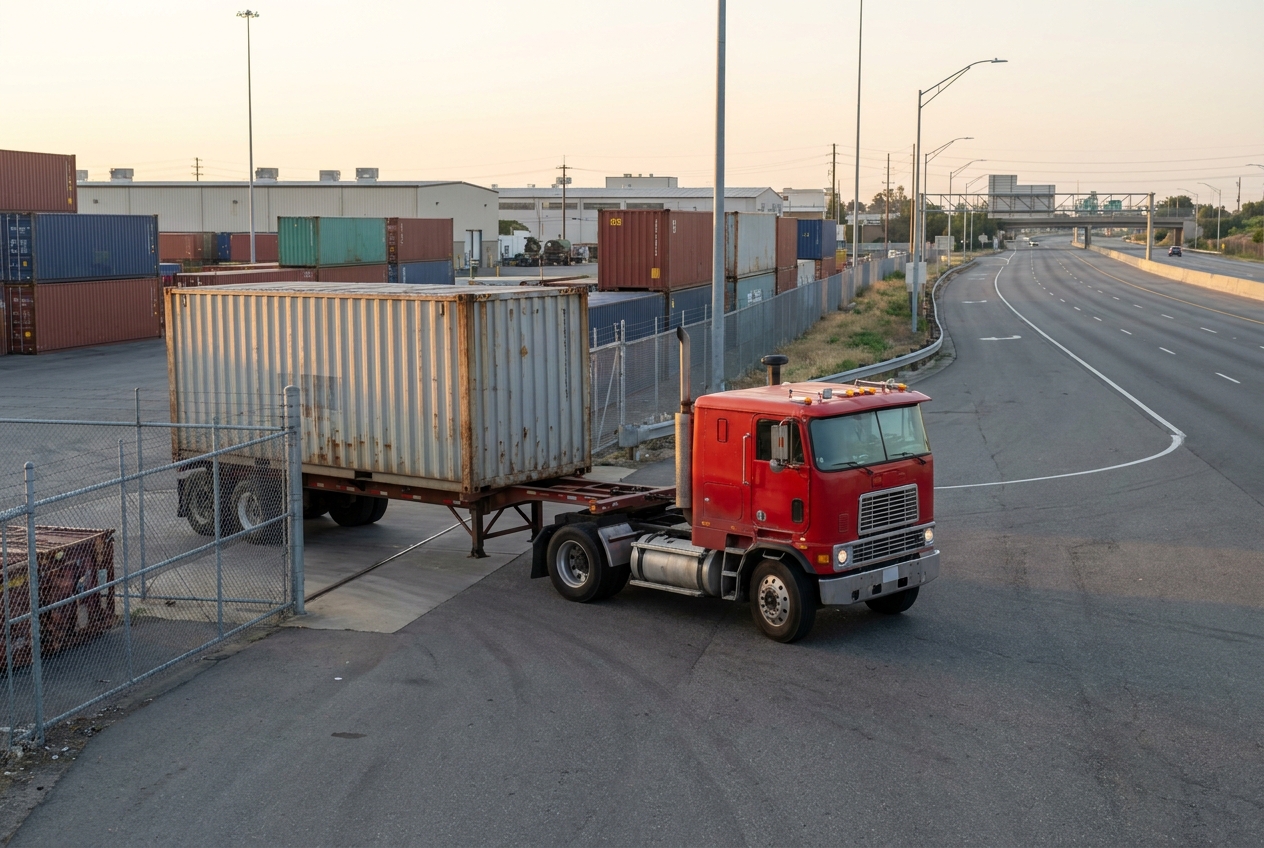
| Gate out | A drayage driver picks up the container on a chassis and delivers it. | Chassis shortage; last free day passes and demurrage starts. |
The linehaul in the middle is usually the most reliable part. Most of the friction shippers feel is at the two ends, at the ramp, which is why availability notifications and free-time clocks matter so much.
How does ramp proximity affect drayage cost?
Ramp proximity is the biggest single factor in what you pay for drayage, the short-haul trucking between the ramp and your door. Dray is priced mostly by distance and driver time, so a container pulled from a ramp 20 miles away costs far less to move than one pulled from 120 miles away, where the driver may burn most of a shift on a single round trip.
As a rough guide, a ramp within about 50 miles of your dock usually keeps dray affordable and lets a driver run more than one turn a day. Past roughly 150 miles, the dray leg can eat much of the savings that made rail attractive in the first place, and at some point trucking the whole lane direct becomes the better deal. There is no universal cutoff, because fuel, driver wait time, and local chassis fees all move the math, but the direction is consistent: every extra mile between the ramp and your facility shows up in the dray invoice.
This is why lane selection matters more than the linehaul rate alone. A cheap rail rate into a distant ramp can lose to a slightly higher rate into a ramp near your warehouse once you add dray, accessorials, and free-time risk. When you compare intermodal against truckload, model the full door-to-door cost, not just the rail portion. Our landed cost calculator and the broader shipper tools hub help you stack those pieces before you commit to a lane.
What causes intermodal ramp delays?
Most intermodal delays happen at the ramp, not on the train. The container may sit because it has not been grounded yet, because a customs or railroad hold has not cleared, or because there is no chassis available to pull it. Gate queues at peak hours add wait time on both ends, and a missed rail cutoff can push a box to the next scheduled train, costing a day or more.
The clock that hurts most is free time. Railroads and terminals give a set number of free days to retrieve a grounded container, and the last free day is when storage charges begin. Miss it and you owe demurrage, the daily penalty for leaving a box past its free time. If your own driver or chassis then holds the equipment too long, per diem or detention can stack on top. These are the same accessorials that surprise shippers on ocean and truck moves, and it is worth understanding how detention and demurrage work before your first ramp pull.
Who runs the ramp, and what should you confirm before booking?
Ramps are operated by the major railroads or by terminal operators working on their behalf, and each has its own gate hours, appointment system, and free-time rules. You rarely deal with the railroad directly for the local leg. Instead an intermodal marketing company, a freight broker, or your 3PL books the rail portion and arranges dray, so the details that affect you sit one layer removed.
Before you book an intermodal lane, confirm a short list: which origin and destination ramps serve the lane, the distance from each ramp to the relevant dock, how many free days you get and when the last free day falls, who supplies the chassis and at what cost, and the ramp gate hours and appointment requirements. Getting those answers up front is what separates a smooth first shipment from a container racking up demurrage while everyone figures out whose chassis it is.
Is intermodal with a nearby ramp right for your freight?
Intermodal tends to win on longer lanes, roughly 700 miles and up, where the rail linehaul is cheap enough to absorb two dray legs and still beat truckload, and where a day or two of extra transit is acceptable. It fits steady, non-urgent volume in standard containers better than time-critical or oddly dimensioned freight. The Bureau of Transportation Statistics tracks how much freight moves by rail and intermodal, and the mode carries a large share of long-haul containerized goods.
The deciding factor is usually the ramp, not the train. A well-placed ramp near both your origin and your destination can make intermodal clearly cheaper than truckload, while a distant or congested ramp can erase the advantage. If you want to see which providers serve your lane, browse the intermodal and rail companies in the directory or the full set of logistics companies, and compare a few before you route your first container. For the wider picture on modes and equipment, the rail freight shipping guide covers how the linehaul itself is priced and scheduled.
Frequently asked questions
What is an intermodal ramp?
An intermodal ramp is a rail terminal where shipping containers are lifted between truck chassis and rail well cars. It is the physical handoff point between over-the-road trucking and long-haul rail in an intermodal move.
Why is it called a ramp?
The term dates to early piggyback service, when trailers were driven up a fixed ramp onto flatcars. Modern terminals lift containers with cranes and reach stackers instead, but the industry still calls the facility a ramp.
How far should my facility be from an intermodal ramp?
There is no fixed rule, but the closer the better. Drayage is priced largely by distance and time, so a ramp within roughly 50 miles usually keeps dray affordable, while 150-plus miles can erode the rail savings that make intermodal worth it.
What causes delays at an intermodal ramp?
Common causes include long gate queues, containers not yet grounded or available for pickup, chassis shortages, missing customs or railroad holds, and last-free-day storage that starts the clock on demurrage.
What is the difference between an intermodal ramp and a port terminal?
A port terminal transfers containers between ocean vessels and land. An intermodal ramp transfers them between rail and truck. Many inland moves touch a port first, then travel by rail to an intermodal ramp closer to the destination.
Do I need my own chassis at the ramp?
Usually your drayage carrier supplies the chassis, often from a shared pool at or near the ramp. Chassis availability and split fees vary by market, so confirm who provides the chassis and what it costs before you book.
Ready to compare providers?
Search the directory by service and location, save options to your shortlist, and send a clear RFQ.
Related guides
Carrier Vetting: How to Avoid Fraud and Bad Carriers
A step-by-step guide to carrier vetting: verify FMCSA authority and safety, confirm insurance with the insurer, spot red flags, and stop double-brokering.
Dedicated vs Common Carrier: Which Fits
How dedicated contract carriage, common carriers, and private fleets compare on cost, capacity, and commitment, and when your volume justifies dedicated.
Shipping Construction Materials to a Jobsite
How construction freight works: matching flatbed and specialized trailers to steel, lumber, pipe, and precast, plus jobsite access, oversize permits, and delivery timing.