
Rail Freight Shipping: Carload and Intermodal
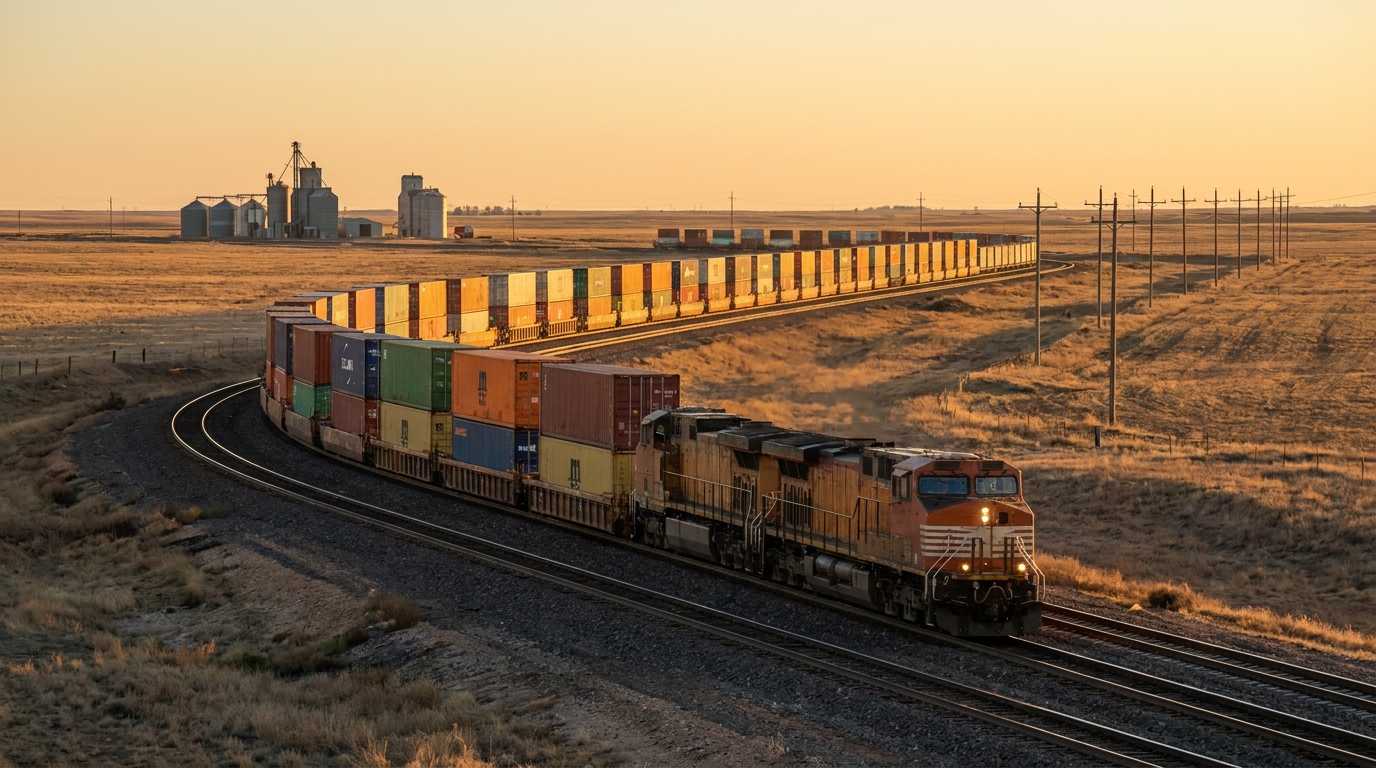
Rail freight shipping moves goods across the country by train, either as carload freight loaded directly into rail cars or as intermodal containers and trailers riding on flatcars. It is one of the most cost-efficient and fuel-efficient ways to move heavy or high-volume freight over long distances, and the Bureau of Transportation Statistics tracks rail as one of the largest carriers of the nation's intercity freight ton-miles. The tradeoff is speed and reach: rail runs on a fixed network, so most shippers pair it with a short truck move at each end to connect the track to their dock.
Key takeaways
- Rail freight comes in two main modes: carload (bulk commodities loaded into rail cars) and intermodal (containers or trailers on flatcars).
- Rail wins on long, heavy lanes where lower cost per mile and lower emissions outweigh a few extra days of transit.
- Transit time is longer and less predictable than trucking, so rail suits freight that is not time-critical.
- Most shippers reach the network through intermodal ramps or transload sites, connected to their facility by drayage.
- Total door-to-door cost includes the line-haul plus drayage at each end, not just the rail rate.
How does rail freight shipping work?
Rail freight moves in trains assembled from many cars, each hauling one shipper's freight, over a network owned by railroads rather than the public highway. In the United States, a small number of large Class I railroads run the long-haul mainlines, while hundreds of short-line and regional railroads handle local pickup, delivery, and connections to the mainline. Your freight may travel on more than one railroad and be handed off, or interchanged, between them along the route.
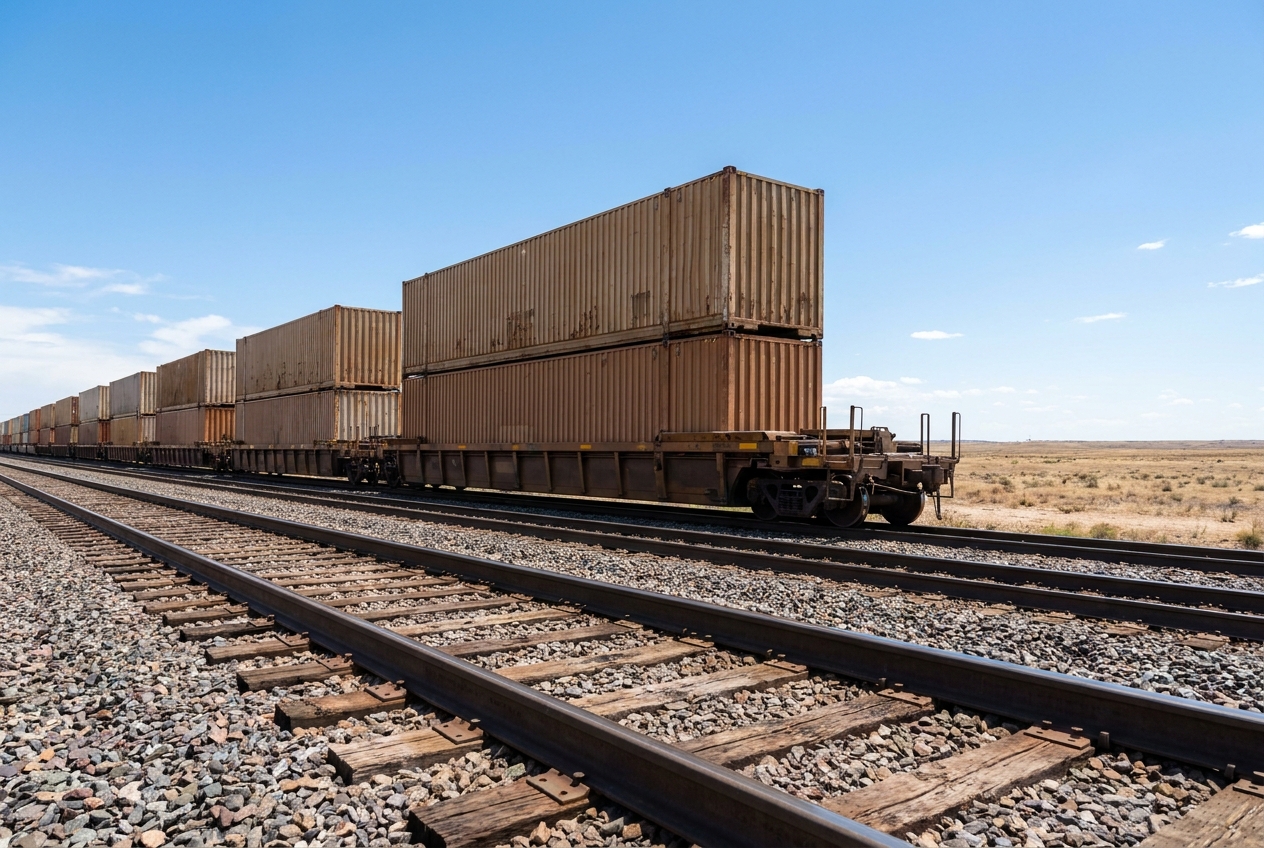
A load is built at an origin point, moved to a rail yard, sorted into an outbound train, hauled over the mainline, then sorted again near the destination and delivered to a siding, ramp, or transload facility. Because trains are built on schedules and cars wait to be grouped with others heading the same way, rail trades the door-to-door directness of a truck for the scale of moving thousands of tons at once.
What is the difference between carload and intermodal rail?
Carload freight is loaded directly into a rail car, while intermodal freight rides inside a standardized container or truck trailer placed on a rail flatcar. That single distinction drives almost every other decision about which mode fits your freight.
Carload is built for heavy bulk. A covered hopper carries grain or plastic pellets, a tank car carries chemicals or food-grade liquids, a gondola carries scrap or aggregates, and a boxcar carries paper, lumber, or packaged goods. The commodity is handled into and out of the car, so carload favors freight that is dense, flows in large volumes, and does not need frequent rehandling.
Intermodal moves the box, not the commodity. A shipping container or trailer is packed once, then travels by truck, rail, and sometimes ocean vessel without the freight inside being touched again. Domestic intermodal typically uses 53-foot containers, while imports arrive in the 20- and 40-foot ocean containers you see stacked two-high on double-stack trains. Intermodal is the natural fit for palletized consumer goods, retail imports, and anything that already moves in containers. To go deeper on the mode, see our guide to what intermodal shipping is.
When does rail freight make sense for shippers?
Rail freight makes sense when the lane is long, the freight is heavy or high-volume, and a few extra days of transit is acceptable in exchange for lower cost and lower emissions. The longer the haul, the more the line-haul savings outrun the fixed cost of the drayage moves at each end.
Three factors point toward rail. First, distance: intermodal generally becomes competitive with trucking on lanes of roughly several hundred miles or more, and the advantage grows on cross-country runs. Second, weight and volume: dense bulk commodities and full-container loads use rail economics best, since one train replaces dozens of trucks. Third, sustainability goals: moving a ton of freight by rail generally burns far less fuel per ton-mile than moving it by truck, which matters to shippers reporting freight emissions. The U.S. Department of Transportation's Bureau of Transportation Statistics publishes the mode-by-mode freight data behind these comparisons.
Carload vs intermodal vs over-the-road: how do they compare?
The three ways to move a long-haul domestic shipment are carload rail, intermodal rail, and over-the-road trucking. Each fits a different combination of commodity, distance, and urgency.
| Factor | Carload rail | Intermodal rail | Over-the-road truck |
|---|---|---|---|
| What moves | Bulk commodity in a rail car | Container or trailer on a flatcar | Trailer pulled by a tractor |
| Best for | Grain, chemicals, lumber, steel, aggregates | Palletized goods, retail imports, boxed freight | Time-sensitive, regional, or oddly shaped loads |
| Typical lane | Long, high-volume, plant to plant | Long, several hundred miles or more | Any distance, especially short and mid-haul |
| Transit time | Longer, schedule-driven | Longer than truck, faster than carload | Fastest, most direct |
| Door access | Needs a siding or transload | Needs a ramp plus drayage | Direct dock to dock |
| Relative cost | Low per ton on volume | Low per mile on long lanes | Higher per mile, no drayage |
For lighter freight that ships less than a full truckload, the comparison is different again; our breakdown of LTL versus FTL shipping covers when consolidation beats a dedicated load.
What are the tradeoffs of shipping by rail?
The core tradeoff is that rail lowers cost by giving up speed, predictability, and direct reach. A shipper choosing rail accepts a longer, less certain transit in return for a lower rate per ton or per mile.
Transit time is the first tradeoff. Freight waits while trains are built, dwells in terminals, and loses time at interchanges between railroads. A load that a truck delivers in two days may take several days by rail, and the arrival window is wider. The second tradeoff is ramp and siding access: rail only serves the points where track and terminals exist, so if the nearest ramp is far from your facility, the drayage cost and time can erase the line-haul savings. The third is drayage dependency itself, covered next, because almost every intermodal move relies on a truck at one or both ends.
How do shippers access rail without a siding?
Shippers without their own rail siding reach the network through intermodal ramps and transload facilities, connected to their dock by drayage. Very few warehouses have track running to the building, so this is the normal path, not the exception.
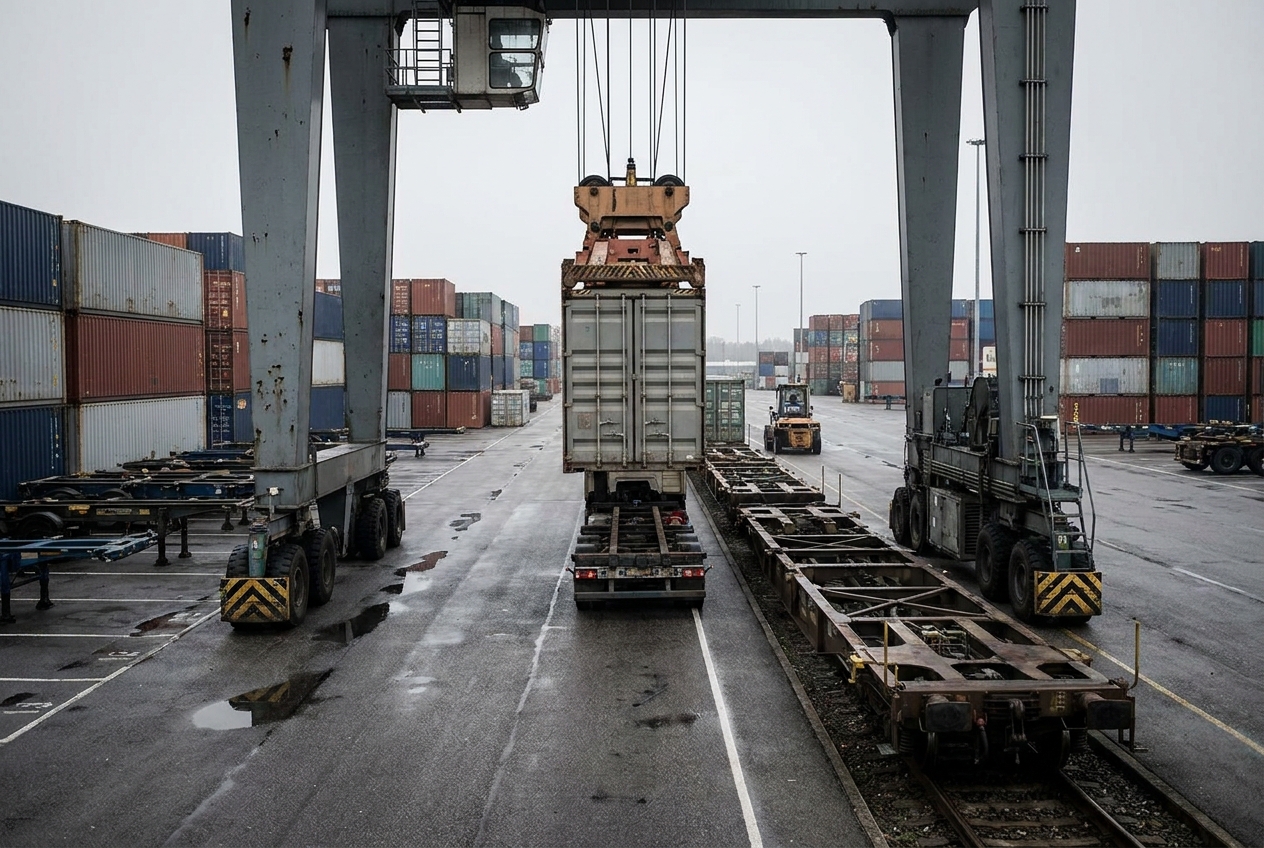
At an intermodal ramp, a crane or reach stacker lifts containers between truck chassis and rail flatcars; the ramp is the handoff point between highway and rail. Learning the layout of these terminals helps, so see our explainer on what an intermodal ramp is. For bulk carload freight, a transload facility transfers the commodity between trucks and rail cars, letting a non-rail-served shipper still use carload economics. Either way, the short truck leg that carries the box or trailer to and from the ramp is drayage, and it is a distinct line item in the total price. Because that leg runs on the highway, the drayage carrier is a motor carrier regulated by the Federal Motor Carrier Safety Administration, so vet its safety record the same way you would any trucker. To find providers, browse the intermodal and rail category in the directory or use the container tools in our container load calculator to right-size the box before you book.
What does a rail freight move look like in practice?
Consider a housewares brand shipping 12 containers of boxed goods per month from a Los Angeles-area warehouse to a distribution center outside Chicago. The lane is roughly 2,000 miles, the freight is palletized and not urgent within a two-day window, and volume is steady. That profile favors domestic intermodal.
The brand books 53-foot containers, drays each loaded box from its warehouse to a nearby intermodal ramp, and the railroad hauls them to a Chicago-area ramp where a second drayage carrier delivers to the distribution center. The all-in cost is the rail line-haul plus two drayage moves and any ramp fees, and transit runs a few days longer than a truck would. Because the brand ships full containers on a long lane and can absorb the extra days, the per-container savings across 12 loads a month typically outweigh the added handoffs. A brand shipping a single urgent pallet on the same lane would stay with a truck. When you are ready to compare carriers, the logistics company directory lets you filter providers by mode and lane.
Frequently asked questions
What is the difference between carload and intermodal rail?
Carload moves a commodity loaded directly into a rail car, such as a covered hopper of grain or a tank car of chemicals. Intermodal moves standardized shipping containers or truck trailers on rail flatcars, so the same box travels by truck, rail, and sometimes ship without the freight being rehandled. Carload suits heavy bulk; intermodal suits palletized boxed goods that already move in containers.
Is rail freight cheaper than trucking?
On long lanes, rail is often cheaper per mile than over-the-road trucking, especially for heavy or bulk freight, because one train moves far more tonnage per unit of fuel. The savings shrink on shorter lanes once you add drayage at both ends and the extra transit days, so the break-even depends on distance, volume, and how time-sensitive the load is.
How long does rail freight take compared to trucks?
Rail transit is usually longer and less predictable than a team or single-driver truck on the same lane, because freight waits for train building, interchange between railroads, and terminal dwell. Plan for extra days rather than extra hours. Rail fits freight where a few days of transit is acceptable in exchange for lower cost.
Do I need a rail siding to ship by rail?
No. Shippers without a private siding use intermodal ramps, where containers are lifted between truck chassis and rail flatcars, or transload facilities where bulk freight is transferred between trucks and rail cars. A short truck move called drayage connects your dock to the nearest ramp or transload site.
What is drayage in rail shipping?
Drayage is the short truck move that carries a container or trailer between a rail ramp or port and the shipper or receiver. Because rail rarely reaches the final dock, most intermodal moves depend on drayage at one or both ends, and that cost and scheduling is a core part of the total door-to-door price.
What goods move best by rail freight?
Heavy bulk commodities such as grain, coal, chemicals, lumber, steel, and aggregates move well as carload. Boxed and palletized consumer goods, retail imports, and anything already containerized move well as intermodal. Freight that is light, urgent, or destined far from any ramp usually stays on the highway.
Ready to compare providers?
Search the directory by service and location, save options to your shortlist, and send a clear RFQ.
Related guides
Carrier Vetting: How to Avoid Fraud and Bad Carriers
A step-by-step guide to carrier vetting: verify FMCSA authority and safety, confirm insurance with the insurer, spot red flags, and stop double-brokering.
Dedicated vs Common Carrier: Which Fits
How dedicated contract carriage, common carriers, and private fleets compare on cost, capacity, and commitment, and when your volume justifies dedicated.
Shipping Construction Materials to a Jobsite
How construction freight works: matching flatbed and specialized trailers to steel, lumber, pipe, and precast, plus jobsite access, oversize permits, and delivery timing.