
What Is a Reefer Container?
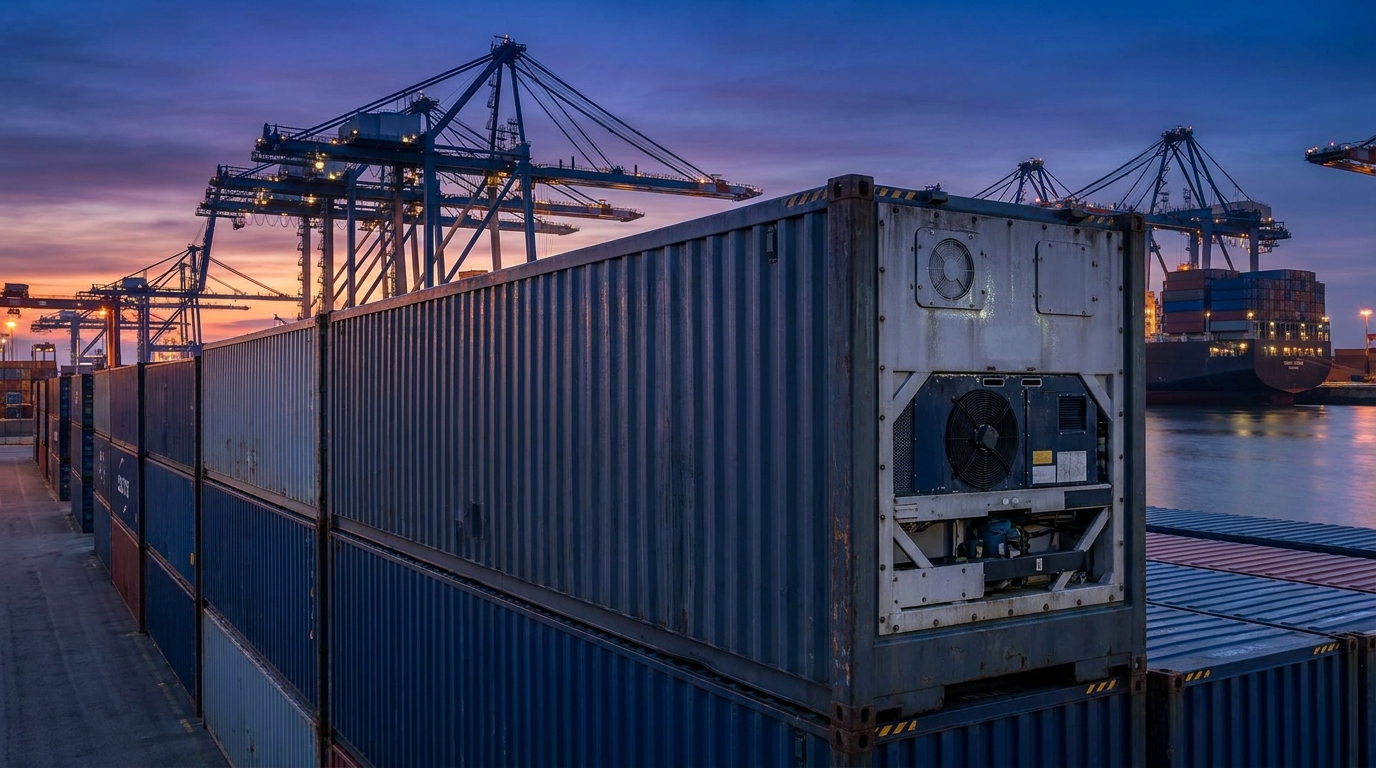
A reefer container is a refrigerated shipping container: a standard intermodal box with its own built-in refrigeration unit that holds a chosen temperature for perishable or climate-sensitive cargo. Unlike a dry container, which is just an insulated-free steel box at whatever the outside air happens to be, a reefer container actively cools (or gently heats) the space inside and keeps it at a set point across ocean, rail, and road. That is what lets frozen seafood, fresh produce, pharmaceuticals, and other temperature-sensitive freight move thousands of miles without spoiling.
Key takeaways
- A reefer container is a refrigerated intermodal box with an integral cooling unit that maintains a set temperature, typically from about minus 30 to plus 30 degrees Celsius.
- It needs a continuous external power source: ship reefer sockets, rail reefer racks or a generator set, and a clip-on genset or shore power on the road.
- The unit holds a temperature; it does not chill down cargo that was loaded warm, so pre-cooling the product and the box matters.
- Controlled atmosphere options manage oxygen and carbon dioxide to slow ripening on long produce lanes.
- Reefer containers suit long ocean and rail moves; reefer highway trailers suit regional and door-to-door road delivery.
How does a reefer container keep cargo cold?
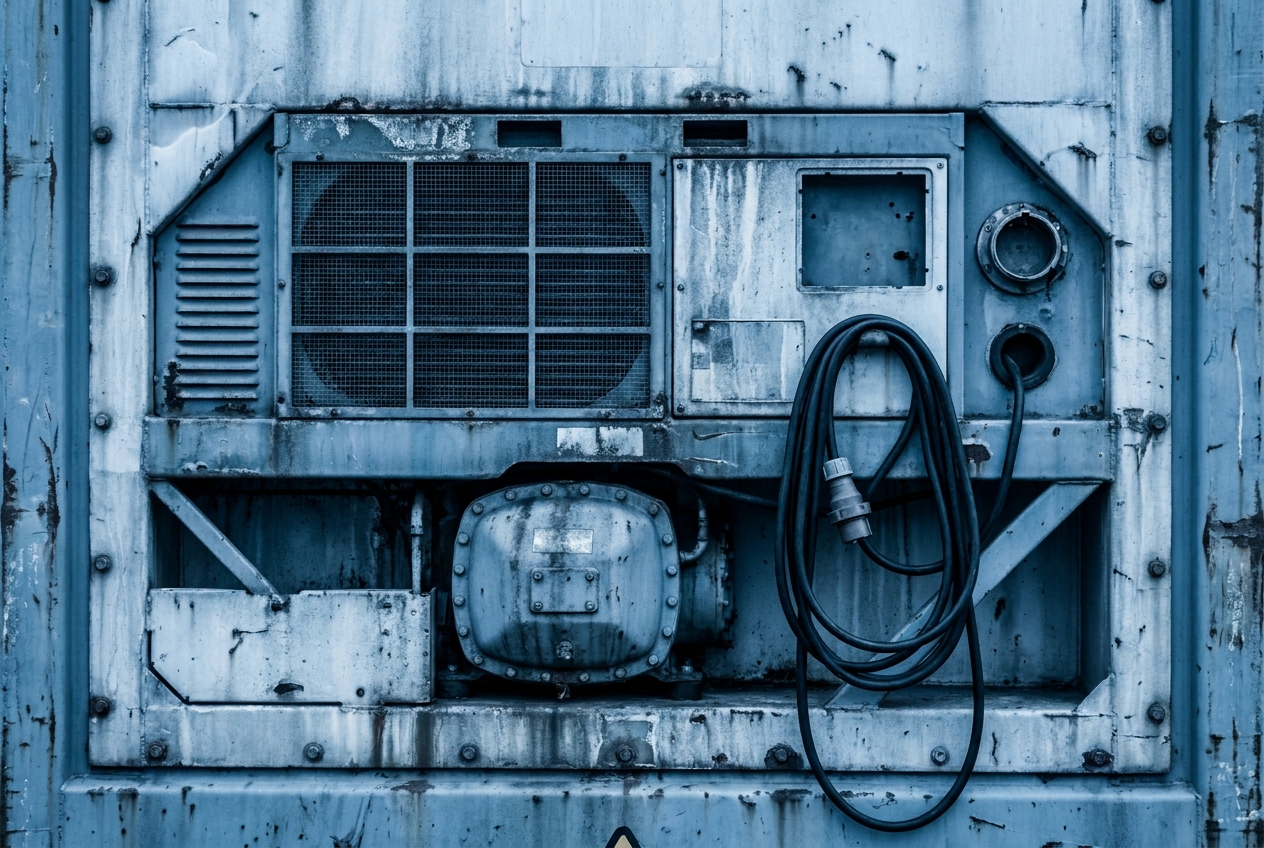
A reefer container cools cargo with an integral refrigeration unit built into one end of the box, combined with forced airflow that circulates chilled air around the load. The machinery works like any vapor-compression fridge: a compressor, condenser, evaporator, and refrigerant loop pull heat out of the interior and reject it outside. You set a target temperature, called the set point, and the unit cycles to hold it.
Airflow is half the job. Reefer containers use bottom-air delivery: cold air is pushed down under a T-shaped floor, up through and around the stacked cargo, then back to the unit. That is why load plans matter. Cargo must be stacked to the red load line and never blocking the floor channels or return-air path, or you get warm pockets while the sensor still reads the set point. The unit controls the air temperature it delivers, not the temperature buried in the middle of a tight pallet.
One point trips up new shippers: a reefer holds a temperature, it does not rapidly pull down warm freight. Load product that is already at its target, into a pre-cooled box, or the unit can spend the whole voyage fighting heat it was never sized to remove.
How does a reefer container get power on a ship, rail, or road?
A reefer container runs on external electricity and needs a live connection for the entire journey. It has no fuel tank of its own, so at each leg it plugs into a different power source, and any gap in power lets the interior drift toward ambient.
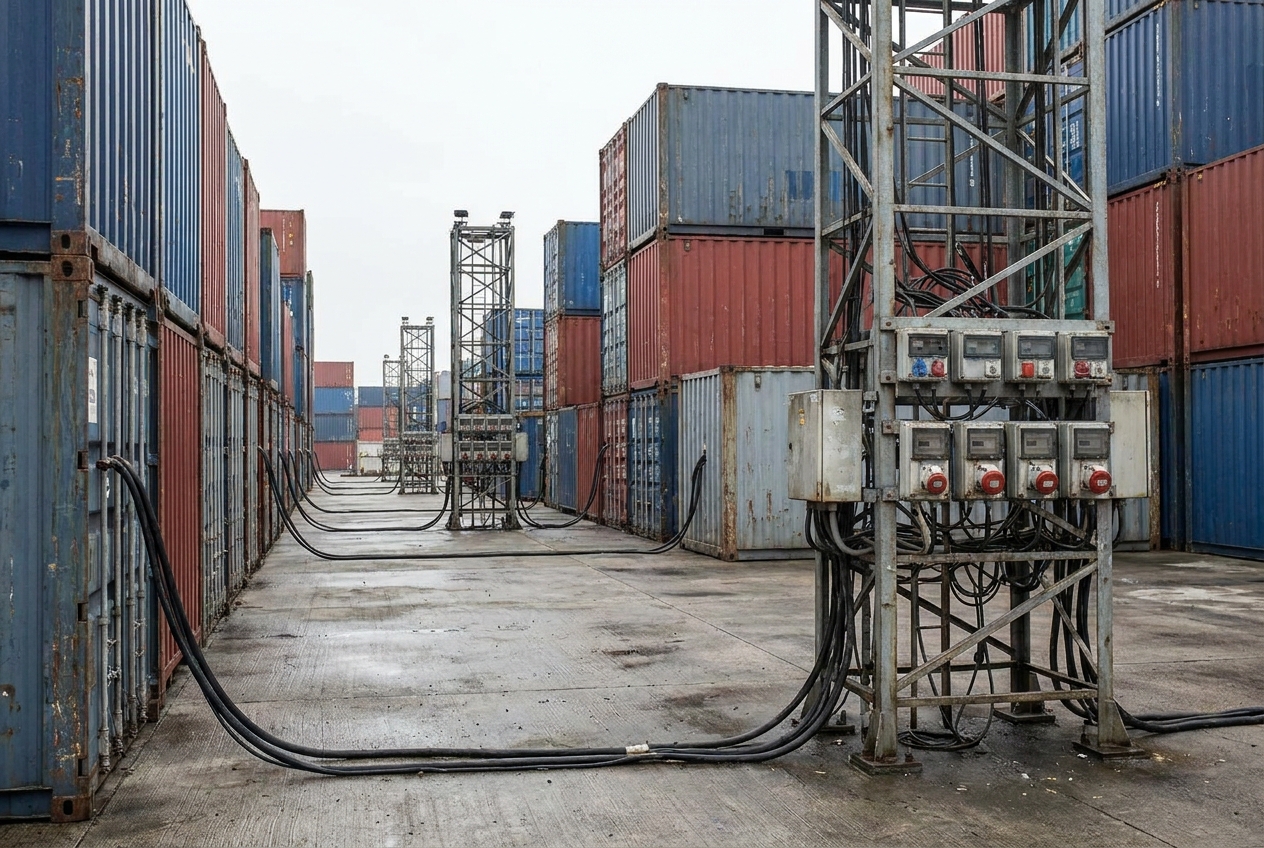
- At sea: the container plugs into reefer sockets on the vessel, and the ship's crew monitors and records temperatures during the voyage.
- On rail and at terminals: boxes plug into reefer racks (banks of powered sockets) or draw from a generator set, often called a genset.
- On the road: a clip-on diesel genset mounts to the container or chassis, or the box connects to shore power while it sits at a dock or yard.
Because power hand-offs are where cold chains break, the moment a reefer is unplugged during a transfer is a known risk point. Pairing the unit's own data logger with independent temperature monitoring for cold storage gives you a record of any excursion rather than a guess after the fact.
What is a controlled atmosphere reefer container?
A controlled atmosphere (CA) reefer container manages the gas mix inside the box, not just temperature. By lowering oxygen and adjusting carbon dioxide, and sometimes humidity, it slows the respiration and ripening of fresh produce so fruit and vegetables arrive market-ready after weeks at sea.
CA is what lets avocados, bananas, berries, and asparagus move on long ocean lanes instead of expensive airfreight. Not every shipment needs it: frozen cargo and most non-produce freight do fine with temperature control alone. CA units cost more and require the right settings per commodity, so use them where extended shelf life actually earns the premium.
What does a reefer pre-trip inspection check?
A pre-trip inspection, or PTI, is a diagnostic run performed before the box is loaded to confirm the refrigeration unit is working. It reduces the odds of a mid-transit failure, though no inspection eliminates the risk entirely.
A PTI typically runs the unit through its functions and checks the compressor and refrigerant operation, the temperature sensors and controller, airflow and the defrost cycle, and any alarms in the unit's log. For high-value or regulated freight such as food and pharmaceuticals, PTI records are part of the paper trail that shows the equipment was fit for the load, which the U.S. FDA under FSMA expects shippers and carriers to maintain for temperature-controlled foods.
Reefer container vs reefer truck trailer: which do you need?
Choose a reefer container for long intermodal moves across ocean and rail, and a reefer highway trailer for regional and door-to-door road delivery. Both hold a set temperature; the difference is how they move, how they are powered, and how far they realistically go.
| Factor | Reefer container | Reefer trailer |
|---|---|---|
| Best for | Ocean and rail intermodal, long lanes, imports and exports | Over-the-road and regional truckload, door-to-door |
| Power source | External: ship sockets, reefer racks, clip-on genset, shore power | Self-contained diesel-fueled refrigeration unit |
| Typical sizes | 20 ft and 40 ft high-cube intermodal boxes | 53 ft highway trailer is the North American standard |
| Moves by | Ship, rail, and truck chassis (drayage) | Truck only |
| Monitoring | Unit data logger plus vessel and terminal records | Unit logger plus driver checks and telematics |
Many shipments use both. An imported container is dragged from the port by drayage, then its contents may be cross-docked into a reefer trailer for final regional delivery. If road capacity is your main concern, the operators listed under reefer trucking providers handle that trailer leg.
What can go wrong with a reefer container?
The common failures are power loss, poor loading, and loading warm product. Each one shows up as a temperature excursion, and the cost lands on whoever owns the cargo unless the records prove otherwise.
- Power gaps during transfers between ship, rail, and road, when the box is briefly unplugged.
- Blocked airflow from cargo stacked over the return-air path or above the red load line, which starves the back of the load.
- Warm loading, where product goes in above its set point and the unit cannot catch up.
- Unit breakdown despite a passed PTI, since machinery can still fail in transit.
Worked example. Say a 40-foot high-cube reefer of frozen shrimp is set to minus 18 degrees Celsius. It clears the ocean leg fine, but during the rail-to-truck transfer it sits unplugged in a yard for several hours in summer heat. The unit's log shows the interior climbed above minus 12 before power was restored. Because an independent monitor recorded the same excursion, the shipper can pinpoint exactly which leg failed and pursue the responsible party, instead of eating the loss on a guess.
How does a reefer container fit into your cold chain?
A reefer container is one temperature-controlled link in a chain that also includes the packaging, the warehouse, the trailer, and every hand-off in between. It only protects cargo while it is powered and correctly loaded, so it has to be planned alongside the rest of the chain rather than trusted to fix a weak plan.
Before you book, confirm the set point per commodity, whether the lane needs controlled atmosphere, who is responsible for power at each transfer, and how temperatures will be recorded end to end. If you are estimating how much product fits per box, a container load calculator helps you plan the stack against the load line. For the wider picture, see how a reefer fits into cold chain logistics and how the right cold chain packaging backs up the equipment. Getting the container, the packaging, and the monitoring aligned is what keeps temperature-sensitive freight sellable when it arrives.
Frequently asked questions
What does reefer mean in shipping?
Reefer is industry shorthand for refrigerated. A reefer container or reefer trailer is temperature-controlled equipment that holds a set point for perishable or climate-sensitive cargo instead of relying on ambient conditions.
What temperature range can a reefer container hold?
Most standard reefer containers hold set points from roughly minus 30 to plus 30 degrees Celsius (about minus 22 to 86 degrees Fahrenheit). Deep-freeze units reach lower. The unit maintains the number you dial in; it does not pull down warm cargo that was loaded hot.
Does a reefer container need power the whole time?
Yes. The refrigeration unit runs on electricity and needs a live power source continuously: ship reefer sockets at sea, reefer racks or a genset on rail, and a clip-on generator or shore power on the road. Any gap in power lets the cargo drift toward ambient temperature.
What is the difference between a reefer container and a reefer trailer?
A reefer container is an intermodal box that moves by ship, rail, and truck chassis and plugs into external power. A reefer trailer is a highway trailer with a diesel-fueled fridge unit built for door-to-door road moves. Containers suit long ocean and rail lanes; trailers suit regional and over-the-road delivery.
What is a pre-trip inspection on a reefer?
A pre-trip inspection, or PTI, is a diagnostic run before loading that checks the refrigeration unit, sensors, airflow, and defrost cycle. Passing a PTI reduces the chance of a mid-transit breakdown, though it is not a guarantee.
What is a controlled atmosphere reefer container?
A controlled atmosphere reefer manages oxygen, carbon dioxide, and sometimes humidity inside the box, not just temperature. Lowering oxygen slows ripening and extends the shelf life of fruit and vegetables on long ocean lanes.
Ready to compare providers?
Search the directory by service and location, save options to your shortlist, and send a clear RFQ.
Related guides
Cold Storage Costs Explained
What drives cold storage cost, how it differs from ambient warehousing, and how to compare quotes line by line before you sign.
What Is Blast Freezing and When Is It Used?
Blast freezing rapidly freezes product with high-velocity, very cold air so ice crystals stay small and quality holds. Here is how it works and when to use it.
What Is Cold Chain Logistics?
Cold chain logistics is the end-to-end system that keeps temperature-sensitive freight within a set range from origin to destination. Here is how the links, monitoring, and compliance fit together.