
Warehouse vs Distribution Center: The Difference
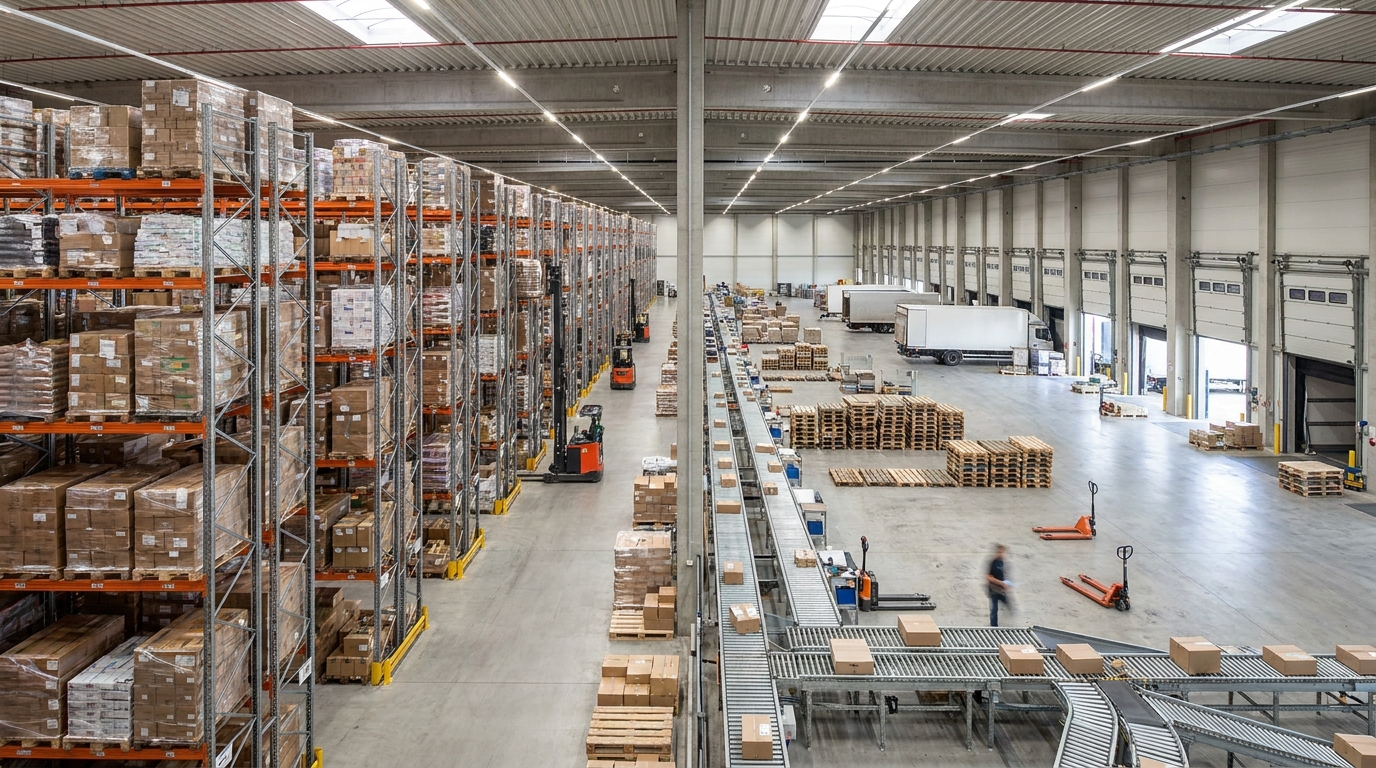
A warehouse and a distribution center do different jobs even though they look alike from the road. A warehouse exists to store inventory, sometimes for weeks or months, with minimal handling in between. A distribution center exists to move inventory fast: it receives product, adds value through picking, packing, and labeling, and ships it out again, often within days. Understanding the difference between a warehouse and a distribution center comes down to two things: how long goods sit still, and how much work happens to them while they are there.
Key takeaways
- A warehouse optimizes for storage; a distribution center optimizes for throughput and speed to the next stop.
- The clearest signal is dwell time: warehouse inventory sits for weeks or months, distribution-center inventory usually turns in days.
- Distribution centers layer on value-added services (pick-pack, kitting, labeling, cross-docking) that a plain warehouse rarely offers.
- Every distribution center is a warehouse, but not every warehouse is a distribution center.
- Choose based on how your product moves to customers, not on the sign over the door.
What is a warehouse?
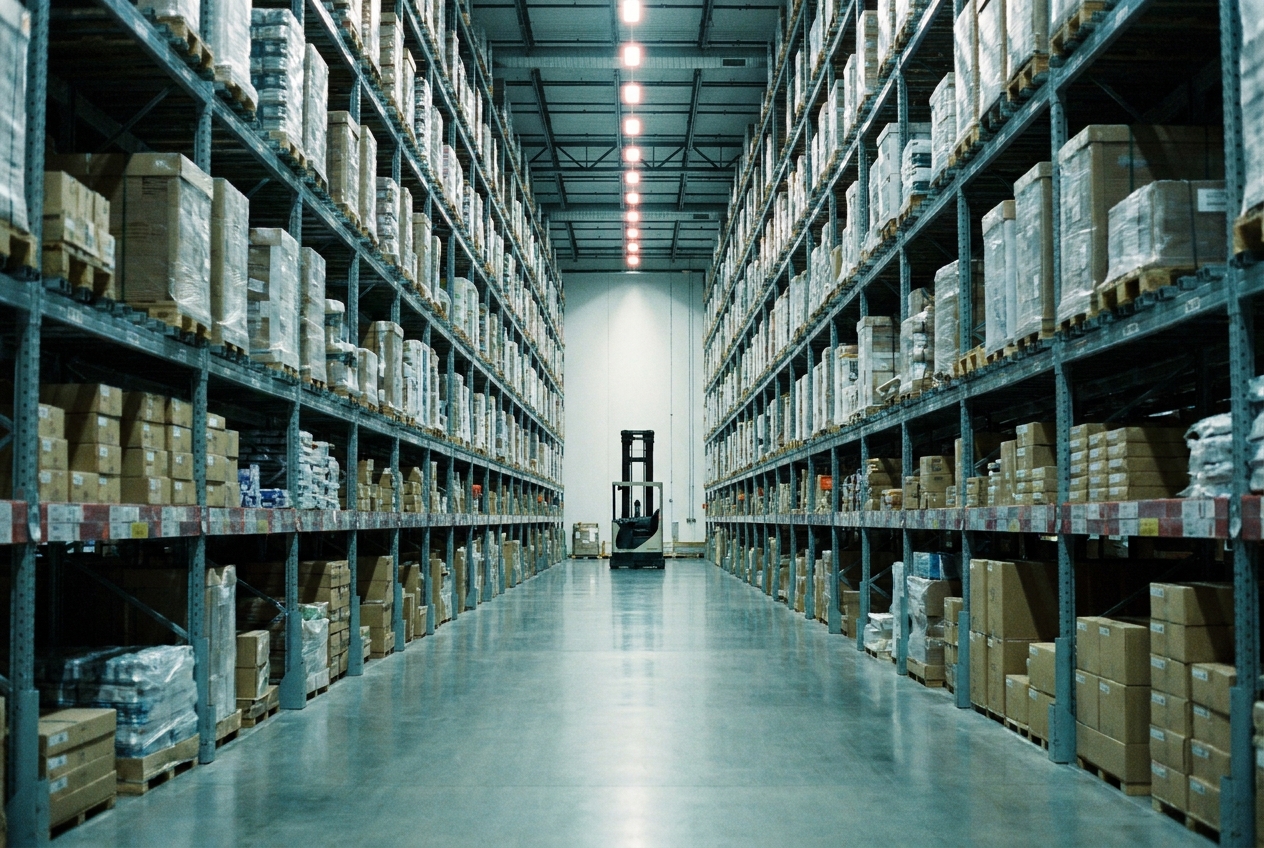
A warehouse is a facility built to store goods safely until they are needed. Its core job is holding inventory, not moving it quickly. Layouts favor dense storage: tall pallet racking, wide reserve aisles, and floor space measured in how many pallets fit rather than how many orders ship per hour.
Typical warehouse functions are receiving, put-away into racking, inventory control, and eventual retrieval when someone downstream calls for the stock. Goods might be raw materials waiting for a production line, seasonal product staged months ahead, or safety stock a company holds as a buffer. Because handling is light and dwell time is long, plain storage warehousing tends to be the lower-cost option per pallet. You are paying mostly for space and security, not labor and technology.
What is a distribution center?
A distribution center (DC) is a specialized warehouse built for high-velocity throughput and order fulfillment rather than long-term storage. Product comes in, gets processed, and goes back out fast, frequently to retail stores, other facilities, or directly to end customers. A DC is judged on how quickly and accurately it moves orders, not on how much it can hold.
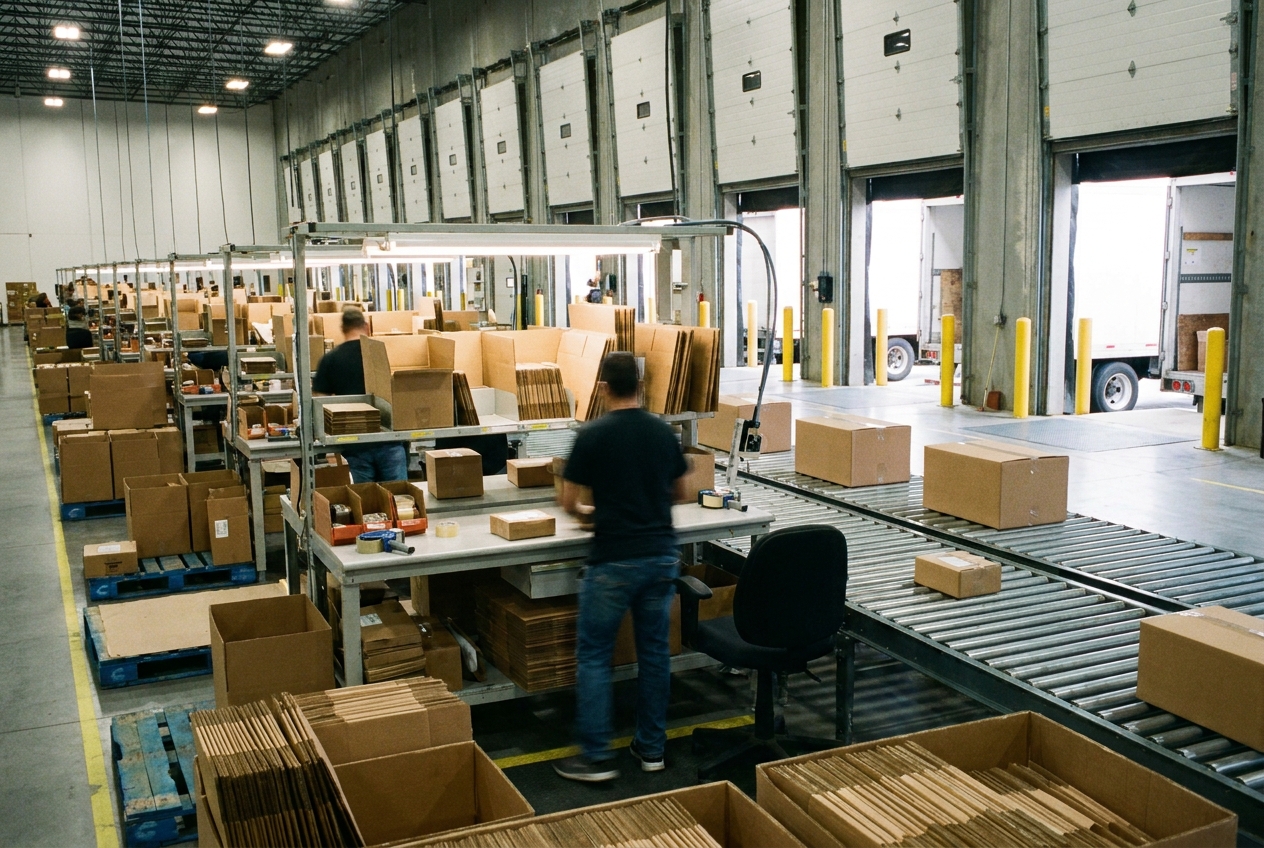
That speed shows up in the services. Distribution centers routinely pick individual items, pack orders, kit or bundle products, apply carrier and compliance labels, and run cross-docking, which is transferring freight straight from an inbound truck to an outbound one with little or no storage in between. The building is designed around flow: many dock doors, conveyors or sortation, staging lanes, and technology to route each order. All of that adds cost per unit handled, but it buys the fast, reliable shipping that retail and ecommerce demand.
What is the core difference between a warehouse and a distribution center?
The core difference is purpose: storage versus movement. A warehouse is optimized to keep inventory still and safe at the lowest cost; a distribution center is optimized to keep inventory moving and to add value on the way through. Everything else, dwell time, layout, staffing, and technology, follows from that one distinction.
Dwell time is the fastest tell. If pallets sit for weeks or months, you are looking at storage warehousing. If most product turns in a matter of days and leaves as picked, packed orders, you are looking at a distribution center. The second tell is value-added services: cross-docking, pick-pack, kitting, and labeling belong to the DC world, while a pure warehouse mostly receives, holds, and releases full pallets or cases.
How do a warehouse and a distribution center compare side by side?
The table below lines up the two facility types across the dimensions that actually change your cost and service. Treat it as a spectrum: many real buildings sit somewhere in the middle.
| Dimension | Warehouse | Distribution center |
|---|---|---|
| Primary purpose | Long-term storage of inventory | High-velocity throughput and fulfillment |
| Typical dwell time | Weeks to months | Hours to a few days |
| Value-added services | Minimal (receive, store, release) | Pick-pack, kitting, labeling, cross-docking, returns |
| Layout emphasis | Dense racking, wide reserve aisles | Many dock doors, staging, conveyors, sortation |
| Order profile | Full pallets or cases | Cases, eaches, individual customer orders |
| Cost driver | Space and security | Labor, technology, handling |
| Best for | Safety stock, seasonal overflow, raw materials | Retail replenishment, ecommerce, fast-moving SKUs |
What functions does each facility perform?
A warehouse performs a short, stable set of functions: receiving inbound freight, putting it away into racking, controlling inventory counts, and retrieving stock when it is called for. The work is deliberate and low-touch, which is what keeps cost per pallet down.
A distribution center performs all of that plus a layer of activity aimed at getting orders out the door. That includes picking individual items to fill orders, packing and boxing, kitting or assembling multi-item sets, applying shipping and compliance labels, staging outbound loads by carrier or route, cross-docking time-sensitive freight, and often processing returns. Because so many hands and systems touch each order, a DC lives or dies on accuracy and cycle time. If you want to model what those handling and storage activities cost before you commit, our warehouse cost calculator lets you estimate storage plus fulfillment costs side by side.
When does a business need a warehouse versus a distribution center?
You need a warehouse when your priority is holding inventory cheaply and you are not shipping small orders out frequently. Bulk raw materials, slow-moving safety stock, and seasonal product staged for a later peak all fit plain storage. You need distribution-center capability when customers or stores expect fast, frequent, order-level shipping and you cannot afford product to sit.
Consider a growing ecommerce brand shipping 400 individual orders a day. A storage-only warehouse would leave the brand hand-picking and packing orders with no sortation, no carrier staging, and slow cycle times. The same brand in a distribution center (or an ecommerce fulfillment center, which is a DC tuned for direct-to-consumer parcels) gets picked, packed, and shipped orders with next-day handling. Now flip it: a manufacturer holding six months of packaging film needs cheap, dense storage, not a bank of pick stations. The right call follows the way product actually moves to the people buying it.
Can one facility be both a warehouse and a distribution center?
Yes. Plenty of buildings run reserve storage in the back and active fulfillment up front, blending both models under one roof. A company might hold overflow and seasonal stock in deep racking while running daily pick-pack and shipping from a forward-pick area fed by that reserve. The two functions support each other rather than compete.
This blending is exactly why the label on the building matters less than the services offered. A third-party logistics (3PL) provider will often describe its network as warehouses, distribution centers, or fulfillment centers almost interchangeably, so the useful question is not what a facility is called but what it actually does: how fast product turns, and which value-added services are included. According to the U.S. Bureau of Transportation Statistics, warehousing and storage is a large and growing part of the logistics sector, and much of that growth is fulfillment-oriented rather than pure long-term storage (Bureau of Transportation Statistics).
How do 3PLs and fulfillment centers fit in?
Most shippers do not build these facilities themselves; they rent capability from a 3PL that already operates warehouses and distribution centers. That lets a brand match its inventory to the right kind of space without signing a lease: storage for the slow stuff, distribution or fulfillment for the fast stuff, and sometimes both from the same partner. When you evaluate providers, ask specifically about dwell-time expectations, which value-added services are standard versus billed separately, and whether they cross-dock, because those answers tell you whether you are really buying storage or throughput.
Energy use is another quiet cost difference, since high-throughput buildings run more equipment and lighting hours; the U.S. EPA's Energy Star program benchmarks warehouse and distribution-center efficiency if you want a reference point. When you are ready to compare real providers, browse vetted warehousing and 3PL companies in the directory and shortlist the ones whose service mix matches how your product moves.
Frequently asked questions
Is a distribution center just a type of warehouse?
Yes. A distribution center is a specialized warehouse built for speed rather than storage. Every distribution center is a warehouse, but not every warehouse is a distribution center. The distinction is about how the space is used: long-term holding versus high-velocity throughput and order fulfillment.
What is the main difference between a warehouse and a distribution center?
Dwell time and services. A warehouse holds inventory for weeks or months with few added services. A distribution center keeps dwell time short, often days, and layers on value-added work like picking, packing, kitting, labeling, and cross-docking to get product to the next stop quickly.
Does a distribution center cost more than a warehouse?
Usually, per unit handled. Distribution centers carry higher labor, technology, and handling costs because of the fulfillment and value-added work they do. Plain storage warehousing is cheaper per pallet but adds little beyond keeping goods safe. The right comparison is total cost to serve your customers, not rent alone.
Do I need a warehouse or a distribution center for ecommerce?
Most ecommerce brands need distribution-center or fulfillment-center capability, because customers expect fast individual-order shipping. A plain storage warehouse fits slow-moving safety stock, seasonal overflow, or bulk raw materials that are not shipped to end customers directly.
Can one building be both a warehouse and a distribution center?
Yes, and many are. A single facility can hold reserve inventory in one zone and run active pick-pack and shipping in another. Third-party logistics providers often blend both models under one roof, which is why the label on the building matters less than the services offered.
What is cross-docking and why does it matter here?
Cross-docking is moving freight from an inbound truck to an outbound truck with little or no storage in between. It is a signature distribution-center function that a pure storage warehouse rarely performs, and it is a fast way to tell the two facility types apart.
Ready to compare providers?
Search the directory by service and location, save options to your shortlist, and send a clear RFQ.
Related guides
What Is Freight Audit and Payment?
Freight audit and payment checks every carrier invoice against your contracted rate and the bill of lading, corrects overcharges, pays the carrier, and captures the cost data.
How to Write a Logistics RFP
A section-by-section guide to writing a logistics RFP that gets accurate, comparable quotes from 3PLs, freight brokers, and carriers.
Reverse Logistics: Returns, Recalls, and Recycling
A complete guide to reverse logistics: the backward flow of returns, recalls, repairs, redistribution, recycling, and disposal, plus how to recover value and choose a provider.