
What Is a Fulfillment Center? Vs Warehouse and 3PL
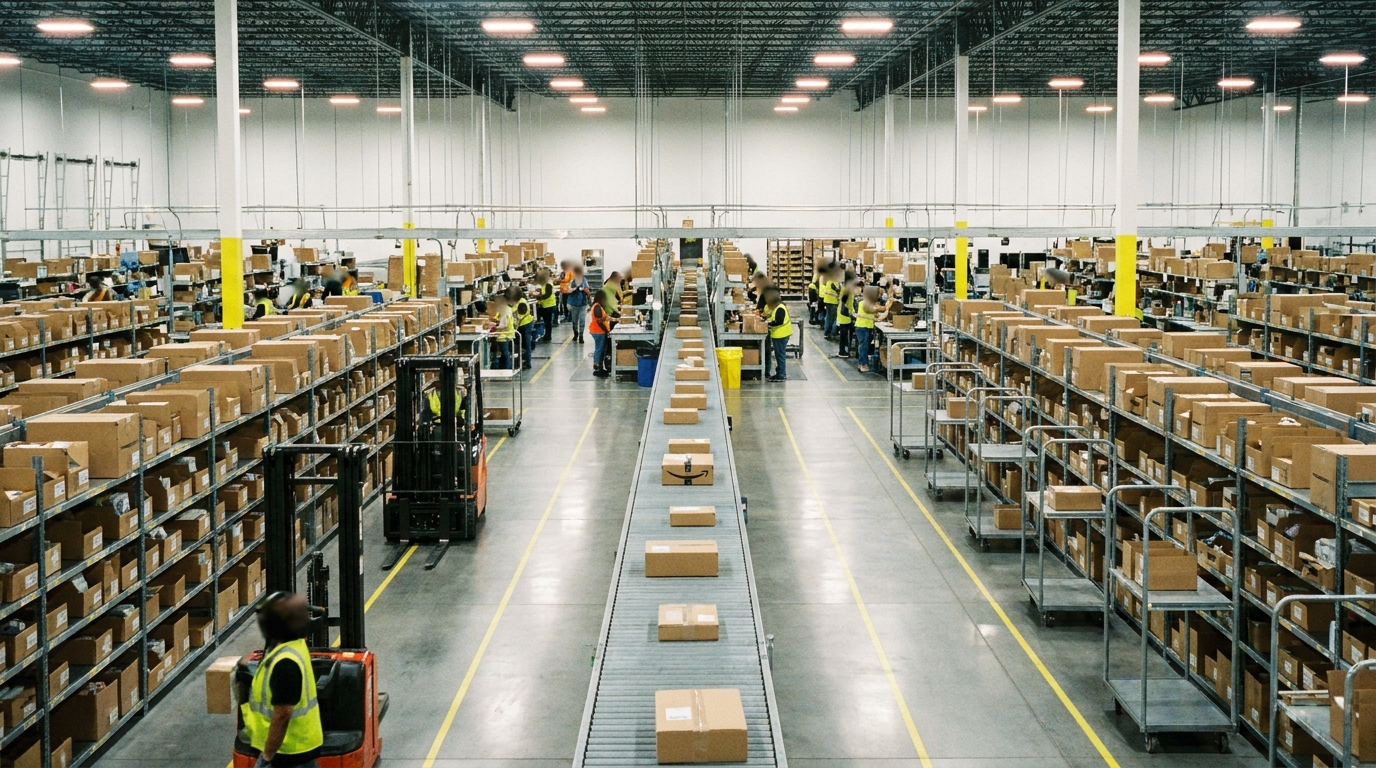
A fulfillment center is a facility that receives, stores, picks, packs, and ships a brand's online orders directly to its customers. It is the physical hub where an order placed on your website or a marketplace turns into a labeled box handed to a carrier. Unlike a plain warehouse built mainly to hold inventory, a fulfillment center is built for outbound flow: high volumes of individual, often mixed-item orders moving out the door every day, plus the returns that come back.
Key takeaways
- A fulfillment center processes individual customer orders end to end: receiving, storage, pick-pack, shipping, and returns.
- A warehouse stores goods; a fulfillment center moves them. The difference is outbound order processing, not just square footage.
- A distribution center ships in bulk to stores and businesses; a fulfillment center ships single orders to consumers.
- A 3PL is the company that operates fulfillment centers as an outsourced service, so a fulfillment center is what you use and a 3PL is who runs it.
- Most brands move to a fulfillment center when order volume, shipping speed, or their own time becomes the bottleneck.
What does a fulfillment center actually do?
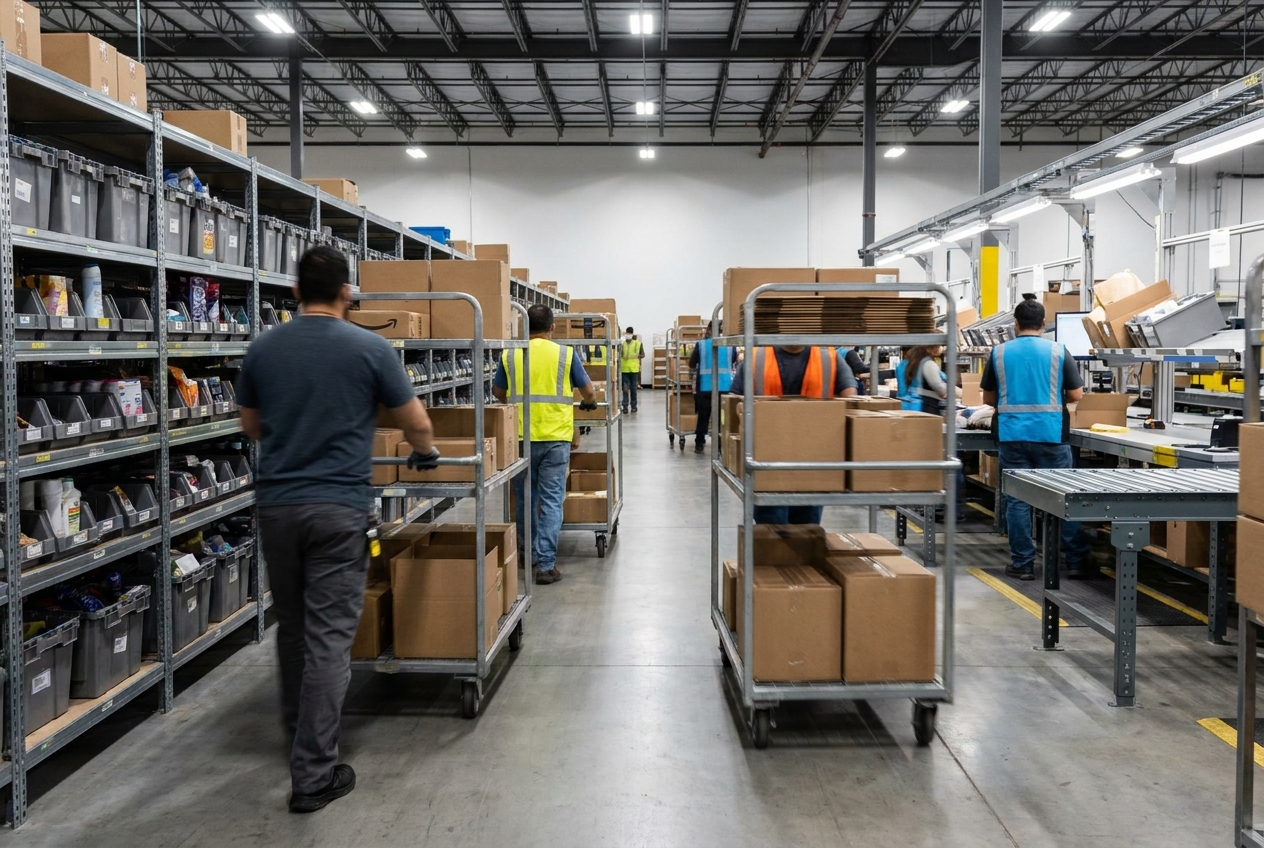
A fulfillment center runs the full path from inbound stock to delivered order. Its purpose is to take a customer's order and get the right items into the right box on a carrier truck quickly and accurately.
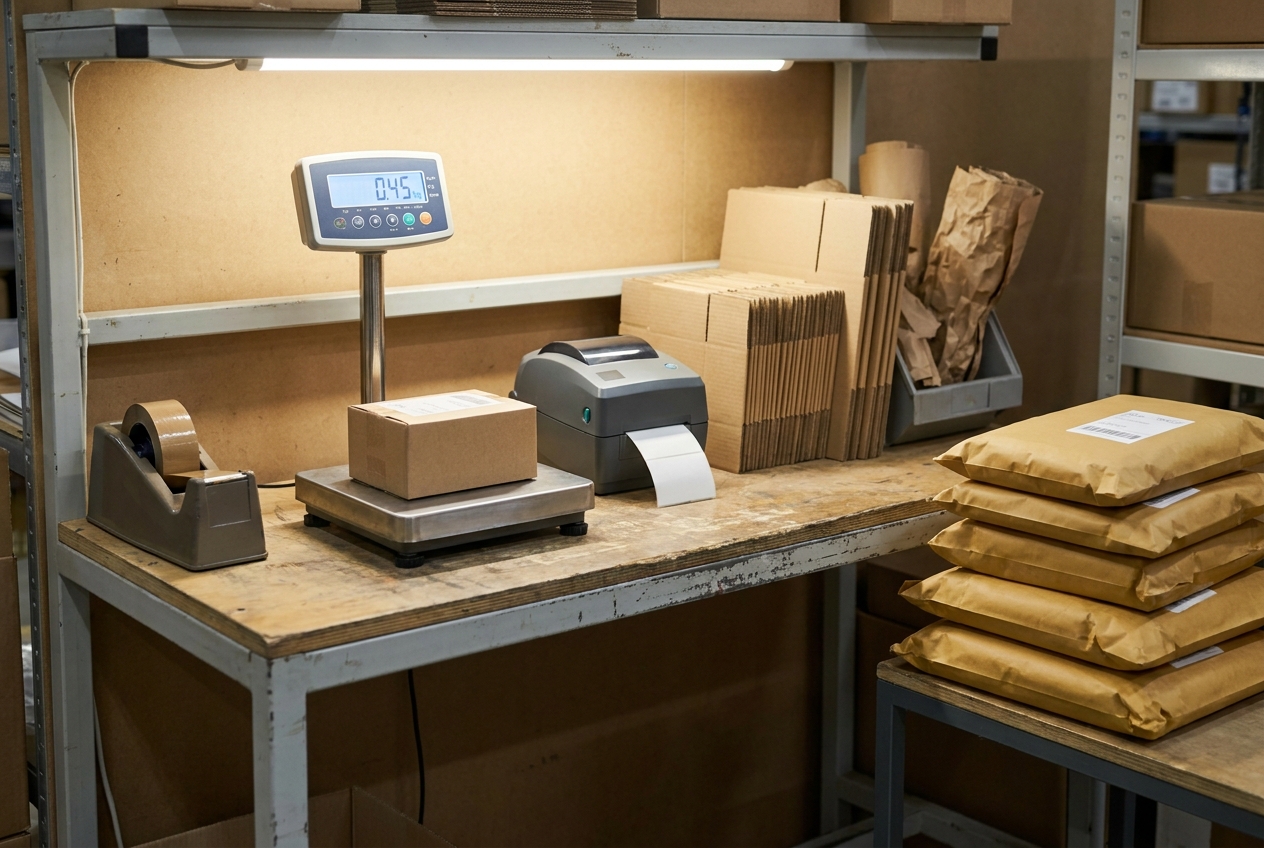
The work breaks into five stages. Receiving: inbound inventory arrives, gets counted against the packing list, inspected, and logged into the system. Storage: units are put away in bins, shelves, or pallet racking and tracked by location. Picking: when an order comes in, staff or automation pull the exact items from their locations. Packing: items are combined, protected, boxed, and labeled, and any kitting or inserts are added. Shipping: the package is rated across carriers and handed off, with tracking pushed back to the customer. Returns run this in reverse, inspecting and restocking or disposing of items that come back.
How is a fulfillment center different from a warehouse?
A warehouse stores goods; a fulfillment center processes orders. That is the core distinction. A traditional warehouse is optimized to hold large quantities cheaply for weeks or months, with occasional bulk moves in and out. A fulfillment center is optimized for constant outbound activity, measured in orders shipped per day and hours from order to handoff.
The practical differences show up in layout, labor, and technology. A warehouse can get by with dense pallet racking and a small crew. A fulfillment center needs pick paths, packing stations, carrier integrations, and order-management software so that hundreds or thousands of small, unique orders ship accurately every day. If you only need to park inventory, a warehouse is enough. The moment you need someone to pick and ship individual customer orders, you need fulfillment.
Warehouse vs distribution center vs fulfillment center: what is the difference?
These three facility types overlap but serve different endpoints. A warehouse stores. A distribution center moves inventory in bulk to businesses and stores. A fulfillment center ships individual orders to consumers. The table below lines up how they compare.
| Factor | Warehouse | Distribution center | Fulfillment center |
|---|---|---|---|
| Primary job | Long-term storage | Bulk movement to stores and businesses | Picking, packing, and shipping single orders |
| Typical ship-to | Rarely ships directly | Retailers, wholesalers, other DCs | Individual end consumers |
| Order size | N/A | Pallets and truckloads | One order, often a few units |
| Inventory turnover | Low, slow-moving | Moderate to high | High, fast-moving |
| Core software | Basic inventory records | Warehouse management | Order and inventory management with carrier integrations |
In practice the lines blur. Many facilities do more than one job, and a large operation may run storage, distribution, and direct-to-consumer fulfillment under one roof. The useful question is not what a building is called but what work it is set up to do for you.
Is a fulfillment center the same as a 3PL?
No. A fulfillment center is a physical facility. A 3PL, or third-party logistics provider, is the company that operates one or more fulfillment centers as an outsourced service. When you outsource fulfillment, you are hiring a 3PL, and the 3PL runs the fulfillment center on your behalf.
The distinction matters when you shop for a partner. A 3PL may run several fulfillment centers in different regions, and it often bundles other services such as warehousing, freight, and FBA prep alongside order fulfillment. So a fulfillment center is one capability inside what a 3PL sells. If you are still mapping the landscape, our guide on what a 3PL is and how the model works covers the full scope, and you can browse vetted providers on the ecommerce fulfillment category page.
When does a growing brand need a fulfillment center?
You need a fulfillment center when handling orders yourself starts costing more than it saves, in time, errors, or shipping speed. There is no universal threshold, but the pressure usually shows up in the same places: orders eating your evenings, storage overflowing your space, or customers wanting faster delivery than one location can give.
Consider a home-goods brand shipping from a founder's garage. At 150 orders a month, packing them by hand is a manageable evening chore. At 900 orders a month across two marketplaces, the founder is spending most of the week picking and packing instead of selling, run out of space for inventory, and losing sales to slower shipping than competitors offer. Moving to a fulfillment center trades a per-order fee for reclaimed time, professional packing, and multi-carrier rates that a small shipper rarely gets alone. That trade tips in favor of outsourcing somewhere in the range of a few hundred to a couple thousand orders a month for many brands, though product size and margins move the line. The U.S. Small Business Administration publishes general guidance on scaling operations that is worth reading before you commit to a contract. When you are ready to compare, our checklist on how to choose an ecommerce fulfillment provider walks through what to ask.
How much does a fulfillment center cost?
Fulfillment pricing usually stacks several fees rather than one flat rate. Expect a receiving fee for inbound inventory, monthly storage charged per pallet or cubic foot, a per-order pick-and-pack fee, and the actual carrier shipping cost, sometimes with extras for kitting, inserts, or returns. Ranges vary widely by product dimensions, weight, and monthly volume, so a lightweight apparel brand and a bulky-goods seller can pay very different effective rates per order.
Because the fees interact, model your own numbers before signing anything. Our warehouse cost calculator helps you estimate storage and handling against your real volumes, and the deeper breakdown in how pick-and-pack fees work shows where the per-order costs come from. Facility energy use also feeds into overhead, and warehouses that carry the Energy Star certification tend to run leaner on utilities, which can show up in the rates a provider quotes.
What should you look for in a fulfillment center?
Look for accuracy, location, and visibility above headline price. A cheap per-order rate means little if orders ship late, arrive wrong, or leave you blind to inventory. Ask for pick accuracy and on-time ship rates, and treat vague answers as a red flag.
Location determines both cost and speed: a center near your customers, or several centers spread across regions, cuts transit time and shipping zones. Software matters as much as the building, so confirm the provider integrates with your store and marketplaces and gives you real-time stock, order, and returns data. Finally, weigh the service scope. If you also import, sell on Amazon, or need freight, a provider that handles those adjacent jobs can save you from stitching several vendors together. When you are ready to shortlist, the National Freight Hub directory lets you filter neutral, unbiased listings by service and region.
Frequently asked questions
Is a fulfillment center the same as a warehouse?
No. A warehouse mainly stores goods for the long term. A fulfillment center stores inventory too, but its core job is processing individual customer orders: picking, packing, and shipping them, then handling returns.
Is a fulfillment center a 3PL?
A fulfillment center is a physical facility. A 3PL is the company that operates one or more fulfillment centers as an outsourced service. Every outsourced fulfillment center is run by a 3PL, but a 3PL may also offer freight, warehousing, and other logistics beyond fulfillment.
What is the difference between a fulfillment center and a distribution center?
A distribution center ships in bulk to businesses and retail stores, often by the pallet or truckload. A fulfillment center ships single, often mixed-item orders directly to individual consumers. Distribution feeds stores; fulfillment feeds doorsteps.
When should an ecommerce brand move to a fulfillment center?
Most brands consider one when order volume outgrows a garage or spare room, when shipping is eating into evenings and weekends, or when they want faster regional delivery. A common trigger is somewhere in the range of a few hundred to a couple thousand orders a month, though it varies by product and team.
Does using a fulfillment center mean giving up control of inventory?
You hand off physical handling, not visibility. A good provider gives you a dashboard or API showing real-time stock levels, order status, and returns, so you still control what is stored, reordered, and shipped.
How much does a fulfillment center cost?
Pricing usually combines receiving fees, monthly storage per pallet or cubic foot, and per-order pick-and-pack fees, plus the actual shipping. Ranges vary widely by product size and volume, so model your own numbers before signing.
Ready to compare providers?
Search the directory by service and location, save options to your shortlist, and send a clear RFQ.
Related guides
Subscription Box Fulfillment: What to Ask a 3PL
How subscription box fulfillment differs from standard ecommerce, the batch and kitting challenges that trip brands up, and the exact questions to ask a 3PL before you move.
Dropshipping vs Holding Inventory in a 3PL
Dropshipping vs 3PL fulfillment compared on margin, speed, control, branding, and risk, with a decision table and a hybrid model that uses both.
What Is a SKU? SKU vs UPC, ASIN, and FNSKU
A SKU is your own internal code for a product. Here is how it differs from a UPC, ASIN, and FNSKU, and how to structure SKUs that keep inventory accurate.