
Domestic vs International Intermodal
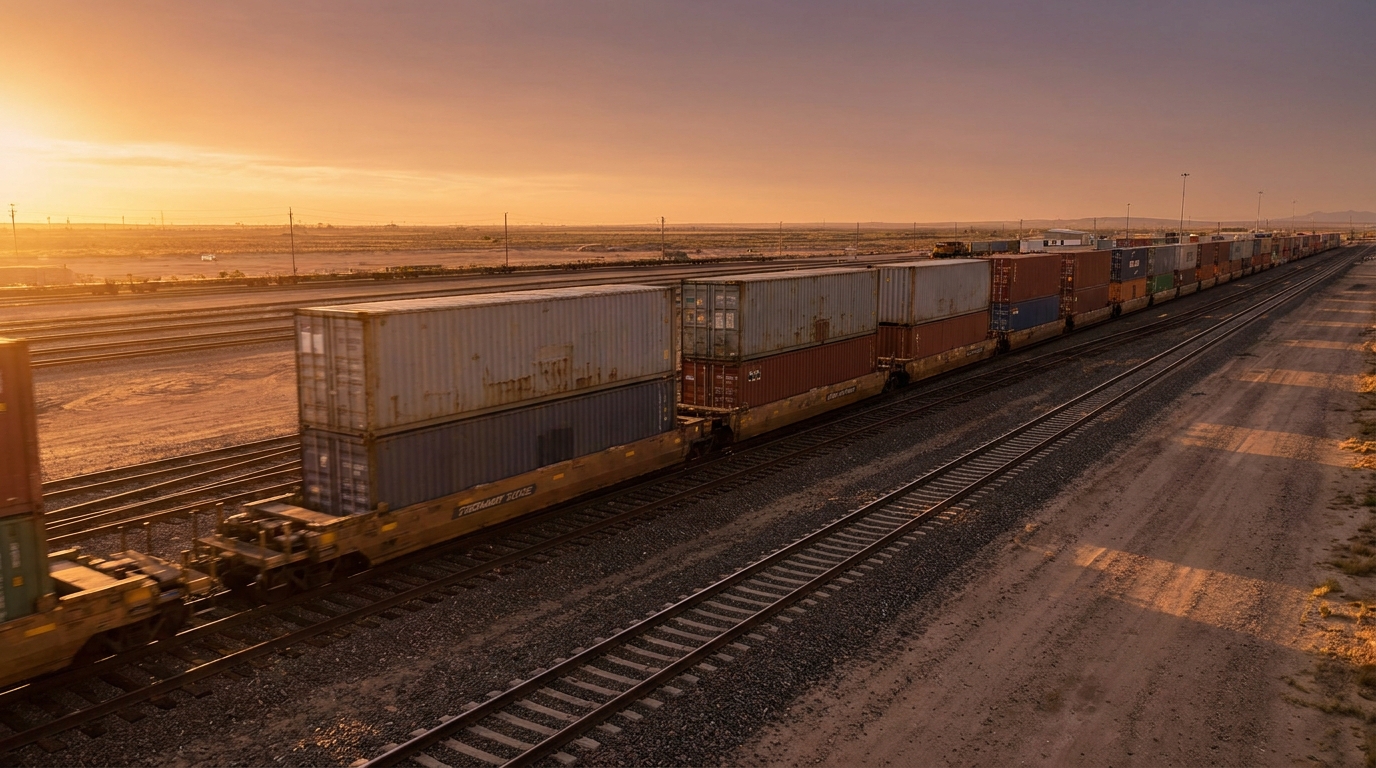
Domestic and international intermodal both combine truck and rail to move a shipping container, but they use different equipment and start in different places. Domestic intermodal moves freight in 53-foot domestic containers that travel inland by rail between North American terminals. International intermodal moves standard ISO ocean containers, usually 20 or 40 feet, that arrive by ship at a seaport and then ride the rail network inland. The right choice depends on where your freight originates, how much it weighs, and how much cube you need.
Key takeaways
- Domestic intermodal uses 53-foot domestic containers on rail for inland North American lanes; international intermodal uses 20- and 40-foot ISO ocean containers moving from a port.
- International boxes are shorter and lower-cube but built for ocean travel and stacking; a 53-foot domestic container holds far more pallets.
- Most modern rail intermodal is COFC (container on flatcar). TOFC (trailer on flatcar) is the older piggyback method and now a small share of volume.
- International containers hit their weight ceiling sooner because ocean and road rules cap the loaded box lower than many shippers expect.
- Use domestic intermodal to replace long-haul truckload inland; use international intermodal to move imports from the port without transloading first.
What is domestic intermodal?
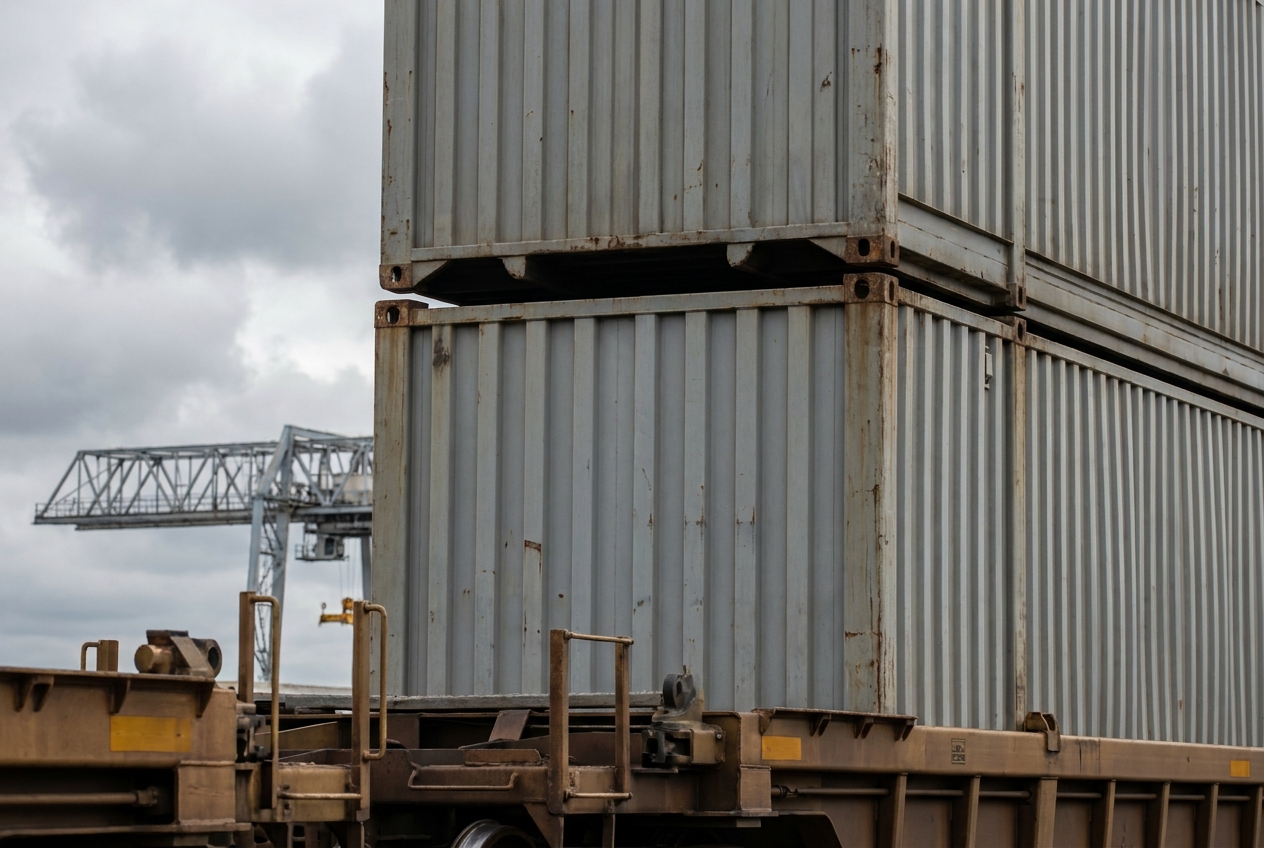
Domestic intermodal is freight moving in a 53-foot domestic container that rides the rail network between inland ramps, with a truck handling the first and last miles. The container itself never sees a ship; it is built for North American rail and highway use. Because a 53-foot domestic container matches the interior cube of a dry van trailer, shippers use domestic intermodal as a lower-cost, lower-emission alternative to over-the-road truckload on longer lanes.
The move works in three legs. A drayage truck picks the loaded container up at the origin, the railroad carries the linehaul between ramps, and a second drayage truck delivers it at destination. If the terms drayage and ramp are new, our guides on what drayage is and how intermodal shipping works cover the mechanics. Domestic intermodal tends to make sense on non-urgent lanes over roughly 700 miles where rail can undercut a truck driving the full distance.
What is international intermodal?
International intermodal is an ISO ocean container that arrives at a US seaport and continues inland by rail rather than being unloaded at the coast. The same steel box that crossed the ocean is lifted off the ship and moved to an inland destination, often under a single through bill of lading. When the rail leg runs straight to an interior market it is called interior point intermodal, or IPI.
The defining feature is that the container is ocean equipment provided by the steamship line, not a domestic box. That shapes everything downstream: the sizes available, the weight you can load, and where the container has to be returned. Ports and inland rail terminals are the handoff points, and understanding the terminal side helps. Our sibling guide on what an intermodal ramp is explains where these lifts happen, and you can find carriers on the intermodal and rail category page.
What container types does each use?
Domestic intermodal runs almost entirely on 53-foot domestic containers, with some older 48-foot equipment still in service. These boxes are taller and wider inside than an ocean container and have reinforced corner posts so two can be double-stacked in a rail well.
International intermodal uses ISO ocean containers built to a global standard: 20-foot, 40-foot, 40-foot high cube, and occasionally 45-foot boxes. The 20-foot unit is the reference point for the industry term TEU (twenty-foot equivalent unit). These containers are corrugated steel, ocean-rated, and sized to stack on a vessel, which is why their interior cube is smaller than a domestic box of similar length.
COFC vs TOFC: what is the difference?
COFC (container on flatcar) loads only the container onto the railcar, while TOFC (trailer on flatcar) loads an entire highway trailer, chassis and wheels included, onto the railcar. COFC dominates modern intermodal because a container has no chassis riding along, so carriers can double-stack two boxes in one well car and move far more freight per train.
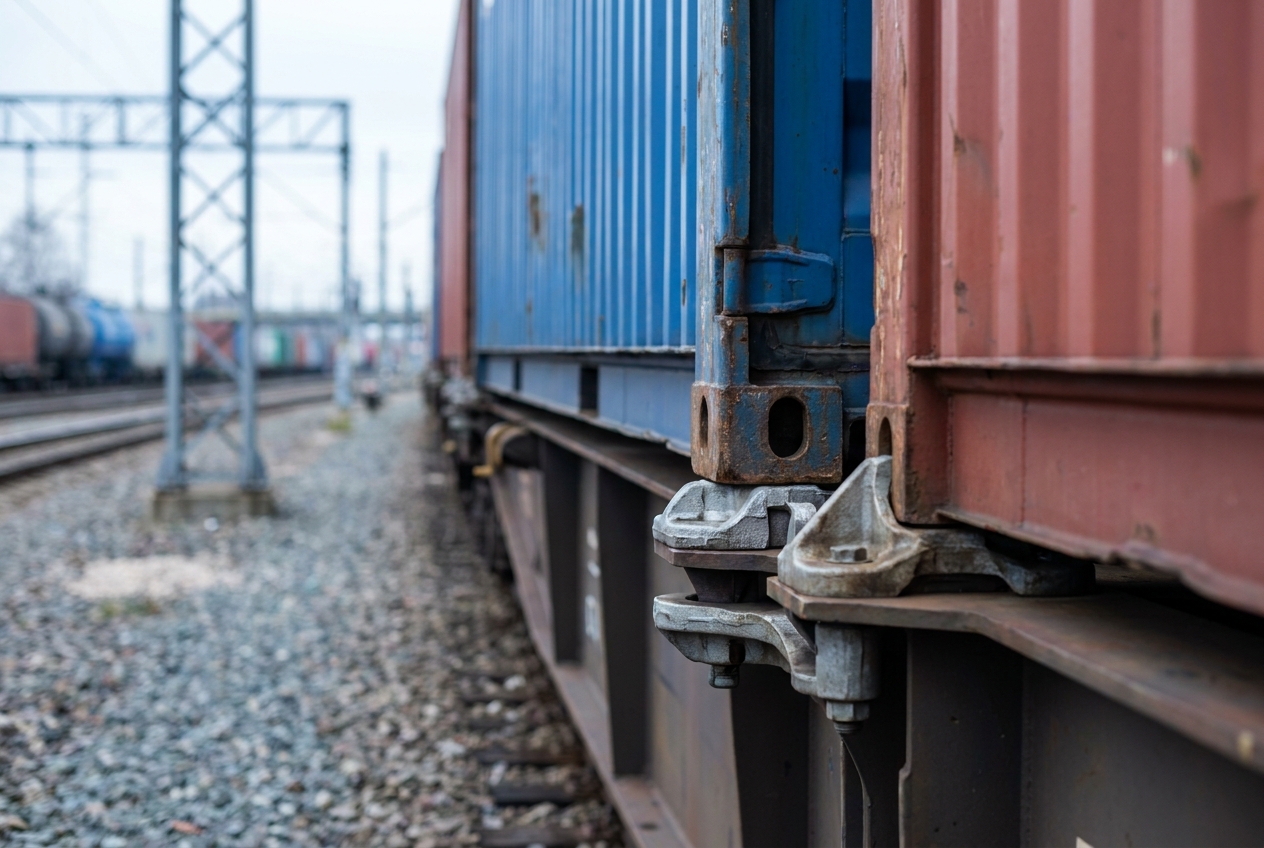
TOFC, often called piggyback, is the older approach. It survives in niches where the trailer needs to roll off and deliver immediately or where equipment cannot be double-stacked, but it carries the dead weight and wind resistance of the chassis, so its share of volume has shrunk. When someone says a load is moving intermodal today, they almost always mean COFC.
How do capacity and weight compare?
Capacity is where the two modes separate most clearly. A 53-foot domestic container holds roughly 26 to 30 standard 48-by-40-inch pallets on the floor, close to what a dry van carries. A 40-foot ocean container holds about 20 to 22 of the same pallets, and a 20-foot box holds roughly 10 to 11. If you are packing to a fixed pallet count, run the numbers with the container load calculator before you commit to a box size.
Weight tells a similar story from the other direction. International containers usually reach their practical weight ceiling before they run out of floor, because the loaded box plus its chassis has to stay inside road weight limits for the drayage leg, and the ocean carrier enforces its own maximum gross weight. A domestic 53-foot container gives you more cube, but heavy, dense freight can still max out on weight before the box is full. The Bureau of Transportation Statistics tracks how much of the national freight tonnage moves by rail and intermodal if you want the broader picture.
When should you use domestic vs international intermodal?
Use domestic intermodal when freight originates and terminates inland, the lane is long enough for rail to beat a truck, and the shipment is not time-critical. It is the natural swap for over-the-road truckload on repeatable inland lanes, and it gives you the full cube of a 53-foot box. Because drayage carriers handle the road legs, confirm the trucker holds proper operating authority, which you can check through the FMCSA.
Use international intermodal when the freight is an import already sitting in an ocean container at the port and you want to move it inland without unpacking it at the coast. Keeping the box intact avoids an extra handling step, but you inherit the smaller cube and the container-return obligation. Many importers instead transload the goods into a 53-foot domestic container near the port to gain space and reach more inland ramps. The right call depends on volume, destination, and how quickly you need the equipment back.
Domestic vs international intermodal: side by side
The table below summarizes the practical differences shippers weigh when choosing a mode.
| Factor | Domestic intermodal | International intermodal |
|---|---|---|
| Container | 53-foot domestic (some 48-foot) | 20-, 40-, 40-foot high cube, 45-foot ISO ocean |
| Where the trip starts | Inland origin, ramp to ramp | Seaport, after ocean arrival |
| Typical pallet capacity | Roughly 26 to 30 floor pallets | Roughly 20 to 22 (40-foot); 10 to 11 (20-foot) |
| Cube | Higher interior cube | Lower cube, ocean-rated |
| Weight ceiling | Cube- or weight-limited | Often weight-limited first |
| Loading method | COFC, double-stacked | COFC, double-stacked |
| Best fit | Replacing inland truckload on long lanes | Moving imports from port to inland destination |
Whichever mode fits, intermodal only pays off when the drayage, ramps, and transit windows line up on your specific lane. Compare providers by mode and coverage in the intermodal and rail directory before you book.
Frequently asked questions
Is a 53-foot container intermodal?
Yes. The 53-foot domestic container is the standard box for domestic intermodal in North America. It rides the rail network between inland ramps and is drayed by truck on each end. It is not an ocean container and generally does not travel by ship.
Can an international ocean container move on domestic intermodal rail?
It can, and it does. An import can stay in its ISO ocean container and ride the rail inland, which is called interior point intermodal (IPI). Many shippers instead transload the freight into a 53-foot domestic container at or near the port to gain cube and reach more inland ramps.
What does COFC stand for?
COFC means container on flatcar. Only the container is lifted onto the railcar, which lets carriers double-stack two containers per well. TOFC, or trailer on flatcar, loads an entire highway trailer with its chassis onto the railcar and cannot be double-stacked.
Why can't you load an ocean container as heavy as a truck?
Ocean containers face a lower practical weight ceiling because the loaded box plus its chassis has to stay within road weight limits for drayage, and ocean carriers enforce their own maximum gross weights. A 40-foot ocean box also has less floor space than a 53-foot domestic container, so it fills up on cube before you can add much weight.
Is domestic intermodal cheaper than truckload?
On longer inland lanes it often is, because rail moves the linehaul portion more cheaply than a truck driving the full distance. The trade-off is transit time and the added drayage and ramp handling on each end, so intermodal usually wins on lanes over roughly 700 miles that are not time-critical.
What is IPI in international intermodal?
IPI stands for interior point intermodal. It is an import move where the ocean container is railed from the port directly to an inland destination under a single through bill of lading, rather than being unloaded at the coast.
Ready to compare providers?
Search the directory by service and location, save options to your shortlist, and send a clear RFQ.
Related guides
Carrier Vetting: How to Avoid Fraud and Bad Carriers
A step-by-step guide to carrier vetting: verify FMCSA authority and safety, confirm insurance with the insurer, spot red flags, and stop double-brokering.
Dedicated vs Common Carrier: Which Fits
How dedicated contract carriage, common carriers, and private fleets compare on cost, capacity, and commitment, and when your volume justifies dedicated.
Shipping Construction Materials to a Jobsite
How construction freight works: matching flatbed and specialized trailers to steel, lumber, pipe, and precast, plus jobsite access, oversize permits, and delivery timing.