
Aerospace and Defense Logistics Basics

Aerospace logistics is the specialized movement, storage, and documentation of aircraft parts, defense hardware, and related materials, where a single missing component can ground a multimillion-dollar asset and a paperwork gap can make an otherwise good part unusable. It differs from standard freight in five ways that shape every decision: time-critical AOG (aircraft on ground) service, AS9120 distributor quality, full lot and serial traceability with certificates, dangerous-goods handling, and export-control awareness. Get those right and parts move fast and stay airworthy. Get them wrong and you face grounded aircraft, failed audits, or blocked exports.
Key takeaways
- AOG shipments are time-critical: the part moves by the fastest reliable route, often next-flight-out air or dedicated courier, backed by 24/7 dispatch.
- AS9120 is the aerospace quality standard for distributors and warehouses, adding traceability and counterfeit-prevention controls on top of ISO 9001.
- Aircraft parts need unbroken lot and serial traceability tied to their certificates, or they cannot be installed.
- Lithium batteries, oxygen generators, and aerospace chemicals are regulated dangerous goods that require trained handling and correct paperwork.
- Many aerospace and defense items are export-controlled under ITAR or the EAR, so confirm classification before shipping across a border.
What makes aerospace and defense logistics different?
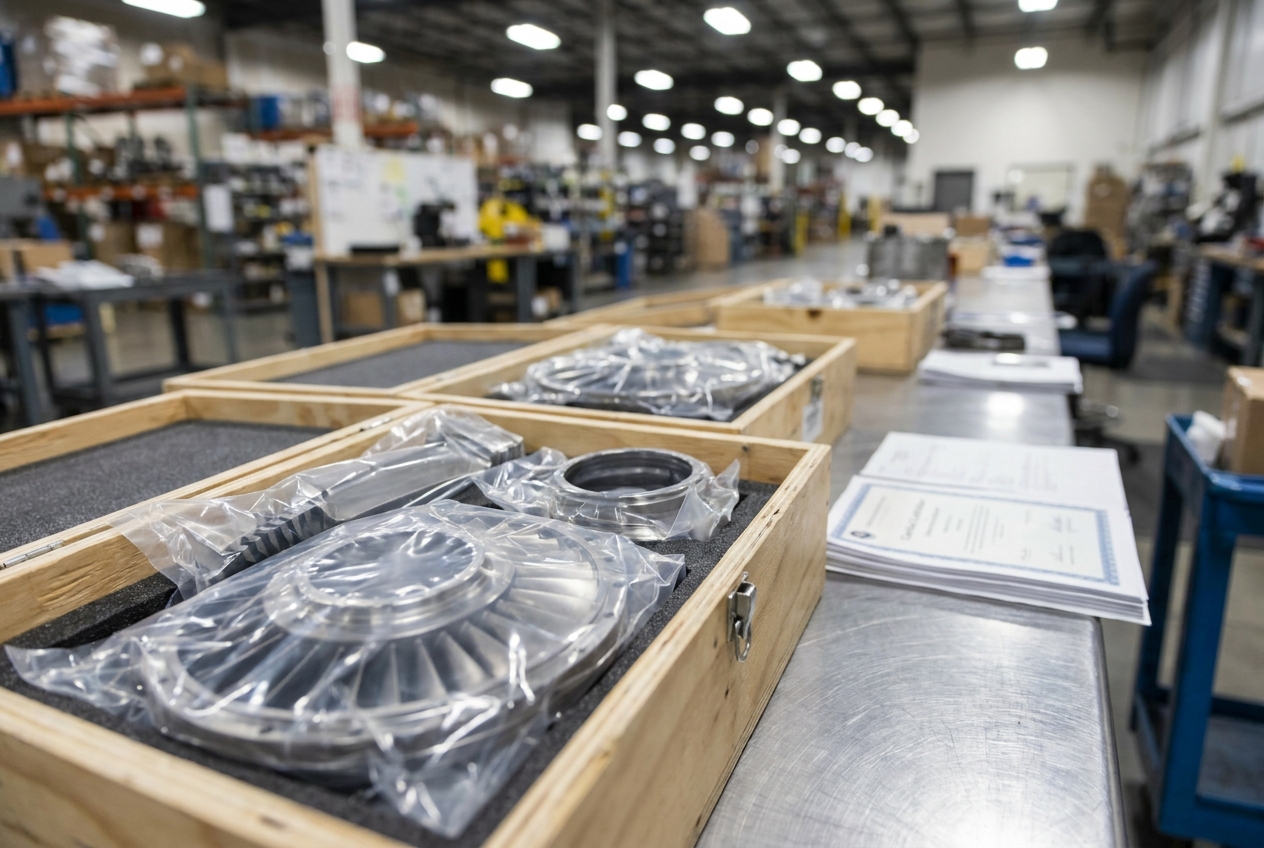
The core difference is that the paperwork travels with the part and is as important as the part itself. In general freight, a shipment is complete when the goods arrive intact. In aerospace, a part that arrives intact but without its material certification, lot traceability, or export authorization is effectively worthless, because it cannot legally or safely go on an aircraft. Providers in this space build their operations around documentation, chain of custody, and speed rather than around lowest cost per pound.
| Requirement | Standard freight | Aerospace and defense logistics |
|---|---|---|
| Speed priority | Cost-driven, scheduled transit | AOG can override cost for next-flight-out delivery |
| Quality system | General or none | AS9120 or AS9100 expected |
| Traceability | Tracking number only | Lot and serial traceability to source and certs |
| Documentation | Bill of lading | Material certs, airworthiness tags, packing lists |
| Regulatory layer | Basic customs | Dangerous goods plus ITAR or EAR export control |
What is AOG service and why does speed matter so much?
AOG means aircraft on ground: the aircraft cannot fly until a specific part is delivered and installed. AOG logistics is the time-critical service that moves that part by the fastest reliable route, often next-flight-out commercial air, a dedicated ground courier, or an on-board courier who hand-carries the part. A grounded aircraft costs an operator lost revenue and disrupted schedules for every hour it sits, so an AOG desk runs 24/7 and measures success in hours, not days. When you evaluate a provider for AOG-capable work, confirm they have around-the-clock dispatch, global airline relationships, and experience clearing time-critical shipments through customs, not just a fast standard-shipping tier. Our guide to expedited freight covers how time-critical modes are priced and dispatched.
Why does AS9120 matter when choosing an aerospace distributor or 3PL?
AS9120 is the aerospace quality management standard written specifically for distributors, stockists, and warehouses that resell or store aerospace parts. It builds on ISO 9001 and adds requirements for traceability, counterfeit-part prevention, record retention, and control of certificates. A related standard, AS9100, applies to manufacturers. When a distributor or third-party warehouse holds AS9120, it means an independent auditor has verified that they have documented, repeatable processes for receiving, storing, and shipping aerospace material without losing its paperwork or mixing lots. That certification is one of the clearest signals that a provider genuinely understands aerospace handling rather than treating your parts like ordinary freight. You can filter for that specialization on the aerospace and defense logistics category in the directory.
How does lot and serial traceability work for aircraft parts?
Lot and serial traceability is the ability to tie a physical part back to its manufacturing batch, its source, and its supporting certificates at any point in the supply chain. Serialized parts carry a unique serial number; batch-produced parts carry a lot number. Either way, the part must stay linked to documents such as the manufacturer's certificate of conformance, material test reports, and any airworthiness release tag. This chain matters for three reasons: it proves the part is genuine and not counterfeit, it lets operators respond to a recall or service bulletin by finding every affected serial, and it satisfies auditors and regulators who require proof of pedigree. A provider that breaks traceability, for example by co-mingling two lots in one bin, can render good parts unusable.
How are aerospace hazardous materials handled?
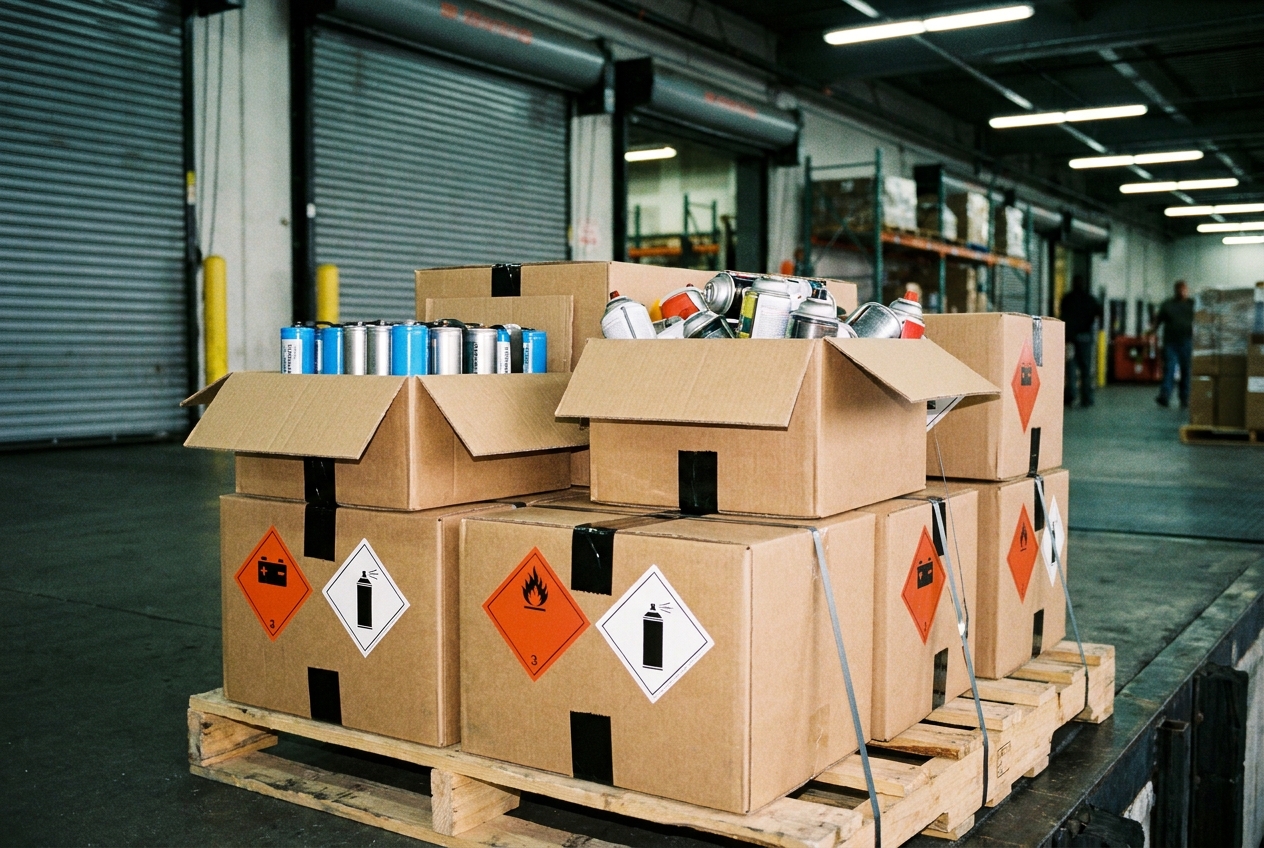
Aerospace and defense freight is full of regulated dangerous goods. Lithium batteries in avionics and portable equipment, chemical oxygen generators, aerosols, paints, adhesives, sealants, and de-icing fluids are all classed as hazardous materials and are especially scrutinized when shipped by air. Correct handling means proper classification, UN-approved packaging, hazard labeling and marking, accurate shipping papers, and personnel trained to the current dangerous-goods rules. Air carriers enforce lithium-battery rules strictly, and a misdeclared shipment can be rejected, delayed, or fined. If your aerospace program includes batteries or chemicals, treat dangerous-goods capability as a hard requirement, and see our hazmat shipping guide for how classification and packaging work. Carrier safety and authority can be checked through the FMCSA.
What does ITAR and export-control awareness require?
Many aerospace and defense parts are export-controlled, which means moving them across a border, or even sharing technical drawings with a foreign national, can require government authorization. Defense articles and technical data fall under ITAR, the International Traffic in Arms Regulations, while many dual-use aerospace items fall under the EAR, the Export Administration Regulations. In practice this means a logistics partner handling regulated items needs to understand classification, screen parties against restricted lists, and keep export records, and it means you should confirm an item's export status before you book an international move. This is a specialized legal area, so treat the general points here as awareness only and rely on your compliance team and official guidance. For the customs side of any cross-border move, the U.S. Customs and Border Protection site is the authoritative starting point.
What should you look for in an aerospace logistics partner?
Compare providers on documented capability, not price alone, because a cheap partner that mishandles certs or misdeclares hazmat can ground an aircraft or block an export. Consider a scenario: a regional operator has an AOG on a Friday night because an avionics unit failed. The right partner locates a certified replacement, confirms its traceability and certificate, packages any lithium cells to dangerous-goods rules, books the next flight out, and clears customs by Saturday morning. A general courier without those systems might move the box fast but arrive with a part the operator cannot legally install. Use the checklist below when you compare candidates, then shortlist across the national directory of logistics companies.
| What to verify | Why it matters |
|---|---|
| AS9120 or AS9100 certification | Confirms audited aerospace quality processes |
| Lot and serial traceability | Keeps parts linked to certs and airworthiness tags |
| Dangerous-goods handling | Legally moves batteries, oxygen generators, and chemicals |
| Export-control awareness | Screens parties and classifies ITAR or EAR items |
| 24/7 AOG desk | Dispatches time-critical parts any hour, any day |
| Global customs experience | Clears urgent cross-border shipments without delay |
The pattern that separates a real aerospace logistics partner from a fast courier is documentation discipline under time pressure. If a provider can move a part next-flight-out and still arrive with clean traceability, correct hazmat paperwork, and export authorization in order, they can support an aerospace or defense program. Freight-market timing and modal costs are covered in the 2026 truckload freight market outlook for the ground legs of your supply chain.
Frequently asked questions
What is AOG in aerospace logistics?
AOG stands for aircraft on ground, meaning an aircraft cannot fly until a specific part is delivered and installed. AOG logistics is a time-critical service that moves that part as fast as possible, often by next-flight-out air or dedicated ground courier, with 24/7 dispatch.
What is AS9120 and why does it matter?
AS9120 is the aerospace quality management standard for distributors, built on ISO 9001 with added controls for traceability, counterfeit-part prevention, and record retention. A distributor or 3PL holding it has documented processes for handling aerospace parts, which reduces the risk of unusable or non-conforming material reaching your line.
Why is lot and serial traceability required for aircraft parts?
Aircraft parts must be traceable to their source and paperwork so operators can prove the part is genuine, airworthy, and correctly certified. Lot and serial traceability lets you tie a physical part to its certificates and manufacturing history, which matters for airworthiness, recalls, and audits.
Do aerospace shipments involve hazardous materials?
Often yes. Lithium batteries, oxygen generators, aerosols, paints, adhesives, and de-icing chemicals are common in aerospace and defense freight and are regulated as dangerous goods. They require correct classification, packaging, marking, and trained handling, especially by air.
What is ITAR and does it affect shipping?
ITAR, the International Traffic in Arms Regulations, controls the export of defense articles and technical data. Many aerospace and defense parts are export-controlled, so moving them across borders, or even sharing drawings with a foreign national, can require authorization. Confirm the classification of any regulated item before you ship internationally.
How do I choose an aerospace logistics provider?
Look for AS9120 or equivalent quality certification, documented lot and serial traceability, dangerous-goods handling capability, export-control awareness, and a real 24/7 AOG desk. Compare providers on those specifics rather than on price alone, since a cheap partner that mishandles paperwork can ground an aircraft.
Ready to compare providers?
Search the directory by service and location, save options to your shortlist, and send a clear RFQ.
Related guides
What Is Freight Audit and Payment?
Freight audit and payment checks every carrier invoice against your contracted rate and the bill of lading, corrects overcharges, pays the carrier, and captures the cost data.
How to Write a Logistics RFP
A section-by-section guide to writing a logistics RFP that gets accurate, comparable quotes from 3PLs, freight brokers, and carriers.
Reverse Logistics: Returns, Recalls, and Recycling
A complete guide to reverse logistics: the backward flow of returns, recalls, repairs, redistribution, recycling, and disposal, plus how to recover value and choose a provider.