
Expedited Freight: When Speed Is Worth the Cost
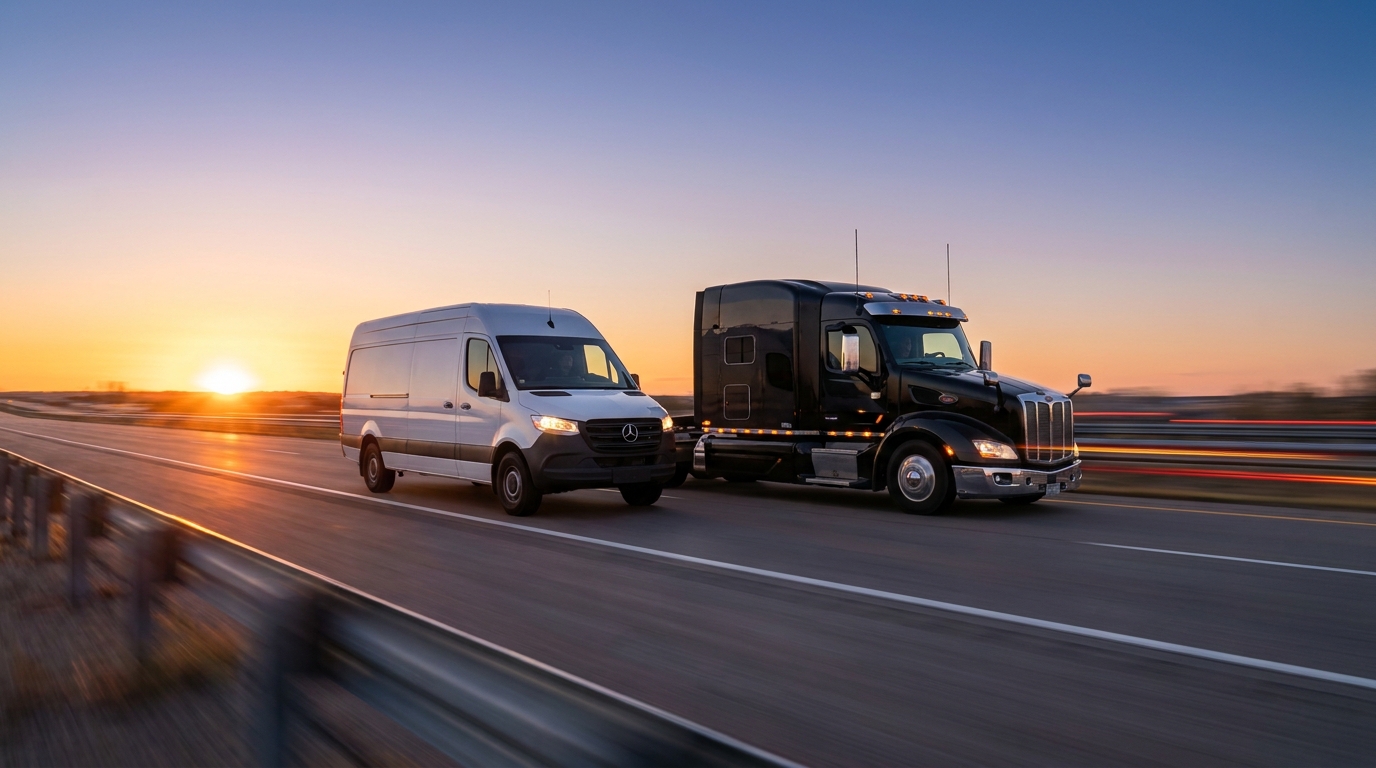
Expedited freight is a premium shipping service that moves an urgent load on dedicated equipment with a guaranteed, direct-drive transit time. Instead of sharing a trailer and waiting at terminals, the shipment rides alone and keeps moving, often with team drivers or air charter, so it arrives in hours or a day rather than several days. You pay a real premium for that speed, and the practical question is not whether expedited freight is expensive but whether being late would cost you more.
Key takeaways
- Expedited freight guarantees a direct drive on dedicated equipment, with no terminal handling and no other freight slowing it down.
- The main options are hot shot, dedicated sprinter or straight truck, team drivers for long ground moves, and air charter for the fastest lane.
- Team drivers can run roughly 900 to 1,100 miles a day because two drivers swap and the truck rarely stops.
- The premium is justified when a delay triggers a bigger cost: a line-down plant, spoiling product, a late penalty, or a missed delivery appointment.
- Compare the freight premium against the real cost of the delay before you book, not against your normal freight rate.
What is expedited freight?
Expedited freight is a service where a carrier commits to picking up quickly and driving straight through to delivery, with the shipment on its own equipment the entire way. The load does not get cross-docked, consolidated, or parked at a terminal overnight. That direct, uninterrupted routing is what separates it from standard freight, where a shipment might sit for a day waiting to fill a trailer or transfer between hubs.
Two things create the speed. First, the equipment is dedicated to your load, so there are no detours to pick up or drop other freight. Second, expedited carriers use tactics to keep the truck moving: right-sized vans that avoid full-truckload scheduling, or team drivers who alternate so the vehicle runs nearly around the clock within federal hours-of-service limits.
What are the main expedited freight options?
Expedited freight covers a ladder of equipment, from a cargo van up to a chartered aircraft. The right choice depends on weight, dimensions, distance, and how fast you truly need it.
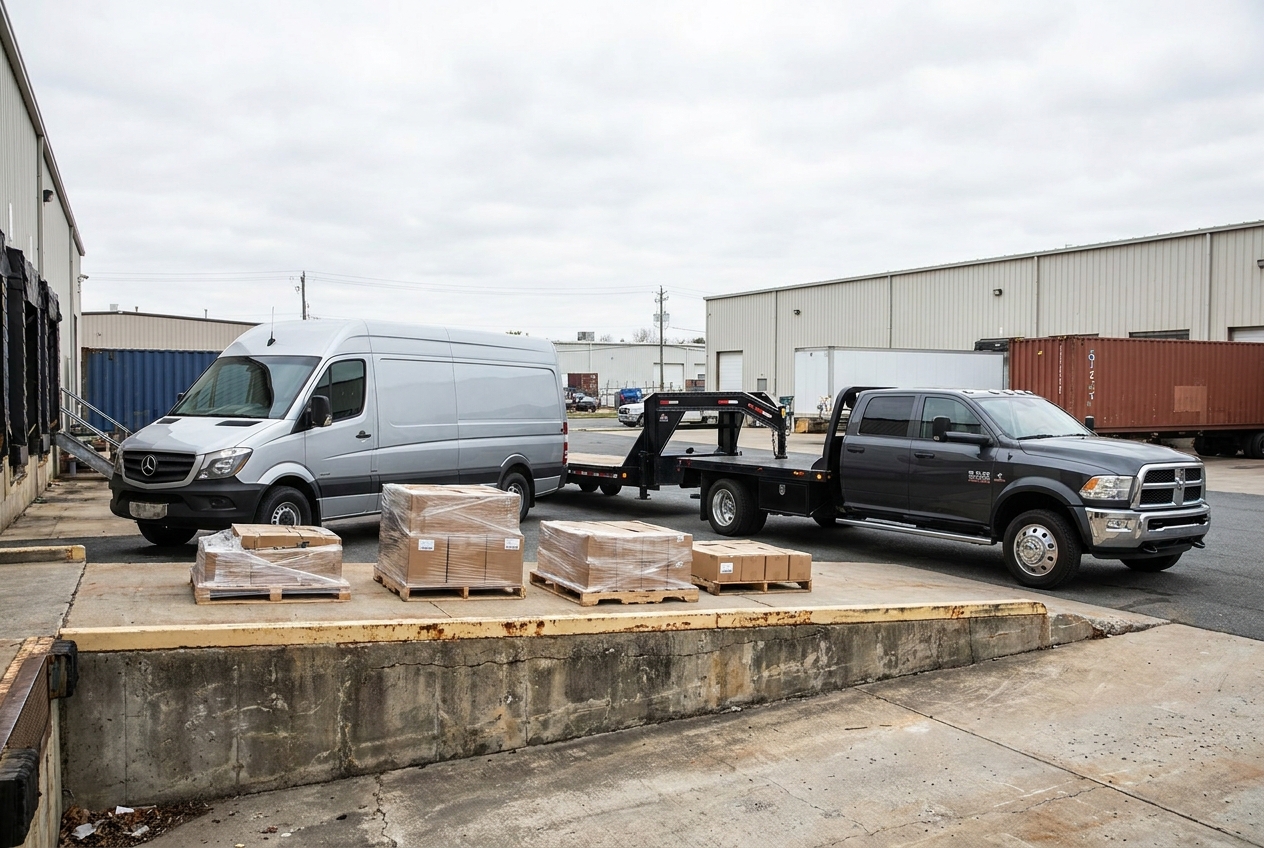
- Hot shot trucking moves smaller urgent loads on a medium-duty pickup pulling a flatbed or gooseneck trailer, usually up to about 16,500 pounds. It fits partial loads and machinery parts that do not need a 53-foot trailer.
- Dedicated sprinter or cargo van handles the lightest, most urgent shipments, often a few pallets up to roughly 3,000 to 5,000 pounds, with fast pickup and a single driver going direct.
- Straight truck (a box truck, commonly 24 to 26 feet) bridges the gap, carrying larger palletized loads that exceed a van but do not fill a tractor-trailer.
- Team drivers put two qualified drivers in a tractor-trailer so one rests while the other drives. This is the workhorse for long, time-critical ground moves because the truck keeps rolling day and night.
- Air charter is the fastest and most expensive tier, used when even team drivers cannot make the deadline, or for AOG (aircraft on ground) parts and other truly cannot-wait shipments.
How do expedited modes compare on speed, cost, and capacity?
The trade-off is consistent: as you climb the ladder toward air charter, speed and cost rise while the usable capacity per run generally narrows. The table below gives typical, hedged ranges to frame the decision, not fixed quotes.
| Mode | Typical speed | Relative cost | Typical capacity | Best fit |
|---|---|---|---|---|
| Sprinter / cargo van | Direct, single driver, a few hundred miles per day | Lowest expedited tier | Roughly 3,000 to 5,000 lb, 1 to 3 pallets | Light, urgent, short to medium haul |
| Hot shot | Direct, single driver | Low to moderate | Up to about 16,500 lb on a flatbed or gooseneck | Urgent partials, parts, small machinery |
| Straight truck | Direct, single driver | Moderate | Larger palletized loads below a full trailer | Mid-size urgent freight |
| Team drivers (tractor-trailer) | ~900 to 1,100 miles per day | High | Full 53-foot trailer | Long-haul, cannot-be-late full loads |
| Air charter | Fastest, hours coast to coast | Highest | Limited by aircraft, often smaller lots | AOG parts, line-down, extreme urgency |
How much does expedited freight cost?
Expedited freight is priced at a premium over standard rates because you are buying exclusive use of the equipment plus guaranteed speed, and the carrier often cannot backhaul efficiently. Rather than a published per-pound rate, expect quotes driven by distance, equipment type, fuel, deadhead miles to reach your dock, and how tight the deadline is. Team and air moves carry the steepest premiums because they consume two drivers or an entire aircraft for one shipment.
Because the premium varies so widely by lane and urgency, the useful comparison is not expedited versus your normal freight bill. It is the expedited quote versus the total cost of arriving late. A quick way to pressure-test a quote is to estimate the delivered cost of the goods against the penalty for delay; a landed cost calculator helps you see the full value at risk before you commit to a premium.
When is expedited freight worth the premium?
Expedited freight is worth it whenever a delay costs more than the speed premium. A handful of situations reliably clear that bar: a line-down event where a factory or assembly line stops for a missing part, perishable or temperature-sensitive goods that lose value by the hour, a contract with a late-delivery penalty or chargeback, a hard retail delivery appointment, and AOG parts grounding an aircraft.
Consider a worked example. A plant is missing a component and the line is idle at an estimated cost of several thousand dollars per hour in lost output and idle labor. An expedited team run quoted well above the standard rate still lands far below one shift of downtime, so the premium is clearly justified. Flip the scenario: routine restock inventory with two weeks of buffer almost never justifies expedited, because nothing breaks if it arrives on the normal schedule. The discipline is to price the delay first, then decide.
How is expedited freight different from standard LTL or FTL?
Standard less-than-truckload and full-truckload both move on normal schedules, while expedited layers a speed guarantee on top of dedicated equipment. With LTL, your pallets share a trailer and pass through terminals, which is efficient but adds handling and transit days. Full truckload gives you the whole trailer but still typically runs a solo driver on a standard timeline with possible relay stops. If you are weighing those baseline modes first, our guide to LTL vs FTL shipping breaks down where each fits.
Expedited is the tier above both. It removes terminal handling entirely, dedicates the equipment to your load, and adds team drivers or air lift to compress transit. You are not just renting more space, you are buying a faster, uninterrupted path. That is also why expedited quotes are less standardized than LTL freight class pricing and are set case by case.
How do you book expedited freight without overpaying?
The fastest, most reliable path to expedited capacity is usually a freight broker or expedited carrier network with a deep bench of vans, straight trucks, and teams that can be dispatched within the hour. A broker can compare several nearby options at once instead of you cold-calling carriers while the clock runs. If you are vetting a partner, our checklist on how to choose a freight broker covers what to confirm, and you can find logistics companies or browse freight brokerage providers in the directory.
To avoid overpaying, give the exact weight, dimensions, pickup readiness, and true deadline up front so the carrier can right-size the equipment rather than defaulting to the most expensive option. Ask whether the quote is all-in, including fuel and any accessorials, and confirm the carrier's authority and insurance before you hand off an urgent load; the FMCSA is the source of record for carrier operating authority and safety data, and it also sets the hours-of-service limits that make team-driver speed possible. For broader mode and cost benchmarks, the Bureau of Transportation Statistics publishes national freight data.
Frequently asked questions
What is expedited freight?
Expedited freight is a premium service that moves a shipment on dedicated equipment with a guaranteed, direct-drive transit time. The load rides alone, does not sit at terminals, and often uses team drivers or air charter to keep moving around the clock.
How much faster is expedited than standard freight?
Expedited ground with team drivers can cover roughly 900 to 1,100 miles a day because two drivers alternate and the truck rarely stops, versus a few hundred miles a day for a solo driver bound by hours-of-service rules. Air charter compresses coast-to-coast moves into hours.
Is expedited freight the same as FTL?
No. Standard full truckload gives you the whole trailer but still follows a normal schedule with a solo driver and possible relay stops. Expedited adds a guaranteed direct drive, no terminal handling, and usually team drivers or right-sized dedicated equipment for the load.
When is expedited freight worth the cost?
It is worth it when a delay costs more than the freight premium: a line-down event idling a plant, perishable or temperature-sensitive goods, a contractual late penalty, a missed retail delivery window, or an AOG (aircraft on ground) part. Compare the premium against the real cost of being late.
What is hot shot trucking?
Hot shot trucking moves smaller, time-critical loads on a medium-duty pickup pulling a flatbed or gooseneck trailer, typically up to about 16,500 pounds. It suits urgent partial loads that do not need a full 53-foot trailer.
Can I book expedited freight through a broker?
Yes. Most shippers reach expedited capacity through a freight broker or expedited carrier network that can dispatch a nearby sprinter, straight truck, or team within an hour. A broker with a deep carrier base can source equipment faster than cold-calling carriers yourself.
Ready to compare providers?
Search the directory by service and location, save options to your shortlist, and send a clear RFQ.
Related guides
Carrier Vetting: How to Avoid Fraud and Bad Carriers
A step-by-step guide to carrier vetting: verify FMCSA authority and safety, confirm insurance with the insurer, spot red flags, and stop double-brokering.
Dedicated vs Common Carrier: Which Fits
How dedicated contract carriage, common carriers, and private fleets compare on cost, capacity, and commitment, and when your volume justifies dedicated.
Shipping Construction Materials to a Jobsite
How construction freight works: matching flatbed and specialized trailers to steel, lumber, pipe, and precast, plus jobsite access, oversize permits, and delivery timing.