
What Is Partial Truckload (Volume LTL)?
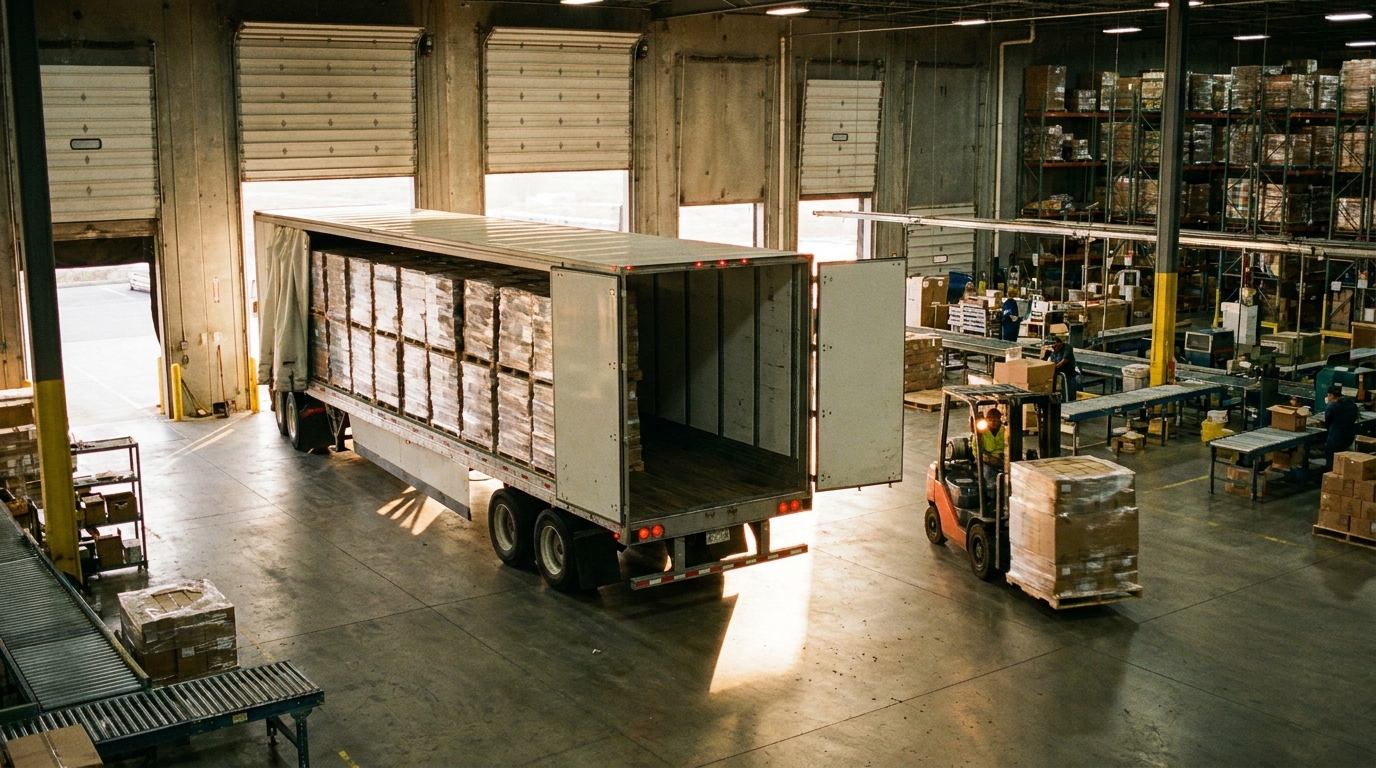
Partial truckload, also called volume LTL, is a shipping mode for freight that is too big for standard less-than-truckload but too small to justify a full dedicated trailer. A partial truckload shipment usually rides on a single truck alongside one or two other loads, priced on the space and weight it occupies rather than an NMFC freight class. For shippers moving roughly 6 or more pallets, or dense freight that rates poorly as LTL, partial truckload often lands between the two on cost while cutting handling and damage risk.
Key takeaways
- Partial truckload and volume LTL describe the same middle mode: bigger than LTL, smaller than a full trailer.
- The usual crossover is around 6 to 12 pallets or roughly 12 to 20 linear feet of trailer space.
- It is typically priced on linear feet and weight, not freight class, which removes reclassification exposure.
- Fewer terminal transfers mean shorter transit and lower damage risk than standard LTL.
- Once you fill most of a trailer, full truckload usually becomes the better value.
What is partial truckload?
Partial truckload is a mode where your freight occupies part of a trailer and shares that trailer with a small number of other shipments, usually without cycling through a carrier's terminal network. It is the practical name for shipments in the gap between standard LTL and full truckload. You pay for the portion of the trailer you use, and the truck typically makes only a few stops before yours.
The label "volume LTL" describes the same territory from the LTL side of the market. Many LTL carriers offer a volume or spot quote when a shipment exceeds their standard limits, often around 12 linear feet, 6 or more pallets, or 10,000 to 15,000 pounds. Whether it is called partial truckload or volume LTL, the shipment is priced as a chunk of trailer rather than a class-based line item.
How does partial truckload differ from LTL and FTL?
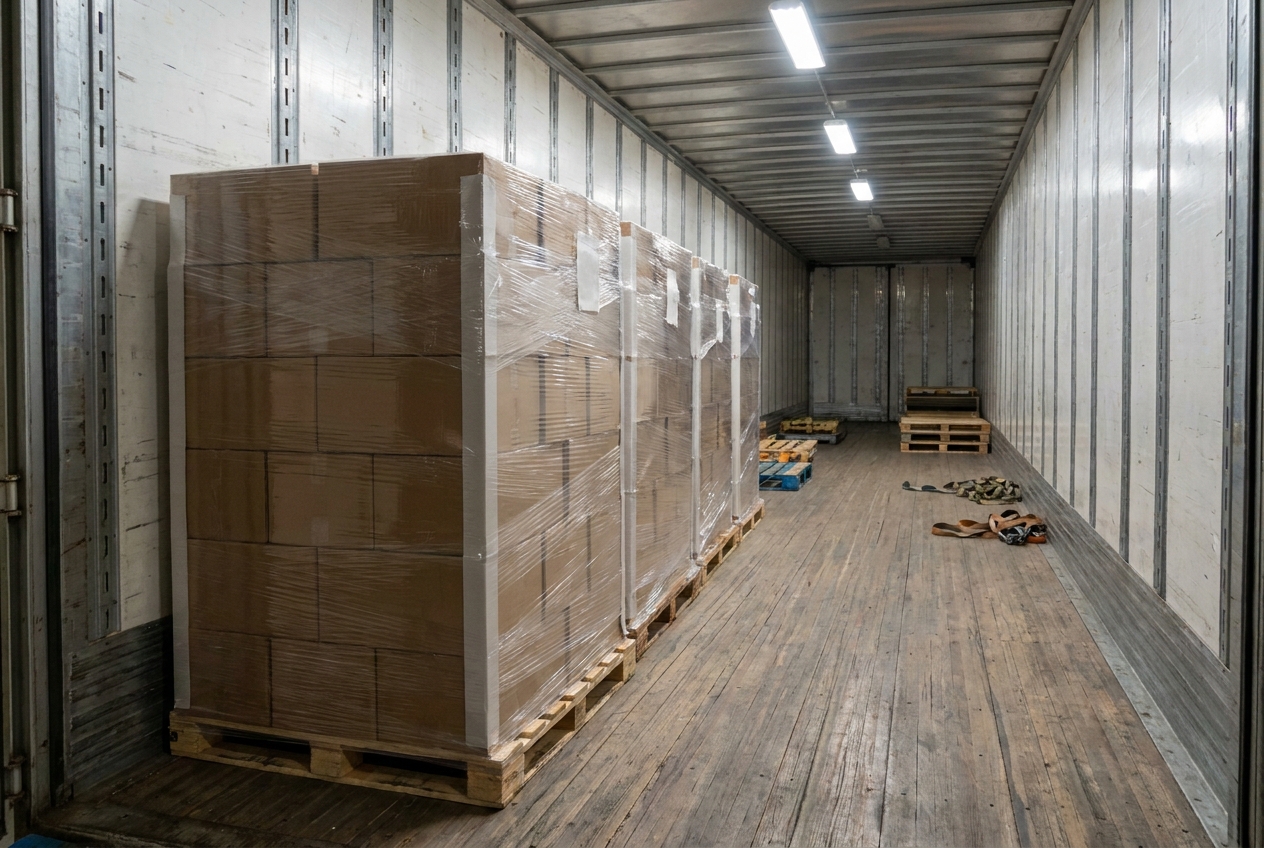
The difference comes down to how much of the trailer you use and how many times the freight is handled. Standard LTL consolidates many small shipments and moves them through hub terminals, so a single pallet may be loaded and unloaded several times. Full truckload dedicates an entire trailer to one shipment with no transfers. Partial truckload sits in between: enough freight to claim real trailer space, but not enough to pay for all of it.
| Factor | Standard LTL | Partial truckload / volume LTL | Full truckload (FTL) |
|---|---|---|---|
| Typical size | 1 to 6 pallets, under about 12 linear feet | 6 to 12+ pallets, roughly 12 to 24 linear feet | Fills most of a 48 or 53 foot trailer |
| Pricing basis | Freight class and weight (NMFC tariff) | Linear feet or pallet positions and weight | Flat rate for the whole trailer |
| Handling | Multiple terminal transfers | Few or no transfers | No transfers, one driver |
| Reclassification risk | Yes, density reweighs common | Low, usually no class applied | None |
| Best when | Small, well-classed shipments | Heavy or bulky mid-size loads | You need the whole trailer or zero touches |
For a full breakdown of the two endpoints, see our guide on LTL vs FTL shipping. Partial truckload is best understood as the bridge between them.
When does partial truckload beat standard LTL?
Partial truckload usually beats standard LTL once you cross roughly 6 pallets or when your freight is dense enough to rate into an expensive class. LTL pricing runs on freight class, and heavy or low-density loads can land in a high class that inflates the rate far beyond the space the freight actually uses.
Two situations flip the math toward partial. First, size: at 8 or 10 pallets, LTL carriers apply capacity surcharges and your shipment starts to congest their terminals, so a volume quote often comes in lower. Second, class exposure: freight that would rate poorly as LTL, such as machinery, tightly packed retail goods, or anything a carrier might reclassify after a reweigh, tends to price better as trailer space. You can pressure-test how your freight classes with our freight class calculator and check density with the dimensional weight calculator before you decide.
When does partial truckload beat full truckload?
Partial truckload beats full truckload whenever you would otherwise pay for a whole trailer you cannot fill. If your shipment occupies half a 53 foot trailer, a dedicated full-truckload rate charges you for the empty half too. Buying only the linear feet you need keeps that unused space off your invoice.
The trade-off is exclusivity. Full truckload gives you a dedicated driver and a guaranteed single transit with no co-loaded freight, which matters for fragile goods or hard deadlines. Partial truckload shares the trailer, so transit can flex slightly around the other stops. If cost is the priority and your freight is stable, partial usually wins in the 6 to 20 pallet range; if control is the priority, full truckload earns its premium.
Why does partial truckload mean fewer handling touches?
Because partial and volume freight generally stays on one truck instead of routing through a hub-and-spoke terminal network, it is loaded and unloaded far fewer times. Standard LTL freight can be handled at an origin terminal, one or more breakbulk hubs, and a destination terminal, and each transfer is a chance for damage, loss, or a reweigh.
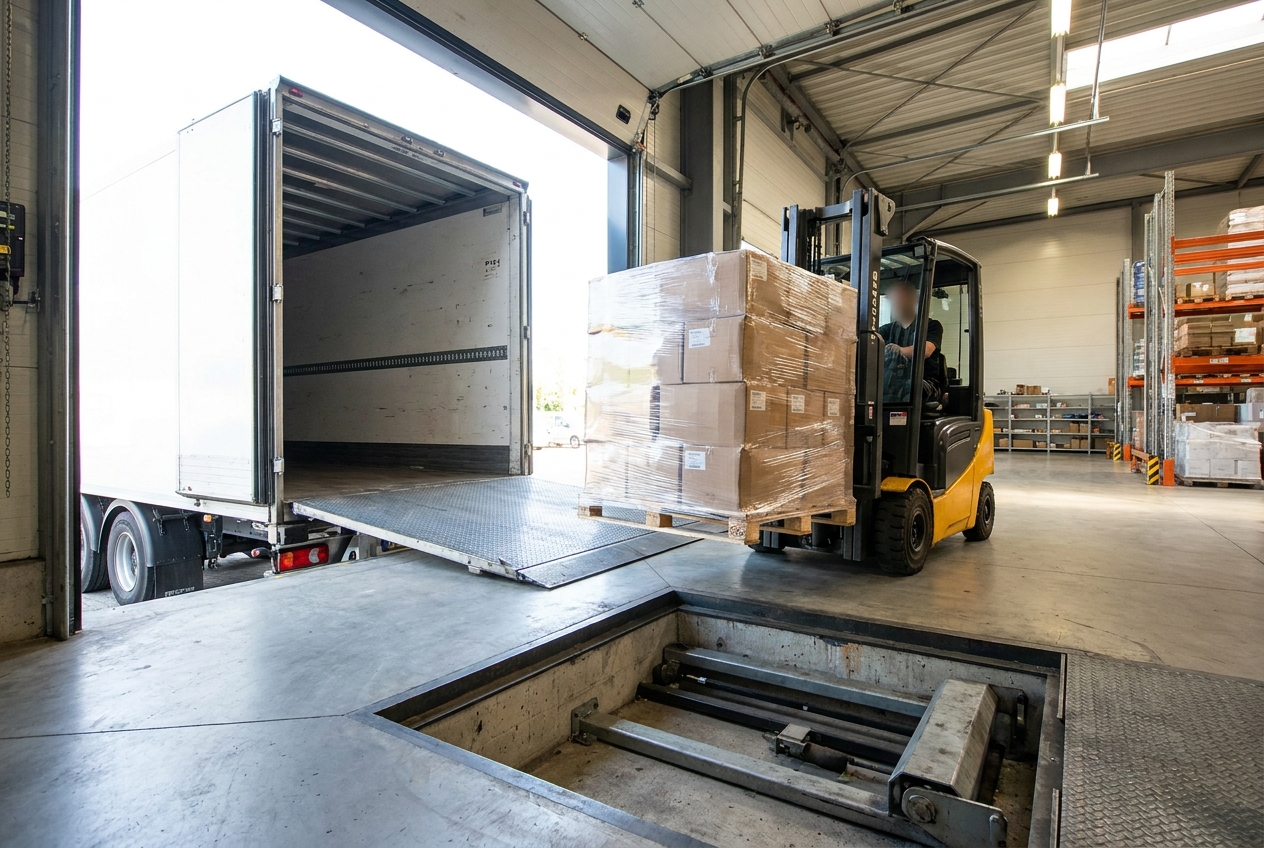
Fewer touches produce two concrete benefits. Damage and claim risk drop, because most freight damage happens during handling, not transit. And you sidestep reclassification exposure: since the shipment is priced on space and weight rather than an NMFC class, there is usually no density reweigh that bumps your class and rebills you weeks later. That predictability is a major reason shippers move borderline loads to partial. For the extra fees that still apply across every mode, see accessorial charges explained.
How is partial truckload priced?
Partial truckload is priced mainly on the linear feet or pallet positions you occupy and the total weight, plus lane, fuel surcharge, and any accessorials. You are effectively renting a slice of the trailer, so a 12-foot, 8-pallet load costs roughly a quarter of a 48-foot trailer's worth of space, adjusted for weight and lane demand.
The variables that move a partial quote are the same ones that move any freight rate: origin and destination pair, current lane capacity, fuel surcharge, and services such as liftgate, residential, or inside delivery. Because there is usually no freight class, you avoid the class-driven swings that make LTL invoices unpredictable, but you should still confirm the linear-foot count the carrier is billing. For broader tactics on trimming these bills, our guide on how to reduce LTL freight costs covers packaging, palletizing, and quoting discipline that apply to partial loads too. You can also shortlist providers on the LTL and volume freight carriers directory.
A worked example: 8 pallets of dense goods
Say you are shipping 8 standard pallets at 48 by 40 by 55 inches, totaling about 6,500 pounds, from Ohio to Georgia. As standard LTL, that freight is dense and bulky enough to draw a capacity surcharge and could be reclassified into a higher class after a reweigh, pushing the rate up unpredictably. As full truckload, you would pay for a whole 53 foot trailer while filling only about a third of it.
Priced as partial truckload, the same load bills as roughly 13 to 15 linear feet of trailer space plus weight, with no class applied. You get fewer terminal transfers, lower damage risk, and a rate that reflects the space you actually use rather than a class code or an empty trailer. That middle position is exactly the gap partial truckload was built to fill.
How do you book a partial truckload shipment?
Start by measuring accurately: pallet count, exact dimensions, total weight, and stackability, since carriers price on linear feet and will verify. Request quotes specifically for volume LTL or partial truckload, so the carrier prices the shipment as trailer space, then compare that quote against both a standard LTL and a full truckload quote for the same lane and pick the cheapest mode for the service you need.
When you compare providers, confirm three things: whether the quote assumes any transfers, what the linear-foot or pallet-position basis is, and which accessorials are included. You can vet and shortlist carriers on the National Freight Hub directory, and verify a carrier's operating authority and safety record through the FMCSA before you book. For broader mode-share and freight-flow context when you are planning capacity, the Bureau of Transportation Statistics publishes national freight data.
Frequently asked questions
Is partial truckload the same as volume LTL?
In practice, yes. Carriers and brokers use partial truckload and volume LTL to describe the same middle mode: freight too large for standard LTL but too small to need a dedicated full trailer. Some carriers reserve volume LTL for shipments still moving on an LTL network at a negotiated flat rate, and partial truckload for freight that stays on one truck the whole way. Confirm which one a quote assumes, because the handling and transit picture differs.
How many pallets make sense for partial truckload?
Roughly 6 or more standard pallets, or about 12 to 20 linear feet of trailer space, is the usual crossover point. Below that, standard LTL is normally cheaper. Above 24 to 26 pallets you are effectively filling a trailer, so full truckload pricing usually wins.
Does partial truckload use a freight class?
Often no. Because partial and volume shipments are typically priced on space and weight rather than the NMFC classification system, they avoid the reclassification and density-reweigh adjustments that can inflate a standard LTL invoice. Confirm with the carrier, since some volume LTL quotes still reference a class.
Is partial truckload faster than LTL?
Usually. Partial and volume freight often rides on fewer trucks with fewer terminal stops than standard LTL, which moves through hub-and-spoke terminals and gets handled repeatedly. Fewer touches generally means shorter transit and lower damage risk, though exact transit depends on lane and carrier.
How is partial truckload priced?
Most partial and volume quotes are built on the linear feet or pallet positions you occupy and the weight, rather than a class-based LTL tariff. You are effectively renting a portion of the trailer. Lane, fuel surcharge, and any accessorials such as liftgate or residential delivery still apply.
When should I choose full truckload instead?
Choose full truckload when your freight fills most of a 48 or 53 foot trailer, when it is fragile enough that you want zero transfers, or when you need a guaranteed single-driver transit on a tight deadline. If you are paying for most of the trailer anyway, a dedicated truck is usually the better value.
Ready to compare providers?
Search the directory by service and location, save options to your shortlist, and send a clear RFQ.
Related guides
Driver English Language Proficiency: What Shippers Should Know
Driver English language proficiency is a longstanding FMCSA requirement now enforced as an out-of-service condition, and here is what it means for shippers.
Hazmat Shipping Requirements: A Shipper Guide
What shippers must get right to move hazardous materials legally: the nine DOT hazard classes, UN numbers, packing groups, placards, shipping papers, packaging, and training.
What Is Heavy Haul Trucking? Permits and Escorts
Heavy haul trucking moves loads too large or heavy for a standard trailer, using specialized equipment, state permits, and escorts. Here is how it works.