
What Is Full Truckload (FTL) Shipping?
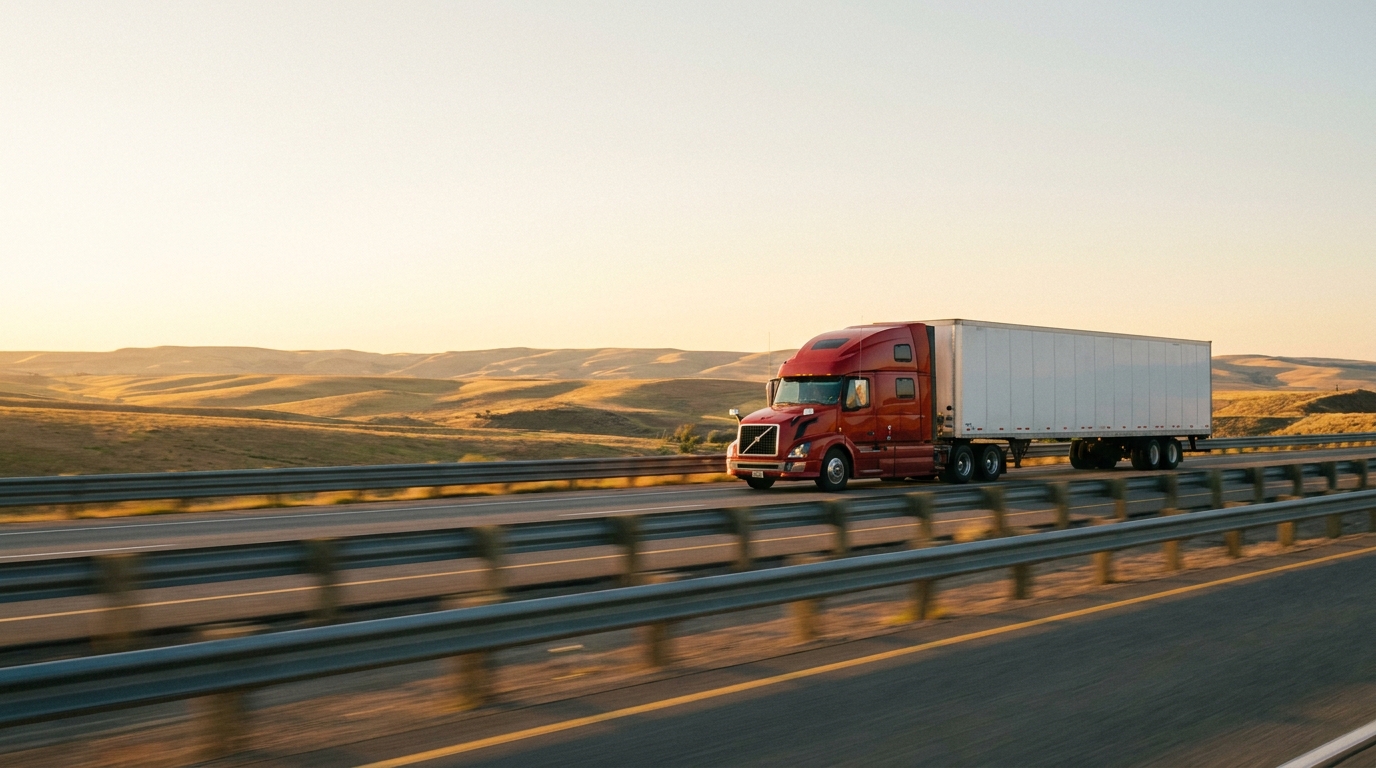
Full truckload shipping, often shortened to FTL or TL, is a freight mode in which one shipment fills an entire trailer and rides alone from pickup to delivery. Instead of sharing space with other companies' freight, your cargo gets a dedicated trailer that leaves your dock and drives straight to the destination, with no terminal sorting and no co-loading along the way. Shippers choose full truckload shipping when they have enough volume to justify a whole trailer, or when the freight is fragile, urgent, or high value enough that a direct, hands-off run is worth paying for.
Key takeaways
- Full truckload means one shipper's freight occupies one trailer for the whole trip, point to point, with no transfers.
- FTL usually makes sense above roughly 24 pallets, about 15,000 pounds, or 26 to 28 linear feet of trailer, and for fragile or time-critical loads at any size.
- Truckload is priced by the lane (origin to destination), not by weight and freight class the way LTL is.
- A 53-foot dry van is the default trailer; reefers, flatbeds, and heavy-haul equipment cover temperature, oversized, and overweight freight.
- Because the trailer is handled once, FTL is typically faster and lower-risk for damage than less-than-truckload.
How does full truckload shipping work?
In a full truckload move, a carrier assigns one trailer and driver to your shipment, the truck loads at your origin, and it drives directly to the consignee. The freight is not broken down, re-sorted, or combined with other shippers' pallets at a terminal. That single-handling model is the core difference from less-than-truckload, where many small shipments share trailers and pass through hub terminals on the way.
Because the trailer belongs to your shipment for the trip, you also control the timing more tightly. You book a pickup window, the load runs on one continuous route, and the driver is accountable for that freight end to end. For shippers moving pallets in volume, that predictability is often the main reason to book truckload rather than piece it out.
When does full truckload shipping make sense?
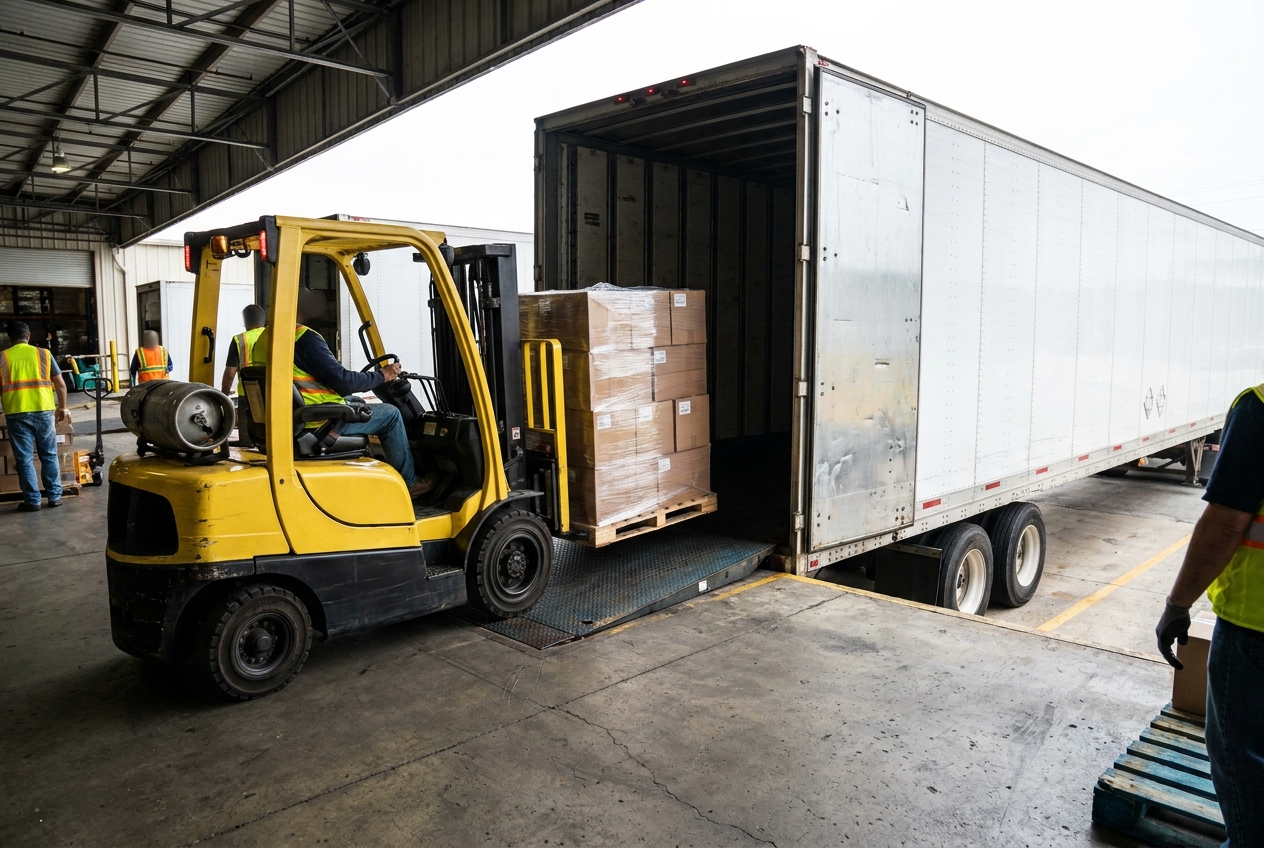
FTL makes sense when your freight fills most of a trailer, when speed matters, or when the load is too fragile or valuable to survive repeated handling. Three triggers point to truckload: volume, urgency, and fragility.
On volume, a common rule of thumb is that shipments filling roughly 24 or more standard pallets, weighing more than about 15,000 pounds, or taking up more than 26 to 28 linear feet of trailer floor tend to price better as a truckload than as LTL. On urgency, a direct point-to-point run skips terminal dwell time, so time-critical freight arrives sooner and on a tighter window. On fragility, every extra touch is a chance for damage, so sensitive, high-value, or awkwardly stacked goods often justify a dedicated trailer even when they do not physically fill it.
A worked example: a beverage brand shipping 26 pallets of canned drinks, about 34,000 pounds, from a co-packer in Ohio to a distribution center in Georgia has both the weight and the pallet count to book a full truckload. Splitting that into LTL shipments would mean multiple pickups, terminal transfers, and more handling of stacked cans that dent easily. One truckload keeps it on a single trailer, handled twice: once at load, once at delivery.
FTL vs LTL: which should you choose?
Choose FTL when you have trailer-filling volume or freight that should not be handled repeatedly; choose LTL when you are moving a few pallets and can accept terminal transfers to share the cost. The table below compares the two modes on the factors that usually decide it. For a deeper breakdown, see our guide on LTL vs FTL shipping.
| Factor | Full truckload (FTL) | Less-than-truckload (LTL) |
|---|---|---|
| Trailer use | Entire trailer, one shipper | Shared with other shippers |
| Typical size | ~24+ pallets, 15,000+ lb, or 26-28+ linear ft | 1 to about 10 pallets, under ~15,000 lb |
| Handling | Loaded once, delivered once, no transfers | Multiple terminal transfers |
| Priced by | Lane (origin to destination) and mileage | Weight, freight class, and distance |
| Transit | Direct, usually faster | Slower, hub routing |
| Damage risk | Lower (single handling) | Higher (repeated handling) |
One thing that trips up shippers: LTL leans on freight class and density to set the rate, while FTL does not care about class the same way because you are buying the whole trailer. If your LTL shipment is bulky and low-density, its class can push the cost close to a truckload anyway, which is often the tipping point to just book FTL.
What trailer types are used for full truckload?
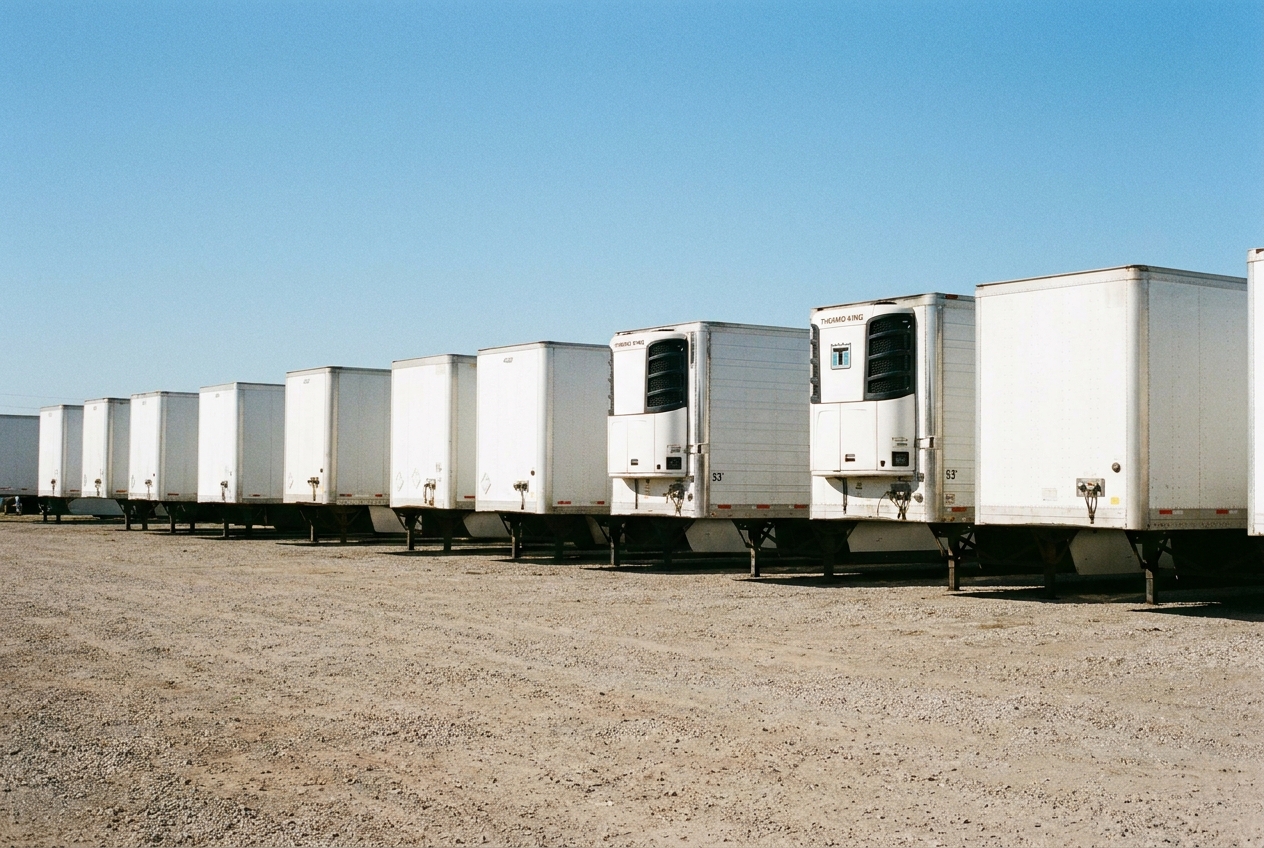
Most FTL freight ships in a 53-foot dry van, the standard enclosed trailer that carries roughly 26 standard pallets of dry, palletized goods. When the cargo needs more than a plain box, you move to specialized equipment.
- Dry van: the default for boxed, palletized, and non-perishable freight. Enclosed and weatherproof, no temperature control.
- Reefer: a refrigerated trailer for food, beverages, pharmaceuticals, and other temperature-sensitive loads that must hold a set range in transit.
- Flatbed: an open deck for machinery, building materials, and oversized items that load from the side or top by crane or forklift.
- Heavy-haul and step-deck: specialized trailers for freight that exceeds legal weight or height limits and needs permits and route planning.
Matching the trailer to the freight matters because the wrong choice either damages the load or wastes money. Temperature-sensitive goods in a dry van can spoil; standard pallets on a flatbed are exposed and need tarping and strapping they do not require inside a van.
How is full truckload pricing calculated?
Full truckload is priced by the lane, meaning the specific origin-to-destination pair, rather than by weight and freight class the way LTL is. The base rate tracks total mileage, then adjusts for the supply of trucks and demand for loads on that lane, fuel surcharges, trailer type, and the season.
The lane balance is the part shippers underestimate. A lane running into a region where few loads head back out leaves carriers with an empty return trip, and that deadhead gets priced into your rate. The same 700-mile haul can cost meaningfully more in the thin direction than the busy one. Specialized trailers, appointment-only facilities, and peak periods like produce season or the pre-holiday push all move the number too, and extra services such as detention or a driver-assisted unload show up as accessorial charges on top of the linehaul.
Because those factors shift week to week, comparing several carrier or broker quotes on your exact lane is the only reliable way to know the market rate. A neutral view of who runs your lanes helps: browse long-haul truckload carriers in our directory or read how to choose a freight broker if you would rather have someone source capacity for you.
How fast is full truckload transit?
FTL transit is usually faster than LTL because the freight rides one trailer straight through, with no time lost to terminal sorting or hub-to-hub linehaul. A driver covers a predictable number of miles per day within federal hours-of-service limits, so transit tracks mileage and route more than it tracks handling.
As a rough planning guide, a solo driver covers a few hundred miles a day once required rest is factored in, so single-driver runs are often quoted in day-per-500-miles terms, while team drivers can roughly halve long-haul transit by trading off at the wheel. Federal hours-of-service rules, published by the FMCSA, cap daily driving and set required breaks, which is why transit estimates are ranges, not guarantees. Truckload still moves the majority of domestic freight tonnage, a scale reflected in national data from the Bureau of Transportation Statistics.
How do you book and prepare a full truckload shipment?
Booking FTL comes down to describing the load accurately, choosing the right trailer, and confirming the lane rate before the truck rolls. Get the details right up front and you avoid reweighs, reclasses, and surprise accessorials.
- Confirm pallet count, total weight, and dimensions, and note anything stackable or non-stackable.
- Pick the trailer type the freight actually requires, including any temperature range for a reefer.
- Specify pickup and delivery windows, and flag appointment-only, liftgate, or limited-access sites, since those drive accessorials.
- Get quotes on your exact lane from more than one carrier or broker, and confirm the fuel surcharge and any detention terms.
- Verify the carrier's operating authority and safety record before you tender the load.
When you are ready to line up capacity, you can compare providers by mode and region in our directory of logistics companies and shortlist carriers that already run your lanes.
Frequently asked questions
What is full truckload (FTL) shipping?
Full truckload shipping, also called TL, is a freight mode where one shipper's cargo occupies an entire trailer for the whole trip. The truck picks up at origin and drives straight to the destination without co-loading other shippers' freight or transferring at terminals.
How much freight do you need for a full truckload?
There is no strict minimum. Shipments that fill roughly 24 or more standard pallets, weigh more than about 15,000 pounds, or measure over 26 to 28 linear feet usually price better as a truckload. You can also book a full truckload for less than that when the freight is fragile, urgent, or high value and you want a direct, hands-off run.
Is FTL faster than LTL?
Usually, yes. A full truckload runs point to point on one trailer, so there is no terminal sorting, no line-haul between hubs, and no repeated handling. That typically shortens transit and reduces the chance of damage compared with less-than-truckload freight.
How is full truckload pricing calculated?
FTL is priced by the lane, meaning the origin-to-destination pair, rather than by weight and freight class like LTL. Rates move with total mileage, the balance of trucks and loads on that lane, fuel surcharges, trailer type, and season. The same load can cost noticeably more on a lane with few trucks heading back out.
What is the difference between FTL and dedicated freight?
A single FTL move is one trailer for one shipment. Dedicated freight is a longer commitment where a carrier assigns specific trucks and drivers to your ongoing volume, often on set lanes or a schedule. FTL is transactional; dedicated is a contracted capacity arrangement.
Do I need a special trailer for full truckload?
Most dry, palletized freight ships in a 53-foot dry van, which is the default FTL trailer. You need specialized equipment when the cargo requires it: a reefer for temperature control, a flatbed for oversized or crane-loaded items, or heavy-haul equipment for loads that exceed legal weight or dimension limits.
Ready to compare providers?
Search the directory by service and location, save options to your shortlist, and send a clear RFQ.
Related guides
Driver English Language Proficiency: What Shippers Should Know
Driver English language proficiency is a longstanding FMCSA requirement now enforced as an out-of-service condition, and here is what it means for shippers.
Hazmat Shipping Requirements: A Shipper Guide
What shippers must get right to move hazardous materials legally: the nine DOT hazard classes, UN numbers, packing groups, placards, shipping papers, packaging, and training.
What Is Heavy Haul Trucking? Permits and Escorts
Heavy haul trucking moves loads too large or heavy for a standard trailer, using specialized equipment, state permits, and escorts. Here is how it works.