
What Is a Retail Routing Guide?

A retail routing guide is the retailer's rulebook for how, when, and by which carrier its vendors must ship purchase orders. It is a binding condition of the vendor agreement, not a suggestion. A typical routing guide dictates carrier selection, load and appointment scheduling, box and pallet labeling, the advance ship notice (ASN), and packaging standards, and it spells out the deductions a retailer takes when a shipment breaks the rules. If you sell into a big-box, grocery, or club retailer, the routing guide is the single document that decides whether your freight is accepted cleanly or bleeds margin through chargebacks.
Key takeaways
- A retail routing guide is the retailer's mandatory instructions for how vendors ship to it, covering carrier, timing, labeling, ASN, and packaging.
- The main reason it exists is to let the retailer control inbound freight cost and keep its distribution centers predictable.
- Breaking a rule triggers a chargeback, a deduction the retailer takes straight off your invoice, often before you can dispute it.
- The guide is a living document that changes, so you re-check the current version before every shipment.
- Compliance can be run in-house or handed to a 3PL, but the vendor stays contractually on the hook for the deductions.
What does a retail routing guide actually dictate?
A routing guide sets the specific rules a vendor must follow to ship a purchase order into a retailer's network. The exact wording varies by retailer, but almost every guide governs the same handful of areas.
- Carrier selection and routing. The guide tells you whether the retailer picks the carrier (collect or prepaid), what weight or pallet thresholds move a shipment from small parcel to LTL to full truckload, and how to request a routing instruction for larger loads. Using a carrier the guide did not authorize is one of the most common violations.
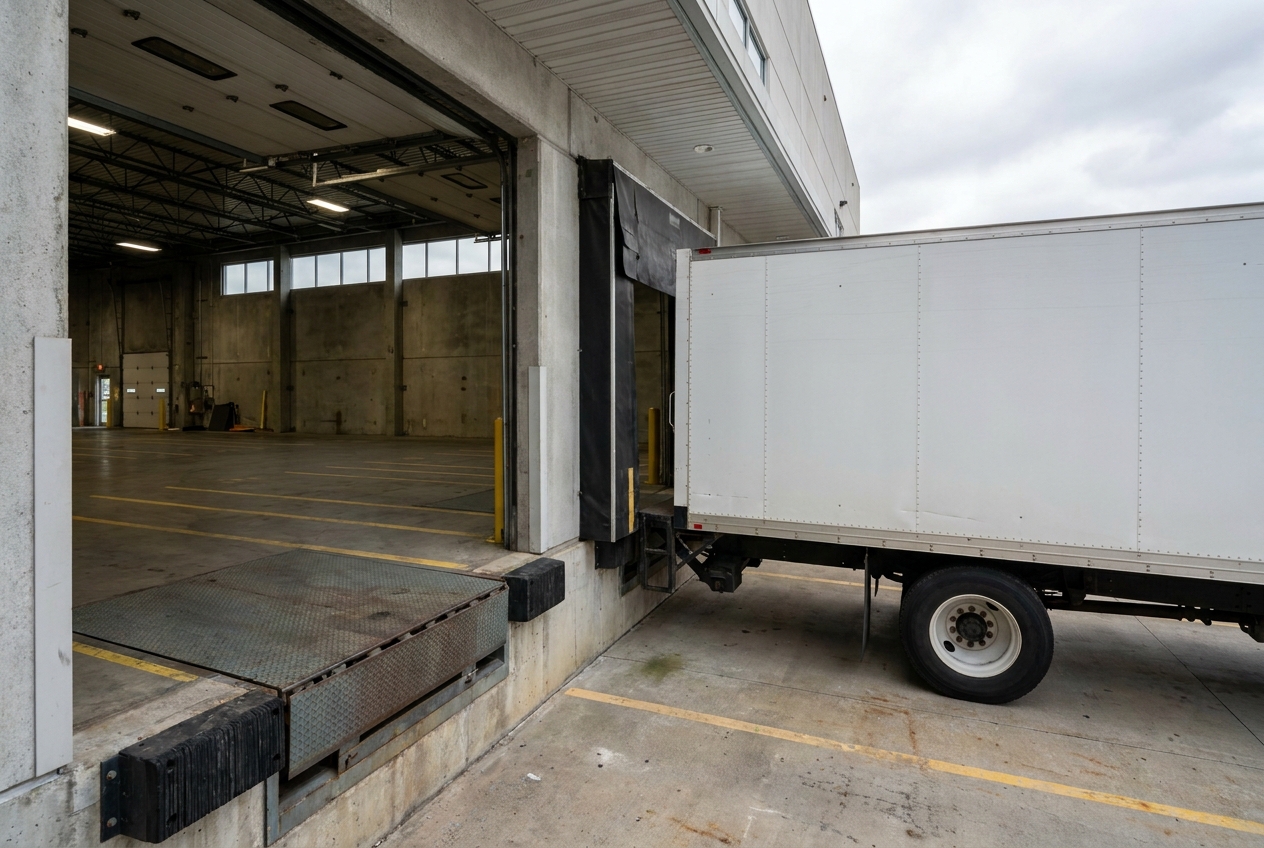
- Delivery appointments and windows. Most guides require a scheduled delivery appointment at the receiving distribution center and a firm arrival window. Showing up early, late, or without an appointment is a frequent chargeback trigger.
- Labeling and the ASN. Guides specify carton and pallet labels, often a GS1-128 shipping label, and an electronic advance ship notice sent by EDI before the truck arrives. A late, missing, or inaccurate ASN is treated as a compliance failure even if the product itself is perfect.
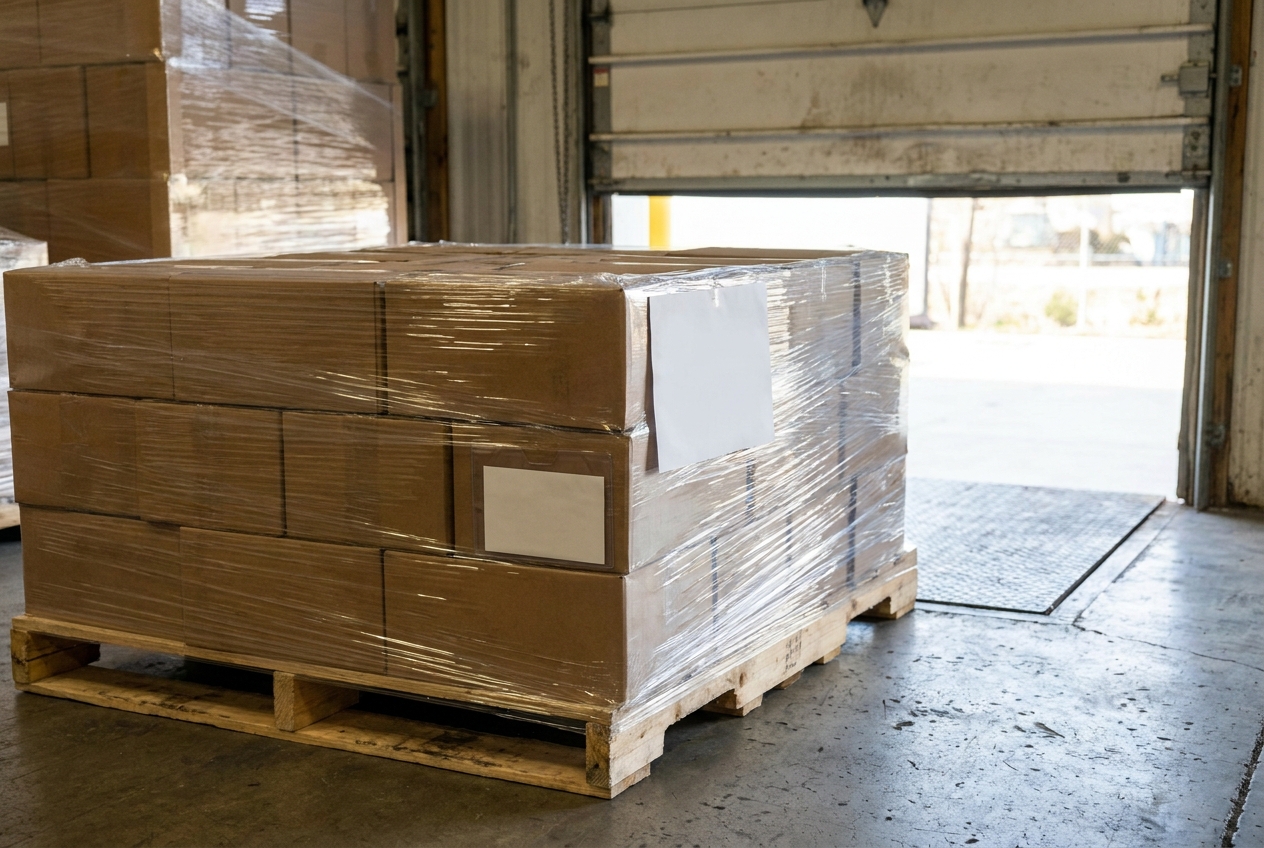
- Packaging and pallet build. Case pack quantities, pallet height and overhang limits, stretch-wrap and slip-sheet rules, and how mixed-SKU pallets are stacked. These rules exist so the DC can receive and put away freight without re-working it.
Why do retailers enforce routing guides so strictly?
Retailers enforce routing guides because standardized inbound freight is cheaper and faster to receive. When thousands of vendors ship the same way, the retailer can consolidate loads onto its own negotiated carrier contracts, plan dock doors and receiving labor against a known schedule, and keep inventory flowing to stores without surprises. A single vendor who ignores the rules imposes cost on the whole network, so retailers price that cost back to the vendor through deductions. Many large retailers layer a formal on-time in-full (OTIF) program on top of the guide, scoring vendors on whether orders arrive on time and complete and fining the ones that miss.
What happens when you violate a routing guide?
Violating a routing guide triggers a chargeback, a deduction the retailer subtracts directly from your invoice. You usually see it as a short-pay on a remittance rather than a bill, which is why chargebacks are easy to miss and hard to claw back. The amounts are set by the retailer and can be a flat fee per violation, a percentage of the purchase order, or a per-carton charge, and several deductions can stack on one shipment. Our guide to retail compliance chargebacks breaks down the common deduction types and how to dispute them.
Here is a worked example. Say you ship a $20,000 purchase order to a grocery retailer. You book your own LTL carrier instead of the retailer's routed carrier, your ASN transmits two hours after the truck already arrived, and one pallet exceeds the height limit. That single shipment can draw three separate deductions: a wrong-carrier charge, a no-ASN or late-ASN fee, and a non-compliant pallet fee. Even at modest per-violation rates, stacked deductions on a mid-size order can quietly erase a chunk of the margin you expected from it.
Routing guide vs. OTIF vs. chargebacks: how they fit together
These three terms get used interchangeably, but they are different layers of the same compliance stack.
| Term | What it is | Vendor's job |
|---|---|---|
| Routing guide | The full rulebook for how, when, and by which carrier to ship | Follow every rule on the current version |
| OTIF program | A performance scorecard for on-time, in-full delivery layered on the guide | Hit the retailer's on-time and fill-rate thresholds |
| Chargeback | The financial penalty for breaking a guide rule or missing an OTIF target | Prevent, catch, and dispute deductions |
Read left to right: the routing guide is the instructions, OTIF is one way your performance against those instructions is scored, and chargebacks are what it costs when either one is missed.
How does a supplier stay compliant with a routing guide?
Staying compliant comes down to reading the current guide, building the shipment to match it, and confirming the details before the truck leaves. In practice that means a repeatable process:
- Pull the current guide for every order. Routing guides change, sometimes mid-season. Re-download the retailer's version tied to the purchase order rather than trusting a saved copy.
- Confirm the carrier and routing first. Check the weight and pallet count against the guide's mode thresholds, and request a routing instruction if the guide requires one before you tender the load.
- Book the delivery appointment early. Appointment slots at busy DCs fill up, and a missed window is one of the easiest deductions to avoid with lead time.
- Validate labels and the ASN. Make sure carton and pallet labels match the spec and that the ASN transmits accurately and before arrival, not after.
- Build the pallet to spec. Respect case pack, height, overhang, and wrap rules so the DC receives it without rework.
If your orders ship through a warehouse, the warehouse cost calculator helps you weigh what compliant handling and labeling actually cost per order before you commit to a fulfillment model.
Can a 3PL or FBA-prep provider handle routing guide compliance?
Yes, and for many suppliers a specialized provider is the practical way to keep up. A retail consolidation partner receives freight from multiple vendors, builds compliant retailer-ready pallets, and tenders on the retailer's routed carriers, which is exactly the workflow big-box guides are built around. Providers in the ecommerce fulfillment category increasingly handle both direct-to-consumer orders and retail purchase orders from the same inventory, applying the right labels and ASNs for each channel.
The catch is accountability. The vendor still signs the retailer agreement and still eats the chargeback, so the 3PL contract should say who is liable when a deduction is caused by the provider's error, how ASN and label accuracy are guaranteed, and how disputes are handled. Before you sign, ask the provider which retailer routing guides they already ship to and how they track guide updates. Comparing providers on that specific capability is what our directory of logistics companies is built for.
What should you check before your next retail shipment?
Before any purchase order goes out, confirm four things: you are on the current routing guide, the carrier and mode match the guide, the delivery appointment is booked inside the window, and the labels and ASN are validated and will transmit on time. Those four checks prevent the large majority of routing guide chargebacks. For the retailer's own official requirements, always defer to the guide the retailer publishes to its vendor portal, and use general small-business freight guidance from the U.S. Small Business Administration or shipping-mode data from the Bureau of Transportation Statistics to sanity-check your carrier and cost assumptions rather than any single vendor's claims.
Frequently asked questions
What is a retail routing guide?
A retail routing guide is the set of rules a retailer publishes telling its vendors how, when, and by which carrier to ship purchase orders. It covers carrier selection, labeling and advance ship notices, delivery appointment windows, and packaging, and it is a binding condition of doing business with that retailer.
Why do retailers use routing guides?
Retailers use routing guides to control inbound freight cost and to keep distribution centers predictable. When every vendor labels, palletizes, and books deliveries the same way, the DC can receive faster, plan dock and labor capacity, and often move freight on the retailer's own negotiated carrier contracts.
What is a routing guide chargeback?
A routing guide chargeback, sometimes called a compliance deduction or expense offset, is money the retailer subtracts from a vendor's invoice for breaking a shipping rule. Common triggers include using the wrong carrier, missing the delivery window, a bad or missing ASN, and non-compliant labels or pallets.
Who is responsible for routing guide compliance, the supplier or the 3PL?
The supplier owns the retailer relationship and is contractually liable for chargebacks, but the day-to-day execution usually sits with whoever ships the order. If a third-party logistics or FBA-prep provider fulfills your retail orders, compliance is a shared responsibility that should be written into the contract.
How often do routing guides change?
Routing guides are living documents. Major retailers update them periodically and around peak season, changing carriers, appointment rules, or label specs. Vendors should re-download the current guide before each shipment rather than relying on a saved copy.
Is a routing guide the same as OTIF?
No. The routing guide is the full rulebook for how to ship. OTIF, meaning on-time in-full, is one performance program some retailers layer on top of it that scores whether orders arrive on time and complete. Following the routing guide is how you hit OTIF targets, but they are not the same thing.
Ready to compare providers?
Search the directory by service and location, save options to your shortlist, and send a clear RFQ.
Related guides
Subscription Box Fulfillment: What to Ask a 3PL
How subscription box fulfillment differs from standard ecommerce, the batch and kitting challenges that trip brands up, and the exact questions to ask a 3PL before you move.
Dropshipping vs Holding Inventory in a 3PL
Dropshipping vs 3PL fulfillment compared on margin, speed, control, branding, and risk, with a decision table and a hybrid model that uses both.
What Is a SKU? SKU vs UPC, ASIN, and FNSKU
A SKU is your own internal code for a product. Here is how it differs from a UPC, ASIN, and FNSKU, and how to structure SKUs that keep inventory accurate.