
Retail Compliance Chargebacks and How to Avoid Them
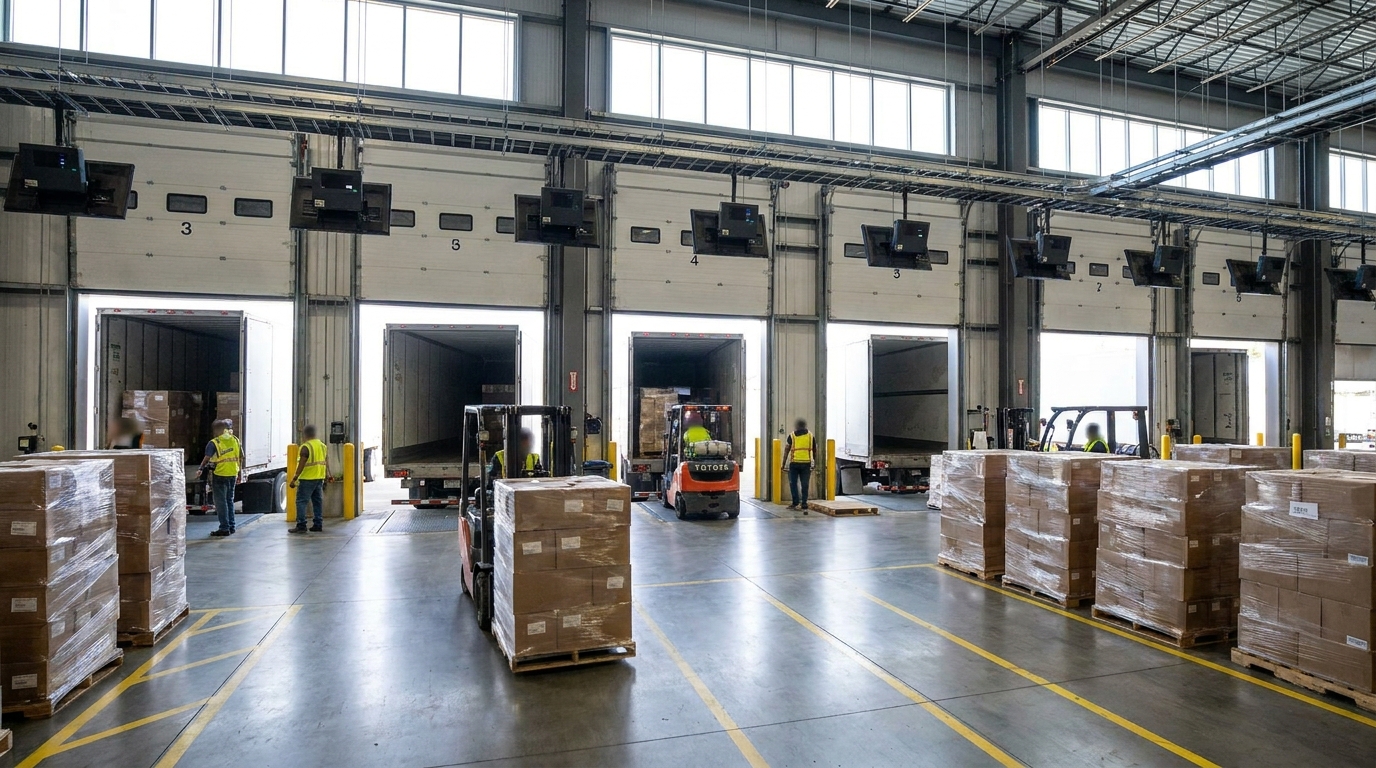
Retail chargebacks are financial deductions a retailer takes from a supplier's invoice when a shipment breaks the retailer's published rules for routing, labeling, packaging, documentation, or delivery timing. The retailer pays the reduced amount and keeps the difference, so a retail chargeback lands as a direct hit to your margin whether or not the product itself was fine. Big-box retailers publish detailed vendor requirements and measure compliance automatically at receiving, which is why one noncompliant shipment can generate several separate charges.
Key takeaways
- A retail chargeback is a penalty deduction for violating a retailer's routing, labeling, packaging, documentation, or delivery-timing rules, not a payment dispute over the goods.
- The most common triggers are OTIF misses, using the wrong carrier or routing, ASN and EDI errors, carton and pallet labeling mistakes, and missed delivery appointments.
- Small per-carton fees repeated across a large purchase order stack up faster than a single large deduction, so labeling errors often cost more than they look.
- Prevention is process, not luck: read the routing guide, transmit clean EDI, label to spec, book through the retailer's routing system, and keep proof for every shipment.
- A prep or fulfillment 3PL that already runs to a retailer's spec removes most human errors before the truck leaves your dock.
What is a retail vendor chargeback?
A retail vendor chargeback is a deduction the retailer applies to your invoice as a penalty for not following its supplier compliance manual. It is separate from a shortage or damage claim about the merchandise: the retailer treats its routing, labeling, and timing rules as part of the purchase order, so breaking them is a breach you pay for rather than a rejected shipment.
The rules live in the retailer's vendor or routing guide. Because receiving is largely automated at a modern distribution center, violations are caught by scanners and systems, not by a person deciding to be lenient. If a barcode will not scan or an EDI message does not match the pallet, the deduction is usually generated automatically.
What are the most common chargeback triggers?
The majority of retail chargebacks come from a short list of repeatable errors. Knowing them tells you where to put your controls.
- OTIF misses: the order arrives late, early, or short of the full quantity due on the delivery date. OTIF is one of the most closely watched standards at major retailers.
- Wrong carrier or routing: shipping collect when the retailer controls the freight, or using a carrier other than the one its routing system assigned.
- ASN and EDI errors: a missing, late, or inaccurate advance ship notice (EDI 856), or an EDI message that does not match the physical cartons.
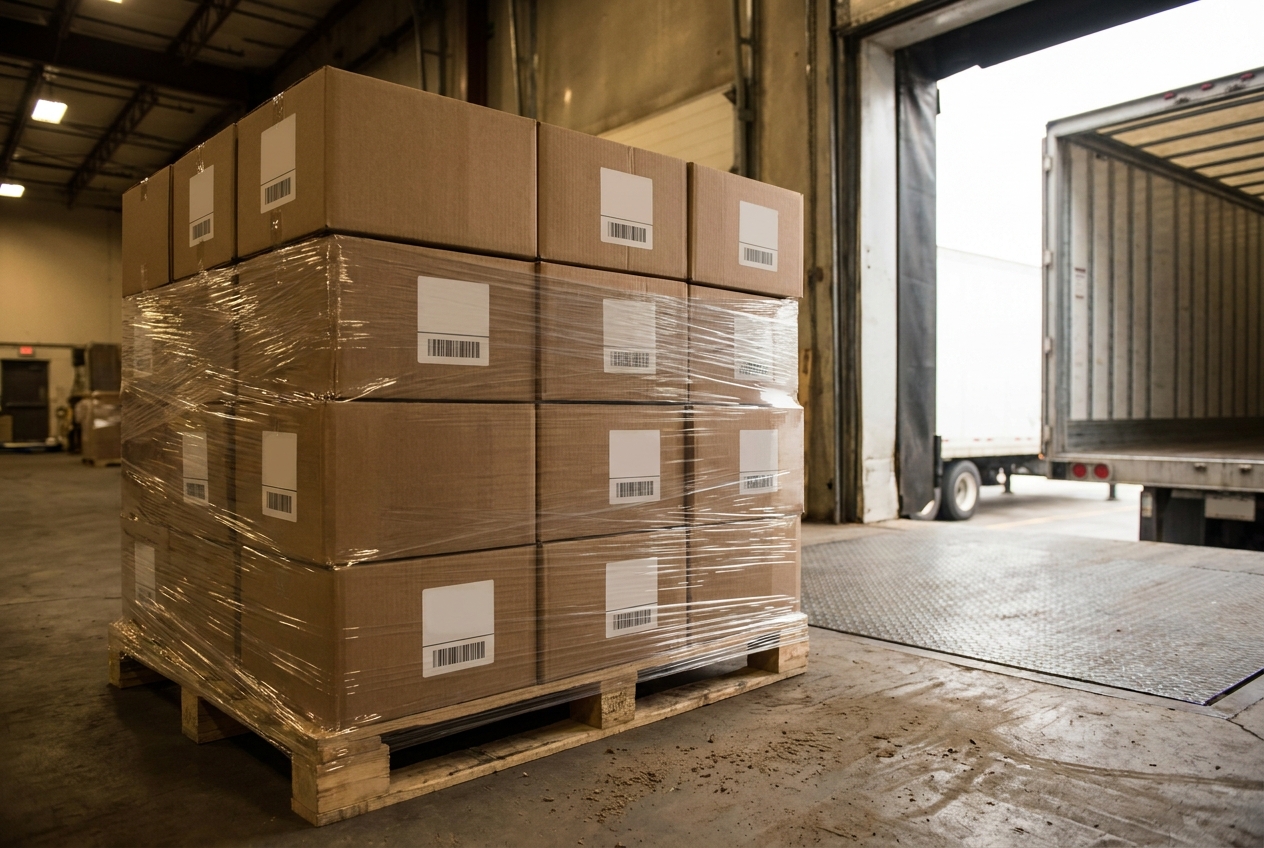
- Labeling and packaging noncompliance: unscannable carton labels, missing pallet placards, incorrect GS1-128 (formerly UCC-128) barcodes, overpacked pallets, or cartons over the weight and dimension limits.
- Appointment misses: arriving without a scheduled delivery appointment, missing the window, or a driver showing up at the wrong door.
How does OTIF turn into a chargeback?
OTIF becomes a chargeback when a shipment falls below the retailer's on-time or in-full threshold, which triggers a penalty tied to the order value. On-time usually means arriving inside a tight delivery window, sometimes as narrow as a specific appointment slot. In-full means every unit on the purchase order arrives, not a partial fill you plan to complete later. Because OTIF is measured against a target percentage, one late truck can push a whole period below the threshold and expose many orders to penalties at once. National on-time freight performance is tracked publicly by the Bureau of Transportation Statistics; the lesson is that transit variability is normal, so build buffer into ship dates rather than assume best-case transit.
How do chargebacks stack up?
Chargebacks stack because a single shipment can break several rules at once, and each rule is charged separately. A late delivery that also carries mislabeled cartons and a mismatched ASN can generate an OTIF penalty, a per-carton labeling fee, and a documentation fee, all on the same purchase order.
Consider a supplier shipping 2,000 cartons on one order to a big-box distribution center. The labels print with a barcode that scans inconsistently. If the retailer charges a flat per-carton noncompliance fee, that error repeats 2,000 times, and the total dwarfs what a single missed appointment would have cost. Per-carton and per-unit fees deserve as much attention as the headline OTIF percentage, because a run of small deductions can quietly erase the profit on an order, a cash-flow risk the U.S. Small Business Administration flags for businesses selling into large accounts.
Which chargeback types matter most, and how do you prevent each?
Most programs group deductions into a handful of categories. The table below maps the common types to their trigger and the control that prevents them, so you can turn it into a pre-ship checklist.
| Chargeback type | Typical trigger | How to prevent it |
|---|---|---|
| OTIF penalty | Late, early, or short delivery vs. the order | Build transit buffer, confirm quantities before shipping, track the load to the appointment |
| Routing violation | Wrong carrier or shipping method vs. the routing guide | Request the routing from the retailer's system for every order; never assume last time's carrier |
| ASN / EDI error | Missing, late, or mismatched EDI 856 | Send the ASN before the truck arrives; reconcile it against the packed cartons |
| Labeling noncompliance | Unscannable or wrong GS1-128 carton and pallet labels | Print to spec, verify scans on a sample, place labels in the required location |
| Packaging noncompliance | Overweight cartons, wrong pallet build, mixed SKUs | Follow the guide's carton and pallet rules; palletize by the retailer's standard |
| Appointment miss | No appointment or arrival outside the window | Book the delivery appointment early and give the carrier the confirmation and door |
How does a routing guide prevent chargebacks?
A routing guide prevents chargebacks by telling you, in advance, exactly how the retailer wants every order shipped, so compliance becomes a checklist instead of a guess. It specifies who controls the freight, which carrier and mode to use, how to label and palletize, what documents and EDI messages to send, and how to schedule delivery. The most valuable habit is treating the routing guide as the source of truth for each order rather than relying on how you shipped last time, because retailers update these rules and change carrier assignments regularly.
How do EDI and ASNs fit in?
EDI and the ASN fit in as the digital record that has to match the physical shipment, and a mismatch is one of the fastest ways to earn a deduction. The advance ship notice, sent as an EDI 856, tells the retailer what is on the truck, how cartons are grouped onto pallets, and what SKUs and quantities to expect before it arrives.
Receiving systems scan the carton labels and compare them to the ASN. If the ASN is late, missing, or describes a different pack than what shows up, the discrepancy is flagged automatically. Accurate EDI transmission and a clean, reconciled ASN remove a whole category of avoidable charges.
How can a supplier or 3PL prevent chargebacks?
A supplier or its 3PL prevents chargebacks by building the retailer's rules into its shipping process and verifying compliance before the truck leaves, not after a deduction appears. The workflow is consistent across retailers even when the rules differ:
- Pull the current routing guide and confirm who controls the freight for this order.
- Request routing or a load number through the retailer's routing system for the specific purchase order.
- Label cartons and pallets to the current GS1-128 spec and verify that a sample scans cleanly.
- Palletize to the retailer's carton and pallet standard, respecting weight and dimension limits.
- Transmit an accurate ASN before arrival and reconcile it against what was packed.
- Book the delivery appointment inside the required window and give the carrier the confirmation.
- Keep the signed bill of lading, appointment confirmation, and ASN so you can dispute any incorrect deduction.
Many brands outsource this to a partner that already runs to the retailer's spec. If you are evaluating providers, the retail consolidation and ecommerce fulfillment categories in the directory are a practical starting point, and you can model the added handling cost with the FBA prep cost estimator. A 3PL that owns compliance turns chargebacks from a recurring surprise into a controlled, measurable line item.
What should you do when a chargeback hits?
When a chargeback appears, decide quickly whether it is valid, and dispute the ones that are not within the retailer's stated window. Valid deductions are a signal to fix the upstream process so the same error does not repeat across the next thousand cartons. Invalid ones, such as an OTIF penalty on a load that actually arrived on time, are disputable if you have proof.
The dispute usually succeeds or fails on documentation, so a signed bill of lading, an appointment confirmation, and ASN records are what show the deduction was applied in error. Track your deductions by category over time, because the pattern tells you where to invest, whether that is a label printer, better carrier routing, or a fulfillment partner that handles retail compliance for you.
Frequently asked questions
What is a retail compliance chargeback?
It is a fee a retailer deducts from a supplier's invoice when a shipment violates the retailer's published rules for routing, labeling, packaging, documentation, or delivery timing. The retailer keeps the deduction and pays the reduced amount, so the supplier absorbs the penalty whether or not the goods were accepted.
What is the difference between a chargeback and OTIF?
OTIF (on-time, in-full) is one performance standard a retailer measures. A chargeback is the financial penalty applied when you miss OTIF or any other rule. Missing an OTIF target is a common trigger for a chargeback, but late shipments are only one of many deduction categories.
How much do retail chargebacks cost?
It varies widely by retailer and violation. Many programs charge a flat per-carton or per-purchase-order fee for labeling and packaging errors, and a percentage of the order value for OTIF misses. Small errors repeated across thousands of cartons add up faster than one large deduction.
Can you dispute a retail chargeback?
Often yes, within the retailer's stated window. You dispute by submitting proof that the deduction is wrong, such as a signed bill of lading, an appointment confirmation, or ASN records. Weak documentation is the main reason valid disputes are denied, so keep clean records for every shipment.
How does a 3PL help prevent chargebacks?
A prep or fulfillment 3PL that knows a retailer's routing guide can label, palletize, and document shipments to spec, book carrier pickups through the retailer's routing system, and transmit accurate EDI messages. That removes the most common human errors before the shipment leaves the dock.
What is an ASN and why does it cause chargebacks?
An ASN (advance ship notice) is an EDI 856 message that tells the retailer exactly what is arriving and how it is packed. If the ASN is late, missing, or does not match the physical shipment or the carton labels, the retailer's receiving system flags it and issues a chargeback.
Ready to compare providers?
Search the directory by service and location, save options to your shortlist, and send a clear RFQ.
Related guides
Subscription Box Fulfillment: What to Ask a 3PL
How subscription box fulfillment differs from standard ecommerce, the batch and kitting challenges that trip brands up, and the exact questions to ask a 3PL before you move.
Dropshipping vs Holding Inventory in a 3PL
Dropshipping vs 3PL fulfillment compared on margin, speed, control, branding, and risk, with a decision table and a hybrid model that uses both.
What Is a SKU? SKU vs UPC, ASIN, and FNSKU
A SKU is your own internal code for a product. Here is how it differs from a UPC, ASIN, and FNSKU, and how to structure SKUs that keep inventory accurate.