
Dropshipping vs Holding Inventory in a 3PL
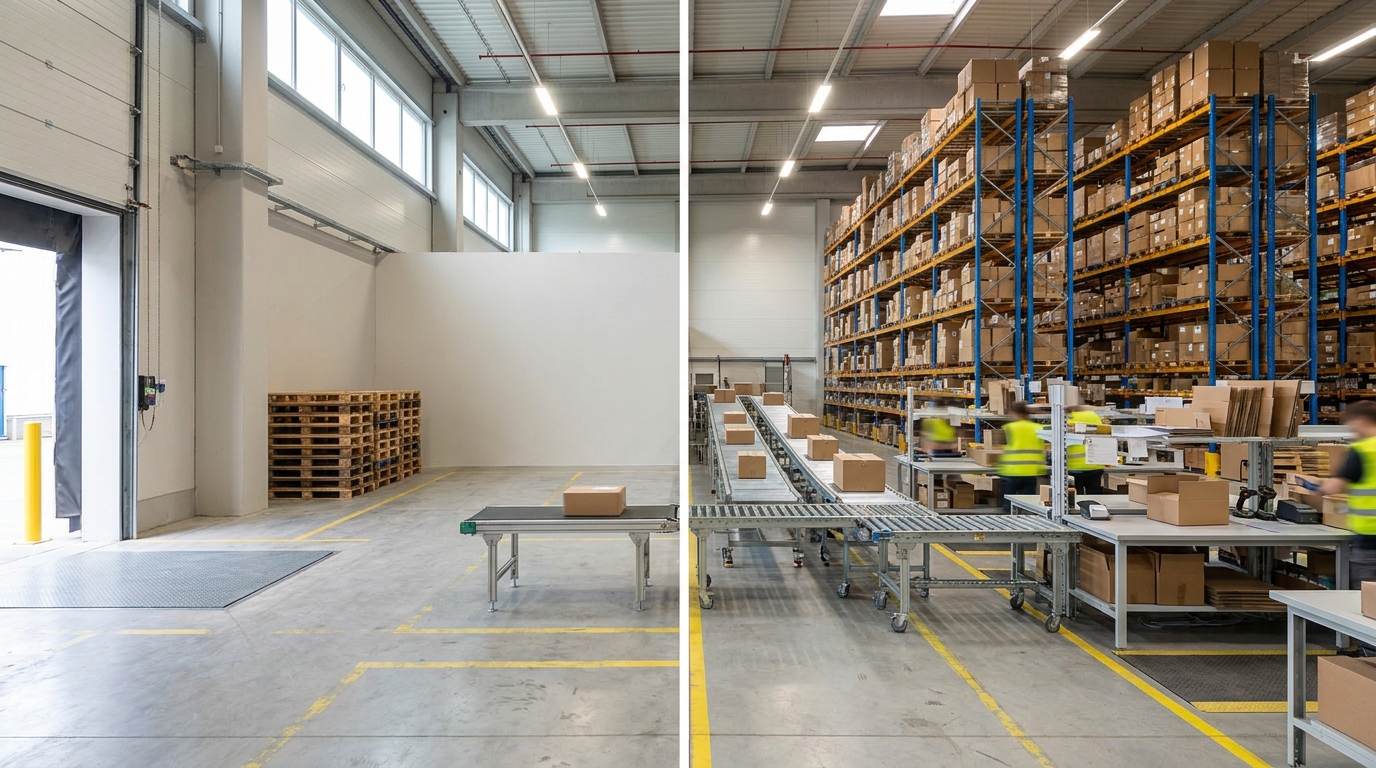
Dropshipping vs 3PL fulfillment comes down to one trade: dropshipping means a supplier holds the inventory and ships each order directly to your customer, so you never buy or store stock, while holding inventory in a 3PL means you buy product upfront, store it in a third-party warehouse, and the provider picks, packs, and ships your orders. Dropshipping minimizes cash risk but gives up margin, speed, branding, and quality control. Holding inventory in a 3PL costs money upfront and adds storage fees, but it lowers cost per order at volume and puts you back in charge of the customer experience. Which one fits depends on how proven your demand is and how much control you need.
Key takeaways
- Dropshipping requires no upfront inventory spend and carries almost no storage risk, but per-unit economics are thinner and you control very little of the fulfillment experience.
- Holding inventory in a 3PL lowers landed cost per order at volume and gives you branded, fast, predictable shipping, at the price of upfront cash and monthly storage fees.
- Dropshipping usually ships slower and less predictably because it depends on the supplier's queue and location; a 3PL ships from stock, often same or next day.
- A hybrid model is common: dropship new or slow SKUs to test demand and avoid tying up cash, and hold proven best-sellers in a 3PL.
- The switch signal is steady demand, margin pressure from per-order supplier pricing, or customer complaints about shipping speed and packaging.
What is the core difference between dropshipping and a 3PL?
In dropshipping the supplier owns the goods and ships them to your buyer; in a 3PL you own the goods and the warehouse ships them for you. That single ownership difference drives every trade-off below. With dropshipping you are effectively reselling: you list a product, the order routes to your supplier, they fulfill it, and you hold no stock. That means no inventory risk and no warehouse bill, but no control over packaging, speed, or what happens when a unit is defective.
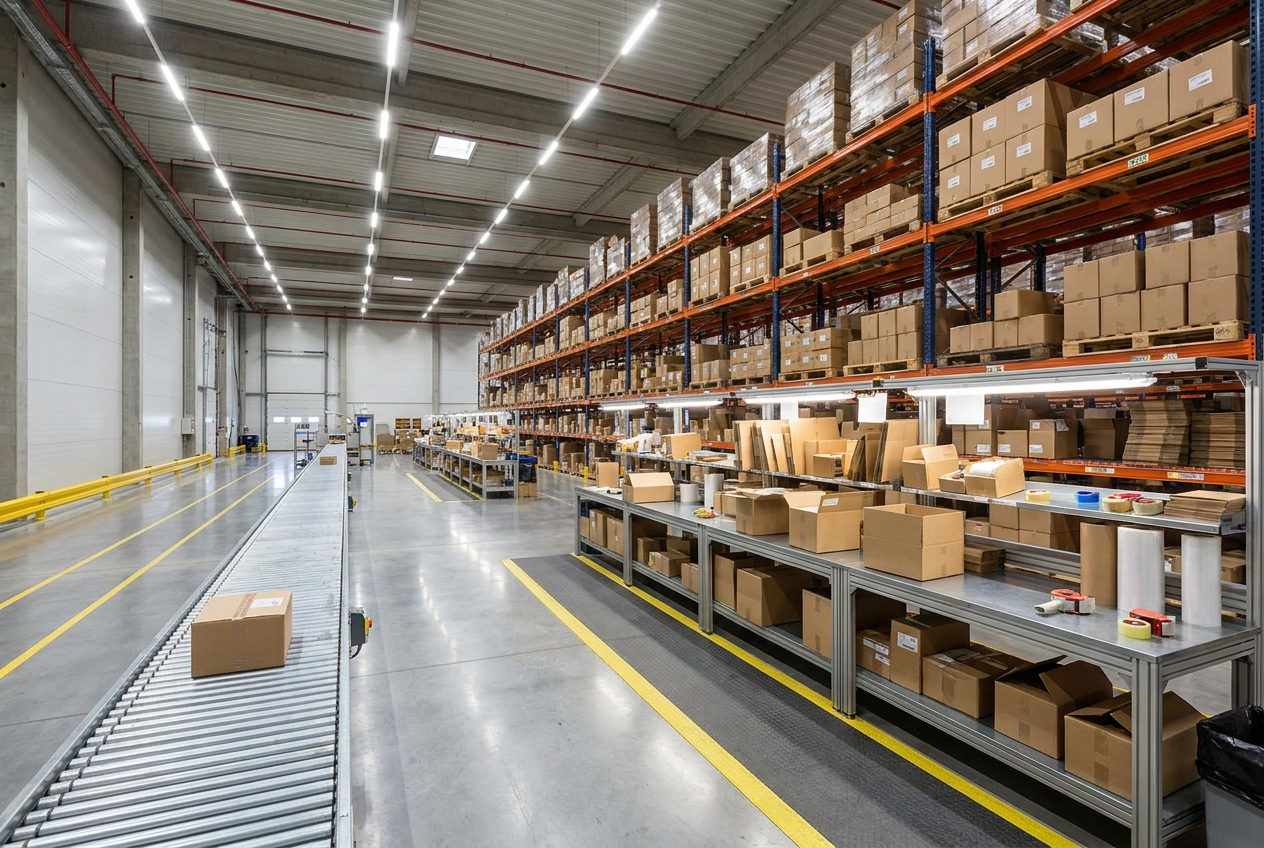
A third-party logistics provider (3PL) flips that. You purchase inventory, ship it into the provider's fulfillment center, and they store it and dispatch each order under your brand. You now own the stock and the cash tied up in it, plus the experience: how fast it ships, what it ships in, and how returns are handled.
How do margins compare between dropshipping and a 3PL?
Dropshipping protects cash but usually earns thinner margins per unit; holding inventory in a 3PL costs cash upfront but lowers your landed cost per order once volume climbs. A dropship supplier bundles the product, the pick and pack, and the shipping label into one per-order price, and that convenience is priced in. Buy inventory outright and hold it in a 3PL, and you pay wholesale for the goods plus separate, generally lower, per-order fees, so cost per order falls as volume grows.
The catch is that a 3PL adds storage fees and requires you to fund inventory before you sell it. If a SKU sells slowly, that stock becomes long-term storage cost and trapped cash. Dropshipping never has that problem because nothing is bought until it is sold.
Which model ships faster and more reliably?
A 3PL almost always ships faster and more predictably because stock sits in the warehouse ready to pick, frequently going out same or next day. Dropshipped orders wait in the supplier's fulfillment queue, and many dropship suppliers ship from overseas, which can add days or weeks in transit and makes delivery dates hard to promise. Cross-border dropshipments can also face U.S. Customs and Border Protection clearance delays that a domestic 3PL avoids entirely.
Speed also depends on where the inventory sits relative to your customers. A single 3PL location near your demand can hit most of the country in a couple of transit days; brands with national volume sometimes split stock across two warehouses, which our guide on a two-warehouse fulfillment strategy covers in depth.
Who controls branding and quality in each model?
A 3PL gives you real branding and quality control; dropshipping gives you very little. Because a 3PL ships your own inventory, you can send branded boxes, inserts, and custom packaging, and you can inspect or prep goods on the way in. Returns come back to your warehouse, so you see problems directly. Dropship suppliers typically ship in plain or their own packaging, rarely support inserts, and you only learn about a quality issue when a customer complains, since you never handle the unit.
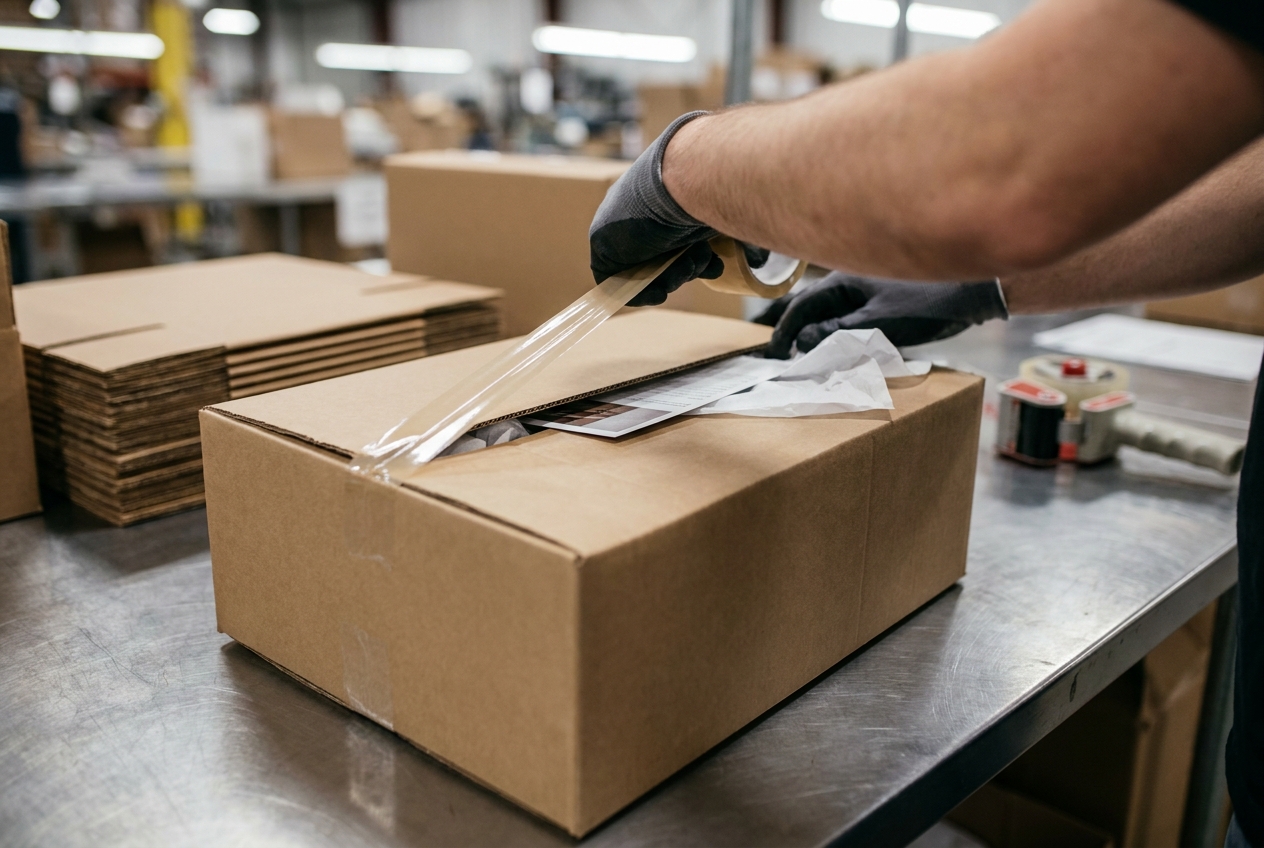
For brands that live or die on the unboxing experience, that difference is decisive. If you want to prep or kit product before it ships, that is only possible when you hold inventory, whether in a general 3PL or an ecommerce fulfillment partner that handles branded packaging.
How does risk differ between dropshipping and holding inventory?
Dropshipping carries almost no inventory or cash risk but high supplier-dependency risk; a 3PL carries inventory and cash risk but keeps supply and fulfillment in your control. With dropshipping, a supplier who runs out, raises prices, or lists your product to compete with you can disrupt your business overnight, and you have no buffer stock. With a 3PL, the risk sits on the balance sheet: unsold inventory, storage fees, and working capital locked in stock you have already paid for. Neither profile is automatically safer, so match it to your cash position and how proven the demand is.
Dropshipping vs 3PL fulfillment: side-by-side comparison
The table below summarizes the practical trade-offs. Read it as tendencies, not absolutes, since a strong supplier or a weak 3PL can shift any single row.
| Factor | Dropshipping | Holding inventory in a 3PL |
|---|---|---|
| Upfront cash | None; buy only after you sell | Significant; fund inventory before selling |
| Margin per order | Thinner; supplier bundles product and shipping | Higher at volume; wholesale goods plus lower pick-pack fees |
| Storage cost | None | Monthly storage plus long-term fees on slow stock |
| Shipping speed | Slower, less predictable; depends on supplier | Faster; ships from stock, often same or next day |
| Branding and packaging | Minimal; supplier packaging | Full; branded boxes, inserts, kitting |
| Quality control | Low; you never handle the unit | High; inspect and prep on the way in |
| Main risk | Supplier dependency, stockouts you cannot see | Unsold inventory and trapped working capital |
| Best fit | Unproven products, thin budgets, testing | Proven demand, brand focus, repeat volume |
When does each model fit, and when should you switch?
Dropship when demand is unproven, cash is tight, or a SKU is bulky, slow, or seasonal; hold inventory in a 3PL once a product sells steadily and margin or speed starts to matter. Early on, dropshipping lets you list a wide catalog and learn what actually sells without buying a pallet of anything. The switch signal is consistency: when a SKU sells predictably, when per-order supplier pricing is squeezing your margin, or when customers complain about slow shipping and plain packaging, holding stock usually pays off.
Consider a store selling a $40 gadget. Dropshipped, the supplier charges roughly $22 all-in per order, leaving about $18 before ads and fees. Once it sells a few hundred units a month, buying the same gadget at wholesale near $11 and paying a 3PL a few dollars to pick, pack, and ship it can push the fulfilled cost well below the dropship price and add branded packaging on top. The numbers are illustrative, but the pattern holds: past a demand threshold, holding inventory both lowers cost per order and improves the experience. To pressure-test your own case, model the difference with a fulfillment cost estimator.
What does a hybrid dropshipping and 3PL model look like?
A hybrid model holds proven best-sellers in a 3PL for fast, branded, low-cost shipping while dropshipping new, slow, bulky, or high-variant SKUs to avoid tying up cash. This is how many maturing brands operate: the top sellers that drive most orders live in the warehouse, and the long tail stays dropshipped until it earns a spot on the shelf. You can also use dropshipping purely as a testing lane, moving a product into the 3PL the moment demand is proven.
The main cost of a hybrid is complexity: two fulfillment paths, two sets of shipping promises, and inventory data to reconcile across systems. It is worth it when your catalog genuinely splits into proven and unproven, and less worthwhile if nearly everything you sell is already a steady mover. If you are evaluating partners for the held-inventory side, our guide on how to choose an ecommerce fulfillment provider covers what to ask, and you can browse vetted providers in the National Freight Hub directory. For a fuller look at the buy-and-hold side, the U.S. Small Business Administration's guidance on managing business finances is a useful reference for how inventory ties up working capital.
Frequently asked questions
Is dropshipping cheaper than using a 3PL?
Per unit, dropshipping usually costs more because the supplier bundles product, pick-pack, and shipping into one price. Its advantage is not lower unit cost but zero upfront inventory spend and no storage risk. Holding stock in a 3PL lowers the landed cost per unit at volume but ties up cash and adds storage fees.
What is the difference between dropshipping and a 3PL?
In dropshipping the supplier owns the inventory and ships each order directly to your customer, so you never touch or store the goods. With a 3PL you buy inventory upfront, store it in the provider's warehouse, and the 3PL picks, packs, and ships your orders. Dropshipping trades margin and control for zero inventory risk.
Can you dropship and use a 3PL at the same time?
Yes, and many brands do. A common hybrid holds proven best-sellers in a 3PL for fast, branded, low-cost shipping and dropships slow-moving, bulky, or new SKUs to avoid committing cash. You can also dropship to test a product, then move it into the 3PL once demand is proven.
Which model ships faster?
A 3PL almost always ships faster and more predictably because stock sits in a warehouse ready to pick, often shipping same or next day. Dropshipped orders depend on the supplier's queue and location, and many dropship suppliers ship from overseas, which can add days or weeks in transit.
Does dropshipping or a 3PL give better branding?
A 3PL gives far more branding control. You can send branded boxes, inserts, and custom packaging, and returns come back to your warehouse. Dropship suppliers usually ship in plain or their own packaging and rarely support inserts, so the unboxing and post-purchase experience is largely out of your hands.
When should I switch from dropshipping to holding inventory?
Switch once a SKU sells consistently, your margins are being squeezed by per-order supplier pricing, or customers complain about slow shipping and packaging. Steady, predictable demand is the signal that buying stock and holding it in a 3PL will lower cost per order and improve delivery speed enough to justify the cash outlay.
Ready to compare providers?
Search the directory by service and location, save options to your shortlist, and send a clear RFQ.
Related guides
Subscription Box Fulfillment: What to Ask a 3PL
How subscription box fulfillment differs from standard ecommerce, the batch and kitting challenges that trip brands up, and the exact questions to ask a 3PL before you move.
What Is a SKU? SKU vs UPC, ASIN, and FNSKU
A SKU is your own internal code for a product. Here is how it differs from a UPC, ASIN, and FNSKU, and how to structure SKUs that keep inventory accurate.
Peak Season Shipping: How to Prepare for Q4
A timeline-based playbook for Q4 peak season shipping: positioning inventory early, forecasting demand, planning labor, diversifying carriers, and hitting FBA cutoffs.