
Subscription Box Fulfillment: What to Ask a 3PL
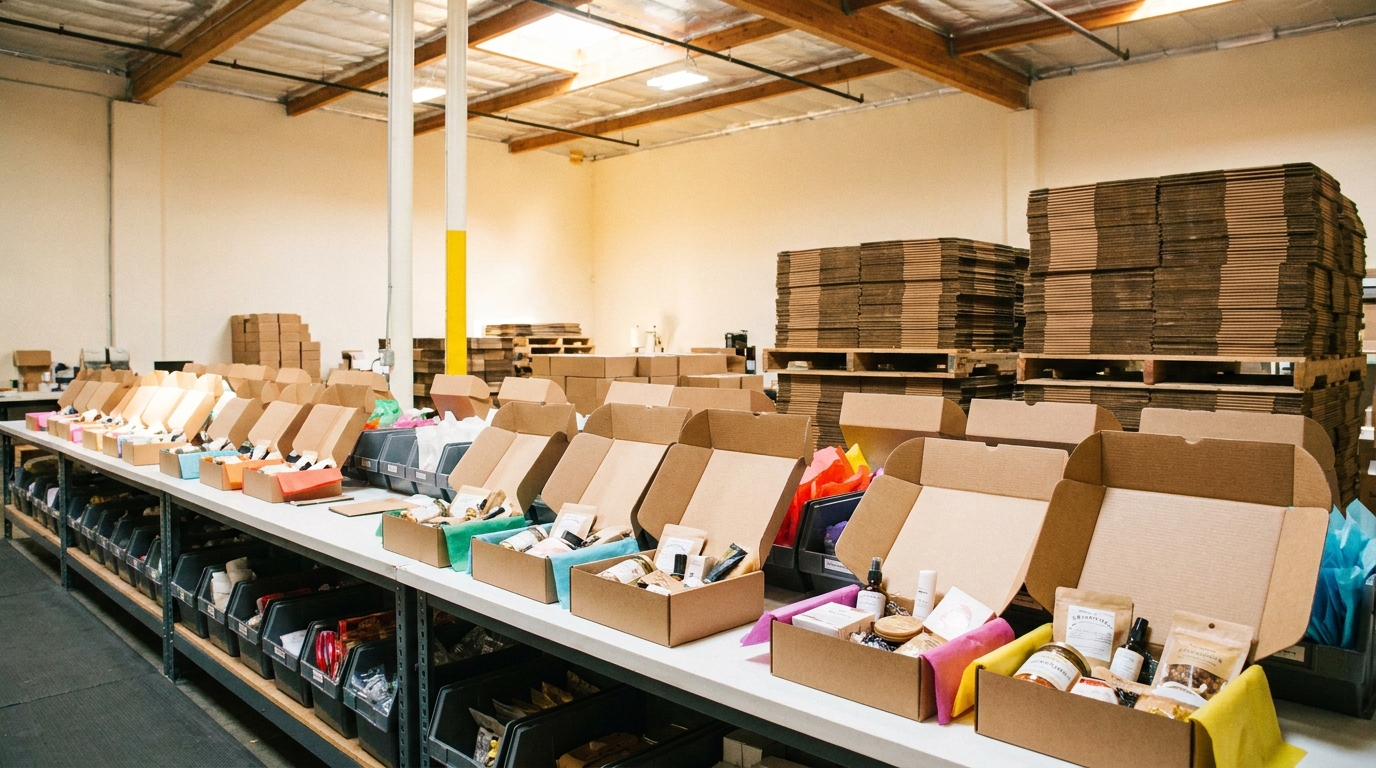
Subscription box fulfillment is the receiving, storage, recurring kitting, and shipping of curated boxes to a recurring member base, and it behaves very differently from standard ecommerce fulfillment. Instead of a steady trickle of single orders, most of your volume ships in one concentrated monthly batch, each box is assembled from several stored components plus inserts, and the contents often change every cycle. That shape, a big batch built from kitted components against a hard cutoff, is exactly what you need to test a 3PL against before you move.
Key takeaways
- Subscription fulfillment is recurring kitting on a deadline, not order-by-order pick and pack, so evaluate a 3PL on batch capacity, not average daily orders.
- The monthly cutoff is the whole game: components must be received, counted, and staged before the kitting window, or the batch slips and members notice.
- A single short or late component can stall thousands of boxes, so a 3PL's receiving discipline and shortage alerts matter as much as its ship speed.
- Ask for a full per-box cost that includes kitting labor, inserts, and packaging, not just the base pick fee, so surprise line items do not appear later.
- Curated variability, where boxes differ by tier, region, or member choice, adds pick complexity that many general ecommerce 3PLs underestimate.
How is subscription box fulfillment different from standard ecommerce fulfillment?
Standard ecommerce fulfillment is reactive: orders arrive one at a time, and the 3PL picks and packs each as it comes. Subscription box fulfillment is a scheduled manufacturing event. The 3PL assembles a large, mostly identical run of boxes from components you shipped in ahead of time, then releases them in a tight window around your monthly renewal date. The work is front-loaded into a few intense days rather than spread evenly across the month.
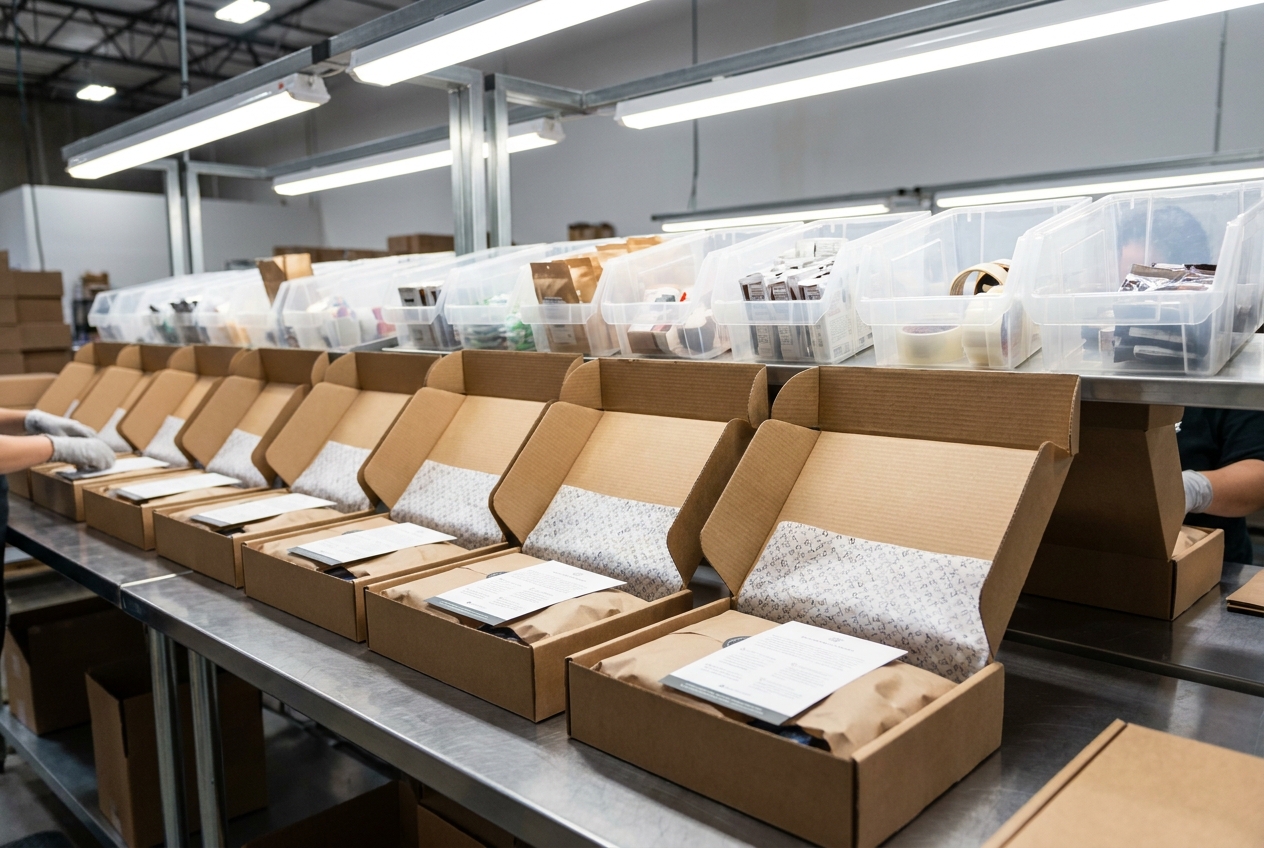
That difference cascades into everything: storage, labor planning, and how a mistake propagates. In standard ecommerce a picking error affects one customer. In subscription fulfillment a component counted wrong at receiving can affect the entire batch. The table below shows where the two models diverge.
| Dimension | Standard ecommerce fulfillment | Subscription box fulfillment |
|---|---|---|
| Order flow | Continuous, order by order | One large batch per cycle at a fixed cutoff |
| Core labor | Pick and pack per order | Recurring kitting and assembly of many identical boxes |
| Inventory stored | Finished, sellable SKUs | Loose components, inserts, and custom mailer boxes |
| Contents | Whatever the customer bought | Curated, often changing every cycle |
| Failure blast radius | One order | Potentially the whole batch |
Because the labor is kitting rather than simple picking, it is worth understanding what kitting and assembly actually involve and how a 3PL prices that step before you compare quotes.
What operational challenges are unique to subscription boxes?
The recurring model creates a handful of problems standard ecommerce rarely faces. Getting a 3PL to explain how it handles each one tells you more than any sales deck.
- Forecasting the batch. Your renewal count, new signups, churn, and skip requests decide how many boxes to build, and that number is not final until close to the cutoff. The 3PL needs a process for a moving box count.
- Storing components between cycles. Loose products, printed inserts, and custom boxes sit in the warehouse for weeks, taking dedicated space, before they become finished boxes.
- Custom packaging and inserts. Branded mailer boxes, tissue, stickers, and a printed card per cycle all have to arrive, be stored, and be assembled in the right sequence for the unboxing to look right.
- Curated variability. If boxes differ by tier, gender, region, or member selection, the kitting line is no longer one recipe. Each variant is its own pick list, and errors climb with variant count.
- On-time monthly ship. Members expect their box around the same date every cycle, so a slipped batch is visible to your entire base at once and drives cancellations.
If your box includes food, beverages, or supplements, add compliance to that list. Consumable subscription boxes can fall under federal food-safety rules, so confirm the 3PL is equipped for them and review the FDA's Food Safety Modernization Act requirements that may apply.
What should you ask a 3PL before moving your subscription box?
Ask questions that probe the batch, the components, and the deadline, not generic fulfillment questions. Use the checklist below as a starting script, and treat vague answers as a red flag.
| Ask about | The question | What a strong answer sounds like |
|---|---|---|
| Batch capacity | How many boxes can you kit and ship in the two to three days around my cutoff? | A specific number tied to staffing, above your peak forecast |
| Receiving cutoff | How far ahead do you need every component on the dock? | A firm lead time, one to three weeks, with a stated policy for late arrivals |
| Shortage handling | What happens if a component arrives short or damaged? | Counted at receiving, flagged to me fast, with a hold-or-ship decision I control |
| Variant handling | How do you manage curated or tiered box variants? | Separate pick logic per variant and a QC step to catch mismatches |
| Component storage | How is between-cycle storage of components and packaging priced? | Transparent storage line items, not buried in a blended rate |
| Full box cost | What is my all-in per-box cost including kitting, inserts, and packaging? | An itemized per-box figure, not just a base pick fee |
| Integration | Do you integrate with my subscription platform for the monthly order file? | A named integration or clear file process, with the count sync timing spelled out |
Layer these on top of the standard evaluation you would run for any partner. The same fundamentals in how to choose an ecommerce fulfillment provider still apply, and a good 3PL onboarding checklist keeps the first cycle from becoming the stress test.
How do 3PLs handle recurring kitting and custom packaging?
A 3PL builds subscription boxes on a kitting line: components are staged in the assembly sequence, workers or a conveyor build each box to a documented recipe, and a quality check confirms the count and contents before the box is closed and labeled. The recipe changes each cycle, so the 3PL re-stages the line every time your contents change.
The variable part is any item that differs box to box. A curated tier or a member-selected item turns part of the run into pick and pack layered onto the kitting base, which is slower and more error-prone than a single fixed recipe. Ask whether variable items are picked before or during assembly, and how the line prevents the wrong item landing in the wrong tier.
How do you forecast and plan the monthly batch?
Forecasting the batch means giving the 3PL a box count early enough to staff and stage, then a final count near the cutoff once renewals, new signups, churn, and skips settle. Most brands send a preliminary count a couple of weeks out and a locked count a few days before the ship date. Agree on those two dates in writing, because the 3PL schedules labor around them.
Plan components against the same calendar. If the 3PL needs everything on the dock two weeks before shipping and your imported inserts clear customs slowly, that import timeline, not the kitting line, becomes your real constraint. Brands that source curated goods abroad should build in buffer for U.S. Customs and Border Protection clearance so a held shipment does not stall the whole batch.
What does subscription box fulfillment cost, and where do brands get surprised?
Subscription box fulfillment has no single rate; it is a stack of line items. Expect receiving, monthly storage of components and packaging, kitting or assembly labor per box, pick and pack for any variable items, packaging materials, and the outbound parcel rate. The surprise is almost always the kitting labor and the storage of loose components, which brands leave out when they compare a subscription quote to a simple per-order pick fee.
As a worked example, imagine a 4,000-box monthly run where each box holds five stored components plus a printed card and a custom mailer. The base pick fee alone tells you almost nothing, because most of the cost is the receiving and count of every component, the weeks of storage before assembly, and the per-box kitting labor to build all 4,000 in a few days. Model the full stack before you sign. A warehouse cost calculator helps you sanity-check the storage and handling side, and the guide on ecommerce fulfillment costs breaks down the parcel and pick components.
How do you choose the right subscription 3PL?
Shortlist 3PLs that already run recurring box programs at your volume, then pressure-test them on the batch, the components, and the cutoff using the checklist above. Walk from any provider that quotes only a per-order pick fee, cannot commit to a receiving cutoff, or has no shortage-alert process, because those gaps show up first during your busiest few days of the month. Compare providers that specialize in this work in the ecommerce fulfillment directory, and confirm your final pick can absorb a spiky monthly batch without the ship date slipping.
Frequently asked questions
What is subscription box fulfillment?
Subscription box fulfillment is the warehousing, kitting, and shipping of recurring curated boxes to a member base. Unlike standard ecommerce, most orders ship in a single large monthly batch, each box is assembled from several components and inserts, and the contents often change every cycle.
How is subscription box fulfillment different from standard ecommerce fulfillment?
Standard ecommerce is a steady stream of single-SKU or small multi-SKU orders picked and packed as they arrive. Subscription fulfillment is recurring kitting: the 3PL builds thousands of identical (or curated-variant) boxes from stored components and ships most of them within a few days of a monthly cutoff.
How much does subscription box fulfillment cost?
There is no single rate. Expect separate line items for receiving, monthly storage of components, per-box kitting or assembly labor, the pick and pack of any variable items, packaging materials, and the outbound parcel rate. Ask for a full per-box cost that includes kitting labor and inserts, not just the base pick fee.
Should a subscription box brand keep fulfillment in-house or use a 3PL?
Small early boxes are often kitted in-house because volume is low and the founder controls the unboxing. Most brands move to a 3PL once the monthly batch outgrows the space and labor they can staff for a few concentrated days each cycle. The trade-off is control versus the ability to absorb a spiky batch.
How far in advance does a 3PL need my components?
Enough lead time to receive, count, and stage every component before the kitting window. Many 3PLs want all components on the dock one to three weeks before the ship date so shortages surface early. Confirm the exact receiving cutoff and what happens if one component lands late.
What happens if a box component arrives short or late?
A missing component can stall the entire batch, since the box cannot ship without it. Ask how the 3PL flags shortages at receiving, whether they will hold and ship a partial box or wait, and how they communicate a delay so you can notify members before the renewal date.
Ready to compare providers?
Search the directory by service and location, save options to your shortlist, and send a clear RFQ.
Related guides
Dropshipping vs Holding Inventory in a 3PL
Dropshipping vs 3PL fulfillment compared on margin, speed, control, branding, and risk, with a decision table and a hybrid model that uses both.
What Is a SKU? SKU vs UPC, ASIN, and FNSKU
A SKU is your own internal code for a product. Here is how it differs from a UPC, ASIN, and FNSKU, and how to structure SKUs that keep inventory accurate.
Peak Season Shipping: How to Prepare for Q4
A timeline-based playbook for Q4 peak season shipping: positioning inventory early, forecasting demand, planning labor, diversifying carriers, and hitting FBA cutoffs.