
What Is a Fuel Surcharge in Freight?
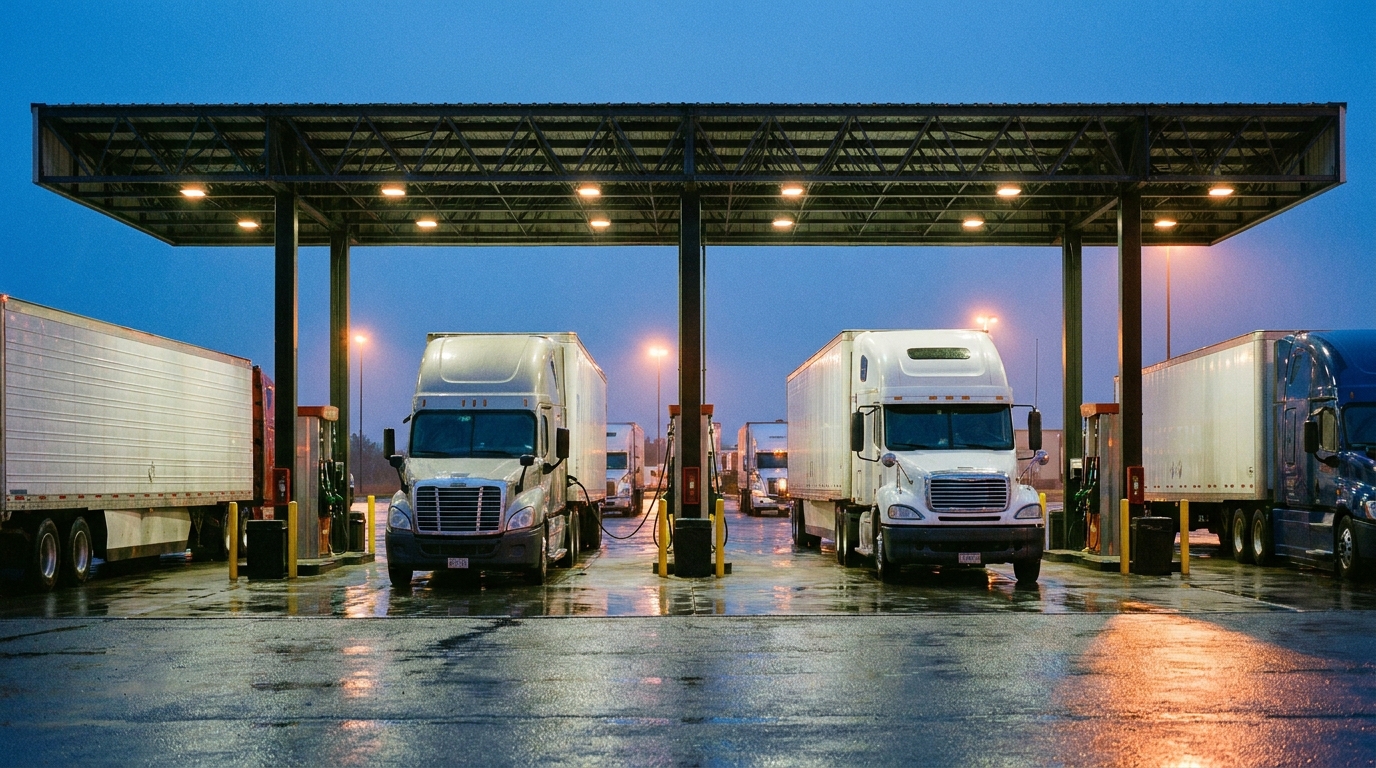
A fuel surcharge is a separate, variable line item that a carrier adds to the base freight rate to cover the changing cost of diesel. Because diesel prices move week to week, the fuel surcharge (usually written as FSC on a quote) lets a carrier hold a stable base rate and adjust only the fuel portion as pump prices rise or fall. It is not a hidden markup or a junk fee; it is the mechanism the freight industry uses to keep base pricing predictable while passing through a cost that neither the shipper nor the carrier controls.
Key takeaways
- A fuel surcharge is a pass-through fee tied to diesel prices, quoted separately from the base linehaul rate.
- In LTL it is normally a percentage of the linehaul charge; in truckload it is normally a per-mile amount.
- The surcharge is pegged to a published national diesel index and resets as that price moves, which is why it fluctuates.
- To compare quotes fairly, always add the fuel surcharge to the base rate and compare the all-in number.
- You can rarely change the diesel index, but you can negotiate which fuel table applies and whether fuel is charged on accessorials.

How does a fuel surcharge work?
A fuel surcharge works by splitting your freight cost into two parts: a base rate that stays put and a fuel component that floats with diesel. The carrier publishes or agrees to a fuel table that maps a range of diesel prices to a surcharge amount. When you get a quote, the carrier looks up the current diesel price, finds the matching row on the table, and adds that surcharge to the base rate as its own line.
Keeping fuel separate protects both sides. The carrier does not have to bake a worst-case fuel guess into every base rate, and you do not overpay when diesel is cheap. It also makes quotes easier to read once you know what you are looking at, which is why the fuel line shows up on nearly every shipment. For a full walk-through of the other lines you will see, our guide on how to read a freight quote breaks down each charge.
How is the fuel surcharge tied to diesel prices?
The fuel surcharge is tied to a published national diesel price average, updated weekly, rather than to whatever a driver paid at a single pump. Carriers commonly peg their fuel tables to the U.S. average on-highway diesel price, which the federal government tracks and reports. The Bureau of Transportation Statistics and other U.S. Department of Transportation sources publish fuel and freight cost data you can use as a neutral reference when a carrier's number looks off.
Each carrier's fuel table sets a base price where the surcharge begins and a step size for how much the surcharge rises for each increment of diesel above that base. Two carriers can quote the same lane and show different fuel surcharges simply because they use different tables, base pegs, or update schedules. That is normal, and it is one reason the fuel line is worth reading rather than skimming.
How is the fuel surcharge applied in LTL versus truckload?
The core difference is the unit: LTL fuel surcharges are almost always a percentage of the linehaul charge, while truckload fuel surcharges are almost always a per-mile amount. The same diesel price drives both, but they are expressed differently because LTL prices by weight and class while truckload prices by distance.
| Aspect | LTL freight | Truckload (TL) |
|---|---|---|
| How the FSC is expressed | Percentage of the linehaul charge | Cents per mile (a per-mile amount) |
| What it is pegged to | Carrier's published fuel table tied to a national diesel index | Diesel price bands in the rate agreement or contract |
| Where you find it | Carrier's online fuel surcharge table, refreshed weekly | Rate confirmation or the contract fuel schedule |
| How often it changes | Usually weekly | Weekly, or set per load on the spot market |
Because the LTL surcharge scales with the linehaul, a heavier or higher-class shipment carries a larger fuel line even on the same lane. On truckload, a longer haul carries more fuel because the surcharge is multiplied by miles. If you ship both modes, expect the fuel line to behave differently on each, and compare it accordingly.

Why does the fuel surcharge fluctuate?
The fuel surcharge fluctuates because it is pegged to diesel, and diesel prices move with crude oil markets, refining capacity, seasonal demand, and regional supply. When the national average diesel price crosses into a new band on the carrier's fuel table, the surcharge resets, so the same shipment can cost more or less from one week to the next even when the base rate has not changed.
This is a feature, not a defect. A floating surcharge means you are not locked into a fuel assumption that stops matching reality. It also means a quote you received last month may not hold today if diesel has moved, so treat the fuel line as time-sensitive and re-check it before you book a lane you priced earlier.
What does a fuel surcharge look like on a real quote?
On a quote, the fuel surcharge appears as its own line beneath the base linehaul, before or alongside accessorials, and the all-in total is what you actually pay. The clearest way to understand it is to run the arithmetic, so here are two illustrative examples. The rates and percentages below are hypothetical and used only to show the mechanism, not current market numbers.
Illustrative LTL example: suppose your base linehaul is 400 dollars and the carrier's current fuel table shows a fuel surcharge of one-quarter of linehaul for the current diesel band. The fuel line adds 100 dollars, for a linehaul-plus-fuel subtotal of 500 dollars before any accessorials. If diesel rises into the next band next week, that same 400-dollar linehaul might carry a larger fuel line.
Illustrative truckload example: suppose your rate confirmation lists a per-mile fuel schedule that adds a set amount per mile at the current diesel band, and your haul is 1,000 miles. The fuel line equals that per-mile amount times 1,000 miles, added on top of the flat linehaul rate. Understanding which fees are fuel and which are situational matters here, and our guide to accessorial charges explained covers the difference so you can read the whole quote.
How do you evaluate a fuel surcharge in a quote?
Evaluate a fuel surcharge by comparing all-in totals, not base rates, and by asking the carrier which fuel table and base peg they use. A low base rate with an aggressive fuel table can cost more than a higher base rate with a modest one, so the base number alone tells you little.
- Add the fuel surcharge to the base rate and compare the all-in figure across carriers on the same lane and week.
- Ask which diesel index the fuel table is pegged to and the base price where the surcharge starts.
- Confirm how often the table updates, since a stale table can lag the real diesel price in either direction.
- Check whether fuel is charged on accessorials or only on linehaul, because that changes the total on service-heavy shipments.
- Re-price any quote that is more than a week or two old, since diesel may have moved.
When you are collecting quotes to compare, the free calculators and comparison tools in our tools hub help you line up all-in costs across providers, and you can shortlist carriers by mode through the logistics company directory. It is also worth confirming a carrier's operating authority through the FMCSA before you commit freight to them.
Can you negotiate or reduce the fuel surcharge?
You can rarely change the underlying diesel index, but you can negotiate the terms around it, especially on steady volume. On contract truckload, shippers often negotiate the per-mile fuel schedule and the base peg directly. On LTL, the lever is usually which published fuel table applies to your account and whether fuel is billed on accessorials.
Beyond negotiation, you reduce total fuel cost by reducing billable miles and weight: consolidating shipments, tightening packaging so you are not paying fuel on a larger linehaul than you need, and choosing lanes and modes that fit the freight. Our guide on how to reduce LTL freight costs covers those levers in detail. The fuel surcharge is a real, unavoidable pass-through, but a shipper who reads the fuel table and compares all-in totals is never surprised by it.
Frequently asked questions
What is a fuel surcharge in freight?
A fuel surcharge, often written as FSC, is a separate line item that a carrier adds to the base freight rate to cover the fluctuating cost of diesel. It lets the carrier keep the base rate stable and adjust only the fuel portion as pump prices move.
How is a fuel surcharge calculated?
It is calculated from a fuel table or formula tied to a national diesel price index. In LTL it is usually a percentage of the linehaul charge for the current diesel price band; in truckload it is usually a per-mile amount that steps up or down as diesel moves.
Why does the fuel surcharge change so often?
Because it is pegged to diesel prices, which are published weekly. When the national average diesel price rises or falls into a new band on the carrier's fuel table, the surcharge resets, so the same lane can cost more or less week to week even at an unchanged base rate.
Is a fuel surcharge the same as an accessorial charge?
No. A fuel surcharge covers fuel cost and applies to almost every shipment, while accessorials are situational fees for specific services such as liftgate, residential delivery, or detention. Both appear as separate line items on a freight quote.
Can you negotiate the fuel surcharge?
You rarely change the underlying diesel index, but you can negotiate which fuel table applies, the base price where the surcharge starts, and whether fuel is charged on accessorials. On steady truckload volume, some shippers negotiate the per-mile fuel schedule directly.
Where does the diesel price data behind a fuel surcharge come from?
Most carriers peg their fuel tables to a published national on-highway diesel average. Federal transportation agencies such as the Bureau of Transportation Statistics track fuel and freight cost data you can use as a neutral reference point.
Ready to compare providers?
Search the directory by service and location, save options to your shortlist, and send a clear RFQ.
Related guides
Driver English Language Proficiency: What Shippers Should Know
Driver English language proficiency is a longstanding FMCSA requirement now enforced as an out-of-service condition, and here is what it means for shippers.
Hazmat Shipping Requirements: A Shipper Guide
What shippers must get right to move hazardous materials legally: the nine DOT hazard classes, UN numbers, packing groups, placards, shipping papers, packaging, and training.
What Is Heavy Haul Trucking? Permits and Escorts
Heavy haul trucking moves loads too large or heavy for a standard trailer, using specialized equipment, state permits, and escorts. Here is how it works.