
Driver English Language Proficiency: What Shippers Should Know
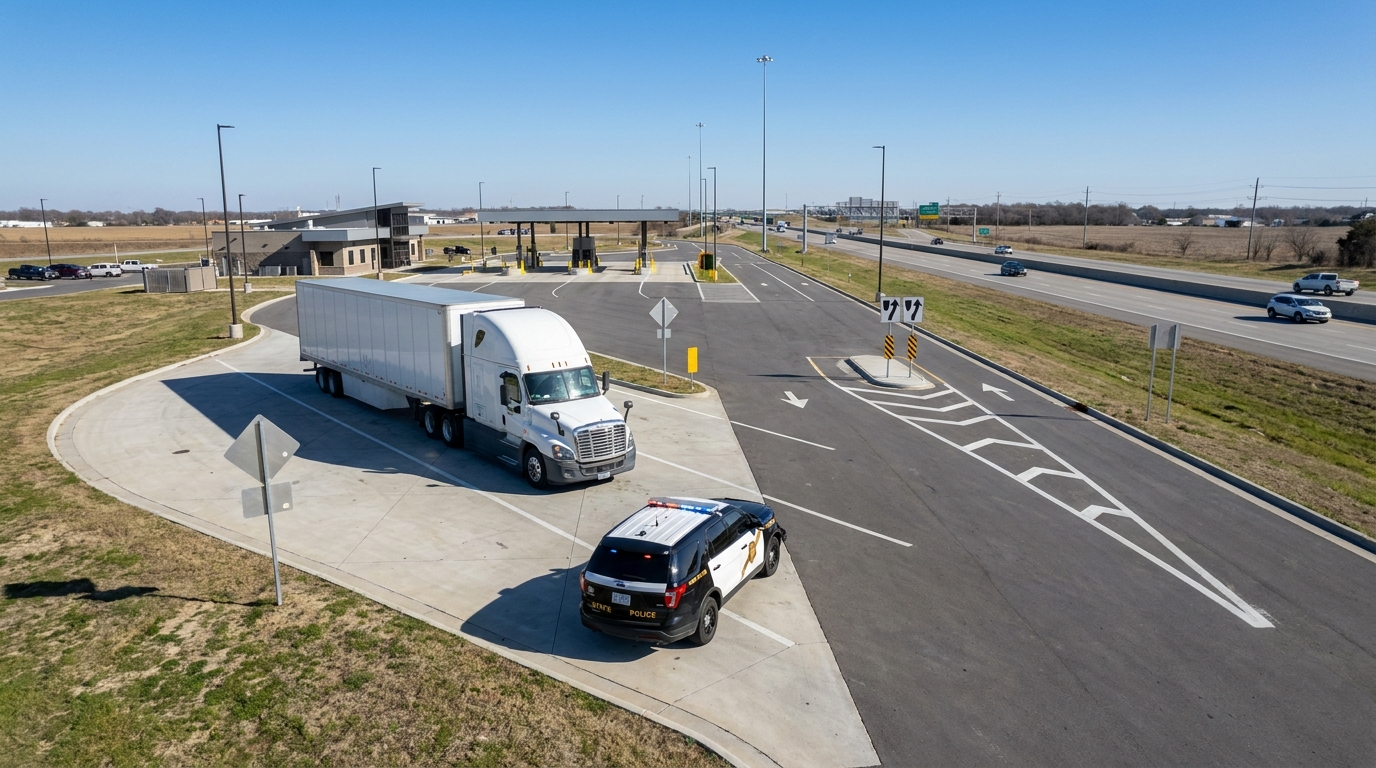
Driver English language proficiency (ELP) is a longstanding federal requirement, enforced by the Federal Motor Carrier Safety Administration (FMCSA), that a commercial driver be able to read and speak English well enough to converse with the public, read highway signs and signals, respond to official inquiries, and make legible records. It is not a new rule. What changed is enforcement: in 2025 FMCSA strengthened how the standard is applied so that an ELP violation is again treated as an out-of-service condition at roadside inspections. For shippers, this is a driver-qualification and enforcement matter, and the practical question is what it means for carrier capacity and vetting, not politics.
Key takeaways
- English language proficiency has long been an FMCSA driver-qualification standard, checked at roadside inspections rather than at the point of hire.
- The 2025 change strengthened enforcement so an ELP violation can again place a driver out of service, pulling that unit off the road until resolved.
- The main effect on shippers is capacity: carriers with drivers placed out of service temporarily lose trucks, which can tighten some lanes.
- The practical shipper response is stronger carrier vetting, not a change to how you tender freight.
- The standard is a safety measure, because a driver must read signs, follow dock and facility instructions, and communicate during inspections.
What is the driver English language proficiency requirement?
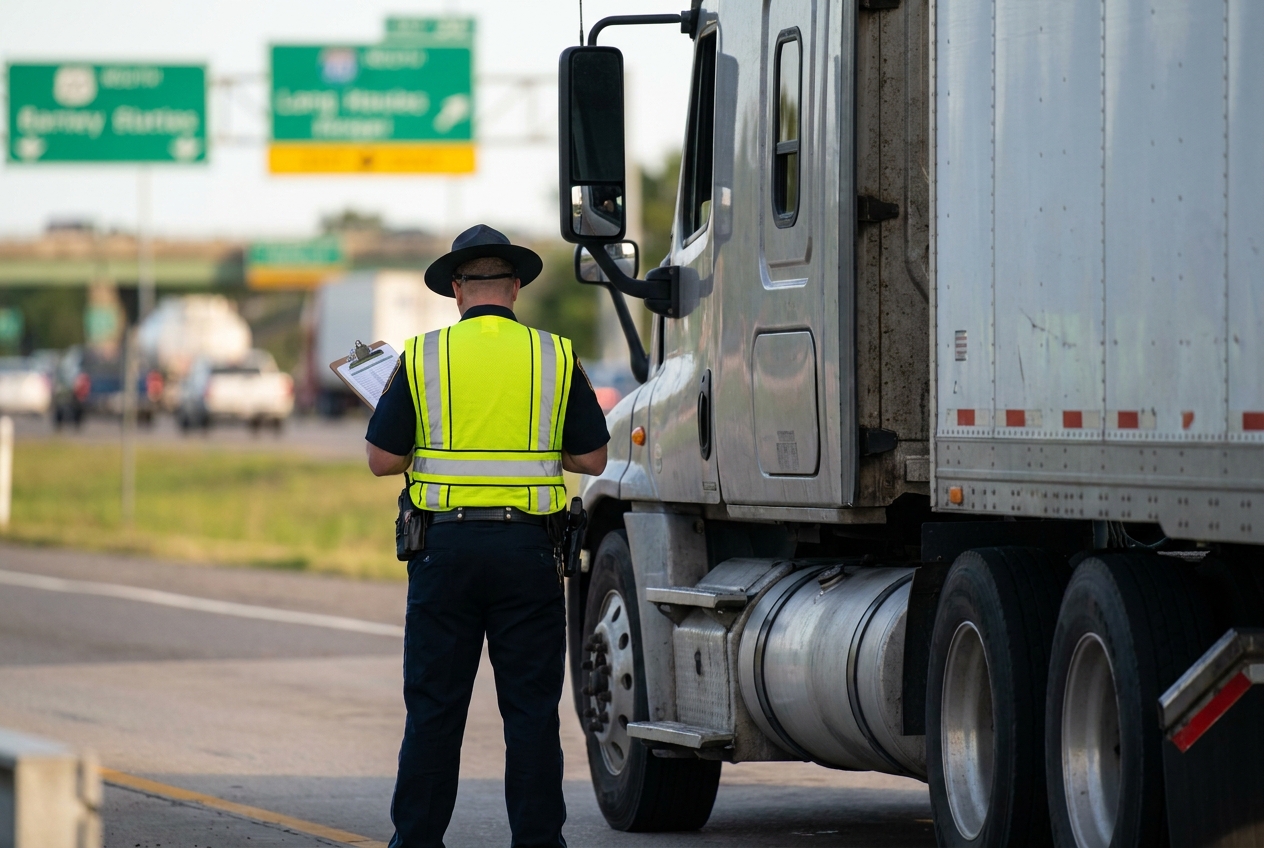
The English language proficiency requirement is an FMCSA driver-qualification standard: a commercial motor vehicle driver must be able to read and speak English sufficiently to do the safety-critical parts of the job. In practice that means conversing with the general public, understanding highway traffic signs and signals, responding to official inquiries at inspections and scale houses, and making entries on records and reports. FMCSA sets the standard and publishes its enforcement guidance; the primary source is FMCSA. The requirement applies to the driver, so it is assessed on the individual behind the wheel, typically during a roadside inspection rather than in advance.
What changed with enforcement in 2025?
The requirement itself is longstanding; the 2025 change was to enforcement. FMCSA strengthened how the rule is applied so that an ELP violation is once again an out-of-service condition. That is the meaningful shift. For years an ELP finding did not automatically take a driver off the road, so the practical consequences were limited. Treating it as an out-of-service condition means an inspector who finds a violation can place the driver out of service on the spot, which stops that truck until the carrier resolves the issue. The specifics of how and when this is applied come from FMCSA guidance, so treat FMCSA as the authority rather than any secondhand summary.
Why does this matter for shippers?
The direct effect on shippers is capacity, not paperwork. When a driver is placed out of service, that unit stops moving freight until the situation is resolved, and the carrier absorbs the disruption. If a carrier has a meaningful share of drivers affected, it can temporarily run fewer trucks, and on tight or specialized lanes that shows up as reduced availability or firmer pricing. Trucking carries the large majority of domestic freight tonnage, per the U.S. Bureau of Transportation Statistics, so anything that adjusts the pool of qualified drivers is worth watching if you move volume over the road. The effect is uneven: it depends on the carrier's workforce and the lane, not on a blanket change across all capacity.
How big is the capacity effect likely to be?
Honestly, the size is hard to pin down and varies by carrier and region, so treat any single number with caution. What is reasonable to expect is a modest tightening on some lanes rather than a market-wide shock, concentrated among carriers whose screening and driver qualification programs are weakest. Well-run carriers that already qualify drivers carefully should see little disruption. The takeaway for a shipper is not to forecast a precise capacity loss but to know which of your carriers run disciplined safety programs, because those are the ones least exposed to sudden out-of-service events of any kind.
How should shippers factor this into carrier selection?
Fold it into the vetting you should already be doing. A carrier's roadside inspection and out-of-service history is public safety data, and it is one of the clearest signals of whether a carrier runs a real compliance program. Ask carriers directly how they qualify drivers, how they track their inspection and out-of-service record, and how they cover a load if a driver or unit is taken out of service mid-transit. Our carrier vetting guide walks through the full checklist, and the questions to ask a long-haul trucking company give you a script for the conversation. You can compare providers by mode and lane in the long-haul truckload directory.

What does this mean if you use a freight broker?
If you tender through a broker, the broker is choosing the motor carriers who actually haul your freight, so their vetting process is your exposure. A broker with a disciplined carrier-qualification process filters out carriers with poor safety and out-of-service records before they ever touch your load. When you evaluate a broker, ask how they onboard and monitor carriers, how they respond when a carrier's authority or safety standing changes, and what their backup plan is when a truck falls out. Our guide to how to choose a freight broker covers what a strong vetting process looks like.
A worked example: a single carrier over one week
Say a shipper moves 20 truckloads a week on a regional lane through one carrier that runs 40 trucks. During a routine enforcement sweep, three of that carrier's drivers are placed out of service in the same week. Those units are down until the carrier resolves each situation, so the carrier is briefly running 37 trucks instead of 40. The shipper does not necessarily see a missed load, but the carrier now has less slack, so it may decline a spot tender, ask for more lead time, or cover a load through a partner. A shipper with a second qualified carrier already vetted on that lane absorbs the gap without a fire drill. A shipper relying on one carrier feels it. That is the real lesson: redundancy in your carrier base is the buffer.
Out-of-service basics: what a shipper should understand
An out-of-service order removes a driver or a vehicle from operation until a defined problem is corrected. It is a standard roadside enforcement tool used for many conditions, from hours-of-service violations to mechanical defects, and now again for ELP. The table below frames how the ELP change fits the shipper's view.
| Question | Before the 2025 change | After the 2025 change |
|---|---|---|
| Is ELP a federal requirement? | Yes, longstanding | Yes, unchanged |
| Where is it checked? | Roadside inspection | Roadside inspection |
| Can a violation place a driver out of service? | Not automatically | Yes, treated as an out-of-service condition |
| Primary effect on shippers | Minimal direct effect | Possible localized capacity tightening |
| Right shipper response | Standard carrier vetting | Stronger carrier vetting and lane redundancy |
What should shippers do next?
Keep it practical. Confirm that your core carriers and brokers run real driver-qualification and safety-monitoring programs, keep at least one vetted backup carrier on lanes that matter, and treat a carrier's inspection and out-of-service record as a standard part of selection. You can find and compare providers by mode in the National Freight Hub directory at find logistics companies. For the regulatory specifics, rely on FMCSA rather than any restatement, since the agency is the authority on how the standard is enforced.
Frequently asked questions
What is the driver English language proficiency requirement?
It is a longstanding FMCSA rule that commercial motor vehicle drivers be able to read and speak English well enough to converse with the public, understand highway traffic signs and signals, respond to official inquiries, and make legible records. It is a driver-qualification standard checked during roadside inspections, not a new law.
What changed with English language proficiency enforcement in 2025?
FMCSA strengthened enforcement in 2025 so that an English language proficiency violation is again treated as an out-of-service condition. A driver found in violation at a roadside inspection can be placed out of service until the issue is resolved, which pulls that unit off the road.
How does this affect shippers?
The direct effect is capacity. If a carrier's drivers are placed out of service, that carrier loses trucks temporarily, which can tighten available capacity on some lanes. For most shippers the practical response is stronger carrier vetting rather than any change to how freight is tendered.
Is English language proficiency a safety issue or a compliance issue?
Both. FMCSA frames it as a safety-related driver-qualification standard because a driver has to read signs, understand instructions, and communicate at scale houses, docks, and inspection stops. It is enforced as a compliance matter at roadside inspections.
What should shippers ask carriers about English language proficiency?
Ask how the carrier screens for driver qualification during hiring, how it monitors its roadside inspection and out-of-service record, and how it covers loads if a driver or unit is placed out of service. A carrier that answers clearly has a functioning safety and compliance program.
Does this apply to brokers and their carrier networks too?
Yes. A freight broker relies on a network of motor carriers, so the broker's vetting process should account for each carrier's safety and out-of-service history. When you choose a broker, ask how they qualify and monitor the carriers who actually haul your freight.
Ready to compare providers?
Search the directory by service and location, save options to your shortlist, and send a clear RFQ.
Related guides
Carrier Vetting: How to Avoid Fraud and Bad Carriers
A step-by-step guide to carrier vetting: verify FMCSA authority and safety, confirm insurance with the insurer, spot red flags, and stop double-brokering.
Dedicated vs Common Carrier: Which Fits
How dedicated contract carriage, common carriers, and private fleets compare on cost, capacity, and commitment, and when your volume justifies dedicated.
Shipping Construction Materials to a Jobsite
How construction freight works: matching flatbed and specialized trailers to steel, lumber, pipe, and precast, plus jobsite access, oversize permits, and delivery timing.