
What Is a Freight Lane and Why Rates Vary
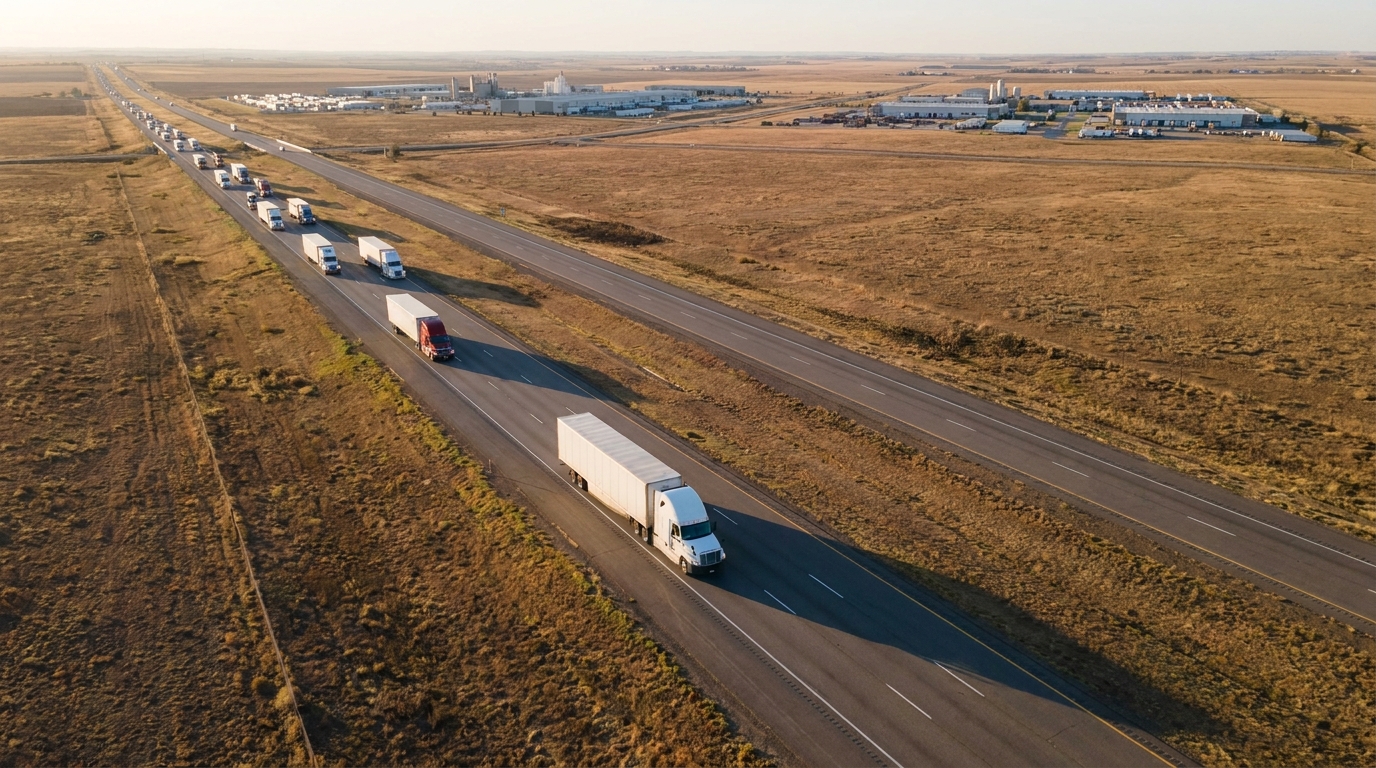
A freight lane is a specific origin-to-destination pairing that shippers and carriers move repeatedly, such as Los Angeles to Phoenix or Chicago to Atlanta. It is defined by two endpoints and a direction of travel, not by any single shipment. Rates vary from lane to lane, and often within the same lane depending on which way you are going, because truck capacity and available freight are rarely balanced in both directions. Understanding your lanes is the first step to knowing whether a quote is fair and where you can push for a better one.
Key takeaways
- A freight lane is a recurring origin-destination route, and it is directional: A to B is a different lane than B to A.
- The busy, high-demand direction is the headhaul; the harder-to-fill return is the backhaul, and it usually prices lower.
- Rates diverge by direction because of capacity imbalance, not distance alone. Trucks piling into a market with little freight to leave create cheap outbound rates and expensive inbound ones.
- Shippers who track volume and rate by lane know exactly where they hold leverage and where to offer carriers a balanced round trip.
- A lane that carries freight both ways almost always earns a lower rate than one that sends trucks home empty.
What is a freight lane?
A freight lane is the repeatable route between a fixed origin and a fixed destination that a shipper uses over and over. When a beverage brand ships from its Dallas plant to a distribution center in Denver every week, Dallas to Denver is one of its lanes. Carriers and brokers think in lanes because pricing, capacity, and transit time are all tied to the specific pair of markets, not to freight in the abstract.
Lanes are directional. Dallas to Denver and Denver to Dallas are two separate lanes with potentially very different rates, because the supply of trucks and the supply of freight differ at each end. This is the single most misunderstood thing about freight pricing, and it is why a shipper cannot assume a round trip costs twice the one-way rate.
What is the difference between headhaul and backhaul?
The headhaul is the primary, high-demand direction a carrier wants to run, where freight is plentiful and the carrier can be selective. The backhaul is the return leg, where loads are scarcer and a carrier will often accept a lower rate rather than drive home empty. The gap between the two is where most of the confusion about "why did my rate jump" comes from.
| Factor | Headhaul (busy direction) | Backhaul (return direction) |
|---|---|---|
| Freight availability | High, many loads competing for trucks | Low, trucks competing for few loads |
| Who has leverage | The carrier | The shipper |
| Typical rate | Higher per mile | Lower per mile |
| Risk of empty miles | Low | Higher if no return load is found |
An empty return trip, known as a deadhead, still burns fuel, driver hours, and equipment time. A carrier prices the headhaul partly to cover the risk that the backhaul will pay little or nothing, so the two directions are really priced as a pair.
Why do rates vary by direction on the same lane?
Rates split by direction because capacity and freight almost never balance. A market that pulls in far more inbound trucks than it generates outbound loads becomes cheap to leave and expensive to enter. The reverse happens in a production-heavy market that ships out more than it receives. Distance is only part of the price; direction relative to that imbalance often matters more.
Seasonality sharpens the effect. Produce regions tighten during harvest, retail lanes into major metros tighten before the holidays, and a lane that was balanced in spring can flip by late summer. This is also why spot rates move faster than contract rates, a distinction covered in our guide to spot versus contract freight rates. National freight conditions set the backdrop for every lane, which is why it helps to read the direction of the market in our 2026 truckload freight market outlook before you lock in annual pricing.
How does capacity imbalance change what you pay?
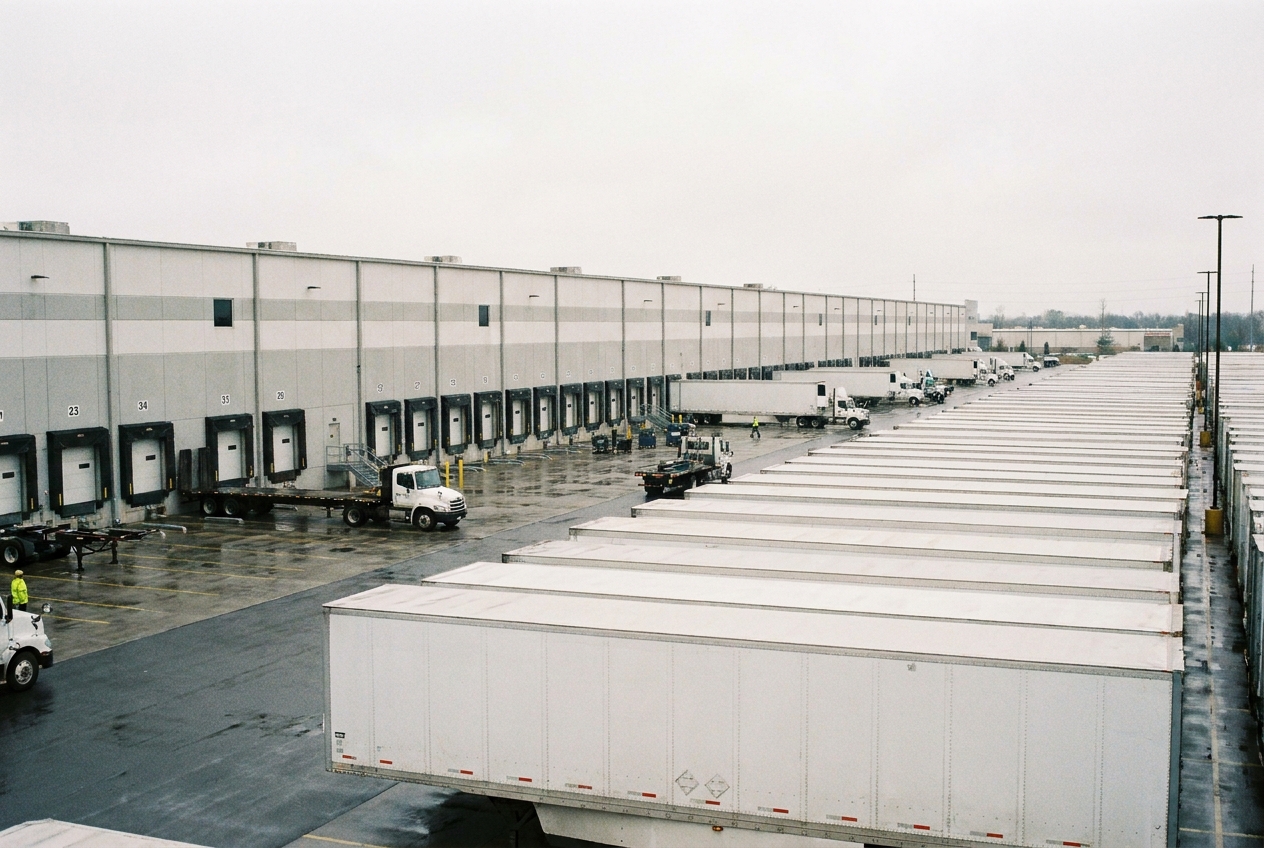
Consider a manufacturer that ships full truckloads from a plant in a rural area out to a dense port metro. Trucks arrive at the metro, unload, and find plenty of freight waiting to head back out, so carriers happily run the return. But getting a truck into the rural origin in the first place is hard, because few loads move that way. The origin is a backhaul market, and that shapes both directions.
Suppose the loaded distance is 600 miles each way. In a scenario like this you might see the outbound leg from the rural plant priced low, near the low end of the market, while the inbound repositioning to reach the plant runs well above it. Illustrative numbers make the point:
| Direction | Market condition | Example per-mile rate | Example 600-mile total |
|---|---|---|---|
| Into the metro (headhaul) | Easy to reload | Higher | Higher line-haul |
| Into the rural plant (backhaul) | Hard to reload | Carrier discounts to avoid deadhead | Lower line-haul, but scarce trucks |
The lesson is not the exact figures, which move constantly, but the shape: the same 600 miles can price very differently depending on which end is starved for trucks. A shipper whose freight happens to run in the cheap direction of an imbalanced lane is in a strong position; one who needs the tight direction should expect to pay for it and plan capacity early.
How do shippers use lane data to negotiate and plan?
Shippers who win on price treat their network as a set of lanes with history, not a pile of individual shipments. For each lane they track volume, direction, seasonality, and past paid rates. That record shows where they ship enough consistent freight to earn a committed contract rate, and where volume is too thin or spiky to justify one, so buying on the spot market makes more sense.
The strongest move is offering carriers balance. If you can pair your outbound freight on one lane with another shipper's freight, or your own return freight, you hand the carrier a loaded round trip and remove their deadhead risk. Carriers reward that with lower rates. When you go to bid, tools like a structured request-for-quote help you present lanes cleanly; our 3PL RFQ builder lays out the volume and lane detail carriers need to price accurately. To see which carriers actually run your key corridors, browse the long-haul truckload directory.
What else changes a lane rate besides direction?
Direction and capacity set the baseline, but several other factors move a lane rate up or down. Distance matters, though not linearly: short lanes spread fixed costs like loading and dock time over fewer miles, so they often price higher per mile than long lanes even when the total is lower. Equipment type, whether the freight moves as a full truckload or shares a trailer, and stop count all factor in, as our overview of LTL versus FTL shipping explains.
Time at the dock is its own cost. When a truck waits beyond its free time to load or unload, the carrier bills detention, which raises the effective cost of a lane that looks cheap on paper. If your facilities are slow, expect that to show up in your rates; our guide to detention and demurrage breaks down how those charges accrue. For national freight flow patterns behind these lanes, the Bureau of Transportation Statistics publishes freight movement data, and carrier authority and safety records can be checked through the FMCSA before you award a lane.
Frequently asked questions
What is a freight lane?
A freight lane is a specific origin-to-destination pairing that a shipper or carrier moves repeatedly, such as Los Angeles to Phoenix. It is defined by the two endpoints and the direction of travel, not by a single load.
What is the difference between headhaul and backhaul?
Headhaul is the primary, high-demand direction a carrier wants to run, where freight is plentiful. Backhaul is the return trip, where loads are harder to find. Headhaul usually prices higher because the carrier can be selective.
Why does the same lane cost more in one direction?
Because capacity and freight rarely balance. If many trucks want to leave a market loaded but few loads come back, the outbound (headhaul) direction commands a premium and the return sells at a discount to avoid an empty trip.
How do shippers use freight lane data?
Shippers track volume, direction, and rate history by lane to spot where they hold negotiating leverage, where they can offer carriers a balanced round trip, and where to lock contract rates versus buy on the spot market.
Does a shorter lane always cost less per load?
Not per mile. Short lanes carry fixed costs like loading, dock time, and repositioning across fewer miles, so the per-mile rate often runs higher than a long lane even though the total load price is lower.
What is a balanced lane and why do carriers prefer it?
A balanced lane offers freight in both directions, so a truck can run loaded out and loaded back. Carriers reward balance with lower rates because it eliminates the cost of deadhead miles between loads.
Ready to compare providers?
Search the directory by service and location, save options to your shortlist, and send a clear RFQ.
Related guides
Carrier Vetting: How to Avoid Fraud and Bad Carriers
A step-by-step guide to carrier vetting: verify FMCSA authority and safety, confirm insurance with the insurer, spot red flags, and stop double-brokering.
Dedicated vs Common Carrier: Which Fits
How dedicated contract carriage, common carriers, and private fleets compare on cost, capacity, and commitment, and when your volume justifies dedicated.
Shipping Construction Materials to a Jobsite
How construction freight works: matching flatbed and specialized trailers to steel, lumber, pipe, and precast, plus jobsite access, oversize permits, and delivery timing.