
Pick-and-Pack Methods: Piece, Batch, Zone, Wave
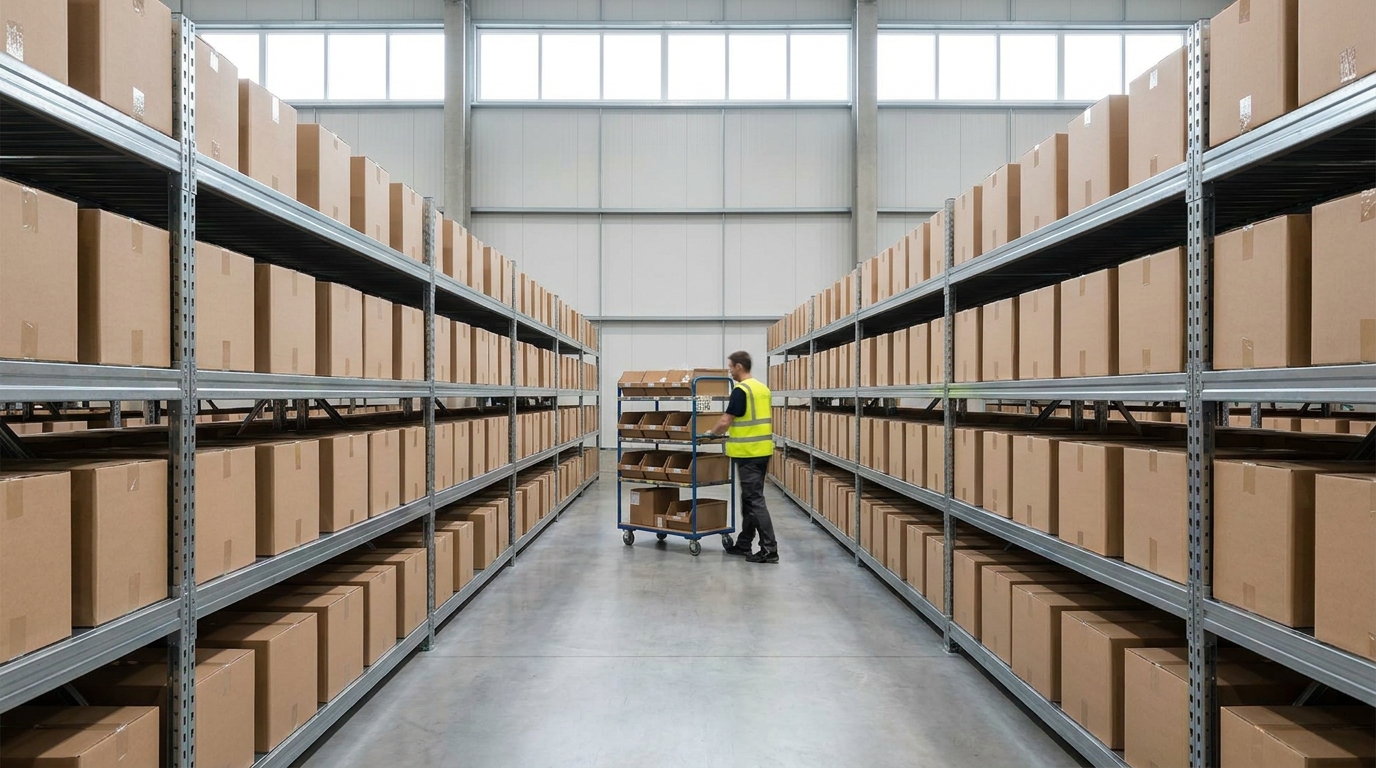
Pick-and-pack methods are the strategies a warehouse uses to retrieve items from storage and combine them into outbound orders. The five you will hear about most are piece (discrete), batch, zone, wave, and cluster picking. They differ in one core question: how many orders, areas, or scheduled releases a worker handles in a single trip through the shelves. That choice drives how far people walk, how fast orders ship, how often they ship correct, and what the labor costs per order.
There is no single best method. The right fit depends on your order profile (lines per order and SKU overlap between orders), your daily volume, and how tight your carrier cutoffs are. Low volume with varied orders favors simplicity; high volume with repeating SKUs favors consolidation.
Key takeaways
- Piece picking handles one order per trip and is the simplest and most accurate method at low volume, but the slowest per order at scale.
- Batch, zone, cluster, and wave picking all reduce walking time by consolidating trips, which lowers cost per order as volume rises.
- Methods that group orders add a sortation step, so they trade a small accuracy risk for higher throughput and lean on scanning to control it.
- Order profile and volume decide the method: many small orders sharing SKUs favor batch or cluster; large multi-line orders and tight cutoffs favor zone or wave.
- If a third-party logistics provider runs your fulfillment, it usually sets the method, but you can ask which one and how it bills the labor.
What are the main pick-and-pack methods?
The main methods are piece, batch, zone, wave, and cluster picking, and they fall into two families. Piece picking is single-order. The other four are consolidation strategies that batch orders, split the warehouse into areas, time releases to a schedule, or carry several orders at once to shorten the total distance walked per unit.
Every method still ends the same way: items are verified, packed into a box or mailer, and labeled for the carrier. The difference is in how items get gathered before that pack step, which is where most of the labor time in a fulfillment center goes.
What is piece (discrete) picking and when does it fit?
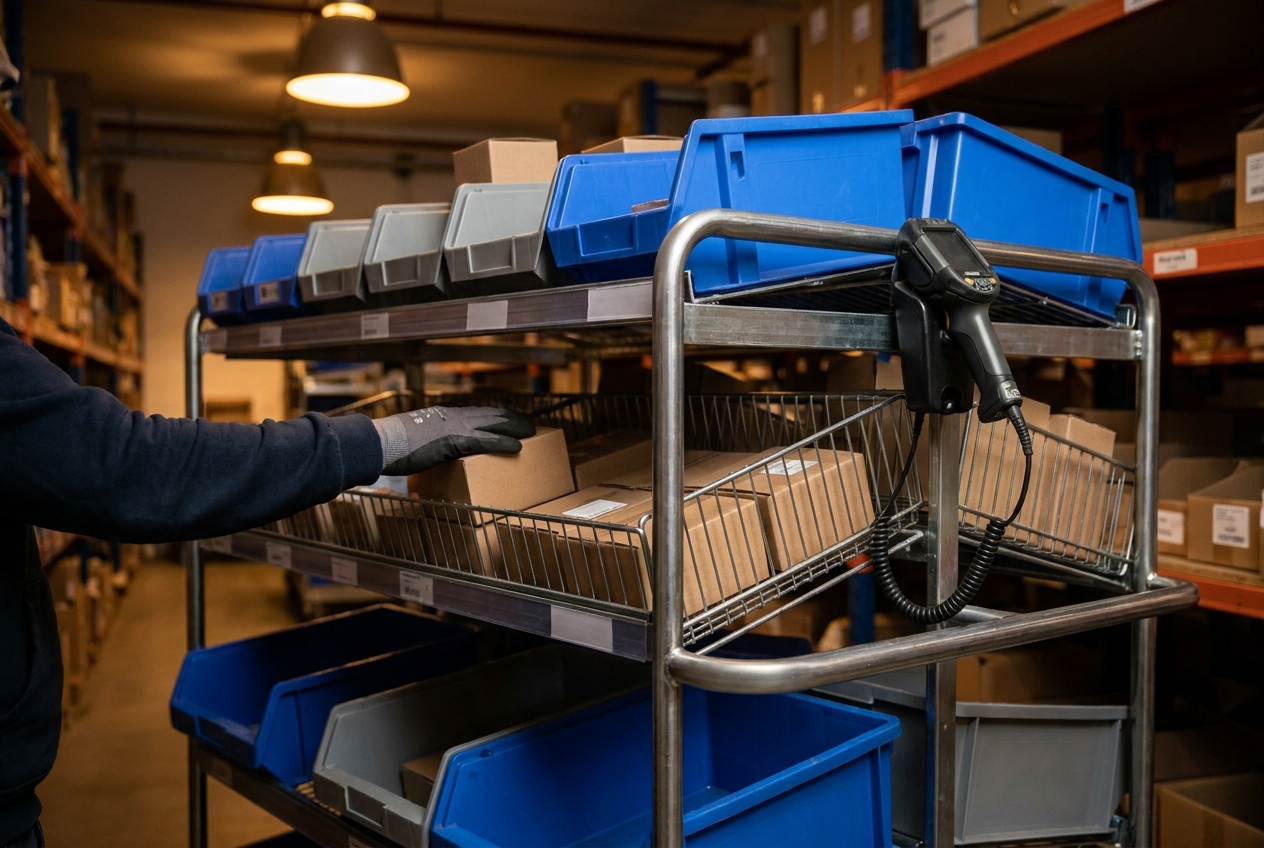
Piece picking, also called discrete picking, means a worker pulls every item for one order, then moves to the next order. It is the most common starting method because it is simple, needs little software, and is hard to get wrong: one tote equals one order.
It fits low-to-moderate volume, orders with only a few lines, and operations that value accuracy over raw speed. The tradeoff is travel. A picker may walk the same aisle dozens of times a day for different orders, so cost per unit climbs quickly once volume grows or your SKUs spread across a large footprint.
When does batch picking make sense?
Batch picking groups several orders that share SKUs into one trip. The worker pulls the total quantity of each item for the whole batch, then sorts units into individual orders at a pack station. It makes sense when many orders contain the same one or two products, which is common for single-SKU or small-catalog ecommerce brands.
The gain is fewer trips to the same shelf. Instead of visiting a bin ten times for ten orders, the picker visits once and grabs ten units. The cost is a sortation step where a unit can land in the wrong order, so batch picking relies on barcode scanning or put-to-light walls to stay accurate. It pairs well with steady, high-volume flow where SKU overlap is real.
How does zone picking work?
Zone picking assigns each worker to a fixed area of the warehouse and has them pick only the lines that fall in their zone. An order that spans several zones is either passed along (a tote moves zone to zone) or consolidated at the end. It works well in large facilities where walking the whole floor for one order would be wasteful.
Zones cut travel because each picker learns a small area and stays in it. The catch is coordination: multi-zone orders need a handoff or a merge, and an uneven order mix can leave one zone swamped while another sits idle. Zone picking is often combined with batch or wave logic rather than run alone.
What is wave picking?
Wave picking releases picks in scheduled groups, called waves, tied to a trigger such as a carrier pickup time, an order priority, or a shift plan. Rather than pick orders as they arrive, the system holds and releases them so work lines up with when trucks leave the dock. It is a scheduling layer that usually sits on top of piece, batch, or zone picking.
Waves help when you ship to fixed cutoffs and need to guarantee that next-day or expedited orders make their carrier. The tradeoff is that orders wait for their wave, so wave picking needs a warehouse management system to plan releases and can add a short delay for any single order in exchange for smoother, more predictable outbound flow.
What is cluster picking?
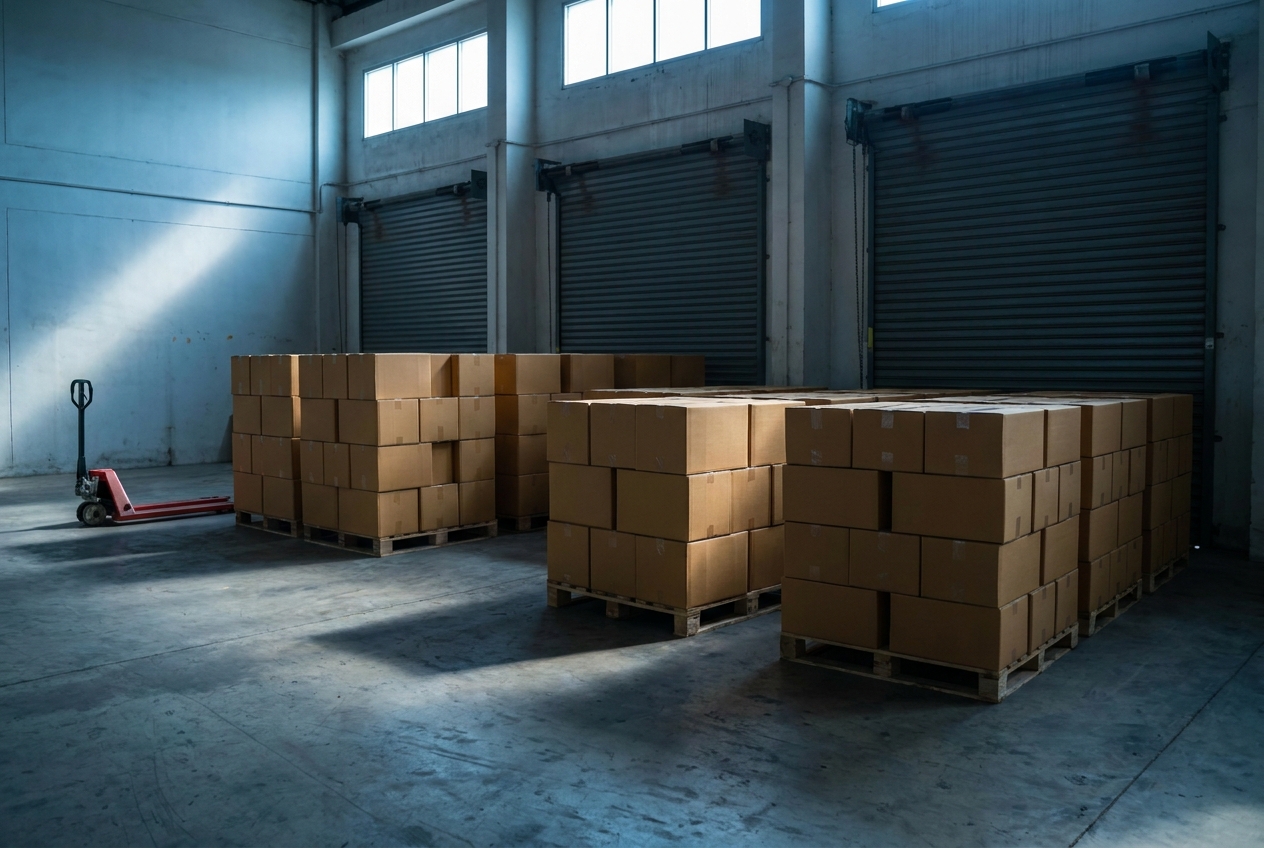
Cluster picking has one worker pick several orders at once into separate bins on a single cart, filling each order's bin as they walk one route. It is like batch picking but the sortation happens during the pick instead of after it, since each order already has its own container on the cart.
Cluster picking shines for high volumes of small, low-line orders, the profile of many direct-to-consumer and ecommerce fulfillment operations. A multi-bin cart with light or screen guidance lets a picker close a dozen or more orders in one trip. The limits are cart capacity and the risk of dropping a unit in the wrong bin, again controlled by scanning at each pick.
How do the pick-and-pack methods compare?
The table below summarizes where each method fits, its relative throughput, and its main tradeoff. Throughput is the general order rate a method supports, not a fixed number, since actual rates depend on layout, staffing, and software.
| Method | Best for | Relative throughput | Main tradeoff |
|---|---|---|---|
| Piece (discrete) | Low volume, few lines, simple setups | Lowest | Heavy walking, high cost per order at scale |
| Batch | Many orders sharing the same SKUs | High | Needs a sortation step and scanning discipline |
| Zone | Large facilities, multi-line orders | Medium to high | Multi-zone orders need handoff or merge |
| Wave | Fixed carrier cutoffs and priority orders | Depends on base method | Orders wait for their wave; needs a WMS |
| Cluster | High volume of small, low-line orders | High | Cart capacity limits; wrong-bin risk |
Many warehouses do not pick one method and stop. A common pattern is cluster or batch picking for small orders, zone picking in a large footprint, and a wave layer over all of it to hit carrier cutoffs. As you compare providers in the ecommerce fulfillment directory, ask which combination a candidate runs for accounts your size.
How does the method affect accuracy and cost?
Accuracy and cost move in opposite directions across these methods, which is the real reason to choose deliberately. Piece picking is the most accurate because one order is handled at a time with no sortation, but it is the most expensive per order at volume. The consolidation methods lower labor cost by cutting travel, and they recover the accuracy they risk through barcode scanning, put-to-light, and pack-station verification.
Consider a brand shipping 600 orders a day, most of them one or two units of a handful of best-sellers. Under piece picking, workers would crisscross the floor 600 times. Switching to cluster picking with a multi-bin cart lets one picker close a dozen orders per trip, cutting trips sharply and pulling down labor cost per order, provided scanning keeps units in the right bins. The savings come from travel time, which is why method choice matters most as volume and SKU overlap rise.
Method choice also interacts with what you pay a provider. Pick-and-pack labor is usually billed per order plus a per-additional-item charge, so a faster method can lower a 3PL's cost to serve you and, over time, your rate. To see how the pieces add up, read our guide to pick-and-pack fees, and if you bundle products before shipping, kitting and assembly adds its own labor line on top.
To sanity-check the numbers for your own volumes, run scenarios through the FBA prep and fulfillment cost estimator before you sign. The Energy Star program covers warehouse facility efficiency, and the U.S. Small Business Administration offers general guidance on managing inventory as order volume grows.
The practical next step is to match your order profile to a method: if orders are few and varied, piece picking is fine; if they are many and repetitive, batch or cluster picking lowers cost per order; if cutoffs are tight, layer wave picking on top. Then ask any provider you compare which method they run and what accuracy rate they report.
Frequently asked questions
What are the five pick and pack methods?
The five common pick and pack methods are piece (discrete) picking, batch picking, zone picking, wave picking, and cluster picking. Piece picking handles one order per trip; the other four group orders, areas, or schedules together to cut walking time and raise throughput as volume grows.
Which pick and pack method is best for a small ecommerce brand?
Most small brands shipping under a few hundred orders a day start with piece picking because it is simple and hard to get wrong. As daily volume climbs and many orders share the same SKUs, batch or cluster picking usually lowers cost per order without a large software investment.
Does the picking method affect order accuracy?
Yes. Piece picking has the fewest chances to misplace a unit because one order is handled at a time. Batch and cluster picking introduce a sortation step where items can land in the wrong order, so they depend on scanning and put-to-light controls to hold accuracy at high volume.
What is the difference between batch and wave picking?
Batch picking groups multiple orders that share SKUs into one pick trip regardless of timing. Wave picking groups picks by a schedule or trigger, such as a carrier cutoff or order priority, so releases line up with when shipments must leave the dock.
Do I choose the picking method or does my 3PL?
If you use a third-party fulfillment provider, the 3PL usually sets the method based on its warehouse layout and software. You can still ask which method they run for accounts like yours, what their reported accuracy rate is, and how pick and pack labor is billed.
How does picking method affect fulfillment cost?
Method mainly changes labor cost by cutting travel time per unit. Methods that consolidate trips (batch, zone, cluster) lower cost per order at higher volume but add sortation labor or software, so the cheapest method depends on your order volume and SKU overlap.
Ready to compare providers?
Search the directory by service and location, save options to your shortlist, and send a clear RFQ.
Related guides
Subscription Box Fulfillment: What to Ask a 3PL
How subscription box fulfillment differs from standard ecommerce, the batch and kitting challenges that trip brands up, and the exact questions to ask a 3PL before you move.
Dropshipping vs Holding Inventory in a 3PL
Dropshipping vs 3PL fulfillment compared on margin, speed, control, branding, and risk, with a decision table and a hybrid model that uses both.
What Is a SKU? SKU vs UPC, ASIN, and FNSKU
A SKU is your own internal code for a product. Here is how it differs from a UPC, ASIN, and FNSKU, and how to structure SKUs that keep inventory accurate.