
Freight Broker Authority and the BMC-84 Bond
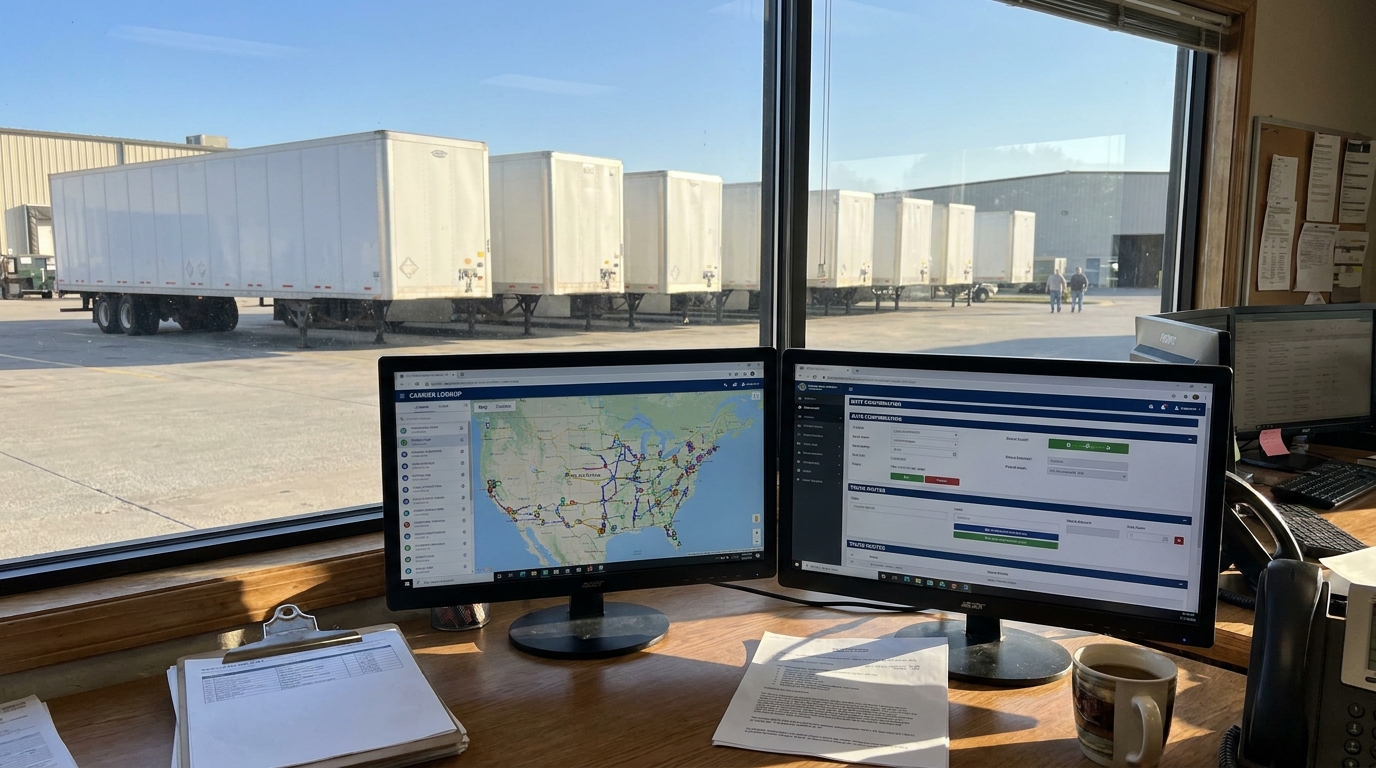
Freight broker authority is the federal license the Federal Motor Carrier Safety Administration (FMCSA) grants a property broker, identified by an MC (motor carrier) docket number, that legally allows the company to arrange freight between shippers and carriers for pay. To keep that authority active, a broker must file a $75,000 BMC-84 surety bond (or a BMC-85 trust). For a shipper, checking that authority and bond before you book is one of the cheapest ways to avoid a double-payment claim, a stranded load, or an outright fraud loss.
Key takeaways
- Freight broker authority is a federal license tied to an MC number; a company without it cannot lawfully broker loads.
- The BMC-84 bond is a $75,000 surety bond that pays valid claims, most commonly a carrier the broker never paid.
- Contingent cargo insurance is optional, not required, and covers a freight loss when the carrier's own cargo policy fails to respond.
- You can verify authority, the bond, and a safety history yourself on the free FMCSA SAFER system in a few minutes.
- A broker that hides its MC number, shows inactive authority, or has no bond on file is a red flag worth walking away from.

What is freight broker authority?
Freight broker authority is the operating authority the FMCSA issues to a property broker, recorded as an MC docket number. It is separate from a carrier's authority: a broker arranges transportation, while a motor carrier physically hauls the freight, and some companies hold both. A shipper working with a broker is trusting a middleman to select and pay a safe, legitimate carrier, so the broker's own federal standing matters.
Authority is not a one-time badge. A broker has to keep a financial responsibility filing on record and stay in good standing, or the FMCSA can revoke it. When you evaluate providers on our freight brokerage directory, active authority is the baseline before anything else about price or service is worth discussing.
What is the BMC-84 bond and what does it cover?
The BMC-84 is a $75,000 surety bond a broker files with the FMCSA to satisfy the federal financial responsibility rule. It is a promise, backed by a bonding company, that valid claims will be paid up to that limit. The most common claim is a carrier that hauled a load in good faith and was never paid by the broker.
The bond does not make a shipper whole for every problem. It is a shared $75,000 pool, so if a broker collapses owing many carriers, claims can exceed the limit and each claimant recovers only a share. The bond is a backstop against non-payment, not a substitute for vetting the broker in the first place. The FMCSA explains broker financial responsibility and the filing requirement on its official site (fmcsa.dot.gov).
What is contingent cargo insurance and why does it matter?
Contingent cargo insurance is a policy a broker can carry that responds to a cargo loss or damage claim when the hauling carrier's own cargo insurance fails to pay. It is not federally required, which surprises many shippers. The legal requirement is the $75,000 bond or trust, full stop.
Because it is optional, coverage varies widely. Some brokers carry no contingent cargo policy at all; others carry limits that may be well below the value of a full truckload of high-value goods. If your freight is expensive or fragile, ask the broker directly whether they carry contingent cargo coverage, what the per-load limit is, and what exclusions apply. Pair that with confirming the assigned carrier's primary cargo insurance, a step covered in our carrier vetting guide.
How do you verify a broker's authority on FMCSA SAFER?
The fastest check is free. Look the broker up by MC or USDOT number on the FMCSA SAFER system (safer.fmcsa.dot.gov) and confirm four things: the operating authority status shows active, the record lists broker authority and not only carrier authority, a BMC-84 bond or BMC-85 trust is on file, and the legal name and address match what the broker told you.
A quick worked example: a broker sends a rate confirmation listing MC-123456. You search that number on SAFER, see the authority is active and lists property broker authority, and confirm a BMC-84 on file. You also notice the legal name differs from the email domain, so you ask the broker to explain it before booking. That five-minute habit is the core of pre-booking diligence, and it complements the fuller checklist in our guide on how to choose a freight broker.
What is the difference between the BMC-84 and the BMC-85?
Both filings satisfy the same $75,000 requirement in different ways. Either one on file keeps authority valid, so a shipper does not need to prefer one over the other, only that one exists and is active.
| Feature | BMC-84 (surety bond) | BMC-85 (trust fund) |
|---|---|---|
| Amount | $75,000 | $75,000 |
| Backed by | A surety / bonding company | Broker's own cash or assets held in trust |
| How claims are paid | Surety pays valid claims, then seeks repayment from the broker | Paid from the trust balance the broker funded |
| What a shipper checks | That it is on file and active on FMCSA records | That it is on file and active on FMCSA records |
How does broker authority protect shippers from fraud and unpaid carriers?
Authority ties a broker to a federal record, a bond, and a safety history you can inspect before money moves. The classic exposure is double payment: you pay the broker, the broker never pays the carrier, and the carrier then pursues you or the freight to collect. Verified authority and a live bond give carriers a legitimate place to file, which reduces the odds that an unpaid carrier turns to the shipper.
Freight fraud has also grown more organized, with bad actors impersonating real carriers or spoofing broker identities. That is why matching the legal name, address, and MC number on SAFER against the paperwork matters as much as confirming the bond. Broker vetting and carrier vetting are two halves of the same defense, and you can run rate and mode math alongside them using the free shipper tools hub.

What are the red flags of a risky or unauthorized broker?
The clearest red flag is a broker that will not give you an MC number, or gives one whose authority is inactive, revoked, or shows only carrier authority. No bond or trust on file is another. Be cautious when the legal name on SAFER does not match the company emailing you, when contact details are only a cell phone and a free email address, or when a broker pressures you to book immediately and skip verification.
None of these alone proves fraud, but each is a reason to slow down and confirm. When a broker checks out, its authority is active, its BMC-84 or BMC-85 is on file, its safety record is clean, and its identity matches, you can book with far more confidence. You can also compare vetted providers on our logistics company directory to widen your options before you commit.
Frequently asked questions
What is freight broker authority?
Freight broker authority is the federal license the FMCSA grants a property broker, identified by an MC (motor carrier) docket number. It legally allows a company to arrange transportation between shippers and motor carriers for compensation. Without active broker authority, a company cannot lawfully broker loads.
What does the BMC-84 bond cover?
The BMC-84 is a $75,000 surety bond that a broker must file with the FMCSA to keep its authority active. It exists to pay valid claims, most often a carrier that hauled a load but was never paid by the broker. If a broker fails to pay, carriers and shippers can file a claim against the bond up to the $75,000 limit.
Is contingent cargo insurance required for freight brokers?
No. Federal rules require the $75,000 bond or trust fund, not contingent cargo insurance. Many established brokers carry contingent cargo coverage voluntarily because it can respond to a freight loss when the hauling carrier's own cargo insurance fails to pay. Ask any broker whether they carry it and for what limit.
How do I verify a freight broker's authority?
Look the broker up on the FMCSA SAFER system by MC or USDOT number. Confirm the operating authority is active, that it lists broker authority (not only carrier authority), and that a BMC-84 bond or BMC-85 trust is on file. Cross-check the legal name and address against what the broker gave you.
What is the difference between the BMC-84 and BMC-85?
Both satisfy the same $75,000 financial responsibility requirement. The BMC-84 is a surety bond backed by a bonding company; the BMC-85 is a trust fund the broker funds with its own cash or assets held by a financial institution. A shipper does not need to prefer one, but either must be on file and active.
Why does broker authority protect me as a shipper?
Authority ties a broker to a federal record, a bond, and a safety history you can check before booking. If the broker disappears without paying the carrier, the carrier may pursue the cargo or the bond, and a shipper that paid the broker but not the carrier can face a double-payment claim. Verifying authority up front reduces that exposure.
Ready to compare providers?
Search the directory by service and location, save options to your shortlist, and send a clear RFQ.
Related guides
Carrier Vetting: How to Avoid Fraud and Bad Carriers
A step-by-step guide to carrier vetting: verify FMCSA authority and safety, confirm insurance with the insurer, spot red flags, and stop double-brokering.
Dedicated vs Common Carrier: Which Fits
How dedicated contract carriage, common carriers, and private fleets compare on cost, capacity, and commitment, and when your volume justifies dedicated.
Shipping Construction Materials to a Jobsite
How construction freight works: matching flatbed and specialized trailers to steel, lumber, pipe, and precast, plus jobsite access, oversize permits, and delivery timing.