
Cross-Border Freight Between the US and Mexico
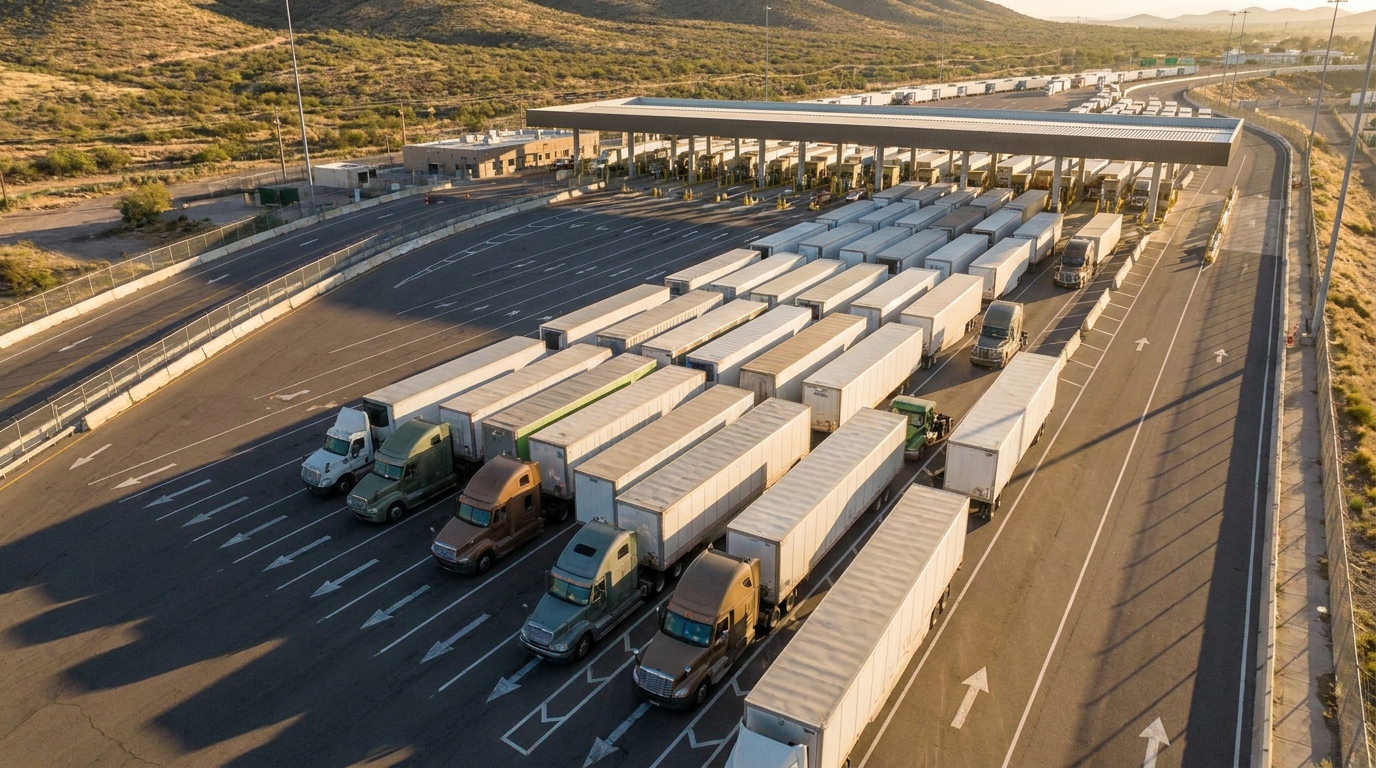
Cross-border shipping between Mexico and the US moves freight across an international boundary, which means every load clears customs twice, once leaving the origin country and once entering the destination country. In practice, cross border shipping to Mexico (or northbound into the US) involves a US customs broker, a Mexican customs broker, a short-haul drayage carrier that physically moves the trailer across the line, and a stack of documents that must match exactly. Get the paperwork and the partners right and a crossing is routine. Get them wrong and the trailer sits.
Key takeaways
- Cross-border freight clears customs on both sides, so you almost always need two licensed brokers, a US one and a Mexican one.
- A drayage or transfer carrier physically shuttles the trailer across the border while customs clears the load; the long-haul carrier handles the rest.
- The core documents are the commercial invoice, the packing list, the certificate of origin, and, on the Mexico side, the pedimento.
- USMCA can lower or remove duties for qualifying goods, but qualification depends on rules of origin and is not automatic; confirm current rules with CBP and a broker.
- Nearshoring is pushing US-Mexico freight volume up, so capacity and broker experience at your specific crossing matter more than ever.
- What is cross-border shipping between the US and Mexico?
- Why is US-Mexico freight volume growing?
- How does the border-crossing process work step by step?
- Who handles customs on each side of the border?
- What documents does a cross-border shipment need?
- What does the drayage or transfer carrier do?
- What are the modes for cross-border freight?
- How do USMCA and duties affect your shipment?
- What security programs matter at the border?
- How do you choose a cross-border freight partner?
- What slows a crossing down and how do you avoid it?
What is cross-border shipping between the US and Mexico?
Cross-border shipping is the movement of freight across the US-Mexico boundary under the customs rules of both countries. It differs from a domestic move in one fundamental way: the shipment stops being purely a trucking problem and becomes a customs problem the moment it approaches the line. Two national customs authorities, US Customs and Border Protection and Mexico's customs agency, each have to be satisfied before the goods move.
Because of that, a cross-border shipment is really three linked legs: the long-haul move to the border on the origin side, the crossing itself (customs clearance plus a short trailer transfer), and the long-haul move away from the border on the destination side. Those three legs explain why you deal with more than one carrier and more than one broker.
Why is US-Mexico freight volume growing?
Cross-border demand is rising because manufacturers are nearshoring, moving production closer to US customers rather than sourcing it from across an ocean. Mexico has become a preferred nearshoring destination, which pulls more raw materials south and more finished goods north across the same set of commercial crossings.
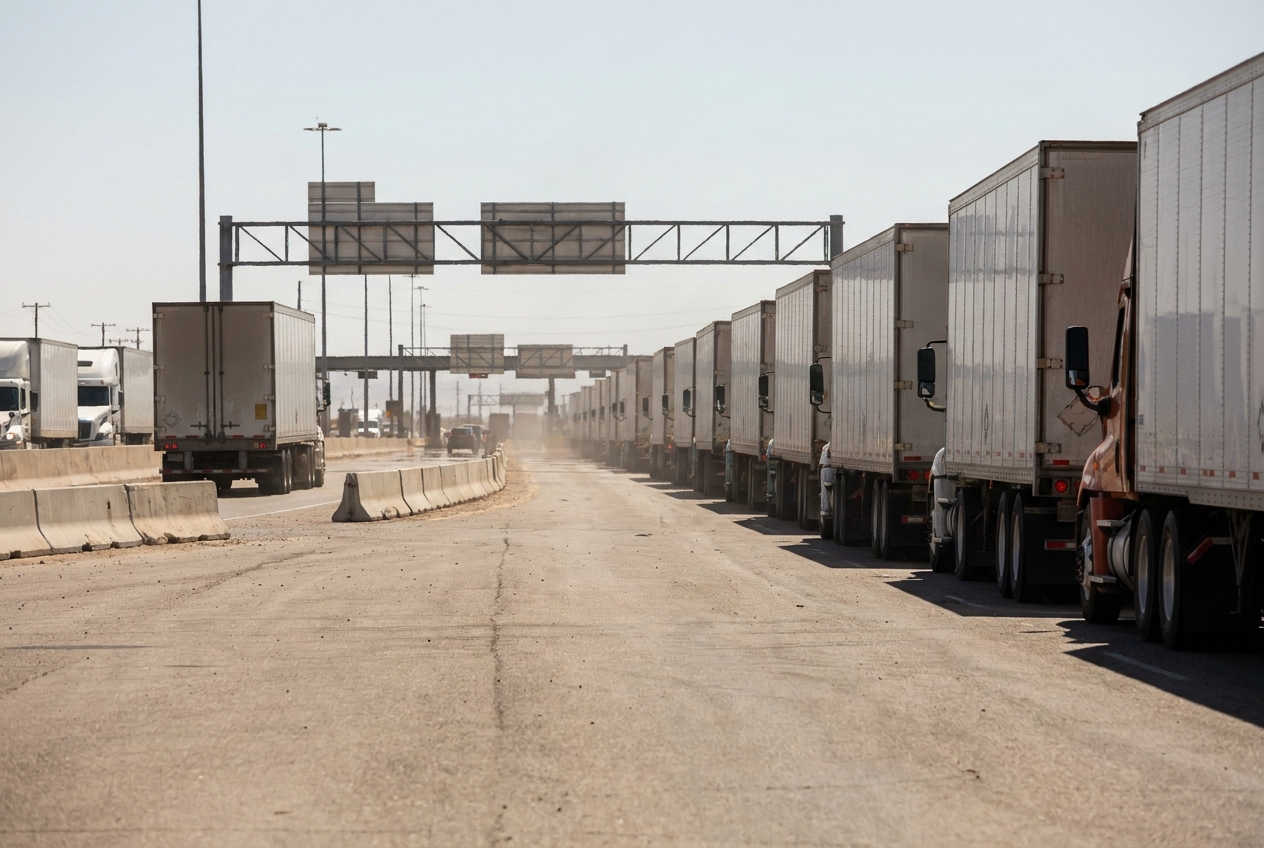
For shippers, the practical effect is congestion at the busiest ports of entry such as Laredo, Otay Mesa, and El Paso. When volume climbs, wait times and detention risk climb with it, and experienced brokers and carriers at your crossing get harder to book. You can track the broader trade picture through the US Bureau of Transportation Statistics at bts.gov, which publishes border-crossing data. The planning takeaway: build in schedule buffer and lock in partners early rather than assuming domestic-lane lead times.
How does the border-crossing process work step by step?
At a high level, a northbound crossing (Mexico to the US) works like this: the goods are picked up in Mexico, cleared for export, physically transferred across the border by a drayage carrier, cleared for import into the US, and released to a US long-haul carrier for final delivery. A southbound crossing is the mirror image. The names change but the pattern of export clearance, transfer, and import clearance holds in both directions.
Here is a typical northbound sequence and who owns each step.
| Step | What happens | Who owns it |
|---|---|---|
| 1. Origin pickup | Long-haul carrier collects the loaded trailer in Mexico and moves it to the border yard | Mexican long-haul carrier |
| 2. Export clearance | Mexican customs broker files the export pedimento and paperwork | Mexican customs broker |
| 3. Transfer across the line | Drayage carrier shuttles the trailer from the Mexican yard to the US yard | Drayage / transfer carrier |
| 4. Import clearance | US customs broker files the US entry with CBP; inspection may be selected | US customs broker |
| 5. Release and final haul | Cleared trailer is handed to a US carrier for delivery to the consignee | US long-haul carrier |
The handoffs between these parties are where time is won or lost. When the broker has the documents ready before the trailer arrives, the load clears and keeps moving; when a document is missing or a classification is wrong, it waits in the yard until it is corrected.
Who handles customs on each side of the border?
Two licensed customs brokers, one per country, handle the customs filings. The US broker files the US entry with CBP; the Mexican broker, called an agente aduanal, prepares and files the pedimento with Mexican customs. These are separate legal filings under separate national rules, which is why a single domestic broker cannot clear both sides.
This is also where the difference between a broker and a forwarder matters. A customs broker is licensed to file customs entries; a freight forwarder arranges and coordinates transportation and documentation but is not necessarily the entity filing the entry. Many cross-border programs use a forwarder to orchestrate the whole move and brokers on each side to file the entries. If that division of roles is fuzzy to you, the guide on the difference between a customs broker and a freight forwarder breaks it down, and you can compare providers on the customs brokerage directory.
What documents does a cross-border shipment need?
The core document set is the commercial invoice, the packing list, the bill of lading, the certificate of origin, and, on the Mexico side, the pedimento. Each has a job, and customs on both sides expects them to agree on value, quantity, weight, and description.
- Commercial invoice: states the seller, buyer, goods, value, and terms of sale. It is the anchor document customs uses to assess duties and taxes.
- Packing list: itemizes what is physically in the shipment so inspectors can verify contents against the invoice.
- Bill of lading: the transport contract and receipt for the goods.
- Certificate of origin: establishes where the goods were made, which is what you rely on to claim preferential treatment under USMCA.
- Pedimento: the official Mexican customs declaration, prepared by the Mexican broker, that ties the entry together on the Mexico side.
Consistency is everything. A weight on the packing list that does not match the invoice, or a vague product description, is a common reason loads get pulled for inspection. For a fuller checklist of what your broker will ask you to provide and why, see the guide on the documents a customs broker needs.
What does the drayage or transfer carrier do?
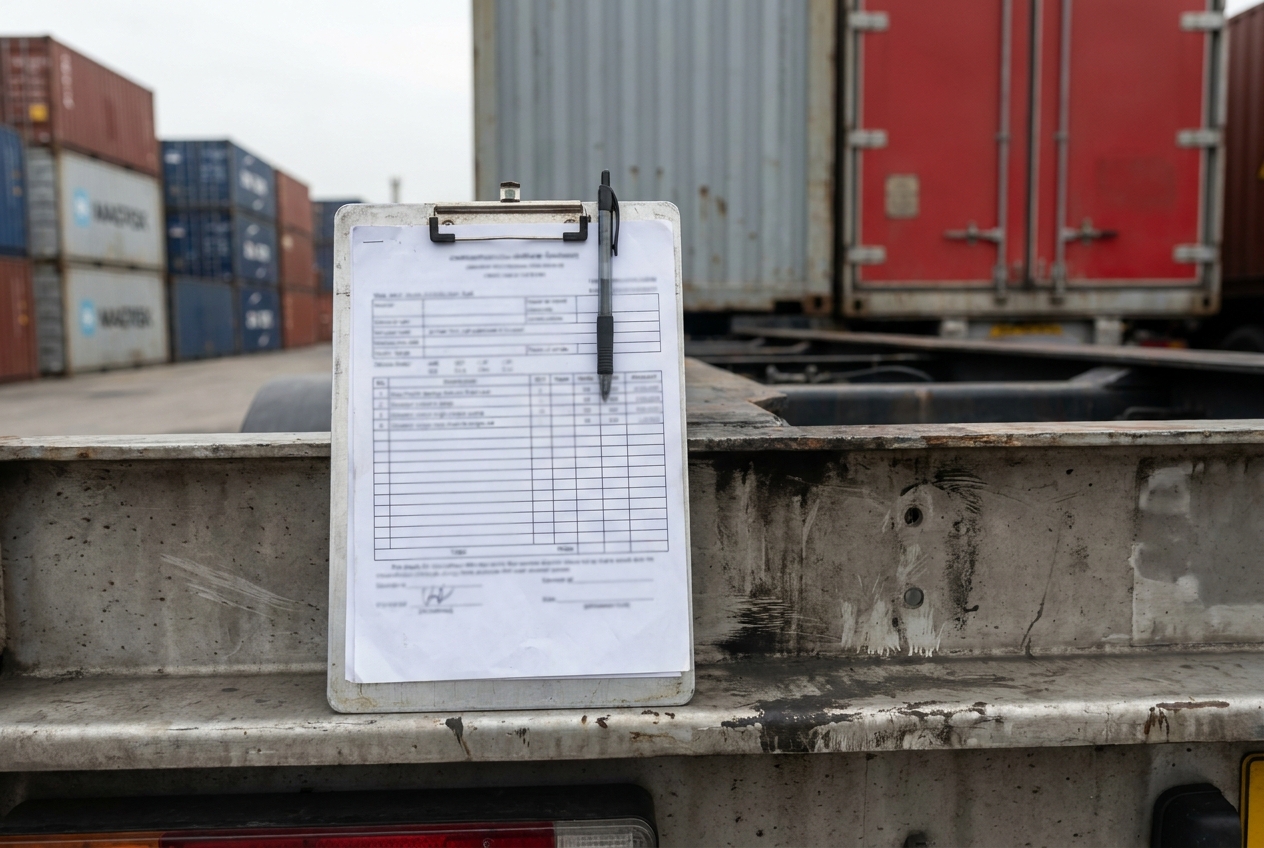
The drayage carrier, also called a transfer carrier, is the short-haul trucker that physically moves the trailer across the border between the two countries' yards. A US over-the-road tractor typically does not drive deep into Mexico, and a Mexican tractor typically does not run the US interstate leg, so a dedicated crossing carrier bridges the gap while customs works the paperwork.
In a common setup, the Mexican long-haul carrier drops the trailer at a yard on the south side, the drayage carrier shuttles it across to a yard on the north side, and a US carrier picks it up once it clears. It is the same role drayage plays at a seaport, moving a container the short distance between the terminal and a nearby yard. If the term is new to you, the primer on what drayage is covers it, and you can find crossing specialists in the cross-border freight directory.
What are the modes for cross-border freight?
Cross-border freight moves in the same basic modes as domestic freight, each clearing customs the same way but with different economics and transit profiles. Choosing the mode is mostly a question of volume, weight, and how time-sensitive the goods are.
| Mode | Best for | Transit and cost notes |
|---|---|---|
| FTL (full truckload) | Full trailers or high-value loads that should not be handled mid-transit | Fastest road option; one trailer clears customs as one unit |
| LTL (less-than-truckload) | Partial loads that share trailer space | Lower cost per shipment; each shipment on the trailer needs clean paperwork, which adds clearance complexity |
| Intermodal / rail | Heavy or long-distance freight where a day or two of extra transit is acceptable | Often lower cost and more fuel-efficient over long hauls; less flexible on timing |
| Cross-border parcel | Small ecommerce packages and low-weight goods | Handled through parcel and postal networks with their own customs process |
Intermodal deserves a closer look for heavier lanes: rail carries the container most of the distance and drayage handles the first and last miles, with less schedule flexibility as the trade-off. If you are weighing road against rail, the explainer on what intermodal shipping is lays out the mechanics, and the international freight directory lists providers that run cross-border lanes.
How do USMCA and duties affect your shipment?
USMCA, the trade agreement among the US, Mexico, and Canada, can reduce or eliminate duties on qualifying goods, but qualification is not automatic. Whether a specific product qualifies depends on its rules of origin, meaning where its materials come from and how it is made, and you generally need a valid certification of origin to claim the preference.
Because duty rates, thresholds, and product-specific rules change and depend on precise classification, treat any number you remember as unreliable. Confirm current rules and rates directly with US Customs and Border Protection at cbp.gov and with a licensed customs broker who can classify your exact product. Low-value shipments can also be handled differently from full commercial entries, and those rules have been changing; the overview of recent de minimis and Section 321 changes is worth reading if you ship low-value parcels. The safe operating rule is simple: do not assume a shipment is duty-free until your broker confirms it in writing.
What security programs matter at the border?
The main voluntary security program on the US side is C-TPAT, the Customs Trade Partnership Against Terrorism, run by CBP. Members meet defined supply-chain security criteria and, in exchange, can see benefits such as a lower likelihood of inspection and faster processing at the border.
You are not required to be C-TPAT certified to ship cross-border, but the program matters when you choose partners. A carrier, broker, or facility that is C-TPAT certified has been vetted against security standards, which tends to mean smoother crossings and fewer holds. Mexico operates its own complementary trusted-trader framework, and many providers hold both. When you evaluate a partner, ask which certifications they carry and how those play at the crossing you use.
How do you choose a cross-border freight partner?
Choose a partner on the strength of their customs relationships on both sides of the border, their security certifications, their visibility tools, and their experience at your specific port of entry. Cross-border is a coordination problem, and the best price means nothing if the load sits in a yard because the broker handoff broke down.
Concrete things to check before you commit:
- Brokers on both sides: confirm they have or coordinate a licensed US broker and a licensed Mexican broker, not just one.
- Bonded and authorized: verify the carrier's operating authority and safety record; US carrier authority and safety data are available through FMCSA.
- Security certification: ask whether they are C-TPAT certified and hold Mexico's trusted-trader equivalent.
- Tracking and visibility: ask how you will see the load through each handoff, including while it sits at the border.
- Crossing experience: favor a partner who runs your lane and knows your port of entry daily; local knowledge of a crossing is worth more than a generic national quote.
A worked example: say you are moving auto parts from a plant near Monterrey to a distribution center in San Antonio. A strong partner pre-clears the export pedimento while the trailer is en route to Laredo, stages the drayage carrier to transfer it on arrival, and files the US entry so the load releases the same day, with tracking at each step. A weak partner quotes a low rate, then the trailer waits two days because the certificate of origin did not match the invoice. Compare candidates side by side in the cross-border freight directory.
What slows a crossing down and how do you avoid it?
Most delays trace back to paperwork, timing, or a broken handoff, not to customs being slow for its own sake. The good news is that the biggest causes are the most controllable.
- Mismatched documents: invoice, packing list, and certificate of origin that disagree on value, weight, or description invite inspection. Reconcile them before dispatch.
- Vague product descriptions: generic descriptions slow classification. Describe goods specifically enough for a broker to classify them cleanly.
- Late paperwork: if documents reach the broker after the trailer, the load waits. Send them in advance.
- Peak congestion: the busiest crossings back up at certain hours and seasons. A broker who knows the crossing can time it.
- Detention exposure: understand how each carrier charges for wait time at the border so a delay does not turn into a surprise invoice.
The through-line is preparation and the right partners. Cross-border freight rewards shippers who treat the customs paperwork as seriously as the trucking and choose brokers and carriers with a real track record at their crossing. Start by comparing providers in the cross-border freight and customs brokerage directories, confirm current duty rules with CBP and a licensed broker, and build enough schedule buffer that a normal crossing never becomes an emergency.
Frequently asked questions
Do I need a customs broker on both sides of the US-Mexico border?
Yes. Cross-border freight almost always uses two licensed customs brokers, one to clear the shipment out of the origin country and one to clear it into the destination country. A US broker handles the US filing and a Mexican broker (agente aduanal) handles the Mexican pedimento. Some freight forwarders coordinate both under one contract, but the two customs entries are still filed separately.
What is a pedimento?
A pedimento is the official Mexican customs declaration required for goods entering or leaving Mexico. It is prepared and filed by a licensed Mexican customs broker and ties together the commercial invoice, classification, duties, and taxes for the shipment. There is no US equivalent document by that name; the US side files its own customs entry with CBP.
How long does a US-Mexico border crossing take?
The customs clearance and physical transfer at the border can range from a few hours to more than a day, depending on the crossing, the time of day, inspection selection, and whether paperwork is clean. Complete, accurate documents and a broker experienced at your specific port of entry are the biggest levers on transit time.
Does USMCA mean my goods cross duty-free?
Not automatically. USMCA can reduce or eliminate duties for goods that qualify under its rules of origin, but qualification depends on where materials come from and how the product is made, and you generally need a certification of origin to claim it. Confirm current rules and rates with US Customs and Border Protection at cbp.gov and a licensed customs broker before assuming a shipment is duty-free.
What is a transfer or drayage carrier at the border?
A transfer carrier, often called a drayage carrier, is a short-haul trucker that physically moves the trailer across the border between the US and Mexican yards. Because a US long-haul tractor usually does not drive deep into Mexico and vice versa, the drayage carrier bridges the two sides while customs clears the load, then hands off to the long-haul carrier on the destination side.
What is C-TPAT and do I need it?
C-TPAT (Customs Trade Partnership Against Terrorism) is a voluntary US supply-chain security program run by CBP. Members meet defined security criteria and can receive benefits such as reduced inspection likelihood and faster processing. You are not required to join to ship cross-border, but many shippers prefer partners who are C-TPAT certified for smoother, more predictable crossings.
Ready to compare providers?
Search the directory by service and location, save options to your shortlist, and send a clear RFQ.
Related guides
Carrier Vetting: How to Avoid Fraud and Bad Carriers
A step-by-step guide to carrier vetting: verify FMCSA authority and safety, confirm insurance with the insurer, spot red flags, and stop double-brokering.
Dedicated vs Common Carrier: Which Fits
How dedicated contract carriage, common carriers, and private fleets compare on cost, capacity, and commitment, and when your volume justifies dedicated.
Shipping Construction Materials to a Jobsite
How construction freight works: matching flatbed and specialized trailers to steel, lumber, pipe, and precast, plus jobsite access, oversize permits, and delivery timing.