
Air Freight Shipping: When and How to Use It
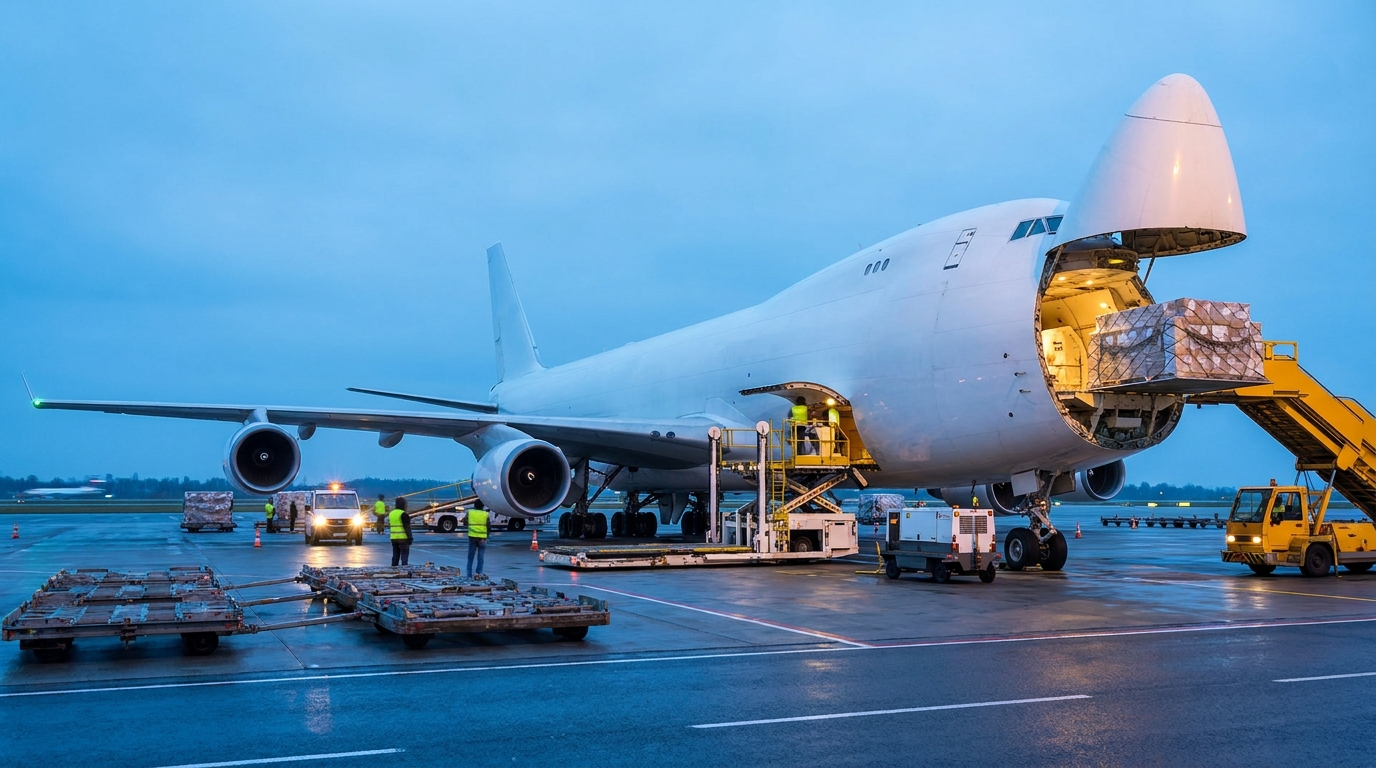
Air freight is the fastest way to move goods across long distances, delivering most international shipments in about one to five days instead of the weeks an ocean container takes. You pay for that speed: air rates run several times higher per kilogram than sea. The decision is rarely about which mode is better overall and almost always about a single shipment: is speed, value, or shelf life worth the premium here? This guide covers when air freight beats ocean, how it is priced on chargeable weight, how the process actually works, and what it costs.
Key takeaways
- Air freight trades money for time: expect roughly 1 to 5 days of transit versus 20 to 45 days door to door by ocean.
- Airlines bill on chargeable weight, the greater of actual weight and volumetric (dimensional) weight, so light but bulky cargo pays for the space it fills.
- Air makes sense for urgent restocks, perishables, and high-value low-weight goods where freight is a small share of product value.
- Ocean almost always wins for heavy, bulky, low-value, non-urgent freight where transit time is not the constraint.
- A freight forwarder books capacity, consolidates cargo, and manages airport handling and customs on both ends.
When does air freight beat ocean freight?
Air freight beats ocean whenever the cost of being slow is higher than the cost of the freight itself. Four situations make that trade worth it.
Speed and urgency. A stockout, a missed launch date, or a factory line stopped for want of a part can cost far more than the airfreight premium. When the shipment has to arrive this week, ocean is not an option.
High value, low weight. For electronics, pharmaceuticals, jewelry, or precision components, freight is a small percentage of the goods' value. Paying a few dollars per kilogram to move something worth hundreds per kilogram barely moves the landed cost, and you get your capital back into inventory sooner.
Perishable or temperature-sensitive goods. Fresh produce, seafood, flowers, and many biologics simply cannot survive a multi-week ocean transit. Air keeps them in the market. For food shipments, the cold chain and its documentation still fall under FDA food-safety rules, so verify handling before you book. See the FDA FSMA overview for what applies.
Small or trial shipments. Samples, first production runs, and replenishment of a fast seller rarely fill a container. Air lets you move a pallet or two quickly without paying to position an ocean box.
How is air freight priced?
Air freight is priced on chargeable weight, which is the greater of the shipment's actual gross weight and its volumetric weight. Airlines do this because an aircraft runs out of space and out of lift at the same time: a light, bulky shipment uses room that a denser one could have paid more for.
Volumetric weight (also called dimensional or DIM weight) converts a shipment's size into a weight using a fixed divisor. The common IATA method is length x width x height in centimeters divided by 6,000 to get kilograms, or cubic inches divided by 166 to get pounds. If that figure exceeds the actual weight, it becomes the chargeable weight. Anything low-density, think pillows, plastic housings, or foam, tends to be billed on volume, not mass. You can estimate the number for your own cartons with the dimensional weight calculator before you request a quote.
How does the air freight process work?
An air freight move runs through a predictable chain of hands, usually coordinated by a freight forwarder rather than the airline directly. Understanding the steps tells you where time and cost actually go.
Booking and pickup. A forwarder books capacity with an airline or with consolidators, then arranges to collect your cargo and truck it to the origin airport. A freight forwarder is the party that stitches these legs together and holds the airway bill.
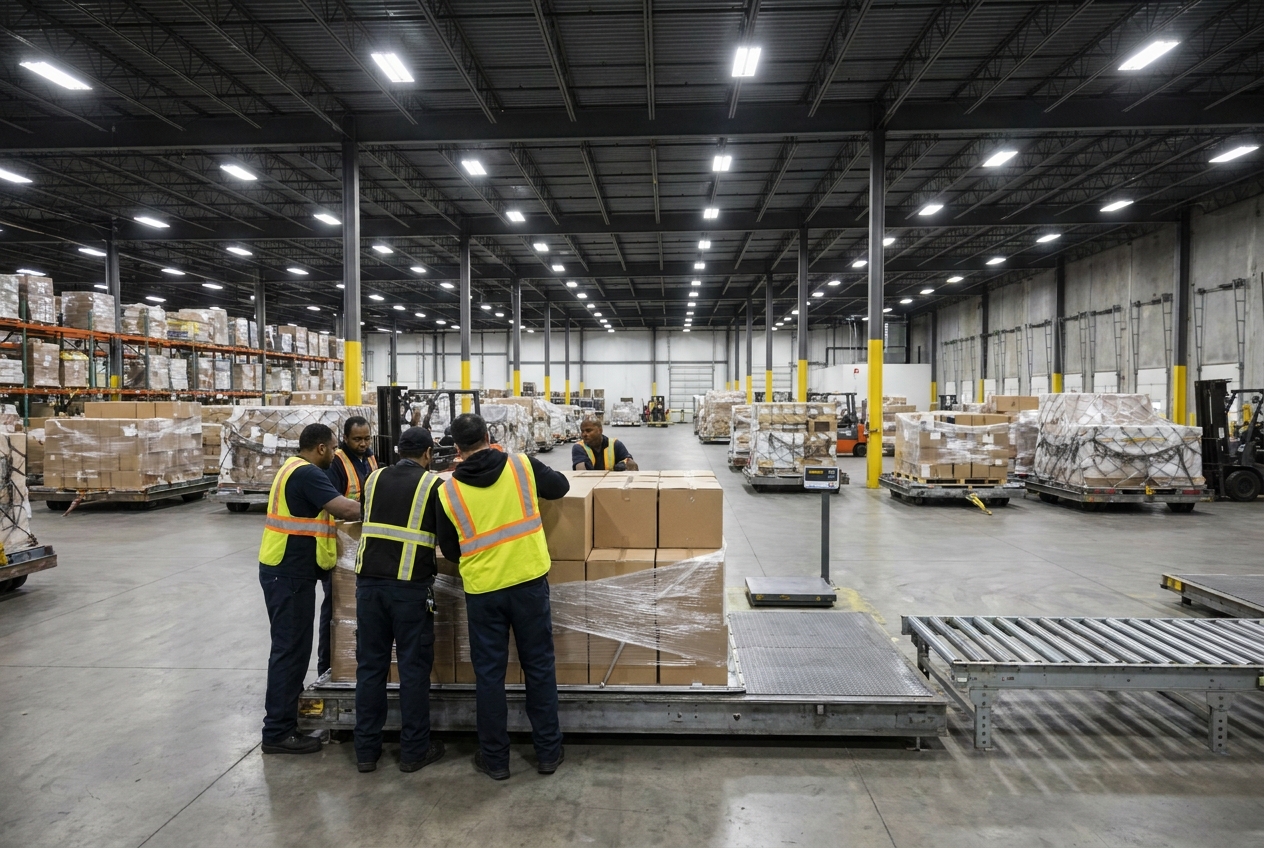
Consolidation. Most shipments do not fill an aircraft position, so forwarders combine cargo from several shippers into one master consignment to buy space at a better rate. Your goods travel under a house airway bill inside that master booking.
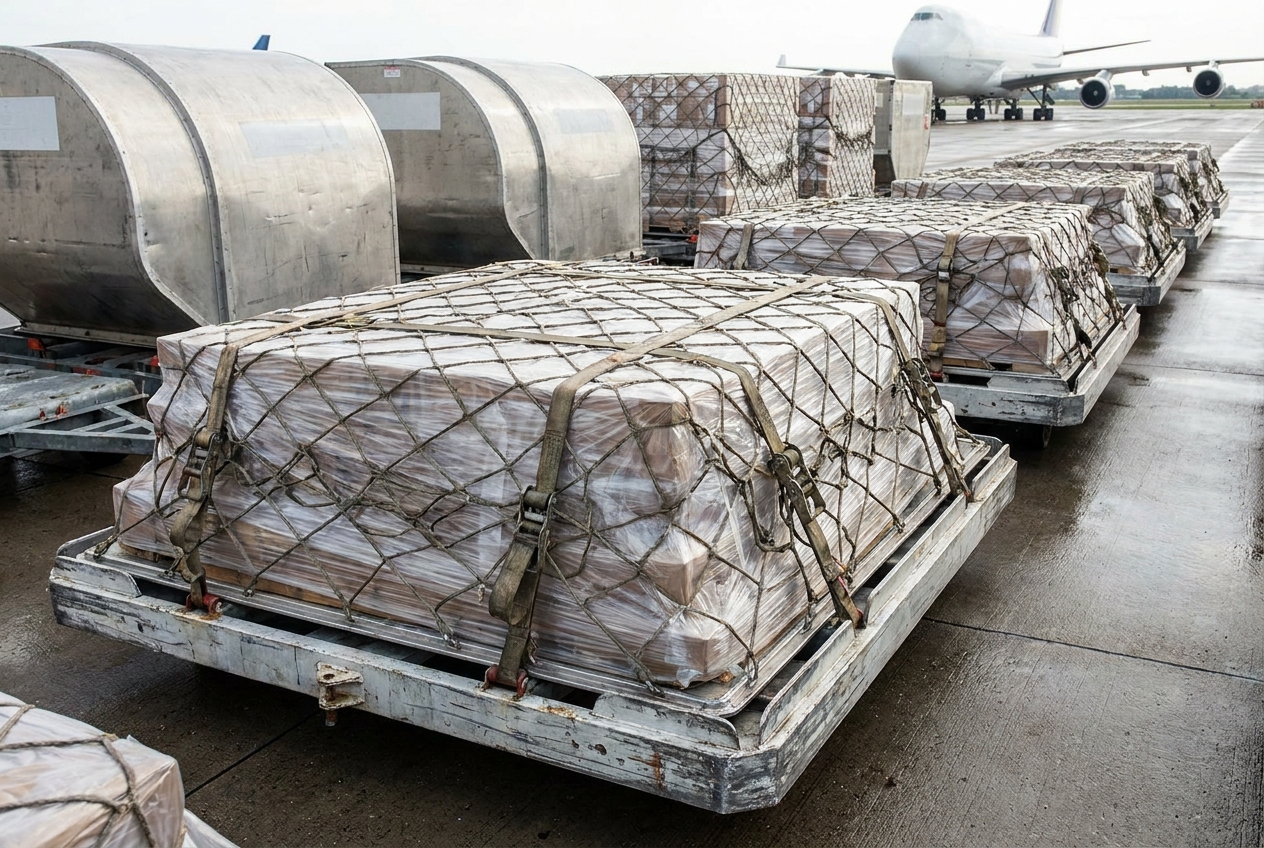
Airport handling and flight. Cargo is screened for security, built up onto pallets or aircraft unit load devices (ULDs), and loaded. Some moves fly on dedicated freighters; a large share of belly cargo rides in the hold of passenger aircraft, which is one reason capacity and rates swing with passenger schedules.
Customs and delivery. At the destination the shipment clears customs, then is deconsolidated and trucked to the receiver. Air often clears faster than ocean because airport facilities are built for speed, but the shipment still needs accurate commercial invoices, HS codes, and any permits. U.S. Customs and Border Protection holds shipments with missing or inconsistent paperwork regardless of mode.
Air freight vs ocean freight: how do they compare?
The two modes solve different problems. Air optimizes for time; ocean optimizes for cost per unit of volume. This table lays out the practical differences a shipper weighs.
| Factor | Air freight | Ocean freight |
|---|---|---|
| Typical transit | About 1 to 5 days | About 20 to 45 days door to door |
| Relative cost | Highest per kg | Lowest per kg, especially by full container |
| Billed on | Chargeable (volumetric) weight | Container space (FCL) or volume and weight (LCL) |
| Best cargo | Urgent, perishable, high-value, low-weight | Heavy, bulky, dense, low-value, non-urgent |
| Capacity swings | Tied to passenger belly space and peak season | Tied to vessel schedules and port congestion |
| Inventory tied up | Days | Weeks |
For the sea side of the decision, the ocean freight shipping guide covers container types, FCL versus LCL, and the demurrage costs that can erode ocean's price advantage.
What does air freight actually cost?
Air freight cost is the chargeable weight multiplied by a rate per kilogram, plus surcharges and origin and destination fees. Rates move with fuel, security surcharges, lane, and season; the fourth-quarter peak and disruptions on ocean lanes can push air rates up sharply. Because rates are quoted per kilogram, dense freight is where air is most competitive, and bulky freight is where the volumetric penalty bites hardest.
Beyond the flight itself, budget for pickup trucking, screening and terminal handling, customs clearance and duties, and final delivery. To see the full picture rather than just the air rate, run the numbers through a landed cost calculator, which folds duties and fees into a per-unit figure you can compare against ocean. For year-over-year context on how freight moves by mode, the Bureau of Transportation Statistics publishes national freight data.
A worked example: when does DIM weight change the answer?
Suppose you are shipping a pallet of lightweight plastic enclosures measuring 48 by 40 by 48 inches and weighing 400 lb. The volume is 92,160 cubic inches; divided by 166 that is roughly 555 lb of volumetric weight. Because the airline bills on the greater figure, you pay for 555 lb, not 400. If the same pallet held dense machined parts at 700 lb actual weight, you would pay on the 700 and the volumetric number would be irrelevant. The lesson: for low-density goods, tightening the packaging or nesting product can cut the bill more than shaving actual weight, and it is worth checking DIM before you commit to air.
How do you decide between air and ocean?
Work backward from the deadline and the value. If the goods must land within a week, or a stockout or spoilage costs more than the freight premium, air is the answer and the only question is which forwarder and lane. If the shipment is heavy, bulky, low-value, and not urgent, ocean almost always wins, and air is worth pricing only as a partial expedite for the portion you truly need fast. Many shippers split the difference, moving the bulk by sea and airing a small safety-stock buffer to cover the transit gap. Whichever way it lands, compare providers that handle both modes through the international freight directory so one partner can quote the trade-off side by side.
Frequently asked questions
How much faster is air freight than ocean?
Air freight typically delivers international shipments in about 1 to 5 days of transit, versus roughly 20 to 45 days door to door by ocean. The gap is why air wins on urgent, high-value, or perishable cargo even though it costs several times more per kilogram.
What is chargeable weight in air freight?
Chargeable weight is the greater of a shipment's actual (gross) weight and its volumetric (dimensional) weight. Airlines bill on whichever is higher because cargo space is limited by both mass and volume, so a light but bulky shipment pays for the room it occupies.
How is volumetric weight calculated for air freight?
The common IATA formula divides the shipment volume by a dimensional factor: length x width x height in centimeters divided by 6,000 gives kilograms, or cubic inches divided by 166 gives pounds. If that number is higher than the actual weight, it becomes the chargeable weight.
When should I choose air freight over ocean?
Choose air when speed matters more than cost: time-sensitive restocks, perishable goods, high-value low-weight items where freight is a small share of product value, samples, or launches. Ocean usually wins for heavy, bulky, low-value, non-urgent freight.
Do air freight shipments still clear customs?
Yes. Every international air shipment clears customs at the destination. Air often clears faster because airport cargo facilities and brokers are set up for speed, but you still need accurate commercial documents, HS codes, and any required permits to avoid holds.
Is express courier the same as air freight?
No. Express couriers move small parcels door to door on a single integrated network with one price. Air freight moves larger palletized or loose cargo airport to airport, usually arranged through a freight forwarder who handles booking, consolidation, and customs separately.
Ready to compare providers?
Search the directory by service and location, save options to your shortlist, and send a clear RFQ.
Related guides
Ocean Freight Shipping: A Complete Guide
How ocean freight works end to end: booking, container types, FCL vs LCL, the transit process, transit times, costs and surcharges, and demurrage risk.
FCL vs LCL: Which Ocean Option to Choose
FCL books a whole container for your freight; LCL shares one with other shippers. Here is how cost, transit time, and handling risk compare, and the CBM point where FCL wins.
What Is a Customs Broker and Do You Need One?
A customs broker is a person or firm licensed by CBP to file entries and clear imports for you. Here is what they do and when you actually need one.