
What Is Safety Stock and How to Set It
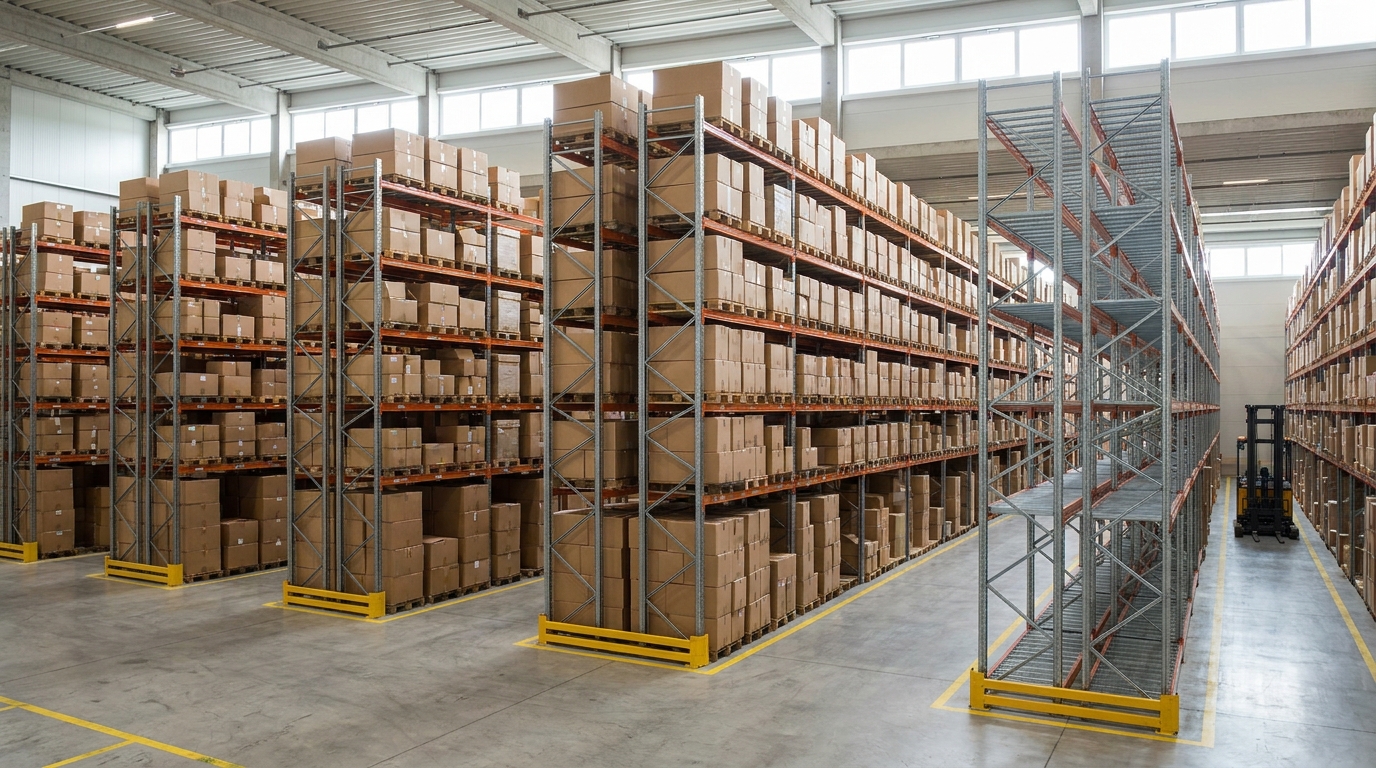
Safety stock is the buffer inventory you keep on hand beyond your expected sales, so a spike in demand or a slow resupply does not push you into a stockout. It is the cushion between the average case, where everything arrives on time and sells at a normal pace, and the bad case, where customers buy faster than usual or your next shipment runs late. Set it too low and you sell out and lose the sale (or, on Amazon, lose ranking). Set it too high and you tie up cash and warehouse space in units that just sit there.
Key takeaways
- Safety stock is buffer inventory held against two unknowns: how fast you will sell and how long resupply will take.
- It feeds directly into your reorder point, which equals expected demand during the lead time plus the safety stock.
- Three drivers set the size of the buffer: your target service level, how variable demand is, and how variable lead time is.
- Higher service-level targets need disproportionately more stock, so aim for enough coverage, not the maximum.
- Lead time is your supplier transit plus receiving and putaway at the warehouse, which matters most when a third party fulfills for you.
What is safety stock?
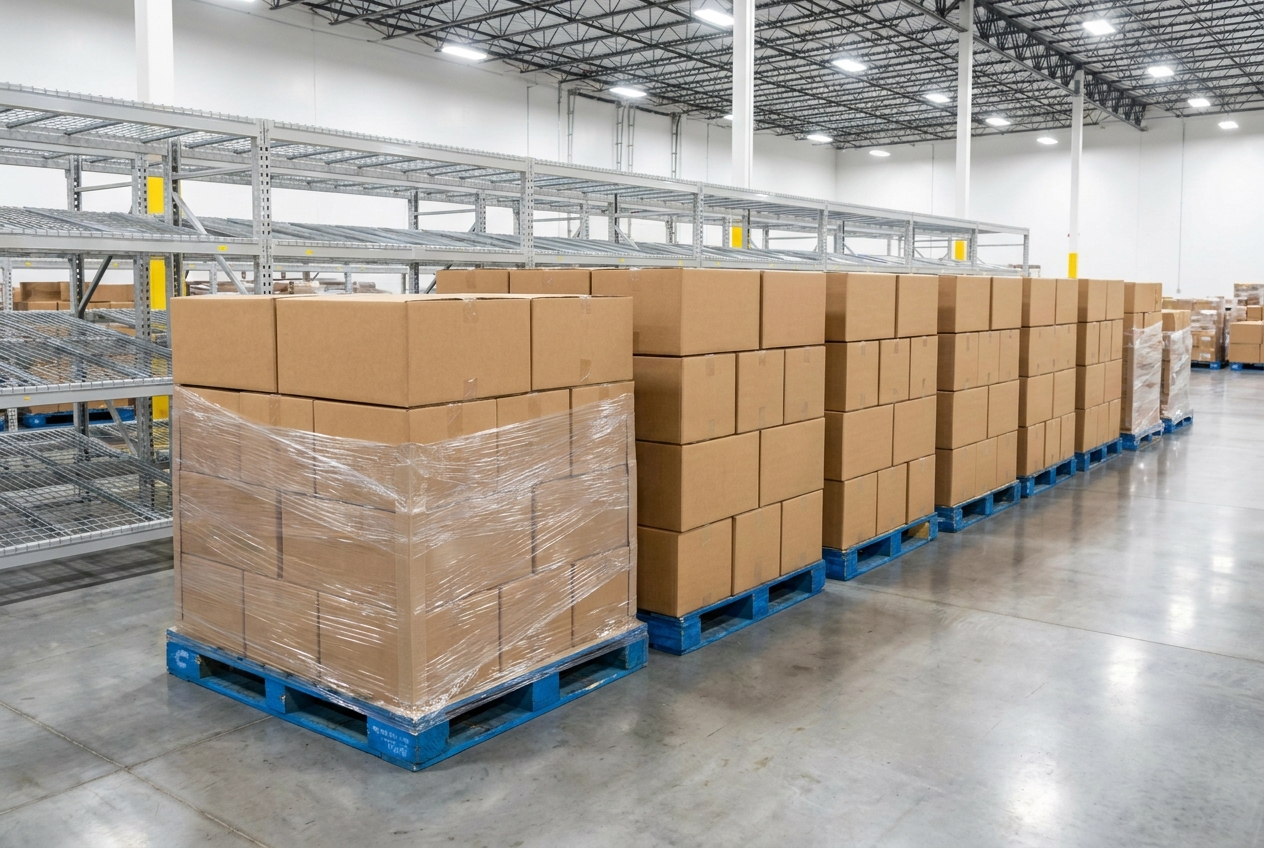
Safety stock is a reserve quantity of a product that you deliberately hold above forecasted demand to protect against uncertainty. It is not the same as your working inventory, which is the stock you expect to sell and replace on a normal cycle. Safety stock is the portion you hope never to touch, because touching it means something went off-plan: a surge in orders, a delayed container, a supplier shorting your purchase order, or a fulfillment center that took longer than usual to check units in.
The key word is uncertainty. If you could predict sales and lead times perfectly, you would need no buffer at all. You would simply order the exact amount to arrive the moment your shelf hit zero. In the real world, both numbers move, and the buffer is what absorbs the movement.
Why do you need safety stock at all?
You need safety stock because two things vary independently and can go wrong at the same time: demand and lead time. Demand variability is the swing in how many units sell per day. A product that sells a steady, predictable amount needs less buffer than one that sells in unpredictable bursts driven by promotions, seasonality, or a viral moment. Lead-time variability is the swing in how long replenishment takes, from placing a purchase order to units being sellable again.
Lead time is easy to underestimate because people count only supplier transit. The real lead time also includes production time, customs and freight delays, and the receiving-and-putaway window once the shipment reaches the warehouse. Freight transit reliability itself fluctuates, and transportation delay data tracked by the Bureau of Transportation Statistics shows why a lead time that is usually predictable can still spike. When you use a third party to store and ship, the receiving step is part of your lead time and often the part sellers forget to measure.
What is the reorder point, and how does safety stock fit in?
The reorder point is the on-hand quantity that triggers you to place a new order. It is built from two parts, and safety stock is one of them:
Reorder point = expected demand during the lead time + safety stock
The first part covers the units you expect to sell while you wait for the new shipment. The second part, the safety stock, covers the case where you sell more than expected or the shipment arrives late. Without the buffer, any faster-than-average day during the lead time would leave you short. So safety stock is not a separate pile you manage on its own. It is the reason your reorder point sits above bare replenishment demand, giving you room to reorder before you actually run out.
How do service level and variability set the buffer size?
Three levers determine how big the buffer needs to be. The first is your target service level, meaning the share of demand you want to fill from stock rather than backorder or lose. The higher you set it, the more buffer you need, and the relationship is not linear. Covering the last few percent of demand, say moving from a moderate target toward near-perfect availability, takes a disproportionately larger buffer than the earlier gains. That is why chasing zero stockouts is expensive.
The second and third levers are the two variabilities. More volatile daily demand widens the range of outcomes you must cover, so it raises the buffer. More volatile lead time does the same, and it often matters more than sellers expect, because a late shipment exposes you during the exact window when you have the least on hand. The table below shows how each driver pushes the buffer.
| Driver | Pushes safety stock up when | Lets you hold less when |
|---|---|---|
| Target service level | You want near-perfect availability | You accept occasional short windows |
| Demand variability | Sales spike unpredictably | Daily sales are steady |
| Lead-time variability | Resupply timing is erratic | Suppliers and freight are reliable |
| Lead-time length | Replenishment takes many weeks | Turnaround is short and local |
How do you calculate safety stock: an illustrative example
The numbers below are illustrative, not real sales data, and are meant only to show the mechanics. Imagine a product that sells roughly 40 units per day, with a replenishment lead time of about 10 days once you count supplier transit plus receiving. Expected demand during the lead time is about 40 times 10, or 400 units. That covers a normal case.
Now suppose that during past resupply windows you have occasionally sold closer to 52 units per day, and shipments have occasionally landed a couple of days late. To stay in stock through those combined swings, you decide to carry a buffer of around 120 units as safety stock. Your reorder point becomes 400 plus 120, or about 520 units. When on-hand inventory falls to roughly 520, you place the next order. If sales and transit run normal, the buffer stays untouched and rolls forward. If they run against you, the buffer is what keeps you selling. Raising your service-level target would push that 120 higher; a more reliable supplier would let you shrink it. A warehouse cost calculator can help you weigh what that extra buffer costs to store against the sales it protects.
How much safety stock is too much?
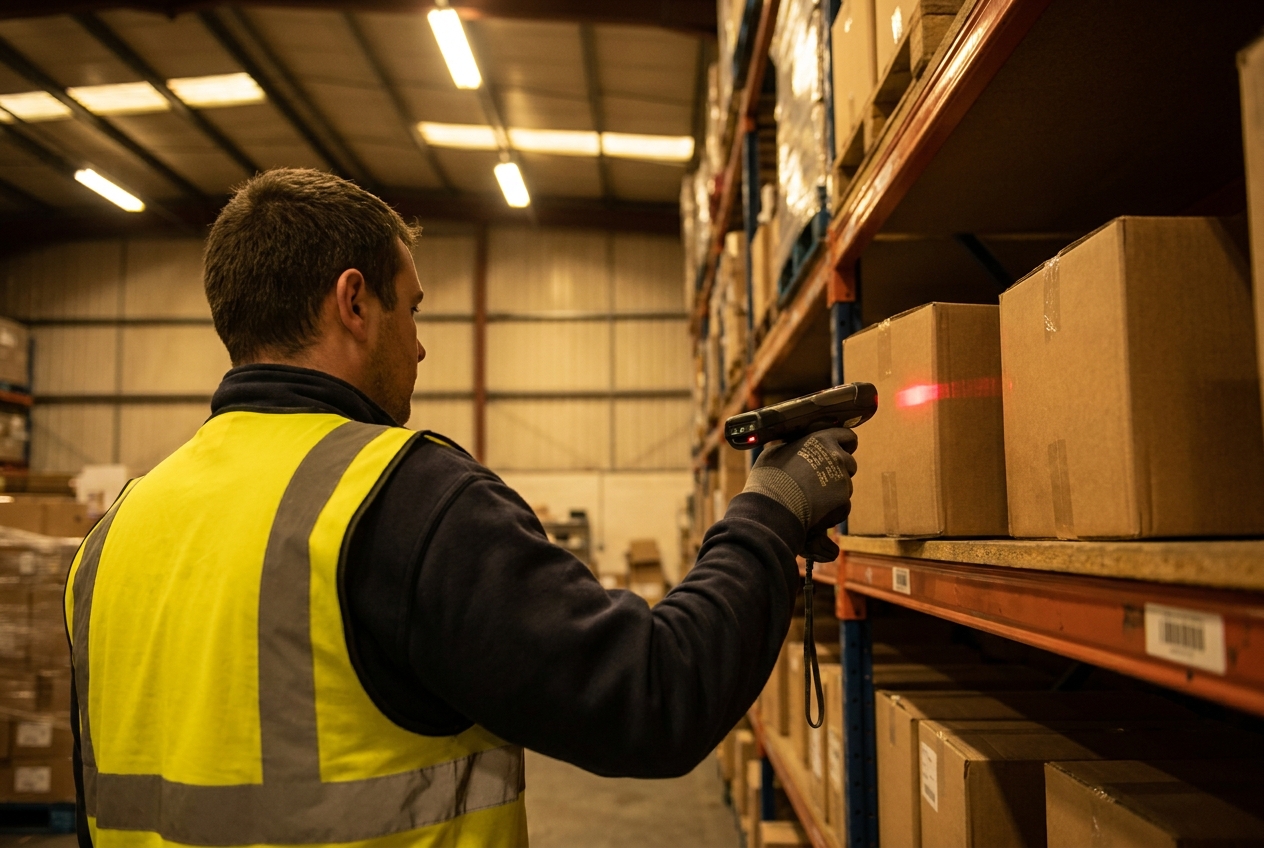
Too much safety stock is the buffer that costs more to hold than the stockouts it prevents. Every buffered unit ties up cash you could spend on marketing or new products, consumes storage, and, in Amazon FBA specifically, exposes you to long-term storage fees and aged-inventory surcharges if it sits past the thresholds. The Small Business Administration frames inventory as working capital for exactly this reason, and its guidance for small businesses treats overstock as trapped cash. The practical test is simple: if you routinely end each cycle with most of your buffer untouched and your service level is already high, your buffer is probably larger than it needs to be. Trim it and watch whether stockouts appear. If they do not, you were carrying dead weight.
How do you set and maintain safety stock with a 3PL?
When a fulfillment partner stores and ships for you, your true lead time includes their receiving and putaway time, so ask for it directly and add it to supplier transit. If you fulfill from more than one location, hold a buffer at each, because a national buffer averaged across warehouses still lets a single region sell out. This is the core reason brands adopt a two-warehouse fulfillment strategy as they scale. Understanding what a 3PL does and its receiving cadence is the difference between a lead time you can plan around and one that surprises you. If you are still choosing a partner, factor replenishment speed into how you choose an ecommerce fulfillment provider, and compare options in the ecommerce fulfillment directory. Whoever you use, revisit your numbers each quarter and before any known peak, because both demand and lead time drift, and a buffer set once and forgotten quietly becomes wrong.
Frequently asked questions
What is safety stock in simple terms?
Safety stock is extra inventory you hold on top of your expected sales during a resupply window. It exists to cover two things you cannot predict exactly: how fast customers buy and how long your supplier or fulfillment center takes to restock. When either runs against you, the buffer keeps you from selling out.
How is safety stock different from the reorder point?
Safety stock is the buffer amount. The reorder point is the on-hand level that triggers a new order, and it equals your expected demand during the lead time plus the safety stock. Safety stock is one input into the reorder point, not the same thing.
What factors increase how much safety stock I need?
A higher target service level, longer or more erratic lead times, and more volatile daily demand all raise the buffer you need. Steady sales and short, reliable replenishment let you hold less. Seasonal peaks and promotions temporarily raise it too.
Does more safety stock always reduce stockouts?
Directionally yes, but with sharply diminishing returns. Moving from a moderate to a very high service level takes a disproportionately large buffer, and that inventory ties up cash, storage, and (for FBA) long-term storage exposure. The goal is enough coverage, not maximum coverage.
How do I set safety stock when a 3PL handles fulfillment?
Ask the 3PL for its typical receiving and putaway time, then treat that plus supplier transit as your true lead time. Split buffers by location if you fulfill from more than one warehouse, and revisit the numbers each quarter as demand and lead times shift.
How often should I recalculate safety stock?
Review it at least quarterly and before any known demand spike such as a holiday, a promotion, or a new sales channel. Lead times and sell-through both drift over time, so a buffer set once and left alone slowly becomes wrong in one direction or the other.
Ready to compare providers?
Search the directory by service and location, save options to your shortlist, and send a clear RFQ.
Related guides
Subscription Box Fulfillment: What to Ask a 3PL
How subscription box fulfillment differs from standard ecommerce, the batch and kitting challenges that trip brands up, and the exact questions to ask a 3PL before you move.
Dropshipping vs Holding Inventory in a 3PL
Dropshipping vs 3PL fulfillment compared on margin, speed, control, branding, and risk, with a decision table and a hybrid model that uses both.
What Is a SKU? SKU vs UPC, ASIN, and FNSKU
A SKU is your own internal code for a product. Here is how it differs from a UPC, ASIN, and FNSKU, and how to structure SKUs that keep inventory accurate.