
Incoterms Explained: Who Pays and Who Bears Risk
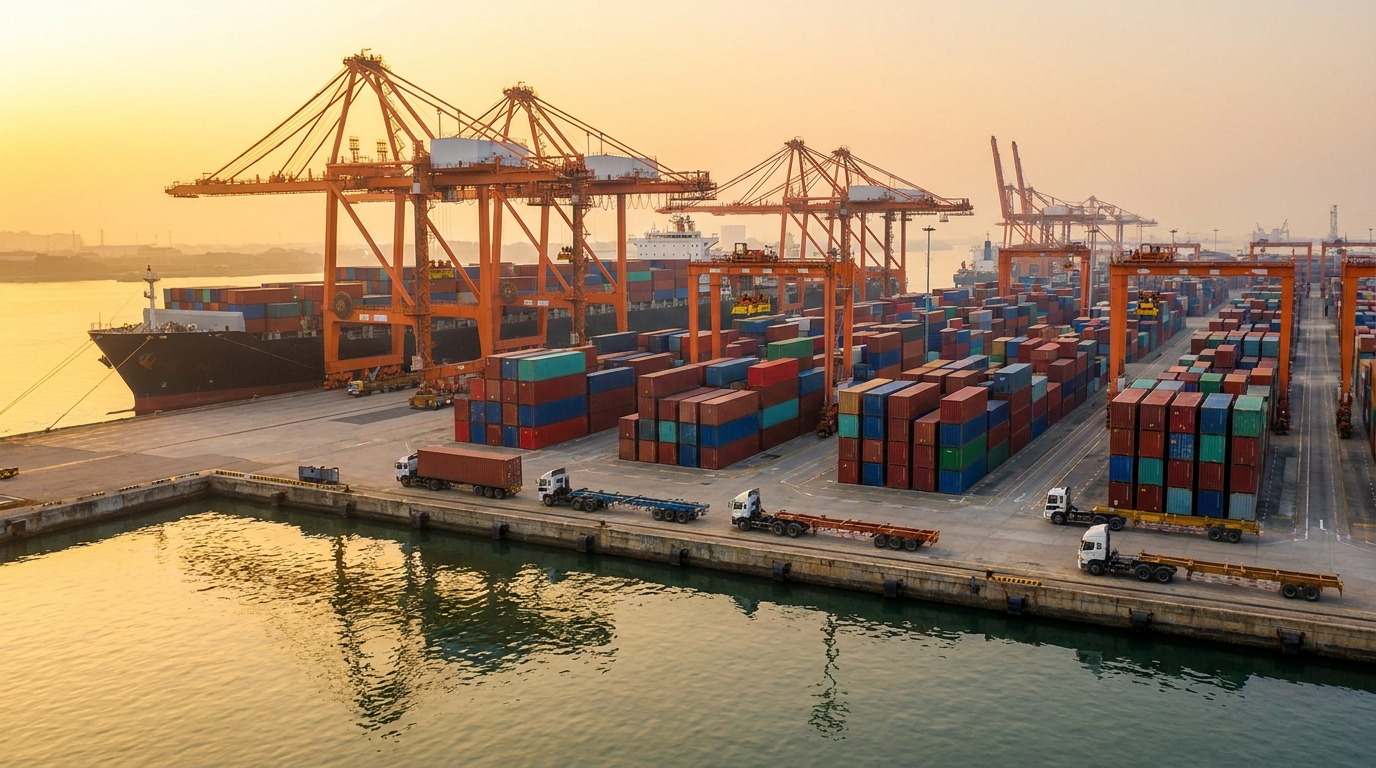
Incoterms are the eleven standardized three-letter trade terms, published by the International Chamber of Commerce (ICC), that tell a buyer and a seller who arranges transport, who pays the freight, who clears customs, and the exact point where the risk of loss or damage passes from one party to the other. They turn a messy negotiation over who handles what into a single line on a contract or commercial invoice, for example FCA Shanghai Port, Incoterms 2020. Get the term right and both sides know precisely where their responsibility ends. Get it wrong and you can end up paying for freight you thought was covered, or bearing the risk on a container you no longer control.
Key takeaways
- Incoterms allocate three things: who arranges and pays for carriage, who handles export and import clearance, and where risk transfers from seller to buyer. They do not decide title, ownership, or the duty rate.
- The 2020 rules split into seven terms usable for any transport mode (EXW, FCA, CPT, CIP, DAP, DPU, DDP) and four for sea and inland waterway only (FAS, FOB, CFR, CIF).
- Using FOB, CFR, or CIF for containerized cargo is the most common mistake, because risk only passes when goods are on board, well after you hand the box to the carrier. FCA, CPT, or CIP fit multimodal moves.
- DDP puts the seller on the hook for import duty and taxes, which is where the biggest cost surprises hit. DAP often shifts that risk to the party better placed to manage it.
- Always pair the term with a named place and the version year, or the term is ambiguous.
What do Incoterms actually decide, and what do they not?
Incoterms decide delivery responsibilities: who moves the goods, who pays each leg of freight, who deals with export and import formalities, and the single point where risk shifts from seller to buyer. That point matters because whoever bears the risk at the moment of a loss files the insurance claim and eats any uninsured shortfall.
What Incoterms do not decide is just as important. They do not transfer legal ownership or title, which the sales contract and local law govern. They do not set the duty rate or tax owed, only who is responsible for paying it. And they do not replace a contract; they are one clause inside it. Keep that boundary clear and you avoid assuming an Incoterm has settled a question it never touches. For projecting the actual duty and taxes on a shipment, run the numbers through a landed cost calculator rather than reading them off the term.
How do all 11 Incoterms compare at a glance?
The fastest way to read the rules is a single table that maps each term to who arranges the main carriage, who pays the freight to destination, and where risk transfers. The terms are ordered from least seller obligation (EXW) to most (DDP).
| Term | Mode | Arranges main carriage | Pays freight to destination | Where risk transfers |
|---|---|---|---|---|
| EXW (Ex Works) | Any | Buyer | Buyer | At seller's premises, goods at buyer's disposal |
| FCA (Free Carrier) | Any | Buyer | Buyer | When handed to buyer's carrier at named place |
| CPT (Carriage Paid To) | Any | Seller | Seller | When handed to first carrier at origin |
| CIP (Carriage and Insurance Paid To) | Any | Seller | Seller (plus insurance) | When handed to first carrier at origin |
| DAP (Delivered at Place) | Any | Seller | Seller | At destination, ready for unloading |
| DPU (Delivered at Place Unloaded) | Any | Seller | Seller | At destination, after unloading |
| DDP (Delivered Duty Paid) | Any | Seller | Seller (plus import duty) | At destination, ready for unloading |
| FAS (Free Alongside Ship) | Sea only | Buyer | Buyer | Alongside the vessel at origin port |
| FOB (Free On Board) | Sea only | Buyer | Buyer | When goods are on board the vessel |
| CFR (Cost and Freight) | Sea only | Seller | Seller | When goods are on board at origin |
| CIF (Cost, Insurance and Freight) | Sea only | Seller | Seller (plus insurance) | When goods are on board at origin |
Notice the split in the risk column: with the C terms (CPT, CIP, CFR, CIF) the seller pays freight all the way to destination, but risk still passes at origin. The seller is paying for carriage it no longer bears the risk on, which trips up buyers who assume a paid-to-destination term means the seller carries the goods safely to the door.
What does each Incoterm mean in plain English?
The eleven terms fall into four families by how much the seller takes on. Reading them as groups is easier than memorizing all eleven.
The E and F terms: buyer controls the main freight
EXW puts almost everything on the buyer. The seller just makes the goods available at its premises; the buyer arranges collection, loading, export clearance, and every leg after. FCA hands the goods to a carrier the buyer nominates, cleared for export by the seller, and is the flexible workhorse for any mode. FAS and FOB are the sea-only equivalents, delivering alongside or on board the vessel at the origin port. Under all F terms the buyer arranges and pays the main international carriage.
The C terms: seller pays freight, but risk still passes at origin
CPT and CFR have the seller pay carriage to the named destination while risk transfers back at origin, when the goods reach the first carrier (CPT) or go on board (CFR). CIP and CIF add cargo insurance bought by the seller. Under Incoterms 2020, CIP requires broad all-risks cover, while CIF still only requires minimum cover, so a buyer wanting comprehensive insurance on ocean freight often specifies a higher level than CIF's default.
The D terms: seller delivers to the destination
DAP delivers the goods at a named place in the buyer's country, ready for unloading, with the buyer handling import clearance and duty. DPU is the only Incoterm that makes the seller unload at destination. DDP goes all the way: the seller clears the goods for import and pays the duty and taxes, carrying the maximum obligation. Each of these keeps risk with the seller until the goods arrive.
Where does risk actually transfer under each term?
Risk transfer is the single most consequential thing an Incoterm sets, because it decides who bears the loss if a container is dropped, a pallet is soaked, or a vessel is lost. There are really only three patterns. Under E and F terms and the C terms, risk passes at or near origin. Under D terms, risk stays with the seller until the goods reach the destination.
The trap is the gap between where risk passes and where the paying party thinks it passes. A buyer on CIF sees the seller paying ocean freight and insurance and assumes the seller carries the risk across the water. It does not: risk passed when the goods went on board at the origin port, and the buyer holds the insurance claim for anything that happens in transit. This is why understanding the term, not just the price, protects you. A freight forwarder can confirm exactly where your responsibility begins and ends for a given move.
Why is FOB the wrong choice for containerized freight?
FOB, along with CFR and CIF, is written for goods that physically pass over a ship's rail, so the seller's risk ends only when the cargo is loaded on board the named vessel. That model fits bulk and breakbulk cargo loaded directly onto a ship. It does not fit a container.
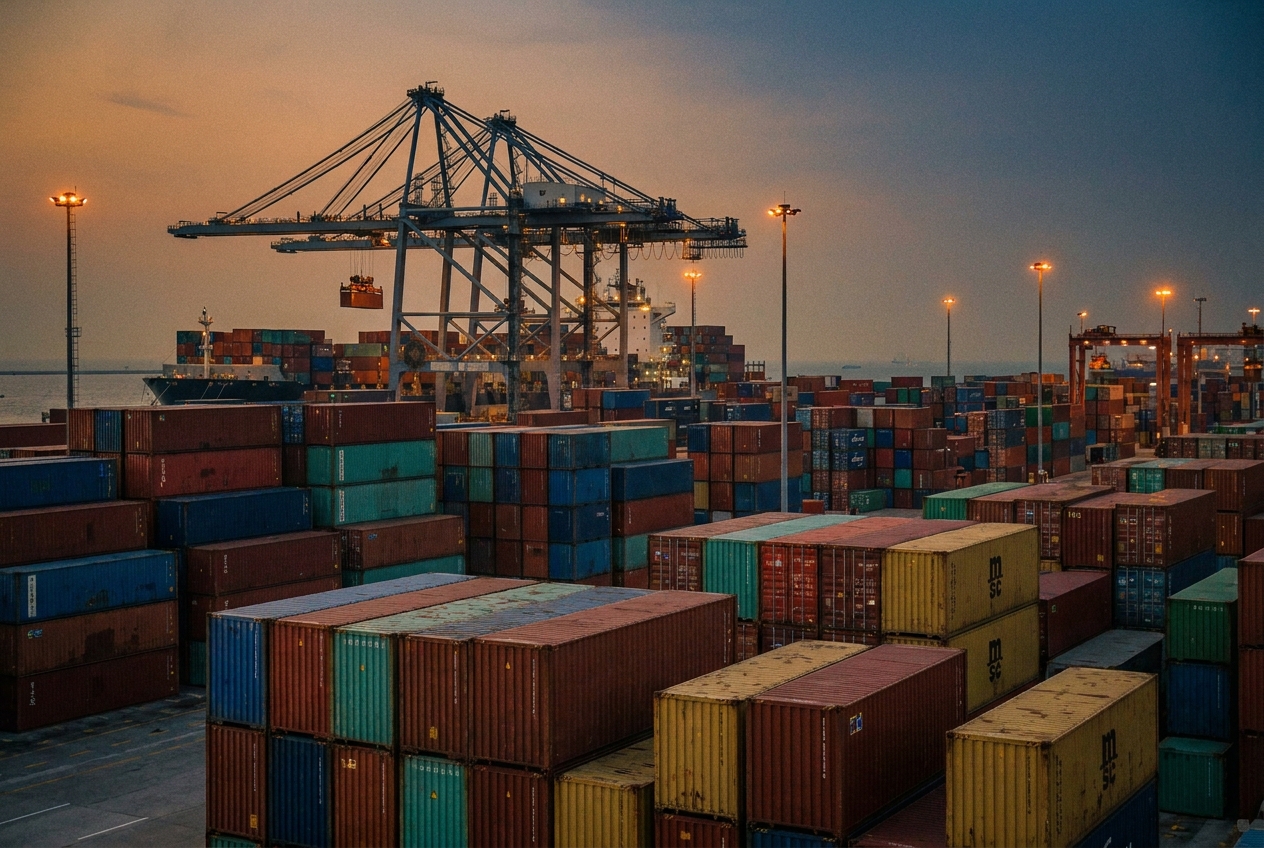
With containerized freight, you typically deliver the sealed box to a container yard or terminal days before it is craned onto the vessel. Under FOB, the seller keeps the risk during that whole terminal period even though it no longer physically controls the goods, and the moment of transfer, going on board, is hard to pin down for a box in a stack. The ICC guidance is explicit that FCA, CPT, and CIP are the correct terms for containers and multimodal shipments, because they transfer risk cleanly at the hand-off to the carrier. If you are shipping containers on FOB out of habit, switching to FCA usually removes the ambiguity without changing who pays the freight. To sanity-check how full your box is before you commit to a term, a container load calculator helps you plan the load.
What are the DDP duty surprises to watch for?
Under DDP the seller becomes responsible for clearing the goods into the buyer's country and paying the import duty and taxes, which is where the costliest surprises live. A seller quoting a tidy DDP price may not have priced the destination duty, import VAT or GST, or brokerage correctly, and can find the delivered deal is unprofitable once the customs bill lands.
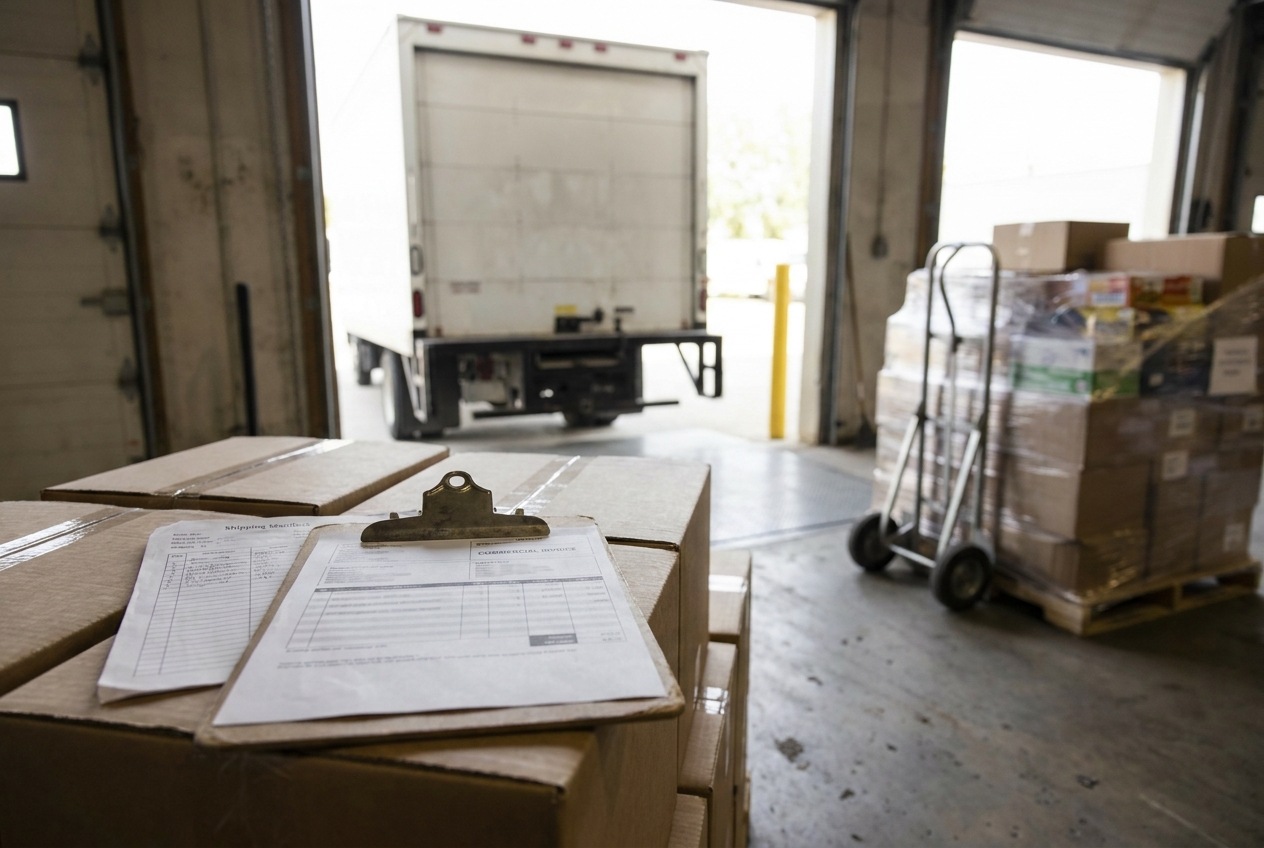
There are practical traps too. In some countries the seller cannot easily recover import VAT because it is not a registered local entity, so that tax becomes a sunk cost. The seller may also lack standing to act as importer of record. For many trades, DAP is the cleaner choice: the seller delivers to the destination, and the buyer, who understands its own duty position and can reclaim local taxes, handles import clearance. Whichever side pays the duty, base the figure on the commercial invoice value and the correct classification. Our guide to what a commercial invoice must contain covers the document customs relies on, and the U.S. importer's duty obligations are described by U.S. Customs and Border Protection.
EXW vs DDP: which extreme causes more trouble?
EXW and DDP sit at opposite ends of the obligation scale, and both cause avoidable friction. EXW asks the buyer to handle export clearance in the seller's country, which is often impractical because a foreign buyer may not be able to file export declarations there or obtain proof of export. FCA fixes this by making the seller responsible for export clearance while still letting the buyer control the main freight, which is why many advisors treat FCA as the sensible replacement for EXW.
DDP, at the other end, loads the seller with import clearance and duty in a country it may not know well. Between the two extremes, the workhorse terms, FCA, CPT, CIP, DAP, cover most real trades with a fairer split of who does what.
How do you choose the right Incoterm for a shipment?
Choose the term by matching control and risk to the party best able to manage each. Work through four questions before you agree to a term.
- Mode of transport. Container or multimodal? Use FCA, CPT, or CIP, not FOB, CFR, or CIF. Bulk or breakbulk over water? The sea terms are fine.
- Who has the better freight rates? If you buy a lot of ocean or air freight, controlling carriage with an F term (buyer arranges) often beats letting the seller mark up a C or D term.
- Who can clear customs on each end? Only accept EXW if you can export from the seller's country; only offer DDP if you can import into the buyer's country and price the duty.
- Who should hold the transit risk and insurance? If you want the seller to insure, specify CIP (broad cover) or CIF, and check the cover level rather than assuming it.
When you send a request for quotes, state the Incoterm and named place up front so every provider prices the same scope. Comparing vetted providers on the international freight directory is easier when your term is fixed, and the free Incoterms guide tool walks the eleven rules side by side.
A worked example: the same shipment under three terms
Picture a U.S. brand importing a full container of goods from a supplier in Vietnam. Under EXW, the brand arranges pickup at the factory, Vietnamese export clearance, ocean freight, U.S. import clearance, duty, and final delivery, and it holds the risk from the factory gate. That is a lot to manage from abroad, especially the export side.
Switch to FCA Ho Chi Minh City port: the supplier now handles export clearance and delivers the container to the carrier, risk passes cleanly at that hand-off, and the brand still controls and pays the ocean freight. Switch again to DDP the brand's warehouse: the supplier arranges everything, including U.S. duty, and carries risk to the door. The freight moved is identical; what changes is who arranges each leg, who pays, and where a mid-ocean loss lands. Reading the difference in cost is where a landed cost calculation earns its keep, since the DDP price should bake in duty the FCA price does not.
What are the most common Incoterms mistakes?
A handful of errors account for most Incoterms disputes. Avoid these and you avoid the majority of delivery arguments.
- Using FOB, CFR, or CIF for containers. The risk gap at the terminal is the classic exposure. Use FCA, CPT, or CIP instead.
- Assuming a C term means the seller carries risk to destination. It does not; risk passes at origin even though the seller pays the freight.
- Naming no place, or a vague one. Write FCA plus the exact point, and the version year, so both sides read the same delivery point.
- Accepting DDP without confirming the seller priced duty and can act as importer. Otherwise the shipment stalls at customs or the deal turns unprofitable.
- Relying on an old version. Note whether you mean Incoterms 2020 or an earlier edition, since insurance and delivery details changed.
For the wider set of trade documents that travel with these terms, the U.S. Bureau of Transportation Statistics tracks the freight flows these rules govern, and starting from the correct term keeps your paperwork consistent from purchase order to customs entry.
What should you do next?
Decide the mode first, then pick a term whose risk-transfer point matches who can actually control the goods at that moment, and always write the named place and the year. For most container imports that means reaching for FCA, CPT, CIP, or a delivered D term rather than the sea-only FOB family. Model the duty and total delivered cost before you sign, confirm who acts as importer of record, and put the exact term on the purchase order and the commercial invoice so nothing is left to assumption.
Frequently asked questions
What are Incoterms in simple terms?
Incoterms are a set of eleven three-letter trade rules published by the International Chamber of Commerce that define, for any sale of goods, who arranges and pays for transport, who handles export and import clearance, and the exact point where the risk of loss or damage passes from the seller to the buyer. They are the shorthand that lets a buyer and seller in different countries agree on delivery responsibilities in a single line on the invoice.
Do Incoterms decide who owns the goods or who pays duty?
No. Incoterms allocate delivery obligations, transport cost, and transfer of risk, not legal ownership or title, which is governed by the sales contract and local law. They do assign responsibility for clearing customs and, under DDP, for paying import duty and taxes, but the term itself does not set the duty rate. Use your commercial invoice value and HS codes with a landed-cost estimate to project the actual duty owed.
Why should I not use FOB for container shipments?
FOB, CFR, and CIF are sea-and-inland-waterway terms written around goods that pass over a ship's rail, so risk transfers only when the cargo is loaded on board. With containerized freight you usually hand the box to the carrier at a terminal days before it is loaded, leaving a gap where you no longer control the goods but still carry the risk. FCA, CPT, and CIP are built for that hand-off and are the better fit for containers and multimodal moves.
What is the difference between DAP, DPU, and DDP?
All three deliver the goods to a named place in the buyer's country. Under DAP the seller delivers ready for unloading and the buyer handles import clearance and duty. DPU is the only term that requires the seller to unload at the destination. DDP goes furthest: the seller clears the goods for import and pays the duty and taxes, taking on the most obligation and the most exposure to surprises.
Which Incoterm is safest for a first-time importer?
Many first-time buyers start with a delivered term such as DAP or with CIF or CIP, so the seller arranges the main carriage and, under the insured terms, buys cargo insurance. As you build carrier relationships and want control over freight cost, FCA (or CPT/CIP) at origin usually gives a better balance. Avoid EXW unless you are set up to handle export clearance in the seller's country, and be cautious accepting DDP from a seller who may not price duty correctly.
Are Incoterms legally required on an international sale?
No rule forces you to use an Incoterm, but naming one, along with the exact place, removes most disputes over who pays for what and who bears a loss in transit. Always write the term with a named place and the version, for example FCA Shanghai Port, Incoterms 2020, so both sides read the same responsibilities. Without a named place the term is ambiguous and can shift cost and risk in ways you did not intend.
Ready to compare providers?
Search the directory by service and location, save options to your shortlist, and send a clear RFQ.
Related guides
What Is a Customs Bond? Single vs Continuous
A customs bond guarantees CBP that an importer will pay duties, taxes, and penalties. Here is how single-entry, continuous, and ISF bonds differ and who needs one.
What Is an HTS Code and Why It Matters
An HTS code is the 10-digit number that classifies an imported product and sets its US duty rate, so getting it right controls what you owe at the border.
What Is Customs Clearance? The Import Process
Customs clearance is the process of getting an import legally released by CBP. Here is how the steps, the players, and the common holds actually work.